A Trailer Behind a UTV in California
There's nothing quite like packing up your side-by-side for a weekend adventure, whether it's heading deep into the desert for some remote camping or tackling a challenging trail system. But often, the UTV's bed just isn't enough for all your gear, leaving you wondering if you can just hitch up a small trailer. The thought of bringing along extra firewood, a bigger cooler, or more tools is tempting, but figuring out California's rules for towing a trailer with your UTV can feel like navigating a maze. This guide is here to clear up the confusion and help you understand when and where you can legally and safely pull a trailer behind your UTV in the Golden State.
The Core Question: Can My UTV Tow a Trailer in California?
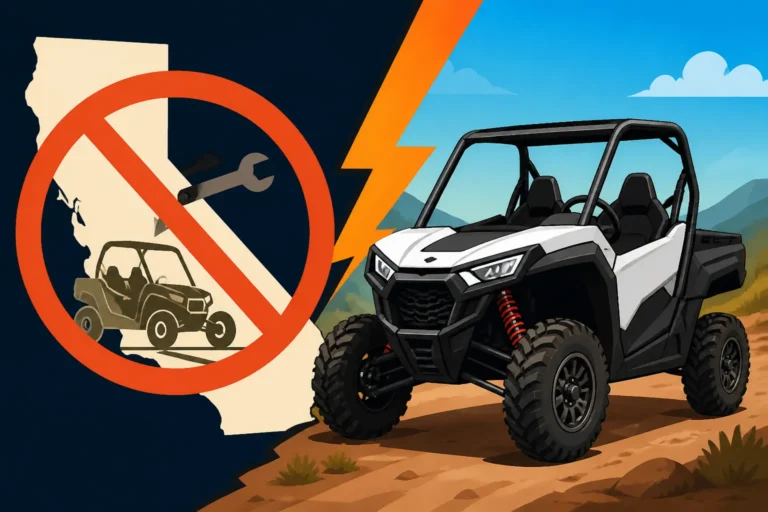
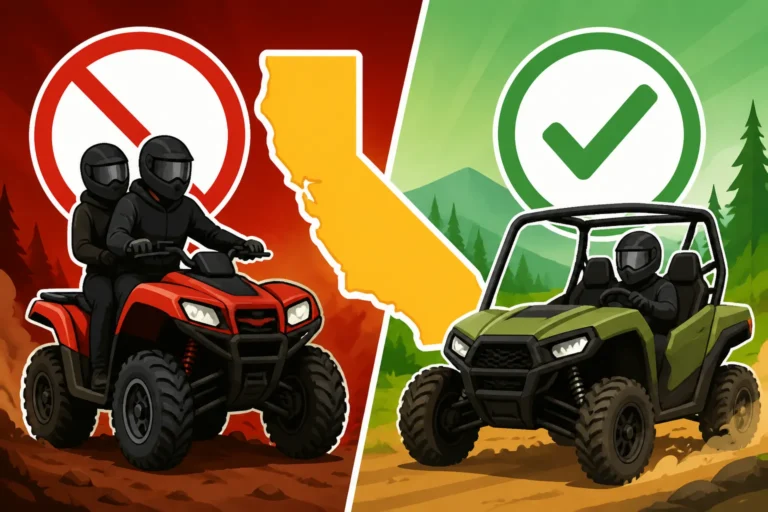
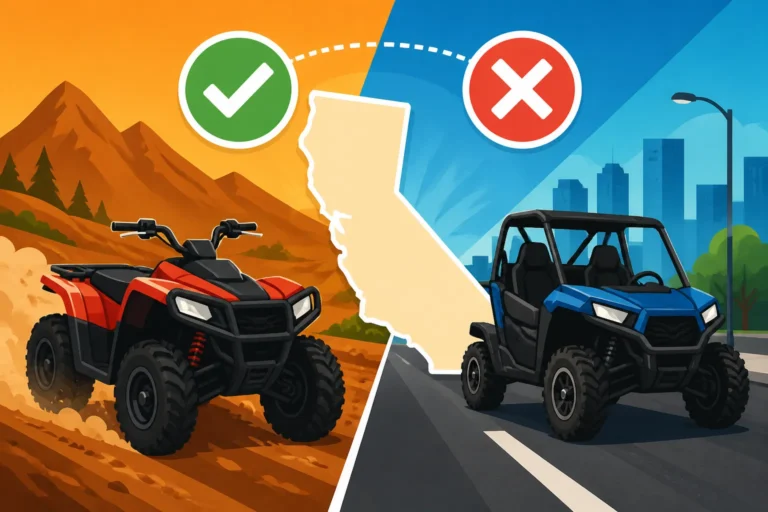
This is the big one, and the answer isn't a simple yes or no. It really boils down to where you plan to do your towing. California has very specific rules about where off-highway vehicles (OHVs) can operate, and those rules directly impact your ability to tow a trailer. Understanding this distinction is key to staying legal and safe.
Where It's Absolutely Permitted: Private Land and Designated OHV Areas
If you're operating on private property that you own, have permission to use, or that's part of a private facility, the rules regarding towing a trailer with your UTV are generally quite relaxed, as long as you prioritize safety. This is where your UTV truly shines as a utility vehicle, capable of hauling feed, tools, or building materials around a ranch or farm. You're free from many of the state's strict regulations because you're not on public land or roads.
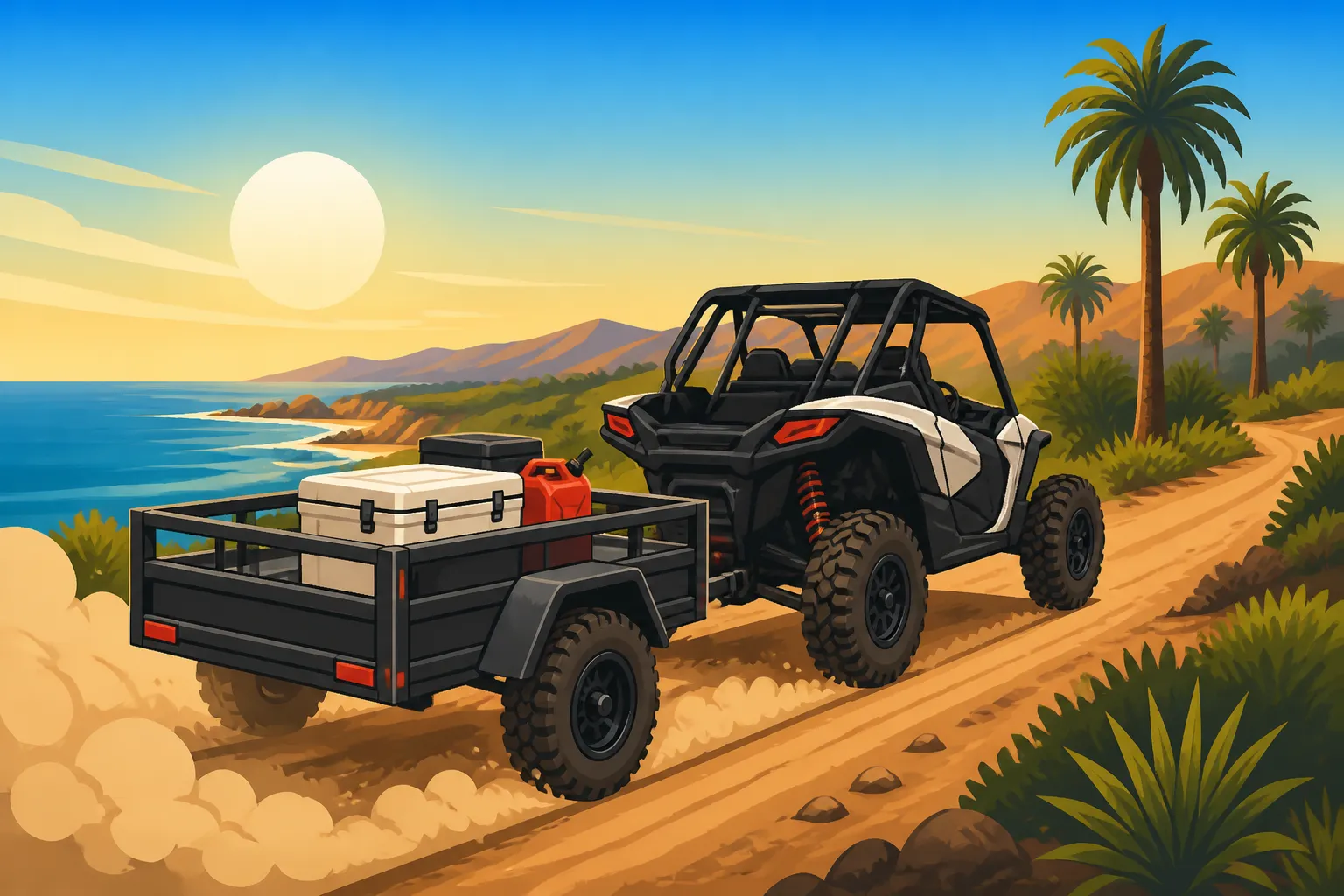
The same goes for designated Off-Highway Vehicle (OHV) areas. California boasts an incredible network of State Vehicular Recreation Areas (SVRAs), Bureau of Land Management (BLM) lands, and National Forest trails where OHV use is explicitly permitted. Places like Glamis in the Imperial Sand Dunes, Hungry Valley SVRA, or Ocotillo Wells are perfect examples. Within the confines of these designated OHV areas, you can absolutely hitch up a trailer to your UTV to transport camping gear, water, extra fuel, recovery equipment, or anything else you might need for your adventure. Rangers and land managers are generally focused on safety, speed limits, and environmental protection within these areas, not whether your UTV is street-legal or its towing capacity, provided you're being reasonable and safe. [Where to Ride an OHV in California] offers a great overview of these areas. Imagine pulling a small utility trailer loaded with a pop-up tent, mountain bikes, and a giant cooler behind your UTV to your favorite remote campsite deep within an SVRA—that's exactly what these machines are built for in these environments.
The Big "No": Public Roads and Highways
Here's where the dream of hauling your jetski to the lake or your garden waste to the dump with your UTV comes to a screeching halt in California. Generally speaking, UTVs are not considered street-legal vehicles in California. This means they are largely prohibited from operating on public roads, streets, and highways, with very limited exceptions for things like designated "combined-use" roads or crossing a highway at a right angle. [Can You Make a UTV Street Legal in California?] delves into the complexities of this. Because the UTV itself isn't recognized as a street-legal vehicle, it cannot legally tow a trailer on these same public thoroughfares.
The logic is straightforward: if the primary vehicle isn't allowed, neither is anything it's pulling. Attempting to tow a trailer with your UTV on a public road in California could lead to significant fines and penalties. Law enforcement officers are vigilant about OHVs on unauthorized roads, and adding a trailer only makes your violation more conspicuous. It's a frustrating reality for many UTV owners who see their versatile machines as potential utility vehicles for everyday tasks, but the state's regulations are clear. So, while your UTV might have a hitch and the power to pull a small trailer, save that capability for the dirt, the dunes, or the privacy of your own land. For highway travel, you'll need to load both your UTV and its trailer onto a proper tow vehicle and trailer. [California Fines for Riding on a Highway] are something you definitely want to avoid!
Practical Considerations for Towing with Your UTV
Even when you're in an approved area, towing a trailer with your UTV isn't just about hooking it up and going. There are crucial practical and safety considerations you need to keep in mind to ensure a smooth, secure, and damage-free experience for both your machine and your gear. Ignoring these can lead to accidents, equipment damage, or getting stuck far from help.
Understanding Your UTV's Towing Capacity
Just like any other vehicle, your UTV has specific limits on how much it can safely tow. This information is absolutely critical and can always be found in your owner's manual. It's not just about the gross trailer weight (GTW), which is the total weight of the trailer plus its cargo. You also need to pay attention to the tongue weight, which is the downward force the trailer's hitch exerts on your UTV's hitch receiver. Exceeding either of these limits can severely compromise your UTV's handling, braking, and suspension, making it unstable and dangerous.
Imagine loading up a trailer with firewood and forgetting to check the capacity. Suddenly, your UTV's rear suspension is sagging, the front end feels light, and braking takes much longer than usual. This is a recipe for disaster, especially on uneven terrain or downhill sections. Many UTVs have towing capacities ranging from a few hundred pounds to over a thousand, but they are not designed to be full-size truck replacements. Always err on the side of caution. If you're planning on hauling significant weight, you might also consider consulting with a specialist or looking into aftermarket suspension upgrades, perhaps from a brand like SuperATV, to handle the additional load more effectively. Overloading puts undue stress on your drivetrain, brakes, and chassis, leading to premature wear and potential breakdowns.
Essential Towing Equipment and Safety
Once you know your UTV's limits, you need the right equipment to tow safely. Most UTVs come equipped with a standard 2-inch receiver hitch, but if yours doesn't, aftermarket options are readily available. You'll need a proper hitch ball that matches your trailer's coupler size (typically 1 7/8 inch or 2 inch). Ensure the hitch ball is rated for at least the weight you plan to tow. Don't skimp on quality here; a cheap hitch can fail under stress.
Safety chains are a non-negotiable item. They provide a critical backup connection between your UTV and the trailer in case the primary coupler fails. Always cross them under the tongue to cradle it, preventing it from digging into the ground if it detaches. While less common for small OHV trailers, if your trailer is heavy enough, it might require its own braking system. Your UTV's brakes are designed for the UTV's weight, not an additional thousand pounds of trailer. If your trailer has brakes, ensure they are properly connected and functioning. For UTVs used heavily in utility applications or those with lifted suspensions, a quality aftermarket hitch from a company like SuperATV can offer improved strength and clearance. Additionally, consider how the load will affect your UTV's visibility, especially if the trailer is wide or tall. Proper load distribution, with heavier items placed low and over the trailer's axle, is paramount for stability and preventing sway, which can quickly lead to loss of control, particularly on rough trails.
Common Scenarios and the California Rules
Let's dive into some specific real-world situations where towing a trailer with your UTV might come into play and how California's rules apply. Understanding these scenarios can help you plan your next adventure or task without running afoul of regulations or compromising safety.
Hauling Gear to a Campsite within an SVRA
This is perhaps the most common and ideal scenario for towing a trailer with your UTV in California. Imagine you're planning a multi-day trip to Oceano Dunes or a weekend at Hollister Hills. You want to bring a larger tent, cooking equipment, several coolers, extra water jugs, a generator, and maybe even a small inflatable boat for nearby waters. Your UTV's cargo bed just won't cut it. Hooking up a small utility trailer allows you to bring all those creature comforts and essentials.
Within the boundaries of the State Vehicular Recreation Area (SVRA), you're generally free to tow your trailer to your designated campsite or to specific staging areas. The key is that all your towing activity occurs within the permitted OHV area. You wouldn't be driving your UTV with a trailer down Highway 1 to get to Oceano; you'd trailer your UTV (and the utility trailer if you're bringing it separately) on a highway-legal tow vehicle, unload at the SVRA entrance, and then hitch up for the internal transit. When packing the trailer, ensure everything is securely strapped down to prevent items from bouncing out on bumpy trails, and always keep your UTV's towing capacity in mind. [Camping at a California SVRA] is a fantastic experience made even better when you can bring all your comforts.
Utility Tasks on the Ranch or Farm
For those fortunate enough to own a ranch, farm, or large private property, a UTV becomes an indispensable workhorse, and its towing capability is a huge asset. Moving hay bales, hauling fencing supplies, transporting tools, or distributing feed to livestock are all tasks where a UTV with a trailer excels. These applications fall under private land use, meaning the stringent public road regulations don't apply. This provides significant flexibility for property owners.
Even in these private land scenarios, safety should still be your top priority. Ensure trailers are in good condition, hitches are secure, and loads are balanced. Overloading on private land can still damage your UTV and create hazardous situations, especially on uneven or sloped terrain. Consider the terrain – a heavy trailer might struggle on soft ground or steep inclines, even if your UTV has the power. If you're moving heavy items frequently, invest in a robust trailer designed for the task. Some UTVs might even offer specific utility packages or options for heavy-duty towing, and aftermarket solutions from companies like SuperATV can provide enhanced durability for demanding farm work. [Farm Quads and California Registration] explores how these vehicles are used in agricultural settings.
Special Events and Designated Routes
Occasionally, there might be specific, limited scenarios where UTVs with trailers could operate on what appear to be public roads, but these are exceptions, not the rule. This typically involves designated combined-use roads within or adjacent to OHV areas, or official "sanctioned events" that have received specific permits. [California Sanctioned Event Permit Explained] outlines the process for such permissions. For example, a small section of a county road might be temporarily designated for OHV access to connect two trail systems, or a parade within a small town might include OHVs as part of a community event.
However, even in these rare instances, the rules are highly specific. The UTV itself must still comply with any requirements for that designated route (e.g., proper OHV registration, lighting during certain hours). Towing a trailer in such a scenario would only be allowed if explicitly permitted by the event or route designation, and it would likely come with additional safety requirements, such as enhanced lighting or signage on the trailer. Crucially, these are not open invitations to use public roads for general towing. Always check with the event organizers or the local land management agency for precise rules before assuming any roadside towing is permissible. When in doubt, it's almost always safer to assume public road towing with your UTV and a trailer is prohibited.
UTV Towing Scenarios in California: A Quick Guide
To help visualize the difference, here's a brief breakdown of common UTV towing situations in California.
| Scenario | Legality in California | Key Considerations |
|---|---|---|
| Private Land | Generally Permitted | Prioritize safety, UTV towing capacity, proper hitch/trailer, secure load. |
| Designated OHV Areas (SVRAs, BLM, NF) | Generally Permitted within Area Limits | Adhere to area rules, UTV towing capacity, secure load for rough terrain, speed limits. |
| Public Roads, Streets, Highways | Generally Prohibited unless specifically designated/permitted | UTVs are not street-legal; towing a trailer compounds the violation. Use a highway-legal tow vehicle. |
| Combined-Use Routes | Prohibited unless explicitly stated by designation | Rare exceptions may exist for UTVs, but towing a trailer is highly unlikely to be allowed. Check local rules meticulously. |
| Sanctioned Events | Potentially Permitted with Special Permit | Event-specific rules apply. UTV must meet event requirements. Trailer use may be restricted. |
Final Thoughts on Towing with Your UTV in California
Towing a trailer with your UTV can dramatically expand its utility, making your off-road adventures more comfortable and your property tasks more efficient. Whether you're hauling extra gear for a long weekend in the [Imperial Sand Dunes] or moving supplies around your land, your UTV is a capable machine. However, the critical takeaway in California is the stark difference between private property/designated OHV areas and public roads.
Embrace the towing capabilities of your UTV where it's designed to perform—off the pavement and within legal riding areas. Always prioritize safety by understanding your machine's limits, using appropriate equipment, and securing your load. For anything involving public roads or highways, remember that California's rules are strict: your UTV is an off-highway vehicle, and trying to make it a road-going tow rig will likely lead to unwanted attention from law enforcement and hefty fines. Stick to trailering your UTV to the riding area, and then enjoy the freedom of its utility once you're there. [California OHV Registration for a Side-by-Side] is important to ensure your machine is always legal in the right places.
Disclaimer
This article is for general informational purposes only and does not constitute professional advice. Laws, prices and regulations vary by location and change over time. Consult a qualified professional for guidance on your specific situation.