California DUI Rules for OHV Riders
It's a beautiful sunny Saturday, the kind that just calls you out to the trails or dunes, right? You've got your machine loaded, your buddies are ready, and the anticipation is buzzing. But here's the thing: while the open air and freedom of off-roading can feel a world away from city streets, the rules around driving under the influence in California apply to your OHV just as strictly as they do your car. Many riders are caught off guard, facing serious legal trouble because they didn't realize that a celebratory beverage around the campfire could lead to a DUI. This guide is here to cut through the confusion and give you a crystal-clear understanding of California's DUI rules for OHV riders, so you can enjoy your adventures without risking your freedom or your future.
The Reality of OHV DUIs in California: It's Not Just for Cars
When most folks hear "DUI," their minds immediately jump to cars, trucks, and paved roads. They picture traffic stops, breathalyzers on the side of the highway, and maybe even those sobriety checkpoints in town. What they often don't realize, or perhaps choose to ignore, is that driving an Off-Highway Vehicle (OHV) in California while impaired carries the exact same weight as driving a sedan down the freeway under the influence. It's a harsh reality that can quickly turn a fun weekend into a legal nightmare.
Why Many Riders Are Unaware
There's a prevailing misconception out there, especially in remote riding areas, that what happens off-road stays off-road. Riders might feel a sense of detachment from "the law" when they're miles deep in the desert or navigating a dense forest trail. The thought process often goes, "I'm not on a public road, so it's different," or "There's no traffic out here, so who's going to get hurt?" This kind of thinking, while understandable given the environment, is incredibly dangerous and legally inaccurate. The truth is, whether you're at Glamis, Ocotillo Wells, or your favorite national forest trail, you are still subject to California vehicle codes. The feeling of freedom from traffic laws doesn't extend to laws designed to protect against impaired operation of any motor vehicle.
Many riders also confuse OHV enforcement with a more lenient approach. They might see others consuming alcohol or even drugs at campsites adjacent to riding areas and assume it's acceptable to then operate their machines. This normalization, unfortunately, doesn't negate the law. Even if you're on a designated trail within a State Vehicular Recreation Area (SVRA) or Bureau of Land Management (BLM) land, the rules are clear. Law enforcement, whether it's the California Highway Patrol (CHP), park rangers, county sheriffs, or even Forest Service officers, are specifically tasked with enforcing these regulations. They patrol these areas regularly, especially during peak riding seasons and holidays, precisely because they know these misconceptions exist.
The Core Legal Framework
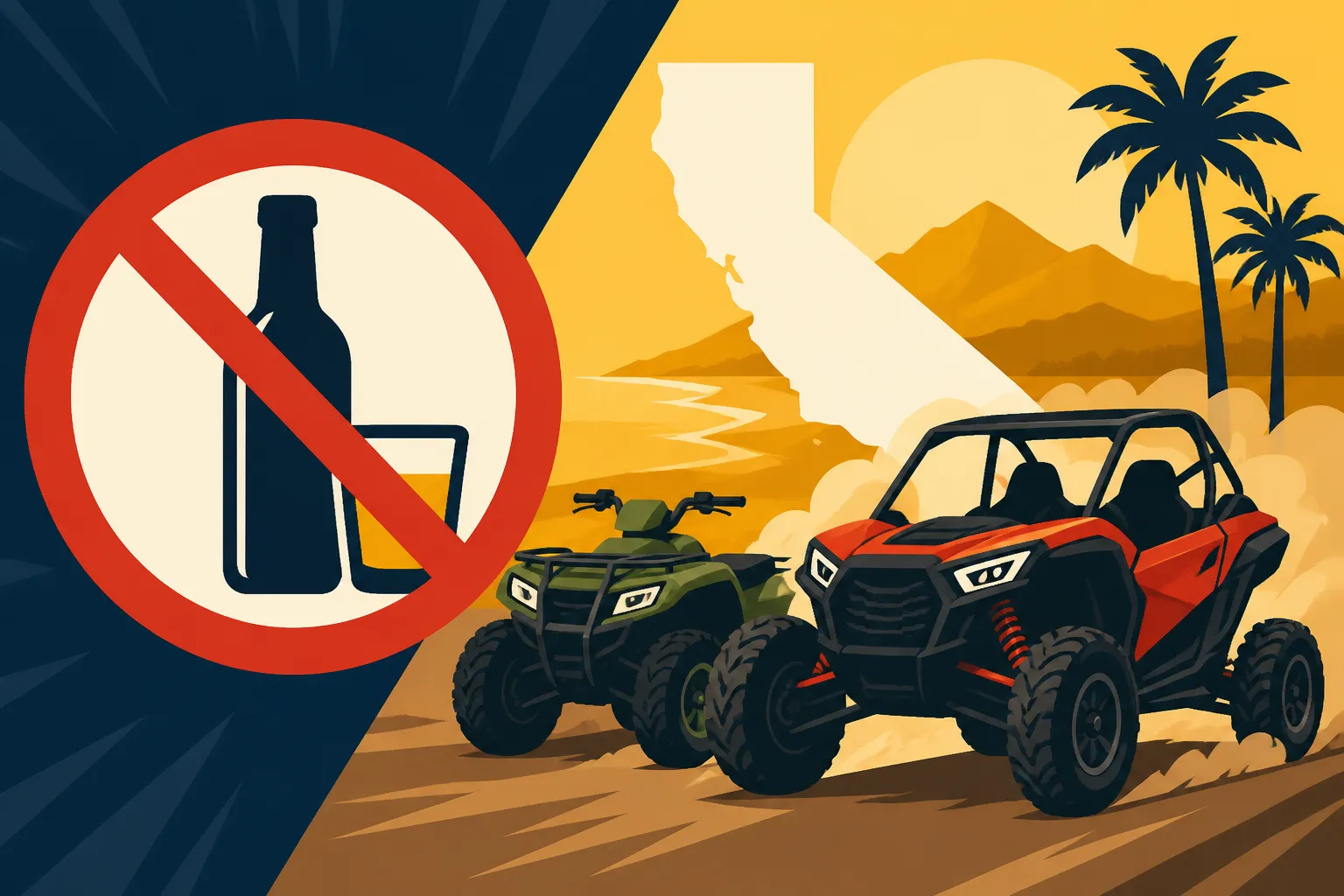
California Vehicle Code (CVC) Section 23152 is the primary statute that makes it illegal to drive under the influence. And here’s the crucial part: CVC 38020 specifically extends these DUI provisions to OHVs. This means that if you operate an OHV while under the influence of alcohol or drugs, you are subject to the same penalties as someone driving a car. There's no separate, "lighter" set of rules for your quad or side-by-side. The state sees impaired driving as impaired driving, regardless of the vehicle type.
This legal framework is designed to protect everyone. While you might not be sharing the trail with highway traffic, you are sharing it with other OHV riders, hikers, campers, and even wildlife. An impaired rider poses a significant risk of accidents, injuries, and even fatalities to themselves and others. Consider a scenario where you're coming over a blind dune or around a tight corner on a trail; reaction time is critical. Any impairment can have devastating consequences. The law also covers driving on any land "open to the public," which includes nearly all designated OHV trails and riding parks in California. So, that feeling of being "off the grid" won't shield you from legal accountability.
What Constitutes a DUI on an OHV?
Understanding the legal definition of "under the influence" is paramount for any OHV enthusiast in California. It's not just about feeling tipsy; the law has specific thresholds and interpretations that can catch even those who feel perfectly capable of riding. The consequences for violating these rules are severe, impacting your driving privileges, your wallet, and potentially your freedom.
Alcohol and Drug Impairment Defined
In California, the legal limit for Blood Alcohol Content (BAC) is 0.08% for adults aged 21 and over operating a motor vehicle, which, as we've established, includes your OHV. This "per se" limit means that if your BAC is at or above 0.08%, you are legally considered impaired, regardless of whether you feel impaired or can pass a field sobriety test. For commercial drivers, the limit is even lower at 0.04%, and for anyone under 21, California has a "zero tolerance" policy, meaning a BAC of 0.01% or higher can result in a DUI.
It’s easy to misjudge your BAC. Factors like your weight, metabolism, gender, and how much food you've eaten all play a role. A couple of beers around the campfire might push one person over the limit, while another might barely feel it. The problem is, the law doesn't care how you feel; it cares about the numbers. Moreover, [Open Container Rules on a California OHV] also apply, making it illegal to have an open container of alcohol in your possession while operating an OHV, even if you're not actively drinking. This can be an additional charge on top of a DUI.
Beyond alcohol, driving under the influence of drugs, including prescription medications and marijuana, is also illegal. This is often referred to as a "DUI of Drugs" (DUID). The challenge with DUID is that there isn't a simple BAC-like number to measure impairment. Instead, law enforcement and expert witnesses will determine impairment based on observable symptoms, field sobriety tests, and chemical tests (blood or urine) that detect the presence and concentration of drugs. Even if you have a prescription, if the medication impairs your ability to safely operate your OHV, you can be charged with a DUI. For instance, if you've recently installed an LED light bar from SuperATV for night riding, but your vision is blurred by medication, you're still a hazard. The focus is always on your ability to operate the vehicle safely and responsibly.
"Under the Influence" – What That Means for You
The "under the influence" standard in California is broader than just hitting the 0.08% BAC mark. CVC 23152(a) states that it's illegal to drive "under the influence of any alcoholic beverage or any drug, or under the combined influence of any alcoholic beverage and any drug." This means even if your BAC is below 0.08%, you can still be charged with a DUI if an officer determines your ability to drive has been impaired. This is often where field sobriety tests come into play.
Imagine a situation: you've had a few drinks, your BAC is, say, 0.06%. You feel fine. But you're riding a tricky trail, maybe one where [Riding a Closed Route in California] rules might apply, and you take a corner too wide, or your reaction time is visibly slower. An officer observes this, pulls you over, and notices red eyes, slurred speech, or an unsteady gait during conversation. Even without hitting 0.08%, if the officer believes your physical or mental abilities are impaired to the point where you cannot operate your OHV safely, you can still face a DUI charge. This subjective element of the law means that even moderate consumption can put you at risk if it affects your riding performance.
Field Sobriety Tests and Chemical Tests
If an officer suspects you are driving under the influence, they will typically ask you to perform Field Sobriety Tests (FSTs). These tests, like the Walk-and-Turn, One-Leg Stand, and Horizontal Gaze Nystagmus (HGN), are designed to assess your coordination, balance, and ability to follow instructions. While you have the right to refuse FSTs, this refusal can sometimes be used as evidence against you in court, suggesting consciousness of guilt. However, if you're a licensed driver, implied consent laws generally mean you must submit to a chemical test (breath, blood, or sometimes urine) if you are lawfully arrested for a DUI. Refusing a chemical test after arrest carries its own set of serious penalties, including automatic driver's license suspension, regardless of the outcome of the DUI case itself.
For OHV riders, these tests might occur on a dirt road, at a staging area, or even next to your camp. The environment might be less formal than a city street, but the legal implications are identical. Officers are trained to observe specific cues of impairment. Submitting to these tests, or refusing them, starts a legal process with significant consequences. Knowing your rights, but also understanding the implied consent law for chemical tests, is crucial for navigating these stressful roadside encounters. It's not just about a temporary inconvenience; it's about potentially losing your license, paying heavy fines, and facing jail time.
Penalties and Consequences: Far Beyond a Slap on the Wrist
A DUI conviction, whether in a car or on an OHV, brings with it a cascade of penalties that extend far beyond the immediate moment of arrest. It's a serious criminal offense in California, and the legal system treats it as such. Riders often underestimate the long-term impact, focusing only on the immediate fines or the inconvenience, rather than the profound ways it can disrupt their lives.
Immediate Impacts: Arrests and Vehicle Impoundment
The moment you're identified as operating an OHV under the influence, the immediate impact is often an arrest. This means handcuffs, a trip to the local jail, and the process of booking. It's a humiliating and stressful experience that can involve fingerprinting, mug shots, and being held until you can post bail or are released on your own recognizance. For many, this is their first interaction with the criminal justice system, and it can be incredibly jarring.
Furthermore, your OHV will likely be impounded. This means your prized quad or side-by-side, maybe one you’ve just accessorized with all-weather storage from SuperATV for those longer trips, will be towed away to an impound lot. Retrieving it involves fees for towing, storage, and administrative costs, which can quickly add up to hundreds, if not thousands, of dollars. This isn't just an inconvenience; it can financially strain a weekend trip and leave you stranded. Imagine being miles out in the desert, your vehicle taken, and no easy way to get back. This is why having a plan for transportation and knowing your legal limits is absolutely essential.
Legal Ramifications: Fines, Jail Time, and License Suspension
The legal consequences for an OHV DUI in California mirror those for a standard vehicle DUI. For a first-time offense, you could face:
- Fines: These typically range from hundreds to thousands of dollars, not including court fees, penalty assessments, and other surcharges.
- Jail Time: While a first offense might result in probation, actual jail time is a possibility, especially if there were aggravating factors like an accident or extremely high BAC.
- Driver's License Suspension: This is a major one. Even though you were driving an OHV, your driver's license (the one for your car) can be suspended by the Department of Motor Vehicles (DMV). This can range from a few months to a year or more, making daily life incredibly difficult.
- DUI School: You'll likely be ordered to complete a DUI education program, which can be several months long and costly.
- Ignition Interlock Device (IID): Depending on the county, you might be required to install an IID in any vehicle you drive, including your personal car. This device prevents your car from starting if it detects alcohol on your breath.
Repeat offenses carry even harsher penalties, with increased fines, longer jail sentences, extended license suspensions, and mandatory IID installation. A second DUI within ten years can mean a minimum of 90 days in jail and a two-year license suspension. A third offense within ten years can escalate to a felony charge, with state prison time and a multi-year license revocation. These penalties are designed to deter impaired driving, recognizing the severe danger it poses.
Long-Term Repercussions: Insurance, Employment, and Record
The immediate legal penalties are just the beginning. A DUI conviction has far-reaching long-term repercussions that can significantly impact your life:
- Insurance: Your car insurance rates will skyrocket. Many insurance companies will classify you as a high-risk driver, leading to substantial increases in your premiums for years. Some insurers might even drop your coverage entirely, forcing you to seek out more expensive "high-risk" policies.
- Employment: A DUI on your criminal record can affect your current job and future employment opportunities. If your job requires driving, a license suspension could mean losing your livelihood. Many employers conduct background checks, and a DUI conviction can be a red flag, especially for positions of trust or those involving transportation.
- Criminal Record: A DUI is a criminal conviction. It will appear on your criminal record, which can impact housing applications, professional licenses, and even international travel. For example, some countries deny entry to individuals with DUI convictions.
- Personal Life: The emotional toll of a DUI, including the stress of court appearances, financial burdens, and the stigma, can be immense. It can strain relationships with family and friends and impact your overall mental well-being.
- Future Costs: Beyond fines, consider the legal fees for an attorney, court costs, DUI program fees, IID installation and monitoring fees, and the cost of alternative transportation during a license suspension. The total financial burden of a DUI can easily reach tens of thousands of dollars.
| Offense | Minimum Jail Time | Fines (Base) | License Suspension | DUI School Duration | IID Requirement |
|---|---|---|---|---|---|
| 1st Offense | 48 hours to 6 months | $390 – $1,000 (plus penalties) | 6 months – 1 year | 3 to 9 months | Often Required |
| 2nd Offense | 90 days to 1 year | $390 – $1,000 (plus penalties) | 2 years | 18 or 30 months | Mandatory |
| 3rd Offense | 120 days to 1 year | $390 – $1,000 (plus penalties) | 3 years | 30 months | Mandatory |
| 4th+ Offense | 180 days to 3 years (felony) | $390 – $1,000 (plus penalties) | 4 years | 30 months | Mandatory |
Note: These are general guidelines; specific penalties can vary based on BAC, aggravating factors, and court discretion.
Staying Safe and Legal: Practical Advice for Every Rider
Understanding the dire consequences of an OHV DUI in California should be a powerful motivator for responsible riding. But knowing the rules is only half the battle; actually implementing safe practices is what truly protects you and your riding companions. It’s about being proactive and making smart choices before you even hit the throttle.
Planning Ahead: Designated Drivers and Alternatives
The easiest way to avoid an OHV DUI is to separate drinking from riding entirely. If you plan to consume any alcohol or substances that could impair you, you simply cannot operate your OHV. This isn't about judgment; it's about legal compliance and safety. A great strategy for group rides is to have designated riders who commit to staying sober and operating the machines. Just like a designated driver for a car, a designated rider ensures everyone else can relax without putting anyone at risk.
Another crucial aspect of planning is considering your transportation to and from the riding area. If you're camping, perhaps designate one person who won't be consuming alcohol to be responsible for driving the truck and trailer, while others enjoy non-alcoholic beverages. If you're just out for the day, make sure you have a safe way to get home without anyone impaired getting behind the wheel of either your OHV or your tow vehicle. Don’t fall into the trap of thinking a short ride back to camp doesn't count. Law enforcement can, and does, patrol campgrounds and access roads. Many parts of California, like the Glamis Imperial Sand Dunes, have active patrols. Remember, officers also check [California OHV Registration for a Dirt Bike] and [California OHV Registration for a Side-by-Side], so you want to ensure all your paperwork is in order should you be stopped for any reason.
Knowing Your Limits and the Law
Beyond the legal BAC limits, it's vital to know your own body's limits. Alcohol affects everyone differently, and even small amounts can impact your coordination, judgment, and reaction time—all critical skills for safe OHV operation. Consider the challenging terrain you might encounter, whether it's navigating tight turns, steep climbs, or unpredictable sand. Any impairment makes these tasks more dangerous.
Educate yourself on all relevant California OHV laws, not just DUI rules. For instance, familiarize yourself with [California Helmet Law for ATV Riders] and [California ATV Passenger Ban Explained]. The more you understand the regulations, the better equipped you are to ride safely and legally. This knowledge can prevent minor infractions from escalating into more serious encounters with law enforcement. It's about being a responsible member of the OHV community and setting a good example, especially for younger riders who might be looking up to you.
Equipment and Preparedness
While no amount of gear can compensate for impaired judgment, proper equipment can contribute to overall safety on the trails. Always ensure your OHV is in excellent working order, with all safety features functioning correctly. This includes working brakes, proper tire pressure, and all required lighting, especially if you plan on any [Night Riding on California Public Land]. High-quality lights, like those offered by SuperATV, can dramatically improve visibility, but they won't help if your perception is skewed by alcohol or drugs.
Carry essential safety gear, including a first-aid kit, a tool kit, and plenty of water. Let someone know your riding plan and estimated return time. Being prepared for emergencies is always a good idea, but it becomes even more critical if you or someone in your group has made poor choices. Ultimately, the best preparation is making the decision to ride sober. The thrill of the ride should come from the adventure itself, not from impaired senses. Safe riding is responsible riding, and that starts with a clear head.
Disclaimer
This article is for general informational purposes only and does not constitute professional advice. Laws, prices and regulations vary by location and change over time. Consult a qualified professional for guidance on your specific situation.