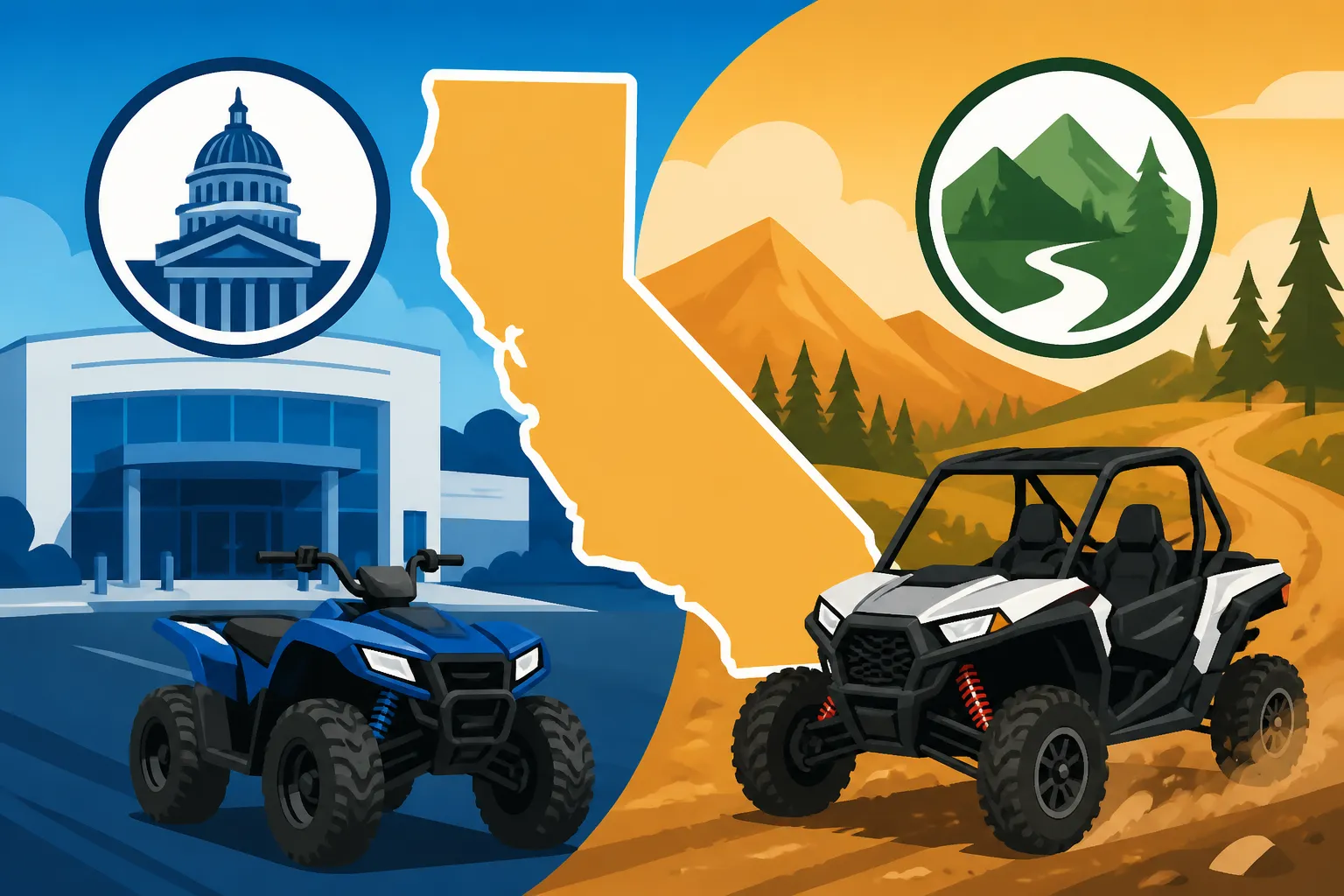
The California DMV and the OHMVR Division
You've just bought your dream ATV or UTV, or maybe you're finally getting around to registering that dusty quad in the back of your garage. Your first thought? The DMV, right? You head over, paperwork in hand, expecting a straightforward process, only to be met with a confusing array of stickers, fees, and questions that leave you wondering if you're even at the right place. It's a common frustration for many California OHV enthusiasts, and it stems from a fundamental misunderstanding of how the California Department of Motor Vehicles (DMV) and the Off-Highway Motor Vehicle Recreation (OHMVR) Division work together, and sometimes, separately. This guide will unravel that tangled thread, explaining each agency's role and how to navigate the system so you can spend less time scratching your head and more time hitting the trails.
Understanding the California DMV's Role in OHV Registration
When it comes to the administrative nuts and bolts of getting your off-highway vehicle (OHV) officially recognized in California, the DMV is indeed your primary point of contact. They are the gatekeepers for all things related to titles, plates, and the initial collection of registration fees. Think of them as the record-keepers and document issuers for your machine. Without their stamp of approval, your OHV isn't legally identified for public land use in California, no matter how shiny it is.
The DMV as the Initial Point of Contact
For many of us, the DMV is the first place that comes to mind when we think about vehicle registration, and that instinct isn't entirely wrong for OHVs. You'll likely find yourself at a local DMV field office, or at least on their website, to begin the registration process. This is where you bring your proof of ownership, your application, and get ready to pay the necessary fees. The DMV is set up to handle the initial intake and processing of your vehicle's identification, which is a crucial first step before you even think about hitting the sand or dirt. They're focused on ensuring your vehicle is properly documented and that the correct fees are collected and routed.
However, this is also where the confusion often begins. DMV staff are experts in processing paperwork and managing vehicle records, but they aren't necessarily off-road riding enthusiasts or experts on specific trail rules. Asking them about the nuances of a Red Sticker riding schedule or which trails are open for a Tan Sticker machine might lead to blank stares or, worse, incorrect information. Their role is to register the vehicle and provide the necessary identification, not to interpret the complex rules of OHV recreation. It's like asking a librarian for medical advice—they can help you find books on the topic, but they aren't doctors. To streamline your visit, it’s always a good idea to have your [California OHV Registration Paperwork Checklist] completed before you walk through their doors.
Processing Your Registration Paperwork and Fees
The DMV's core function in the OHV world is to process your registration paperwork and collect the associated fees. This typically involves submitting a completed application form, like the famous REG 343, which serves as your declaration of ownership and request for registration. You'll also need to provide proof of ownership, such as a manufacturer's certificate of origin (MCO) for a new machine, or a signed-off title and bill of sale for a used one. The DMV then reviews these documents to ensure everything is in order and that the vehicle legally belongs to you.
Once your paperwork is approved, you'll pay a series of fees. These usually include the base biennial registration fee, plus additional charges like the California Highway Patrol (CHP) fee and any applicable local fees. These fees are not just random numbers; they are specifically earmarked to support various aspects of OHV recreation and enforcement throughout the state. While the DMV collects these funds, a significant portion is then channeled directly to the OHMVR Division, which uses them to manage trails and SVRAs. It's important to understand that if you delay this process, you might incur penalties. Just like with street-legal vehicles, there are [California OHV Late Registration Penalty] fees if you miss the renewal deadline, and transfer penalties if you don't title a newly acquired machine promptly. For a full breakdown of the costs involved, it helps to understand [California's $54 OHV Registration Fee Broken Down] and what each line item contributes to.
Issuing Your Identification Plate and Title
Perhaps the most tangible output of your DMV visit for an OHV is the issuance of your physical identification plate and, for most machines, a Certificate of Title. Unlike street-legal vehicles that get a license plate and yearly stickers, OHVs in California receive a small, permanent ID plate that is bolted to the vehicle, typically on the rear fender or frame. This plate displays a unique identification number, along with the all-important color-coded sticker (Green, Red, or Tan) that dictates when and where your OHV can be ridden. Without this plate and sticker, your machine is not legally identified for use on public lands within California.
The Certificate of Title is another critical document issued by the DMV. This piece of paper is the official proof of legal ownership for your OHV. It contains details about your vehicle, such as the VIN, make, model, and the owner's information. It's essential to keep this document safe, as it's required for selling your OHV, proving ownership in case of theft, or making any significant changes to its registration. Just as with a car, having your name properly listed on the title is paramount. If you're wondering about this crucial document, you might find more information in our article on [California Issues a Certificate of Title] and understanding [Why the OHV Title Should Be in Your Name]. This title, much like your house deed, is the definitive proof that the machine is yours, and without it, you can run into significant headaches down the line.
Introducing the OHMVR Division: What They Are and What They Do
While the DMV handles the paperwork and the initial legal identification of your OHV, the California Off-Highway Motor Vehicle Recreation (OHMVR) Division is the heart and soul of off-roading in the Golden State. Part of California State Parks, the OHMVR Division is dedicated to providing quality OHV recreation opportunities while also protecting the state's natural and cultural resources. They are the agency that truly understands the trails, the environmental impact, and the complex ecosystem of off-road enthusiasts.
The OHMVR Division's Mission and Structure
The OHMVR Division's mission is multi-faceted: to facilitate sustainable OHV recreation, manage the State Vehicular Recreation Areas (SVRAs), and administer a comprehensive grant program that supports OHV opportunities across the state. Unlike the DMV, which is a broad agency handling all types of vehicles, the OHMVR Division is hyper-focused solely on off-highway motor vehicles. This specialization means they are the experts in everything from trail design and maintenance to environmental mitigation and rider safety education. They work closely with federal, state, and local agencies, as well as private organizations, to ensure that California continues to offer diverse and responsible OHV experiences.
The structure of the OHMVR Division is geared towards this mission. They have staff dedicated to land management, environmental scientists, law enforcement rangers, and grant administrators. This specialized team ensures that decisions about OHV use are made with a deep understanding of the unique challenges and opportunities presented by off-road recreation. Their offices are often located near or within the SVRAs themselves, putting them right where the action is. If you've ever wondered about the nuts and bolts of how California supports its vast network of trails and riding areas, you'll find the answer in [What the OHMVR Division Actually Does]. They are the custodians of our riding lands, working to balance access with preservation.
Funding and OHV Grant Programs
One of the most vital functions of the OHMVR Division is its role in managing the significant funds generated by OHV registration fees and fuel taxes. When you pay your OHV registration fees to the DMV, a substantial portion of that money doesn't just disappear into a general state fund. Instead, it's channeled directly into the OHMVR Division's Trust Fund. This fund is then strategically allocated to various programs and projects aimed at enhancing and sustaining OHV recreation across California. It's a closed system, meaning the money collected from OHV users goes back into OHV-related initiatives.
A key way the OHMVR Division uses these funds is through its robust OHV Grants Program. This program provides financial assistance to federal, state, and local agencies, as well as qualified private organizations, for projects that directly benefit the OHV community. These grants cover a wide range of activities, including trail development and maintenance, law enforcement patrols in riding areas, rider education and safety programs, and vital environmental conservation efforts. For instance, grant money might fund new signage at an OHV park, purchase equipment for trail grooming, or support educational campaigns on safe riding practices. Understanding [What California OHV Fees Pay For] sheds light on how your registration dollars directly contribute to the future of off-roading in the state, ensuring that the trails we love remain open and well-maintained.
Managing State Vehicular Recreation Areas (SVRAs)
The crown jewels of California's OHV system are its State Vehicular Recreation Areas (SVRAs), and these are directly managed by the OHMVR Division. California boasts a network of nine SVRAs, each offering a unique riding experience, from the vast sand dunes of Oceano Dunes to the challenging trails of Hungry Valley and Hollister Hills. These SVRAs are purpose-built and managed lands dedicated to off-highway recreation, providing designated trails, camping facilities, and staging areas for riders of all skill levels and vehicle types.
Managing these SVRAs involves a tremendous amount of work, including trail design, maintenance, safety enforcement, and environmental monitoring. OHMVR rangers are present in these areas to assist riders, enforce rules, and ensure the safety of visitors. They are the frontline experts, intimately familiar with the terrain, the local wildlife, and the specific regulations that apply to each park. Their responsibilities also extend to habitat restoration, dust control, and ensuring compliance with environmental regulations within the SVRAs. If you plan to visit any of these premier riding spots, like Oceano Dunes, Glamis, or Ocotillo Wells, it's the OHMVR Division's guidelines you'll be following. Knowing about [California's State Vehicular Recreation Areas] is key to planning your next adventure, as these are the places specifically set aside for us to enjoy.
The Interplay: How DMV and OHMVR Work Together (and Sometimes Cause Confusion)
It's clear that both the DMV and the OHMVR Division play crucial roles in the California OHV landscape. One handles the legal registration and titling, while the other manages the recreation itself. The challenge, and often the source of frustration, arises when these two distinct functions overlap or are misunderstood by the general public. It's like having a car manufacturer and a road maintenance department – both are essential for driving, but they do very different things.
Shared Data, Separate Functions
At the core of their interaction is a system of shared data but entirely separate functions. The DMV acts as the initial data collector and document issuer. They record your OHV's VIN, your ownership details, and collect the fees. This information is then shared with the OHMVR Division. The OHMVR Division, in turn, provides the DMV with the criteria for issuing the different colored stickers – Green, Red, and Tan – based on vehicle type, model year, and emissions compliance. These stickers are ultimately affixed to the ID plates issued by the DMV, making them the visual representation of OHMVR's rules.
However, the DMV's role largely ends once the plate and title are issued. They are not responsible for enforcing riding regulations or interpreting the meaning behind the stickers they've issued. That responsibility falls squarely on the OHMVR Division and other land management agencies (like the Bureau of Land Management or U.S. Forest Service) whose rangers and law enforcement personnel patrol the riding areas. They use the information on your sticker to determine if your machine is compliant with the specific rules of that particular riding area or season. Understanding the specific differences between [Green, Red and Tan: California's Three Stickers] is critical for any rider, as these stickers dictate where and when you can legally ride in California. Without this understanding, you could inadvertently violate a rule.
Why You Can't "Just Ask the DMV" About Riding Rules
This distinction is why you often hear the advice, "Don't ask the DMV about riding rules!" While DMV employees are generally helpful and knowledgeable about their specific tasks, their expertise does not extend to the ever-evolving regulations of OHV recreation. Their training focuses on processing applications, verifying ownership, and collecting fees for a vast array of vehicle types, not on the seasonal closures of specific SVRAs or the eligibility of a specific model year for a certain sticker type. They are clerks, not trail wardens.
Imagine asking your local post office clerk about the best way to cross the Mojave Desert in a UTV. They might give you a kind smile, but they won't have the specialized knowledge to advise you on routes, permits, or safety gear. Similarly, asking a DMV representative about whether your Red Sticker machine can ride year-round in a particular area might lead to frustration for both of you. For these specific, recreation-focused questions, you need to consult the OHMVR Division's website, individual SVRA pages, or even contact a ranger directly. Our article, [Red Stickers and What Changed in California], is a prime example of the kind of detailed information that falls within the OHMVR's purview, not the DMV's. These are dynamic rules, constantly being updated to protect resources and ensure public safety.
The Crucial Link: Stickers and Enforcement
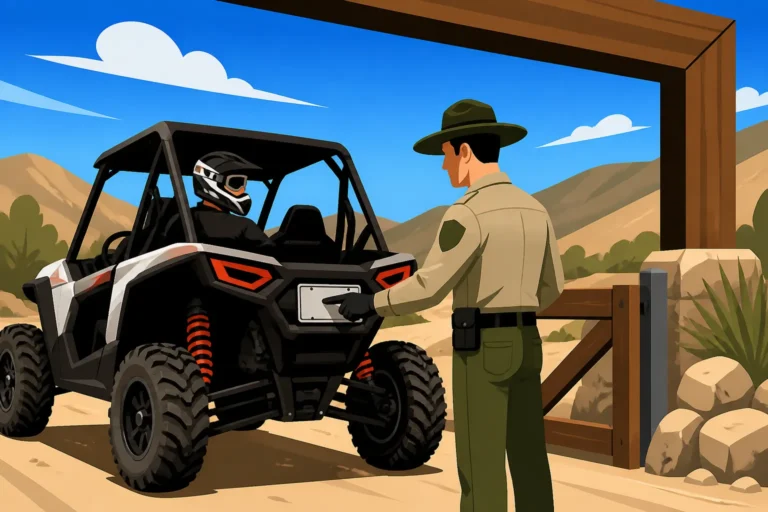
The little colored sticker on your OHV's identification plate is the crucial link between the administrative process handled by the DMV and the recreational rules set and enforced by the OHMVR Division. When a ranger at a gate, or out on a trail, checks your OHV, they aren't looking to see if your paperwork was processed correctly by the DMV. Instead, they're looking at that sticker. The color of the sticker (Green, Red, or Tan), along with the year displayed on it, immediately tells them what rules apply to your machine for that location and time.
For instance, if you're pulling into the gate at Ocotillo Wells, rangers will be performing [Sticker Checks at Ocotillo Wells] to ensure that your OHV has a valid California identification. If you have a Green Sticker, you generally have year-round access to most OHV public lands. A Red Sticker, however, has seasonal restrictions in many areas, meaning you might be turned away during certain months. The Tan Sticker is even more specialized, typically for specific sanctioned events. This visual cue is quick and efficient for enforcement, allowing rangers to ensure compliance without needing to delve into your full registration history. Therefore, while the DMV provides the physical identification, it's the OHMVR Division's rules, represented by that sticker, that truly govern your riding privileges on public lands.
Navigating the System for a Smooth OHV Experience
Understanding the distinct roles of the DMV and the OHMVR Division is the first step toward a hassle-free OHV experience in California. It allows you to direct your questions and efforts to the right place, saving you time and preventing frustration. By knowing who does what, you can prepare effectively for registration and confidently plan your rides.
Where to Go for What Information
To simplify things, think of it this way:
- For anything related to legal ownership, registration fees, vehicle titles, ID plates, or transferring ownership: Your go-to is the California DMV. This includes applying for a new registration, renewing an existing one, replacing a lost title or ID plate, or transferring ownership when buying or selling an OHV. These are the administrative and legal aspects of your machine's identity.
- For anything related to where you can ride, when you can ride, specific trail rules, noise regulations, spark arrester requirements, safety courses, or permits for State Vehicular Recreation Areas (SVRAs) and other public lands: Your resource is the California OHMVR Division (often via the California State Parks website) or the specific land management agency (e.g., BLM, Forest Service) that manages your intended riding area. This is where you'll find information about Green, Red, and Tan Sticker rules, seasonal closures, grant programs, and how your OHV fees are put to use.
Always cross-reference information if you're unsure, especially if you get conflicting advice. A call to the local SVRA office can clear up specific riding rules far more effectively than a general DMV line. This dual approach ensures you have both your legal documentation in order and a clear understanding of the rules of the trail.
Preparing Your Paperwork for the DMV
Going to the DMV, even for an OHV, can feel like a daunting task. However, being prepared with all the necessary documents can make the process significantly smoother. You'll need proof of ownership, which could be a Manufacturer's Certificate of Origin (MCO) for a new machine, or a properly endorsed title and a bill of sale for a used one. If you're buying a used machine from a private seller, having a clear and comprehensive bill of sale is critical. This is where resources like LawDepot can be incredibly helpful. You can find robust templates for a bill of sale on LawDepot that cover all the necessary information, ensuring you don't miss any vital details that could hold up your registration.
In addition to proof of ownership, you'll generally need a completed application for Title or Registration (Form REG 343) and potentially a Vehicle Verification form (REG 31), which might require a certified vehicle verifier to inspect your OHV's VIN and other details. Having all these forms filled out accurately and completely before you arrive at the DMV will save you immense time and headaches. For example, understanding [What California's Form REG 343 Asks For] in advance means less time fumbling at the counter. Remember, making an [California OHV Registration Appointment at the DMV] is often a wise move, allowing you to bypass long wait times and potentially get quicker service for your prepared paperwork.
Understanding Your Sticker Type and Its Implications
The colored sticker on your OHV's ID plate is more than just a decorative decal; it's a critical indicator of your machine's compliance with California's emissions standards and, consequently, its legal riding access. The sticker color determines when and where your OHV can be ridden on public lands managed by the OHMVR Division and other state/federal agencies.
- Green Sticker: This is the most flexible sticker. Generally issued to OHVs that meet California's stringent emission standards, it allows year-round riding access in all OHV recreation areas throughout the state. If you have a Green Sticker, you typically have the broadest access. For dirt bike riders, understanding [California Green Sticker for a Dirt Bike] is a common query.
- Red Sticker: This sticker is issued to OHVs that do not meet California's emission standards (often older two-stroke models or certain newer four-strokes not certified for sale in California). Red Sticker machines have seasonal restrictions, meaning they can only be ridden during specific times of the year, typically during the cooler, wetter months, in designated Red Sticker areas. These rules are in place to reduce emissions during peak ozone season. Our guide on [California Red Sticker Rules Today] explains the current regulations in detail.
- Tan Sticker: This is a special-use sticker issued to OHVs that are used solely for sanctioned competitive events, such as races or rallies, and never for general recreation on public lands. These machines are often highly modified and do not need to meet standard emission requirements, as their use is limited to controlled environments. You won't see many recreational riders with these.
Before heading out, always double-check the OHMVR Division's website or the specific SVRA/land management agency's page for the latest information on seasonal closures, weather-related restrictions, and any changes to sticker rules. This proactive approach ensures you're always in compliance and avoids potential fines or disappointment at the trail entrance.
Common Frustrations and How to Overcome Them
Despite the best intentions, navigating the California OHV registration and recreation system can still lead to some common frustrations. From conflicting information to paperwork headaches, many riders face similar challenges. Recognizing these pain points is the first step toward overcoming them and ensuring a smoother experience.
The "DMV Told Me Something Else" Scenario
This is perhaps the most common and exasperating frustration for OHV enthusiasts in California. You visit the DMV, ask a question about riding rules or sticker eligibility, and receive an answer. Then, you go to an SVRA or check the OHMVR website, and you find completely different information. The conflicting advice leaves you confused, frustrated, and sometimes even in violation of a rule you thought you understood. This usually happens because, as we discussed, DMV staff are trained in vehicle registration, not OHV recreation policy. Their information might be outdated, generalized, or simply not applicable to the specific nuances of OHV use.
To overcome this, remember the distinct roles: DMV for paperwork and legal identification, OHMVR for riding rules and land management. If you have a question about where your Red Sticker can ride or if a particular trail is open, bypass the DMV entirely. Go directly to the OHMVR Division's website, look up the specific SVRA or BLM field office you plan to visit, or even call their ranger station. They are the authoritative source for recreation-specific information. If you're still getting conflicting info, ask who told them the information – often, it's a matter of one agency receiving outdated guidance from another. Trust the direct source for recreational matters.
Tackling Paperwork Headaches
Paperwork can be a significant barrier to entry or renewal for many OHV owners. Whether it's tracking down an old title, getting a vehicle verified, or simply filling out the correct forms, the process can feel overwhelming. Missing a single signature or an obscure piece of information can lead to multiple trips to the DMV or delays in getting your machine registered. This is where organization and utilizing available resources become key.
First, always start with the official DMV website to download the latest forms and review their instructions. Don't rely on old photocopies or advice from forums, as requirements can change. Second, if you're dealing with a private party sale, ensure you have a robust bill of sale. LawDepot is an excellent resource for generating comprehensive legal documents like a bill of sale, which can prevent disputes later and provide the DMV with all the necessary transaction details. It’s also crucial to have your [California Vehicle Verification on Form REG 31] done correctly, as an incomplete verification can halt your registration process. Finally, keep copies of everything! A digital backup of your forms, titles, and registration receipts can be a lifesaver if anything goes missing. Using a trusted platform like LawDepot can also help ensure all your legal bases are covered, making the entire paperwork journey less stressful.
Staying Up-to-Date on Riding Rules
One of the most dynamic aspects of OHV recreation in California is the ever-changing nature of riding rules, trail closures, and permit requirements. What was open last month might be closed today due to weather, fire danger, environmental concerns, or ongoing maintenance. Relying on old memories or word-of-mouth can lead to fines, disappointment, or even dangerous situations. Keeping current with these regulations is essential for responsible riding.
Make it a habit to check the OHMVR Division's website and the specific land management agency websites (e.g., California State Parks SVRA pages, BLM California, US Forest Service) before every trip. Many SVRAs have dedicated pages with real-time updates on conditions, closures, and any special alerts. Subscribing to email newsletters from your favorite riding areas or following their social media channels can also provide timely updates. Remember, rangers are out there enforcing these rules, and ignorance is rarely accepted as an excuse. This proactive approach isn't just about avoiding tickets; it's about ensuring a safe, enjoyable, and environmentally responsible riding experience for everyone. A good resource for ensuring your personal legal documents are in order, should you need them for any permits or declarations, might also be a service like LawDepot, which provides access to various legal templates.
DMV vs. OHMVR: A Quick Comparison
To help clarify the roles, here's a quick summary of who handles what:
| Feature/Responsibility | California DMV (Department of Motor Vehicles) | California OHMVR Division (Off-Highway Motor Vehicle Recreation) |
|---|---|---|
| Primary Function | Vehicle registration, titling, ID plates | OHV recreation management, trail maintenance, safety, grants |
| Key Documents Issued | Certificate of Title, ID Plate with Sticker | N/A (they set rules for stickers issued by DMV) |
| Fees Collected | All OHV registration and transfer fees | N/A (they receive funds from DMV-collected fees) |
| Information Expertise | Legal ownership, registration processes | Riding rules, trail conditions, environmental regulations, SVRAs |
| Enforcement Role | N/A (focus on administrative compliance) | OHV law enforcement (rangers) on public lands |
| Public Contact Point | Field offices, website for registration/title | SVRA offices, State Parks website, local ranger stations |
| Main Goal | Accurate vehicle record-keeping | Sustainable OHV recreation, resource protection |
Disclaimer
This article is for general informational purposes only and does not constitute professional advice. Laws, prices and regulations vary by location and change over time. Consult a qualified professional for guidance on your specific situation.