Renewing California OHV Registration
Ah, the annual (or rather, biennial, thankfully!) dance with the California DMV for our beloved ATVs and UTVs. It’s a rite of passage for every off-road enthusiast in the Golden State, often met with a groan as you try to remember due dates, decipher official notices, and just generally navigate the bureaucracy. We all want to keep our machines legal and ready for the next adventure without the headache. This guide is designed to cut through the confusion and give you a clear, step-by-step path to smoothly renewing your California OHV registration, ensuring your ride is always ready for the trails.
Understanding Your California OHV Registration Renewal Notice
That little piece of paper that arrives in the mail, or perhaps an email if you've gone paperless, is your official reminder that it's time to re-up your OHV's registration. It might look a bit daunting with all its codes and numbers, but it’s actually your best friend in streamlining the renewal process. Ignoring it or tossing it aside in a pile of junk mail can lead to unnecessary stress and, let’s be honest, avoidable late fees that nobody wants to pay. Think of it as your golden ticket to continued legal riding fun.
What the Renewal Notice Tells You
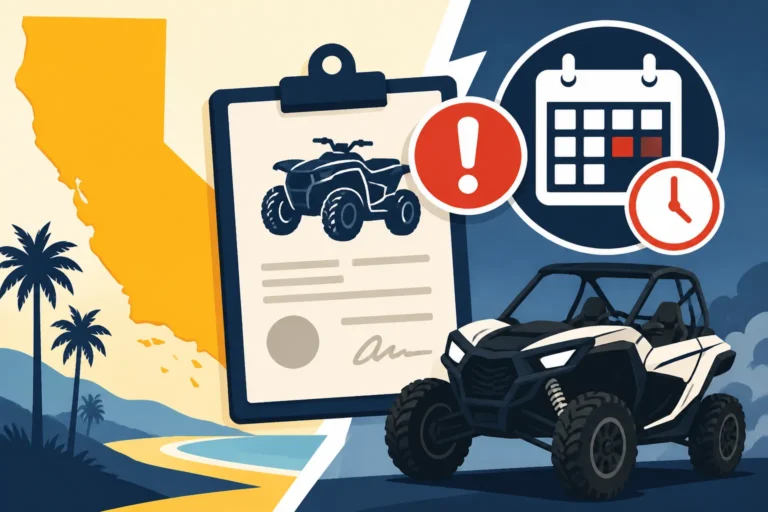
Your renewal notice contains all the critical information you need to renew your OHV’s registration. It will clearly display your current identification (ID) plate number, which is unique to your machine, along with the specific due date for your renewal. You’ll also find a breakdown of the fees you owe, which can sometimes look like a confusing jumble of acronyms and numbers. It's essentially a pre-filled form that takes much of the guesswork out of what you need to submit. Always double-check that the vehicle information listed on the notice matches your OHV to avoid any future mix-ups. This notice also usually includes a renewal ID or access code, which is particularly important if you plan to [Renewing a California Green Sticker Online].
Decoding the Fees and Dates on Your Notice
The fee section on your renewal notice is where many riders scratch their heads. It typically includes the base biennial registration fee, plus a few additional charges like the always-present [The $10 CHP Fee on a California OHV]. These fees contribute to the overall funding of OHV parks and programs, so while paying them might feel like a chore, you're actually supporting the very places you love to ride. The expiration date, which for most California OHVs is June 30th, is prominently displayed. It's crucial to understand that even if you registered your machine midway through a cycle, your expiration will align with this universal date, as California does not prorate OHV registration fees. [Why California Will Not Prorate Your Fee] explains this in more detail. Make sure you mark this date on your calendar, set a reminder on your phone, or stick the notice on your fridge—whatever it takes to ensure you don't miss it.
What to Do If You Don't Receive a Notice
Life happens, and sometimes that all-important renewal notice just doesn't make it to your mailbox. Maybe it got lost in the shuffle, redirected to an old address, or perhaps the postal service just had an off day. Don't panic! Not receiving a notice does not exempt you from the responsibility of renewing your registration on time. The onus is always on the owner to ensure their OHV remains legally registered. If June is approaching and your notice hasn't shown up, you can still proceed with renewal. You'll typically need your ID plate number or VIN (Vehicle Identification Number) to start the process. You can often check your registration status online or simply visit a DMV field office or a qualified third-party vendor to get the necessary information and complete your renewal. Having good records, perhaps organized with a service like LawDepot for all your important documents, can make this process smoother.
The California OHV Registration Renewal Timeline
Understanding the rhythm of California's OHV registration cycle is key to avoiding penalties and keeping your machine ready to roll. It's not a yearly thing like your car registration, which is a small mercy, but it does have its own specific cadence that's important to grasp. Once you understand the pattern, it becomes much easier to stay on top of things and avoid that last-minute rush.
California's Two-Year Registration Cycle
Unlike annual vehicle registrations, California OHVs operate on a biennial, or two-year, registration cycle. This means you only need to renew your sticker and ID plate every other year. This longer cycle offers a bit of convenience, reducing the frequency of administrative tasks. However, it also means it's easier to forget when that renewal is actually due, especially if you're not riding as frequently as you used to. Your ID plate and sticker will display the two-year validity, so you can always check them to see when your current period expires. It's a system designed to be less burdensome for riders, but it still requires a bit of attention to detail to ensure you don't miss that critical June 30th deadline. For more details on this cycle, check out [California OHV Registration Two-Year Cycle].
Why June 30th Is the Universal Expiration Date
One of the unique aspects of California OHV registration is the universal expiration date: June 30th. Regardless of when you initially registered your OHV, or at what point within the two-year cycle you paid your fees, your registration will always expire on June 30th. This date was established to simplify the system for the state, creating a single annual cutoff point for all OHV renewals. It means that if you bought a machine in, say, September, your first registration might only be valid for a little over a year and a half before hitting that June 30th mark. This isn't a mistake; it's simply how the system works. It's a fixed point in time that every OHV owner needs to remember, allowing you to plan your renewal well in advance and avoid the rush. We have a whole article dedicated to [California's June 30 Expiration] if you want to dive deeper into why this date is so important.
Understanding Proration and Why California Doesn't Do It
Given that fixed June 30th expiration date, many new OHV owners or those registering a machine mid-cycle often wonder about proration. They might think, "If I register my quad in January, why do I have to renew it by the following June 30th, just 18 months later, and pay the full two-year fee?" This is where California's system can feel a bit counter-intuitive. The simple answer is that California does not prorate OHV registration fees. You pay the full [California's Biennial OHV Registration Fee] regardless of how many months are left until the next June 30th. The fee covers the period up to the next universal expiration date, rather than a full two-year period from your registration date. While it might seem a little unfair at first glance, it’s a policy designed to streamline administration for the state. This means it's always worth considering the timing if you're buying a new machine in the spring; you might pay the full fee only to renew again a few months later. For a full explanation, see [Why California Will Not Prorate Your Fee].
Methods for Renewing Your California OHV Registration
When it comes to renewing your OHV registration in California, you've got a few options at your disposal. The DMV understands that people have different preferences and schedules, so they've tried to provide various avenues to get the job done. Each method has its own set of pros and cons, from the convenience of online renewals to the assurance of in-person assistance. Choosing the right one for you often depends on your comfort level with technology, how complex your situation is, and how much time you have before that dreaded June 30th deadline.
Renewing Your Green Sticker Online
For many riders, the most convenient way to renew their California OHV registration is online. If your machine holds a [California Green Sticker Explained], and your registration is straightforward (no overdue penalties, no changes to ownership, etc.), you can often complete the entire process from the comfort of your home. The online portal is usually accessible 24/7, making it ideal for those with busy schedules. You'll need your ID plate number and the renewal access code from your notice. Once you've entered the information and paid your fees with a credit or debit card, you'll typically receive an immediate confirmation. Your new stickers and ID plate will then be mailed to you. It's a fantastic option for simplicity and speed, cutting out the need for a trip to the DMV. You can find more specific guidance in our post on [Renewing a California Green Sticker Online].
Renewing by Mail: The Traditional Route
If you prefer a more traditional approach, or if you're uncomfortable with online transactions, renewing by mail is still a perfectly viable option. Your renewal notice typically includes a return envelope and instructions for mailing. You'll need to fill out any necessary information on the notice, attach a check or money order for the total amount due, and send it off to the address provided. This method is often preferred by those who like to keep a paper trail and aren't in a huge rush. However, be mindful of processing times; mail renewals can take a few weeks to process, and during peak periods (like just before June 30th), it can take even longer. Always send your mail renewal well in advance of the deadline to ensure it's received and processed on time. Our article [Renewing Without Going to a Field Office] also touches on this convenient method.
Renewing in Person at a DMV Field Office
For those situations that are a bit more complex, or if you simply prefer face-to-face interaction and immediate processing, visiting a California DMV field office is your best bet. This is particularly useful if you have outstanding issues, need to make changes to your address, or are dealing with a lost renewal notice or ID plate. While it might involve making an appointment and potentially waiting, the benefit is that you can get all your questions answered and issues resolved on the spot. Make sure to bring all relevant documents, including your renewal notice (if you have it), your current ID plate number, and personal identification. Having a copy of a bill of sale or other proof of ownership is also wise, just in case. Visiting a field office can feel like a chore, but sometimes it's the most efficient way to handle specific problems. For tips on how to prepare for this, check out [Taking an OHV to a California DMV Field Office].
Third-Party Options for Renewal
Beyond the official DMV channels, you might also find third-party vendors, often licensed registration services or auto clubs, that can assist with OHV renewals. These services sometimes offer extended hours, shorter wait times, and a more personalized experience, though they usually charge an additional service fee for their convenience. For some riders, the extra cost is well worth it to avoid the hassle of the DMV. These vendors can often handle standard renewals, but for more complex issues, they might still direct you to a full-service DMV field office. Always ensure that any third-party service you use is legitimate and licensed to handle California OHV transactions. They can be a lifesaver when you’re short on time or just dreading the DMV experience.
| Method | Pros | Cons | Key Steps |
|---|---|---|---|
| Online | Convenient, 24/7 access, immediate confirmation | Not all machines eligible, potential website glitches | 1. Visit DMV website. 2. Enter ID/Plate number. 3. Pay fees. |
| No appointment needed, simple for basic renewals | Slower processing, risk of mail loss, no immediate proof | 1. Fill out form REG 343. 2. Attach check/money order. 3. Mail to DMV. | |
| In-Person | Immediate processing, help with complex issues | Requires appointment, wait times, travel to field office | 1. Schedule appointment. 2. Gather documents. 3. Visit DMV. 4. Pay fees. |
| Third-Party | Convenience, shorter waits, personalized service | Additional fees, may not handle complex issues, verify legitimacy | 1. Find licensed provider. 2. Bring documents. 3. Pay fees + service fee. |
Common Fees Associated with OHV Registration Renewal
Let's talk about money. Nobody loves paying fees, but understanding what you're paying for can make it a little less painful. The fees associated with renewing your California OHV registration are not just random charges; they directly contribute to the maintenance, development, and safety of the state's OHV program. Knowing the breakdown can help you budget and also understand the value these fees provide to the riding community.
The Standard Renewal Fee Breakdown
The core of your renewal cost is the [California OHV Registration Cost]. This fee, usually around $54 for a two-year period, is actually composed of several smaller charges. The bulk of it goes to the Off-Highway Motor Vehicle Recreation (OHMVR) Division, which manages the state's OHV parks and grant programs. This money helps fund everything from trail maintenance and facility improvements to safety education and law enforcement in riding areas. Additionally, a portion is allocated to local agencies that manage OHV opportunities within their jurisdictions. While the exact figures can fluctuate, the purpose remains consistent: to support the very infrastructure that allows us to enjoy our sport. You can think of it as your direct contribution to keeping California's trails and dunes open and in good condition.
Understanding the $10 CHP Fee
Another consistent line item on your renewal notice is the $10 California Highway Patrol (CHP) fee. This might raise a few eyebrows – what does the CHP have to do with off-road riding? Well, the CHP plays a crucial role in OHV safety and enforcement, particularly on roads and in areas where OHVs might interact with conventional traffic. This fee supports their efforts in enforcing OHV laws, providing public safety services, and responding to incidents within or near designated OHV areas. It's a small but vital contribution to ensuring safety, not just for OHV riders, but for everyone who shares the roads and public lands in California. So, while it's not directly funding a new trail, it's certainly contributing to a safer riding environment. For a deeper dive into this specific charge, check out [The $10 CHP Fee on a California OHV].
The Painful California OHV Late Registration Penalty
Here's the fee nobody wants to pay: the late penalty. California takes its registration deadlines seriously, and missing that June 30th date can cost you. The penalty for late OHV registration is generally 50 percent of the renewal fee. Yes, you read that right – 50 percent! So, if your standard renewal fee is $54, you could be looking at an additional $27 on top of that. This can quickly turn a manageable renewal into an expensive oversight. It’s definitely a strong motivator to get your renewal in on time. The DMV is pretty strict about these penalties; there's usually no grace period or sympathetic waiver. The best way to avoid this sting is to get ahead of the deadline. Our post [California's 50 Percent Late Fee on OHV Registration] lays out the details of this costly penalty, offering a clear picture of what you stand to lose by being tardy.
Required Documents and Information for Renewal
Getting all your ducks in a row before you begin the renewal process can save you a significant amount of time and frustration. There’s nothing worse than getting halfway through a form or waiting in line at the DMV only to realize you’ve forgotten a crucial piece of information or a necessary document. Being prepared means a smooth, quick transaction, and getting back to planning your next adventure without delay.
What to Have Ready for a Smooth Process
The primary document you'll need for renewal is your official renewal notice. As discussed, this notice is pre-filled with your OHV's ID plate number, the expiration date, and the fees due. If you don't have the notice, don't worry, you can usually proceed with your OHV's ID plate number or VIN. You'll also need a valid form of payment, whether that's a credit card for online renewals, a check or money order for mail, or cash/card for in-person transactions. It's always a good idea to have your driver's license or another government-issued ID handy, especially for in-person visits, as proof of identity. Being organized and having everything in one place, perhaps with a secure document management system like those you might explore through LawDepot, will make the process stress-free.
Proof of Ownership and Identity
While typically not required for a standard renewal if you have your renewal notice, having proof of ownership on hand is always a good idea. This could be your Certificate of Title, a previous registration card, or a bill of sale from when you purchased the machine. It’s mainly for situations where there might be a discrepancy or if you’re renewing in person and need to verify details. As for identity, a current driver’s license or state-issued ID card is standard. For in-person transactions, the DMV or third-party vendor will ask for this to confirm you are the registered owner or an authorized agent. Think of these as backup documents that you might not need, but are invaluable if a question arises. Keeping these documents readily accessible in a safe place is a best practice for all vehicle owners.
Vehicle Information You'll Need
Beyond your ID plate number, having specific vehicle information on hand can be very helpful. This includes the VIN (Vehicle Identification Number), which is permanently stamped on your machine, typically on the frame. You might also need to confirm the make, model, and year of your OHV, though this information is usually pre-filled on your renewal notice. If you're using [What California's Form REG 343 Asks For] to renew by mail without a notice, you'll need to fill in all these details yourself. It’s also wise to know your current odometer reading, as sometimes that information is requested, though less common for OHV renewals than for on-road vehicles. A quick glance at your machine before you start the renewal process can ensure you have all these specifics memorized or written down.
Troubleshooting Common Renewal Issues
Even with the best intentions and preparation, sometimes things don't go exactly as planned during the OHV registration renewal process. You might encounter a hurdle, big or small, that leaves you scratching your head. But don't despair! Most common issues have straightforward solutions, and knowing what to do in advance can save you a lot of stress.
Lost or Missing Renewal Notice or ID Plate
One of the most frequent issues is a lost or simply unreceived renewal notice. As mentioned before, this isn't a showstopper. You can still renew using your OHV's ID plate number or VIN. If you're renewing online, you might need to select an option indicating you don't have the notice. For mail-in renewals, you'd fill out a blank form REG 343, providing all the vehicle details yourself. If it's your actual ID plate that's lost or damaged, that's a different scenario. You'll need to specifically request a replacement. This typically involves completing a form and paying a small fee. You definitely want to get that replaced because riding without a visible, valid ID plate can lead to citations. Our article on [Replacing a California ID Plate] goes into detail on how to handle this particular situation and what [What the ID Plate Looks Like] when it arrives.
Expired Registration: What to Expect and How to Fix It
So, you missed the June 30th deadline. It happens. The first thing to expect, unfortunately, is the late penalty. As we discussed, this can be a significant addition to your regular renewal fee. The good news is that you can still renew your registration even if it's expired. The process is generally the same as a regular renewal, but you'll need to include the late fees. If your registration has been expired for an extended period, say several years, you might need to provide additional documentation or potentially visit a DMV field office to ensure everything is in order. The key is to address it as soon as you realize it's expired to prevent further penalties or issues if you're ever stopped while riding. Ignoring it won't make it go away, and it will only get more complicated (and expensive) the longer you wait.
Changes to Your Address or Vehicle Information
Did you move? Did you make a significant modification to your OHV that changes its classification? These situations require updating your records with the DMV. For an address change, you can often do this online or by filling out a change of address form. It's crucial to keep your address current so you receive future renewal notices and other important correspondence. For changes to the vehicle itself, such as engine swaps that might affect its emissions status (though less common for renewals), you might need to visit a DMV field office. They can guide you through any necessary inspections or form submissions to accurately update your OHV's record. It's always better to be proactive and ensure your vehicle's information is accurate with the state, as incorrect data can lead to issues down the road.
Renewing a Machine You Just Bought (Transfer vs. Renewal)
This can be a point of confusion for new owners. If you recently purchased an OHV and its registration is due for renewal, you might be wondering if you just renew it or if there's a different process. The answer depends on whether the ownership transfer has already been completed. If you've already transferred the title into your name, and you're now the registered owner, then you would proceed with a standard renewal. However, if you haven't yet transferred ownership into your name, you typically need to complete the title transfer process first. The DMV usually wants the ownership established before a new registration period begins under your name. While you might be able to combine these steps at a DMV field office, it's generally best to think of them as two distinct transactions: transfer of ownership, then renewal of registration. Don't forget that California also has a [The $28 Transfer Penalty in California] if you delay the title transfer.
Special Considerations for Different Sticker Types
California's OHV system is famous (or infamous, depending on who you ask) for its colored stickers: Green, Red, and Tan. These stickers aren't just for aesthetics; they signify important distinctions about your machine's emissions compliance and, crucially, where and when you can legally ride. When it comes time to renew, the type of sticker your OHV displays will have specific implications, so it's important to understand these differences.
Renewing a Green Sticker Machine
The Green Sticker is the most desirable type for many riders in California. It signifies that your OHV meets California's stringent emission standards, allowing you to ride year-round in all designated OHV areas within the state. Renewing a Green Sticker machine is generally the most straightforward process, as these vehicles are considered fully compliant. As long as your machine continues to meet emissions requirements (which is assumed unless you've made illegal modifications), you'll simply follow the standard renewal procedures outlined earlier. You'll pay the [California Green Sticker Cost] as part of your overall renewal fee, and you're good to go. This typically involves the least amount of hassle, making Green Sticker machines very popular for their unrestricted access to California's diverse riding landscapes.
Renewing a Red Sticker: What You Need to Know
Red Sticker machines, historically, faced seasonal riding restrictions in certain areas due to their higher emissions levels compared to Green Sticker machines. [Red Stickers and What Changed in California] details the evolution of these rules. While some of the seasonal restrictions have eased or changed over time, especially for newer Red Sticker machines, the underlying emission classification remains. When renewing a Red Sticker, the process is largely the same as for a Green Sticker, in terms of forms and fees. However, it's critical for Red Sticker owners to stay informed about current riding regulations, as these machines may still face limitations on specific public lands or during certain times of the year. Always verify the rules for your intended riding area before heading out, even after your renewal is complete, to ensure you're compliant with local restrictions.
Renewing a Tan Sticker: Sanctioned Events and Beyond
The Tan Sticker is a newer addition to California's OHV identification system, specifically designed for competition machines. These are typically purpose-built racing vehicles that don't meet California's emissions standards for recreational riding. [California's Tan Sticker Machines] provides an in-depth look at their purpose. The Tan Sticker allows these machines to be registered and operated only during sanctioned competitive events on approved courses. You won't be taking a Tan Sticker machine out for a casual weekend trail ride. Renewing a Tan Sticker will involve the same forms and fees as other OHVs, but the key consideration is understanding the strict limitations on its use. If you have a Tan Sticker, renewing it ensures you can continue to participate in the competitive events you love, but it's not a ticket to broader recreational access. Always ensure your machine is only used for its designated purpose under the Tan Sticker regulations.
Why Staying Current Matters: Benefits of Timely Renewal
It’s easy to view OHV registration as just another bureaucratic hoop to jump through, another fee to pay. But in California, staying on top of your registration is more than just avoiding a penalty; it's about being a responsible rider, maintaining access to incredible places, and contributing to the health and future of the sport. The benefits extend far beyond a simple piece of paper or a sticker on your fender.
Avoiding Penalties and Fines
This is probably the most immediate and tangible benefit. Letting your registration expire opens you up to significant financial penalties. As discussed, California has a [California OHV Late Registration Penalty] that can add 50 percent to your renewal fee. Beyond that, if you're caught riding an unregistered OHV on public lands, you could face hefty fines from law enforcement, whether it's a park ranger, BLM officer, or CHP. These fines can quickly overshadow the cost of renewal itself. By renewing on time, you simply pay the standard fee and avoid any unpleasant surprises or citations while you're out enjoying the trails. It's a simple act that protects your wallet and your peace of mind.
Ensuring Legal Access to California Riding Areas
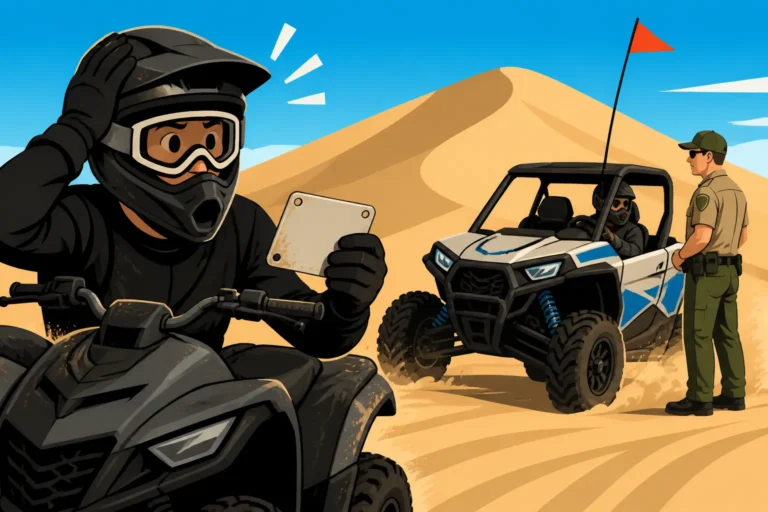
California boasts some of the most diverse and spectacular OHV riding areas in the country, from the vast dunes of Glamis to the rugged trails of the state SVRAs like Hungry Valley and Hollister Hills. However, access to these incredible places is contingent upon proper registration. Rangers and law enforcement routinely check for valid ID plates and current stickers at OHV park entrances, staging areas, and even out on the trails. If your registration is expired, you'll be turned away, or worse, cited. Timely renewal ensures you have legal access to all designated public OHV areas, allowing you to plan your trips without the worry of being denied entry. It's your ticket to continuing to explore California's off-road paradise.
Supporting OHV Parks and Programs
Perhaps the most important, yet often overlooked, benefit of renewing your OHV registration is your direct contribution to the OHV program itself. A significant portion of your registration fees, including the [California's $54 OHV Registration Fee Broken Down], goes directly to the California State Parks Off-Highway Motor Vehicle Recreation Division. This money is then used for a wide array of vital services: maintaining and improving existing OHV parks and trails, acquiring new riding areas, funding law enforcement patrols, providing safety and educational programs, and restoring land impacted by OHV use. Essentially, every time you renew, you're investing in the future of off-road riding in California, ensuring that these opportunities remain available for you and for generations to come. Without these funds, our beloved riding areas would quickly deteriorate or even close down. So, when you renew, know that you're playing a crucial part in sustaining the sport you love. Our guide [What the OHMVR Division Actually Does] provides more context on where these vital funds are allocated.
Disclaimer
This article is for general informational purposes only and does not constitute professional advice. Laws, prices and regulations vary by location and change over time. Consult a qualified professional for guidance on your specific situation.