Why an Arizona Rider Still Pays
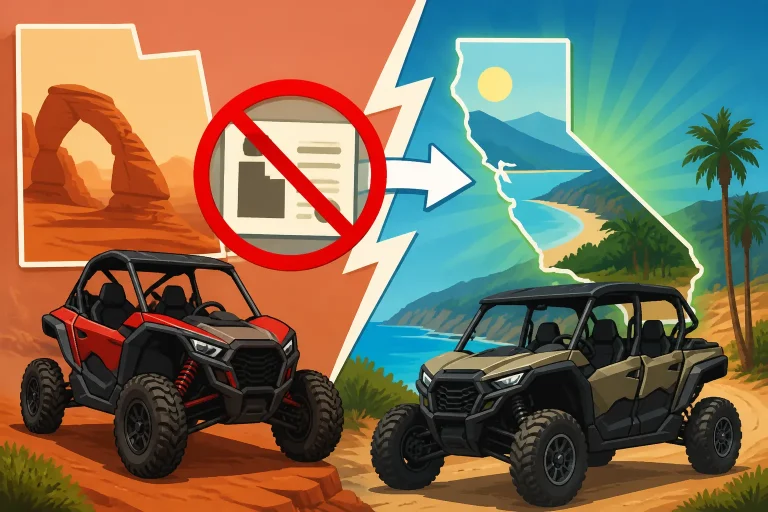
An Arizona plate can make an ATV or UTV look ready for a California ride, but it may not count as the off-highway registration California requires. The key issue is reciprocity: California expects Arizona OHV owners to buy a nonresident permit. Here’s why, what documents matter, and how to avoid arriving at a riding area without the right proof.
Why an Arizona rider still needs a permit
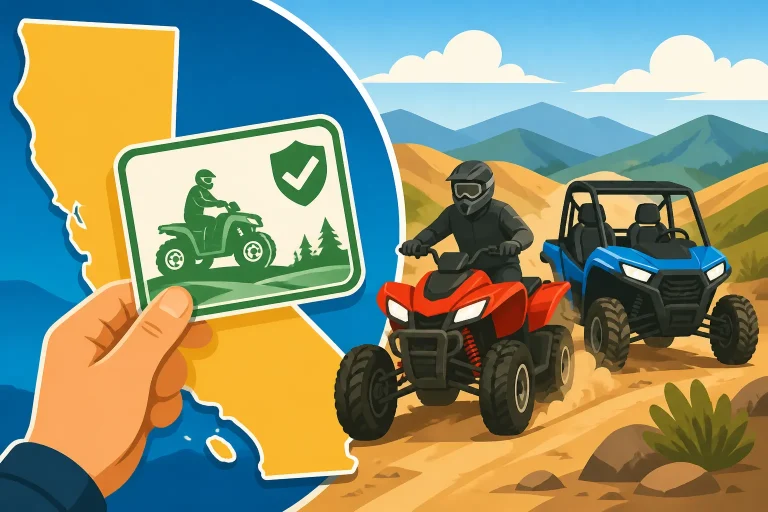
California’s nonresident OHV permit system is not a blanket acceptance of every out-of-state plate or registration. The state’s rule for Arizona riders is tied to reciprocity: Arizona requires visitors from California with valid OHV registration to buy an Arizona nonresident permit, so California requires Arizona OHV owners to buy a California Nonresident OHV Use Permit.
That means an Arizona resident should not assume that an Arizona title, license plate, or other vehicle document automatically gives permission to ride in California. The permit is the required step for Arizona OHV owners, even if the machine is otherwise properly documented at home. California State Parks’ Off-Highway Motor Vehicle Recreation Division administers the nonresident permit program.
The practical difference is that a California permit is a separate authorization for a nonresident rider’s OHV use. It is not the same thing as transferring the machine’s registration to California, and buying one does not mean the ATV or UTV has been registered as a California vehicle. For a broader explanation of who needs one, see California’s Nonresident OHV Use Permit and California OHV Permit for Out-of-State Riders.
California State Parks lists the required nonresident permit fee as $30 as of November 2026. Check the agency’s current instructions before setting out, since the amount and purchase process are details to confirm close to your trip. The permit fee is a cost separate from any Arizona registration or title-related charges you may already have paid.
A common point of confusion is that California has some reciprocity arrangements for out-of-state OHV credentials, but that does not mean every state’s documents qualify. Arizona’s rule is specifically reciprocal: its OHV owners still need the California permit. California OHV Reciprocity: Only Two States explains why reciprocity should be checked by state rather than assumed from the fact that a machine is registered elsewhere.
Why an Arizona plate may not count as OHV registration
Not all plates or vehicle documents show the same thing. The central question is whether you have current Arizona off-highway registration or an equivalent document that California accepts, not simply whether a plate is attached to the machine.
Arizona’s “RV” plate is a title-only document rather than an off-highway registration. A title can show who owns a vehicle, but it is not proof of current OHV registration. That distinction matters when a rider assumes a document that establishes ownership also establishes the right to operate off-highway. Likewise, a street-licensed OHV from Arizona still requires a California nonresident permit because California does not have a matching registration program for that situation. See Why an Arizona Registration Will Not Do in California for more on that distinction.
| What you have | What it shows | What an Arizona rider should do |
|---|---|---|
| Arizona OHV registration | The machine has an off-highway registration in Arizona | Do not assume it replaces California’s nonresident permit; Arizona OHV owners are required to buy the California permit |
| Arizona “RV” plate or title-only document | Ownership or title status, not off-highway registration | Treat it as insufficient proof of qualifying OHV registration and check the California permit requirement |
| Arizona street-legal plate | The vehicle has street-licensing documentation | Do not rely on it instead of a California nonresident permit |
| Valid out-of-state driver’s license | Helps establish that you are a nonresident | Carry it, along with the relevant OHV documents and permit |
The California DMV says nonresident OHV owners must carry a valid out-of-state driver’s license to establish residency. For a rider who wants to operate without a California permit, the DMV also calls for proof of current home-state OHV registration or its equivalent. But Arizona’s reciprocal rule still applies to Arizona OHV owners: having home-state paperwork does not remove the California permit requirement described for Arizona riders.
If you are unsure what an Arizona document proves, read the document’s description rather than relying on the plate’s appearance. A title, a registration card, and a road-use plate can have different purposes. When the document says “RV” or otherwise appears to be title-only, do not treat it as off-highway registration without confirmation. Does California Honor Arizona OHV Registration? and Why a Street-Legal Plate Does Not Substitute address these common assumptions.
Get the permit and display it as instructed
The simplest approach is to handle the permit before the trip, using the California State Parks instructions for nonresident OHV permits. Confirm the current purchase process and the directions for the specific machine you will ride. Avoid relying on a last-minute interpretation of an Arizona plate at a trailhead or riding-area entrance.
Use this checklist:
- Confirm the machine and your residency documents. Make sure you can identify the vehicle and show a valid out-of-state driver’s license to establish nonresident status. Keep the Arizona registration or other ownership paperwork with you as well.
- Get the California nonresident permit. Arizona OHV owners should plan to obtain it rather than treating an Arizona plate as a substitute. Check California State Parks’ current instructions for the purchase method and applicable permit details.
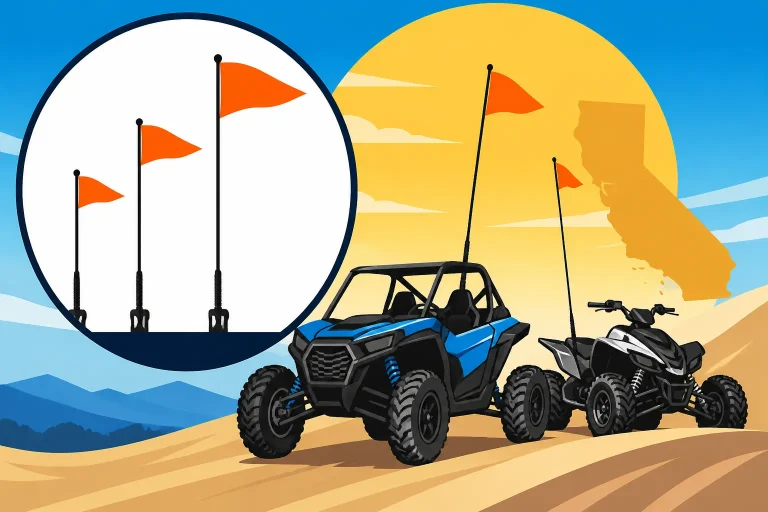
- Attach the permit where required. For an ATV, California State Parks says the nonresident permit must be affixed to the left rear quadrant on a permanent plastic or metal frame member, where it is visible to outside inspection. For a UTV or another machine type, follow the permit’s specific placement instructions rather than assuming the ATV placement rule is identical.
- Carry your paperwork. Keep the permit and supporting documents available while riding. A waterproof document pouch from a retailer such as Amazon can help keep paper records legible, but it does not replace the required permit or proper display.
- Recheck before you ride. Confirm the permit is still attached and readable, and that the documents you are carrying match the vehicle. If a sticker comes loose or is damaged, follow the issuing agency’s instructions for resolving it instead of improvising a new display location.
The permit’s display matters because staff need to be able to inspect it on the vehicle. A permit tucked away with your registration papers may be useful as a record, but for an ATV it does not satisfy the stated placement requirement. Conversely, a visible permit does not replace the paperwork you may need to establish residency or answer questions about the machine.
For help with the purchase process, see How to Buy a California Nonresident OHV Permit. If the machine has a plate from a different state or is street-licensed, Out-of-State Plates California Will Not Honor can help clarify why a plate alone may not settle the permit question.
Avoid the trip-day paperwork mistake
The most useful preparation is to separate three questions that riders often blend together: who owns the machine, whether it has current off-highway registration, and whether California requires a nonresident permit for the rider and machine. An Arizona title may help establish ownership. An Arizona registration may document status in Arizona. Neither should be treated as proof that an Arizona rider has met California’s permit requirement.
Before leaving, check that the permit has been purchased and attached correctly, and place the relevant documents together. Keep a copy or photo for your own records if useful, but do not assume a photo will satisfy an inspection or replace the required permit display. Carry the original documents required by the agency’s instructions.
It is also worth checking the machine’s paperwork before buying a used ATV or UTV for an out-of-state trip. Ask the seller what each document represents and make sure the vehicle identification details match. If the machine has a street plate, title-only document, or paperwork from a previous owner, resolve the uncertainty before planning to ride. A seller’s claim that “it has a plate” does not establish that it has the registration California expects.
For Arizona riders, the decision is straightforward once the reciprocity rule is understood: budget for the California nonresident permit, follow the current State Parks instructions, and do not rely on an Arizona “RV” plate or street-legal plate as a substitute. That small check before departure can prevent an avoidable problem at the riding area.
Sources
- California Department of Parks and Recreation — Nonresident OHV Use Permits (checked November 2, 2026)
Disclaimer
This article is for general informational purposes only and does not constitute professional advice. Laws, prices and regulations vary by location and change over time. Consult a qualified professional for guidance on your specific situation.