Carrying Fuel on a California Ride
Carrying fuel on a California ride can solve a range problem, but an unsecured or unsuitable container can turn a routine stop into a fire and spill hazard. The right plan depends on your machine, route, weather, and riding area. Here’s how to estimate what you need, transport it safely, and check the rules that can affect where you refuel or store fuel.
Plan Your Fuel Before the Ride
Start with the route, not with the size of the spare can. Estimate how far you expect to ride, whether the route includes slow or steep sections, and where you can safely turn back. Sand, hills, soft ground, frequent stops, and heavy loads can all affect fuel use. A machine’s published range is a planning reference, not a promise for every ride.
Check your machine’s fuel gauge or tank level before leaving, and account for any fuel you’ll use getting from camp to the riding area. If you’re riding with a group, don’t assume another rider can share fuel: their machine may use a different fuel type, and their own reserve may be needed to get back.
Use the owner’s manual and your own riding experience to estimate consumption. When conditions are unfamiliar, plan a conservative route and leave enough fuel to return without relying on an uncertain refill point. A fuel reserve is most useful when it covers a specific gap in your plan, not when it adds weight without solving a problem.
| Riding situation | A practical fuel plan |
|---|---|
| Short, familiar loop | Fill the machine before riding and confirm the route fits its expected range. |
| Long or unfamiliar route | Carry a suitable reserve if the machine and riding area allow it; set a clear turnaround point. |
| Hot weather or soft sand | Allow for greater fuel use and shorter practical range. See California Riding in Summer Heat and California Desert Riding Safety. |
| Group ride | Compare machine ranges and fuel needs before starting; don’t make one rider the group’s only backup. |
| Camp-based riding | Plan how fuel will be transported to camp, carried on the ride, and stored afterward. Check the area’s current rules. |
Before you go, check the riding area’s current notices and land-manager rules. A container that is acceptable for transport may still be restricted at a particular campsite, event, or riding area. Fire conditions and temporary closures can also change what is allowed. California Trail Closures to Check First is a useful companion when access conditions may affect your route.
There isn’t one simple fuel rule that applies to every California ride, vehicle, and piece of public land. Requirements may depend on the site, the land manager, the activity, or current fire restrictions. For dune trips, review the rules for the specific area, including California Rules for Riding Imperial Sand Dunes. If you’re riding in brush or forest, check the local fire and equipment requirements as well as California Spark Arrester Requirement Explained.
Choose a Suitable Container and Transport It Securely
Use a purpose-made container labeled for the fuel you intend to carry. Check its condition before each trip: look for cracks, swelling, a damaged cap, a worn seal, or a spout that no longer closes properly. A container that once held water or another liquid is not a substitute for a fuel container. Don’t use a food or drink bottle, an unmarked jug, or a container that is not designed for gasoline or the intended fuel.
Follow the container maker’s instructions about filling, sealing, handling, and storage. Don’t fill past the marked limit, and leave the required expansion space. Fuel can expand as it warms, so a container filled to the brim may leak or build pressure. Close the cap and vent as directed, and wipe away any spill before loading it.
Secure the container so it cannot tip, slide, rub against sharp equipment, or be crushed by cargo. A proper tie-down is better than wedging a loose container between bags or tools. Keep it away from hot exhaust parts, electrical equipment, ignition sources, and anything that could puncture it. Avoid carrying fuel in the passenger compartment when a safer, separated cargo location is available. Keep it upright and protected from impact, following the container and vehicle manufacturers’ instructions.
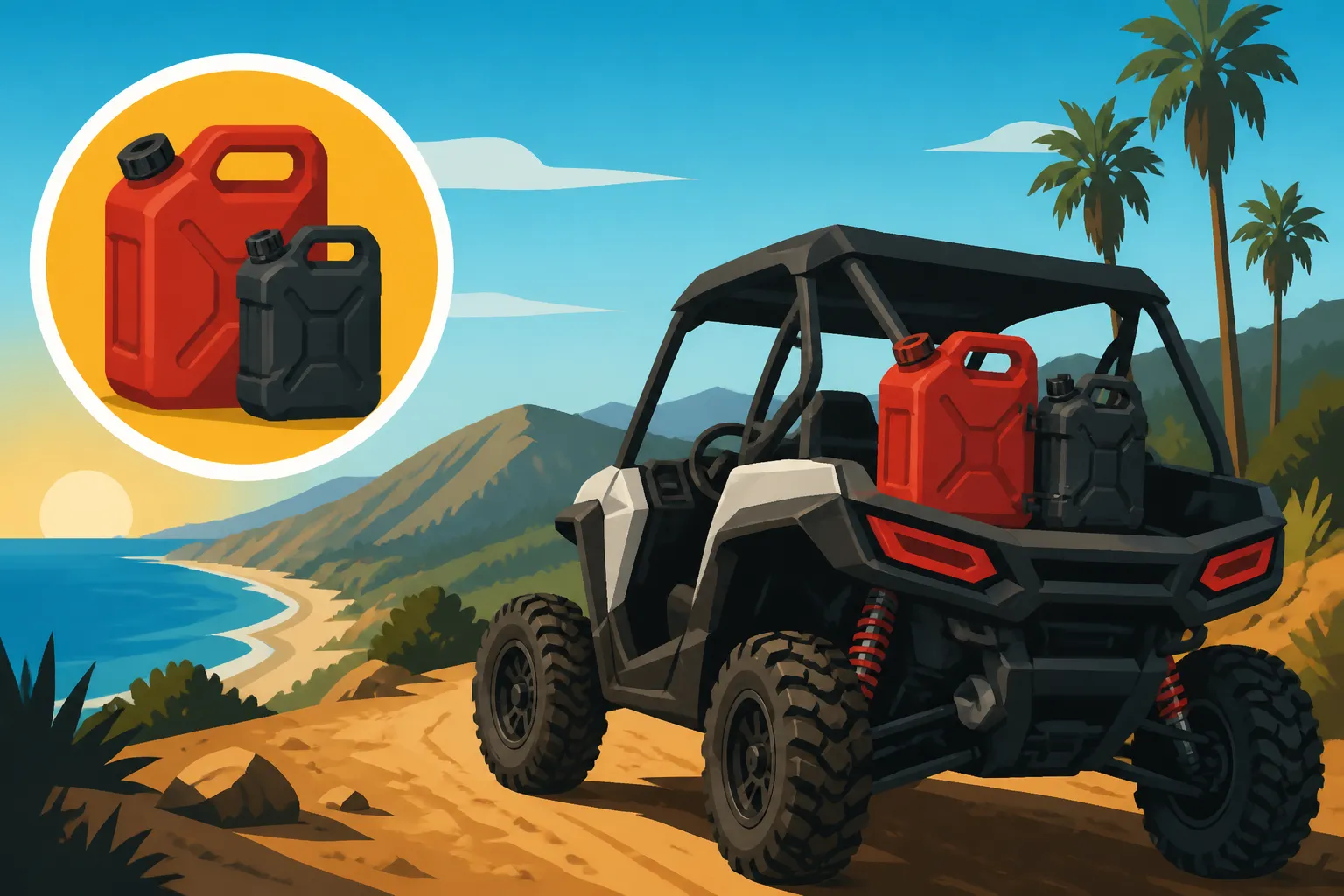
On an ATV or UTV, use only a suitable, securely mounted fuel container or auxiliary tank that is compatible with the machine. Don’t strap a loose can where it can contact the exhaust, interfere with steering or suspension, block access to controls, or shift during a rollover. A container mounted outside the machine can still become a hazard if it is poorly secured or exposed to impact. Check the machine manual before adding any accessory tank, and don’t exceed the vehicle’s load limits.
If you’re buying a container, including through Amazon, check the actual product labeling, specifications, and compatibility rather than relying on a listing title or customer photos. Confirm that the container is intended for the fuel you use and that its mounting method suits your machine. An accessory that fits physically may still be unsuitable for the vehicle or route.
Transporting a spare can from home to the trailhead is a separate part of the plan. Keep it secured in a suitable cargo area, away from passengers when possible, and out of direct heat. Don’t leave a fuel container loose in a vehicle or in a hot enclosed space. Avoid smoking, open flames, and other ignition sources while handling fuel. If you smell fuel or see a leak, don’t start or operate the vehicle; move people away and deal with the problem safely before continuing.
At camp, store fuel only where the area’s rules and the container maker permit. Keep it away from cooking equipment, fires, occupied sleeping areas, and places where it could be knocked over. Don’t assume that a campsite’s general permission to camp means every kind of fuel storage is allowed. Camping Beside Your Machine in California covers related considerations for staying near your OHV.
Refuel Carefully and Follow Site Rules
Refuel outdoors in a stable, well-ventilated place, away from flames, smoking, and running engines. Let a hot machine cool before opening its fuel tank. Pour slowly, keep the container steady, and avoid overfilling the machine. If fuel spills, stop and clean it up using an appropriate method rather than washing it into soil, a drain, or a waterway.
Keep the container’s cap closed when it is not in use. Don’t leave a full can in direct sun or beside a hot machine while you ride. Carrying fuel on an ATV or UTV adds weight and can affect handling; an unsecured load may shift when the machine turns, climbs, or crosses uneven ground. If the container changes the machine’s balance or blocks a safe riding position, the setup needs to be changed before the ride.
At a riding area, follow posted instructions about where refueling is permitted and how fuel must be stored. Some sites may have designated locations or temporary restrictions, while others may not allow certain activities at all. Ask the land manager or event organizer if the posted rules are unclear. Don’t refuel near a campfire, vegetation, a busy staging area, or another place where a spill could create extra risk.
Fuel planning matters most when you’re far from a safe stopping point. Before setting out, tell someone your intended route and expected return time, and agree on what to do if a machine runs low. Don’t continue deeper into a remote area just because a spare can is available. Terrain, weather, a mechanical problem, or a blocked route can change the amount of fuel you need to get back. California Fire Season and Trail Access explains why conditions can affect access, while California Desert Riding Safety offers additional preparation guidance.
A legal machine setup is only one part of a safe ride. Your route and equipment must also suit the area. If your trip includes brush-covered land, check that the machine’s exhaust equipment complies with the local requirements; see Spark Arresters on California Brush-Covered Land. If a posted restriction closes an area or limits activities, carrying extra fuel does not make it acceptable to ride there.
Use this simple pre-ride sequence:
- Confirm the route, access status, and any local fuel or fire restrictions.
- Check the machine’s fuel level and estimate the trip’s needs conservatively.
- Choose a container intended for the fuel, inspect it, and secure it properly.
- Keep the container away from passengers, hot components, and ignition sources.
- Refuel only when the machine is stopped and cool, in a suitable location.
- Recheck the container and machine for leaks before riding.
If a container leaks, smells strongly of fuel, or cannot be secured properly, leave it behind and change the plan. Cutting the route short or returning to a safe fuel source is better than carrying a damaged can or improvising a mount on the trail.
Disclaimer
This article is for general informational purposes only and does not constitute professional advice. Laws, prices and regulations vary by location and change over time. Consult a qualified professional for guidance on your specific situation.