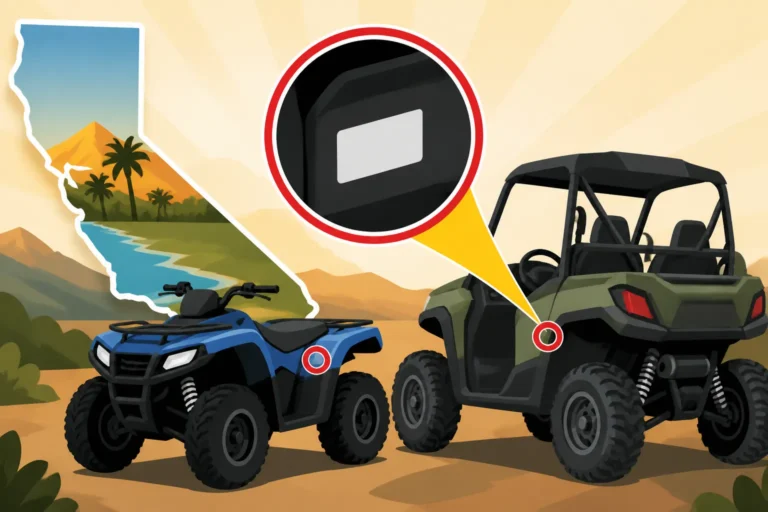
Why a 2022 Machine Might Be Tan
It can be incredibly confusing to navigate California's off-highway vehicle (OHV) sticker system, especially when you've just bought a relatively new machine, perhaps a shiny 2022 model, and you hear it might need a "Tan Sticker." You might be thinking, "Wait, aren't new machines supposed to be clean and get a Green Sticker? What's a Tan Sticker, and why would my new ride be stuck with one?" This guide is here to untangle that knot of frustration, explaining precisely why a modern machine, specifically one from the 2022 model year or newer, might fall under the Tan Sticker designation and what that means for your riding adventures.
Understanding California's OHV Sticker System
Before we dive deep into the world of the Tan Sticker, it's essential to understand the basics of California's OHV identification system. For years, riders in the Golden State primarily dealt with two colors: green and red. Each of these stickers signified different things about your machine's emissions compliance and, consequently, where and when you could ride.
The Green Sticker: Standard for Most Riding
The Green Sticker is the gold standard for most off-road enthusiasts in California. When your machine proudly displays a [California's Green Sticker Explained], it means it meets California's stringent emission standards, allowing you to ride year-round in any designated OHV area. This sticker is generally issued to machines that are certified by the California Air Resources Board (CARB) as meeting the current emission requirements for off-road recreational use. Most dirt bikes, ATVs, and UTVs sold for general recreational use in California are designed to earn this sticker, giving owners the freedom to hit the trails whenever they wish. Think of it as your all-access pass to California's fantastic riding opportunities, from the vast dunes of Glamis to the winding trails of Hungry Valley.
The Red Sticker: Seasonal Riding for Non-Compliant Machines
Then there's the Red Sticker, which has historically been a bit more restrictive. [Red Stickers and What Changed in California] details how this sticker was primarily for older off-highway vehicles that didn't meet California's latest emission standards but were still legally sold when new. These machines were typically restricted to a seasonal riding schedule, generally from October 1 to May 31, in designated OHV areas. This seasonal limitation was a way to manage air quality, ensuring that older, higher-emitting machines weren't used during the hotter summer months when air pollution is typically worse. However, the landscape for Red Stickers has been evolving, with significant changes impacting older machines and their future use on public lands.
The Introduction of the Tan Sticker
Now, let's talk about the newcomer: the Tan Sticker. This particular sticker color, often overlooked or misunderstood, plays a crucial role for a specific category of newer OHVs, especially those from model year 2022 and beyond. It's a critical distinction that many riders, particularly those buying brand-new machines, need to be aware of to avoid disappointment or, worse, a citation.
Why the Tan Sticker Was Created
The Tan Sticker, officially known as the "Sanctioned Event Permit," emerged to address a very specific regulatory challenge. California's emission regulations continued to evolve, and manufacturers developed machines specifically for competitive closed-course racing or other sanctioned events. These machines, while often cutting-edge and high-performance, are not designed or certified to meet the same general recreational emission standards as Green Sticker machines.
The dilemma was clear: how could California allow these competition-specific machines to be sold and used for their intended purpose without granting them the year-round, general access of a Green Sticker machine, or the seasonal restrictions of a Red Sticker machine? The answer was the [California's Tan Sticker Explained]. It provides a pathway for these machines to be legally identified and used, but strictly within the context of sanctioned events. It's not about them being "dirtier" or "cleaner" in a general sense; it's about their specific certification purpose from the manufacturer.
Key Eligibility for a Tan Sticker
So, what makes a machine eligible for a Tan Sticker? The primary factors revolve around its model year and its manufacturer's certification. For a 2022 model year machine (or newer), eligibility for a Tan Sticker hinges on it being specifically manufactured and labeled by the original equipment manufacturer (OEM) for "closed-course competition only." This means the manufacturer did not certify it to meet the general OHV emission standards for recreational riding.
When you're looking at a brand-new machine, the tell-tale sign is often on the emissions label itself. You won't see the typical CARB compliance statement for recreational use; instead, you'll find language indicating its competition-only status. This distinction is crucial, as it directly impacts how the California Department of Motor Vehicles (DMV) or the Off-Highway Motor Vehicle Recreation (OHMVR) Division will classify and sticker your machine during the registration process. If you're filling out forms like [What California's Form REG 343 Asks For], this classification will determine which sticker you receive.
Why a 2022 Machine Specifically Might Get a Tan Sticker
The 2022 model year is a significant demarcation point for this rule. It's not arbitrary; it's a direct result of the ongoing evolution of California's emission standards and how manufacturers respond to them.
The Regulatory Landscape Shift Around 2022
Around the 2022 model year, California's CARB regulations for off-highway vehicles solidified in a way that further differentiated between general recreational machines and those intended for competition. Manufacturers, needing to comply with these stricter standards for mainstream models, began more clearly segmenting their product lines. This led to an increase in models explicitly designed and certified for "closed-course competition only," which, by their very nature, would not pass the emissions requirements for a Green Sticker.
So, if you buy a new 2022 model year dirt bike, ATV, or UTV that's marketed as a "competition" model, it's highly likely it will be assigned a Tan Sticker. These are often high-performance machines, sometimes without features like headlights or taillights, designed purely for the track or dedicated race events. The manufacturers aren't trying to skirt rules; they're simply building machines for a specific market segment that operates under different regulatory allowances. This shift means that while your 2022 machine is new, it's categorized differently than a new recreational machine built to California's general emission standards. You can think of it as a parallel regulatory track for [Machines Built for Closed-Course Competition].
Identifying a Tan Sticker Eligible Machine
The key to identifying a Tan Sticker eligible machine, especially a 2022 or newer model, lies in its CARB emissions label. Every OHV sold in California, whether for competition or general recreation, has an emissions label, usually located on the frame, engine, or swingarm. For a Tan Sticker eligible machine, this label will explicitly state that the vehicle is "for closed-course competition only" or similar language. It will not have the standard CARB certification for general recreational use that would qualify it for a Green Sticker.
When you're buying a machine, whether new from a dealer or used from a private seller, always check this label. It's the definitive source of truth for its emissions status. If you're purchasing used, asking for proof of this certification or checking the label yourself is paramount. Consulting an online service like LawDepot for a robust bill of sale can also help document the transaction clearly, including any explicit statements about the vehicle's intended use or sticker eligibility, protecting both buyer and seller. The DMV will verify this information during registration, usually requiring a physical inspection or verification on [California Vehicle Verification on Form REG 31]. The sticker you receive, whether green, red, or tan, is determined by this factory certification.
The Restrictions and Freedoms of a Tan Sticker
Having a Tan Sticker machine means you operate under a different set of rules compared to Green or Red Sticker riders. It's not an all-access pass, but it does grant specific freedoms for competition use.
Where and When a Tan Sticker Machine Can Be Ridden
A machine with a Tan Sticker is primarily intended for use at sanctioned competitive events or on private land. This is the core "freedom" the Tan Sticker provides: it allows these competition-focused machines to exist and be used legally for their designed purpose in California. However, this freedom comes with significant restrictions for general public land riding.
You generally cannot take a Tan Sticker machine out for a casual trail ride on a state park or national forest OHV trail during non-event times, even if that area typically allows Green Sticker machines year-round. The primary legal use case for a Tan Sticker machine on public lands is when participating in a [California's Sanctioned Event Permit Explained]. This means an organized race, rally, or other event that has received specific approval from the land management agency. Without such an event, your Tan Sticker machine is restricted to private property. This is a critical distinction that many new buyers of competition models sometimes overlook.
Displaying the Tan Sticker and Permit
Just like Green and Red Stickers, the Tan Sticker itself must be properly displayed on your OHV. California law requires the OHV identification plate, which contains the sticker, to be securely affixed to the vehicle. For most ATVs and UTVs, this means mounting it in a clearly visible location, typically on the left side of the machine, or in the same area you'd mount a traditional license plate on a street vehicle. For dirt bikes, it's usually on the left fork leg. It's similar to how you would display any [California's OHV Plate Number Explained].
Beyond the sticker itself, if you are participating in a sanctioned event that requires your Tan Sticker, you'll also likely need to display the event permit. This permit, often a temporary decal or paper, must also be visible and is your proof that you're authorized to be riding that machine at that specific time and location. The rules regarding [Displaying a Permit on the Left Side] are quite specific and are enforced by rangers and event officials. Always double-check the event's specific requirements for permit display to avoid any issues.
Here's a quick comparison of California's OHV Stickers:
| Sticker Color | Model Year Eligibility | CARB Compliance | Riding Restrictions | Primary Use Case |
|---|---|---|---|---|
| Green Sticker | All Years (if compliant) | Meets current CA standards | Year-round access to designated public OHV areas | General recreational riding |
| Red Sticker | Pre-2003 (historically) | Does not meet current CA standards | Seasonal access (Oct 1 – May 31) to designated public OHV areas | Older recreational riding |
| Tan Sticker | 2022 Model Year + | "Closed Course Competition Only" | Restricted to sanctioned competitive events or private land | Competition and specific organized events |
Understanding why a 2022 machine might have a Tan Sticker boils down to its factory certification. It's a new machine, yes, but it's purpose-built for competition and, therefore, does not meet the general recreational emission standards that would earn it a Green Sticker. Always verify the emissions label when purchasing any OHV, and be aware of the specific limitations and opportunities that come with each sticker type. The world of California OHV riding is rich with options, but knowing your machine's sticker status is the first step to legally enjoying it.
Disclaimer
This article is for general informational purposes only and does not constitute professional advice. Laws, prices and regulations vary by location and change over time. Consult a qualified professional for guidance on your specific situation.