When California OHV Registration Expires
Many California OHV owners scratch their heads when it comes to figuring out when their registration actually expires. It's not always intuitive, and frankly, a lapse in registration can lead to frustrating fines or even prevent you from enjoying those epic trail rides. This guide is here to clear up all the confusion around California's OHV registration expiration dates, ensuring you're always good to go when you hit the dirt.
The Universal Expiration Date: June 30th
This is the big one, folks. It's probably the most common point of confusion, but once you know it, you won't forget it. Unlike some vehicle registrations that expire on your birth month or the month you first registered, California OHV registrations operate on a fixed cycle.
Why June 30th, Every Two Years?
Every single off-highway vehicle registration in California, whether it's for your beloved quad, dirt bike, or side-by-side, expires on June 30th. No exceptions. This isn't just a random date; it's part of how the state manages its OHV program. The idea behind a universal expiration date is to simplify administration, even if it feels a little less personal to us riders. It ensures that everyone is on the same biennial cycle, making it easier for the California Department of Parks and Recreation's Off-Highway Motor Vehicle Recreation (OHMVR) Division to manage the program. You might wonder, "Why June and not December?" It's just the way the system was set up, and it's been that way for a long, long time. So, mark your calendars, because June 30th is the golden rule. [Why June 30 Is the Only Expiration Date] is a great read for more background.
The Biennial Cycle Explained
Now, while the date is always June 30th, the year varies because California OHV registration works on a two-year cycle. This means your registration is valid for two full years, always ending on June 30th. For example, if you registered your machine in July 2023, your registration would be valid until June 30th, 2025. If you registered in March 2024, it would still expire on June 30th, 2025. It's not two years from your registration date, but rather two years ending on the next June 30th of an eligible renewal year. This is a crucial distinction and often catches people off guard.
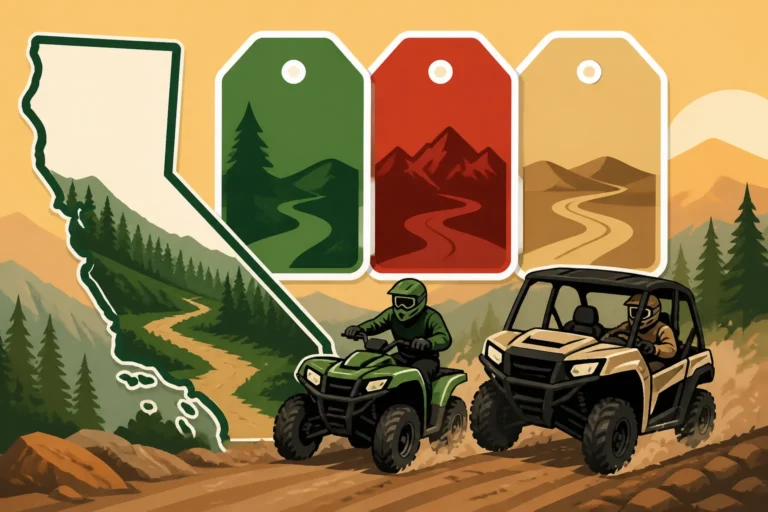
This biennial system is tied to the color of your registration sticker. Generally, green stickers are for machines that meet California's emissions standards, red stickers are for machines that don't, and tan stickers are for machines built before 2002 or used exclusively in sanctioned events. Regardless of the sticker color, the underlying registration that allows you to ride on public lands adheres to this June 30th, two-year cycle. You can learn more about this by reading [California's Biennial OHV Registration Fee].
What Your Sticker Color and Registration Date Mean for Expiration
While the June 30th expiration applies to all California OHV registrations, the timing of when you last registered can feel a bit odd due to the two-year cycle. Let's dig into how your specific situation plays out.
Navigating Early Registrations and Prorated Fees
Sometimes, you might buy a new-to-you OHV or register a brand-new machine and feel like you're getting shortchanged on your registration period. For instance, if you purchase an OHV in May and register it, that registration will still expire on June 30th of the following year in the two-year cycle. So, you might only get 13 months of registration before you need to renew again. This can feel unfair, especially if you're thinking you just paid for two full years. However, California does not prorate OHV registration fees. [Registering a Machine Bought in May] explains this common scenario. The state's reasoning is that the administrative cost of prorating would outweigh the benefits. It's one of those quirks of the system we just have to live with.
The good news is that after that initial, sometimes shorter, period, you'll be firmly on the standard two-year cycle, renewing every other year on June 30th. Always double-check your registration card and the sticker itself for the exact expiration year to be absolutely certain. The numbers printed on the sticker indicate the year it's valid through.
Reading Your Sticker and Registration Card
Your OHV registration sticker isn't just a pretty decal; it's got important information. Look closely at the sticker: it usually displays the expiration year in large print. For example, if you see '25' on your sticker, it means your registration expires on June 30th, 2025. The sticker color, be it green, red, or tan, signifies compliance with certain emissions standards and seasonal riding restrictions, but it doesn't change the June 30th expiration date of the underlying registration itself.
Your official registration card, which you should always carry with you when riding on public land, will also clearly state the expiration date. It's your definitive proof of current registration. Think of your registration card as the official document, and the sticker as the visual cue for law enforcement or rangers at the trailheads. [Carrying Registration Paper on the Sand] is a good reminder of what you need to have with you. Make a habit of checking both regularly, perhaps at the start of each riding season, to avoid any last-minute surprises.
The Repercussions of Lapsed OHV Registration
Ignoring that June 30th deadline can lead to more than just a little inconvenience. It can quickly become an expensive headache and put a damper on your riding plans.
Penalties and Fines for Late Renewal
California takes OHV registration seriously, and for good reason—these fees help fund the OHV program, maintain trails, and support law enforcement. If you let your registration expire and don't renew it by the June 30th deadline, you'll be hit with late penalties. The state applies a pretty hefty late fee that can be a significant percentage of your regular renewal cost. It's definitely designed to encourage timely renewals! [The $27 Late Penalty in California] breaks down exactly what you can expect.
Imagine you're pulling into the staging area at Oceano Dunes, all geared up for a weekend of fun. A ranger stops you at the gate, checks your sticker, and boom—it expired last month. Not only are you facing a citation, but you might also be turned away, ruining your trip before it even begins. It's a frustrating scenario that's entirely avoidable with a bit of planning.
| Scenario | Fee Type | Cost Implications |
|---|---|---|
| On-Time Renewal | Standard Registration Fee | The regular biennial fee, usually a set amount like California's $54 OHV Registration Fee Broken Down. |
| Late Renewal (after June 30th) | Standard + Late Penalty | Adds a substantial penalty (e.g., $27 or 50% of the registration fee, whichever is greater). |
| Riding Unregistered | Citation/Fine + Late Fees | Significant roadside fine from law enforcement, plus you'll still owe the registration and late fees. |
| Transferring Late (OHV purchase) | Transfer Fee + Late Penalty | If a title transfer isn't completed within 10 days, a penalty is added to the transfer fee. |
Note: Specific fee amounts should be verified directly with the California DMV or the OHMVR Division, as they can change.
Inability to Ride on Public Lands
This is perhaps the most immediate and impactful consequence of having an expired registration. In California, all OHVs operated on designated public lands—which includes state vehicular recreation areas (SVRAs) like Hollister Hills or Ocotillo Wells, as well as many BLM and Forest Service lands—must have current California OHV registration (or a valid nonresident permit, if applicable).
Without that current, valid registration sticker and accompanying card, you are simply not allowed to operate your machine on these public lands. Rangers, law enforcement, and even park staff at entrance gates routinely check for current registration. If yours is expired, you'll likely be turned away or, worse, cited. This rule is in place to ensure that all riders contribute to the maintenance and management of these valuable resources. It also ensures that all machines meet basic identification requirements. So, if your summer riding plans involve hitting the trails, make absolutely sure your registration is current.
Proactive Steps for Managing Your OHV Registration
Nobody wants to deal with expired registration. The good news is, with a little organization and foresight, you can easily stay on top of your renewals and avoid any hassles.
The State Won't Always Send Reminders
Here's a critical piece of information: unlike your street-legal vehicle registration, which often comes with a handy renewal notice in the mail, you cannot always count on the state sending you a physical reminder for your OHV registration. While they might send one as a courtesy, it's not guaranteed, and you absolutely should not rely on it. This is where personal responsibility comes into play.
Because reminders can be hit or miss, it's really up to you to keep track of that June 30th expiration date every two years. Many riders find it helpful to set up their own reminder system, whether it's a calendar alert on their phone, a note on a physical calendar, or an annual check-in date. Think of it as part of your pre-season prep, just like checking your tire pressure or changing your oil.
Record Keeping and Timely Renewals
To ensure you're always good to go, make record-keeping a priority. When you receive your new registration card and sticker, immediately make a note of the expiration year. You can use a physical folder for all your OHV documents, or even a digital system. Having all your paperwork in order, especially when dealing with the DMV or the OHMVR Division, makes the renewal process much smoother. For example, if you need a bill of sale or other documentation, tools like those offered by LawDepot can help you create and organize important legal documents related to your OHV purchase or sale. Maintaining these records isn't just about renewal; it's also vital for proof of ownership or in case of theft.
When it comes time to renew, you have a few options. While you can't typically renew your OHV registration online directly through the California DMV website, you can often renew by mail or in person at a DMV field office or a licensed OHV dealer. Check out [Renewing California OHV Registration] for a deeper dive into the process. Gather all your necessary documents ahead of time. This might include your previous registration card and any verification forms if required. Being prepared can save you a ton of time and frustration. Some riders even use services to generate a bill of sale or other necessary forms, and a platform like LawDepot can be a helpful resource for this kind of paperwork. Plan to start the renewal process a month or two before June 30th, just to give yourself plenty of buffer time. That way, you won't be scrambling at the last minute and risking those late penalties.
Remember, keeping your California OHV registration current is a small task that ensures you can continue enjoying all the incredible riding opportunities our state has to offer without any unwelcome surprises.
Disclaimer
This article is for general informational purposes only and does not constitute professional advice. Laws, prices and regulations vary by location and change over time. Consult a qualified professional for guidance on your specific situation.