Why You Cannot Register an OHV Online
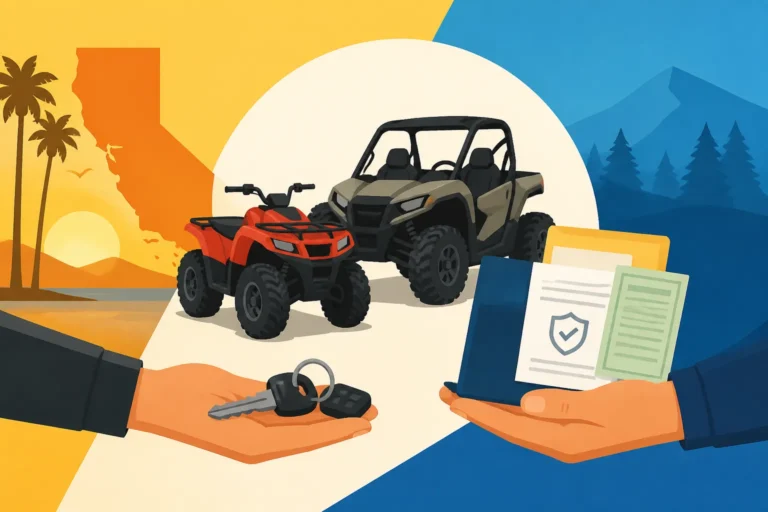
There's nothing quite like the frustration of trying to get something done with the DMV, especially when you're expecting to be able to handle it all with a few clicks from your couch, only to hit a wall. When it comes to registering an off-highway vehicle (OHV) in California for the very first time, many riders are surprised to find that the online convenience they're used to for other transactions just isn't an option. This guide will walk you through why that's the case, what specific hurdles make online OHV registration impossible, and how you can prepare to make the in-person process as smooth as possible.
The Inherent Challenges of Online OHV Registration
In our modern world, we've become accustomed to managing so much of our lives digitally, from banking to renewing our car's registration. It's perfectly natural to assume that getting your new quad or side-by-side officially recognized by the state would be just as straightforward. However, off-highway vehicles present a unique set of challenges that prevent a fully online registration system, primarily due to the crucial need for physical verification and the complex nature of the fees involved.
The Importance of Physical Vehicle Verification
Unlike your street-legal car or truck, which has easily accessible VINs and often a detailed service history, OHVs require a direct, in-person inspection. This isn't just a formality; it's a vital step to ensure the vehicle exists as described, to prevent fraud, and to confirm compliance with California's specific rules. A trained professional needs to physically check the Vehicle Identification Number (VIN) and sometimes the engine number. They're looking for things like the proper emissions labels, especially when determining whether your machine qualifies for a [California's Green Sticker Explained], a Red Sticker, or a Tan Sticker.
Imagine trying to verify a VIN through a webcam or by uploading a photo. It's simply not secure or reliable enough to catch potential alterations or confirm the vehicle's true identity and features. For instance, what if a VIN plate has been swapped, or the machine has been significantly modified in a way that impacts its emissions compliance? These are details that require a pair of eyes on the actual vehicle. This hands-on check ensures that the state is registering legitimate machines and that owners aren't attempting to bypass regulations. This physical inspection process is formally documented on a [California Vehicle Verification on Form REG 31], which must be completed by an authorized verifier.
Complexities Beyond a Simple Click
Beyond physical verification, OHV registration often involves a cascade of specific fees and calculations that can be surprisingly intricate. It's not just a flat fee like a simple renewal. You might be dealing with sales tax if you purchased the machine from a private party, use tax if you brought it in from out of state, the actual registration fee, various surcharges, and potentially penalties if you're registering it past a certain deadline. For example, understanding [California's $54 OHV Registration Fee Broken Down] reveals multiple components that can vary based on your situation.
These calculations often require a representative to input data, check records, and apply the correct rates based on the vehicle's purchase price, model year, and even where it was acquired. There are different sticker types, like [Green, Red and Tan: California's Three Stickers], each with its own eligibility criteria that can further complicate the process. An online system would need to be incredibly robust to handle every possible permutation, cross-reference databases for sales tax rates, and apply penalties automatically, all while ensuring accuracy. The potential for error is high, and the state prefers to have a human involved to review and ensure everything is correct before you receive your official documents and [California Issues a Certificate of Title].
The Essential Paperwork and In-Person Hurdles
When you register an OHV in California, you're not just providing basic information; you're presenting a collection of specific documents, many of which are original and must be physically reviewed. This document-heavy process, coupled with the need for signatures and verification, means that an online submission just isn't equipped to handle every step.
The Paperwork You'll Need in Hand
The cornerstone of your OHV registration is California's Application for Title or Registration, often referred to as [What California's Form REG 343 Asks For]. This form isn't something you simply fill out and upload. It requires original signatures, and sometimes notarization, depending on the circumstances. Beyond this, you'll need:
- Proof of Ownership: This could be the manufacturer's certificate of origin (MCO) for a brand-new machine, a properly endorsed title from a previous owner, or a bill of sale for a private party transaction. If you're buying from a private seller, having a clear and comprehensive [California OHV Bill of Sale Requirements] document is crucial. Resources like LawDepot can be incredibly helpful for finding professional templates for documents like a bill of sale, ensuring you don't miss any vital information.
- Vehicle Verification: As mentioned, the [California Vehicle Verification on Form REG 31] must be completed by an authorized verifier. You cannot perform this step yourself or simply upload photos of your VIN.
- Smog or Emissions Documentation: While many OHVs are exempt from traditional smog checks, they still need to meet California's emissions standards, which is often confirmed via an emissions label on the machine itself. This is what the verifier will be looking for.
Trying to submit these original documents online would be a logistical nightmare, risking loss or damage. The DMV requires these physical proofs to ensure the integrity of the registration process.
The In-Person Verification Hurdle
This is perhaps the biggest roadblock to online OHV registration. You literally have to bring your machine in for inspection, or arrange for a certified vehicle verifier to come to you. This might sound inconvenient, especially when you're just eager to get out on the trails, but it's a critical step. During this verification, the verifier will:
- Locate and Confirm VIN: Ensure it matches your ownership documents.
- Check Engine Number: If applicable and easily accessible.
- Inspect Emissions Labels: Crucial for determining which sticker (Green, Red, or Tan) your OHV qualifies for. This directly impacts where and when you can ride in California. For example, a machine with a Red Sticker has different riding restrictions compared to a Green Sticker machine.
- Note any modifications: While not always a barrier to registration, significant modifications could be noted.
This hands-on check is necessary because OHVs can be modified, rebuilt, or even assembled from parts, making their identification and compliance more complex than a standard production car. The in-person verification ensures that what's being registered aligns with what's actually on the ground.
Sales Tax and Fee Collection
Another significant reason for the in-person requirement, especially for private party sales, is the collection of sales tax (or use tax, if purchased out of state). [California OHV Registration and Sales Tax] rules are specific, and the tax is generally based on the purchase price of the vehicle.
When you buy from a licensed dealer, they usually handle the sales tax collection and remittance directly. However, for a private party sale, the DMV acts as the collection agent for the state's sales tax. They need to review the bill of sale, calculate the correct tax amount, and collect it on the spot. This isn't just about the sales tax; there are numerous other fees like the Off-Highway Vehicle License Fee, the Off-Highway Vehicle Trust Fund Fee, and potentially a [The $10 CHP Fee on a California OHV], all of which contribute to the overall [California OHV Registration Cost]. These fee structures are designed to fund the OHMVR program and maintain riding areas, and their calculation often necessitates a direct interaction to ensure accuracy and payment.
What You Can Do Online (And What to Prepare For)
While you can't complete the entire OHV registration process online, you can certainly take proactive steps to streamline your in-person visit. Thinking ahead and preparing as much as possible will save you valuable time and reduce potential headaches at the DMV or with a licensed registration service.
Preparing Your Documents and Forms
The digital age still allows you to gather and organize most of your necessary paperwork from the comfort of your home. You can:
- Download Forms: Access official California DMV forms, like the REG 343 and REG 31, from their website. You can fill out all the static information on these forms digitally before printing them. Remember, signatures will likely need to be original and perhaps witnessed or notarized in person.
- Create a Bill of Sale: If you purchased your OHV from a private seller, ensure you have a comprehensive bill of sale. Using reputable online resources like LawDepot can help you create a legally sound document that covers all the necessary details, protecting both buyer and seller. A well-prepared bill of sale can prevent complications when proving ownership and calculating sales tax.
- Gather Proof of Prior Registration/Title: If the OHV was previously registered, have those documents ready. If you've [Replacing a Lost California OHV Title], make sure you have the replacement documentation in hand.
Having all your ducks in a row – printed, organized, and largely filled out – means less time fumbling with pens and searching for information during your appointment. It also allows you to double-check everything before you arrive, minimizing errors.
Scheduling Your Visit to a Field Office
Even though you can't register online, many DMV offices allow you to schedule an appointment online. This is an absolute game-changer for avoiding long wait times. Instead of showing up and hoping for the best, you can secure a specific time slot, greatly reducing the time you'll spend in the waiting room.
To schedule your visit, go to the California DMV website and look for their appointment system. You'll typically need to select the type of service you need (e.g., "Vehicle Registration" or "Other Services" if OHV-specific isn't listed) and choose your preferred office and time. Make sure you select a DMV field office that has experience with OHV registrations, as not all offices are equally versed in the nuances of off-road vehicles. Showing up with a confirmed appointment can significantly cut down on the overall time spent. This is a crucial step if you want to avoid the common frustrations associated with DMV visits, especially for something that requires hands-on attention like OHV registration. You can learn more about this by reading [California OHV Registration Appointment at the DMV].
Your Options for Completing OHV Registration
Since online registration isn't feasible for initial OHV registration, you have a few established pathways to get your machine legal. Each option has its own pros and cons, but all of them require careful preparation and an understanding of the necessary in-person steps.
Visiting a California DMV Field Office
This is the most common and direct route for first-time OHV registration. You'll need to gather all your paperwork, ensure your OHV is ready for verification, and then either schedule an appointment or simply walk in.
Pros:
- Direct Interaction: You get to speak directly with a DMV representative who can answer your questions and guide you through the process. This can be invaluable if your situation is unique or complex.
- Immediate Resolution: In most cases, if all your paperwork is in order and your verification is complete, you'll walk out with your new OHV sticker and possibly your [California Issues a Certificate of Title] on the same day.
- State Authority: You're dealing directly with the issuing authority, ensuring everything is official.
Cons:
- Wait Times: Even with an appointment, wait times can sometimes be unpredictable, particularly at popular offices. Without an appointment, you could be in for a very long day.
- Specific Knowledge Varies: While DMV staff are generally knowledgeable, some field offices might handle fewer OHV registrations than others, leading to slightly longer processing times as staff confirm procedures.
- Travel Required: You must transport your OHV to the field office for verification, which requires a truck and trailer or other suitable means. You can read more about what to expect by reviewing [Taking an OHV to a California DMV Field Office].
Licensed Registration Services
Beyond the DMV, there are independent, privately owned businesses often called "DMV service providers" or "registration services" that are licensed by the state to process many types of vehicle registrations, including OHVs. They can act as an intermediary, handling much of the paperwork for you.
Pros:
- Convenience: Many of these services offer extended hours, shorter wait times, and often more personalized attention than a typical DMV office.
- Expertise: They specialize in registration and titling, so they're often very efficient and knowledgeable about the specific requirements for OHVs.
- Verification Services: Some licensed services have authorized vehicle verifiers on staff, meaning you can complete both the paperwork and the physical verification at one location. You might still need to bring your OHV to them, but it simplifies the overall process.
Cons:
- Additional Fees: These businesses charge a service fee on top of the standard DMV registration costs. This fee varies by provider but offers convenience in exchange.
- Limited Locations: While common in many areas, not every town will have a licensed registration service that handles OHVs.
Mail-in Renewals (But Not First-Time Registration)
It's important to clarify that while initial OHV registration cannot be done by mail or online, renewing your existing California OHV registration is often much simpler. For renewals, if your information hasn't changed significantly, you typically receive a renewal notice in the mail. You can often pay this fee online or mail it back, much like renewing your car tags.
However, this convenience does not extend to initial registration because the core requirements for physical verification and original document submission are absent in a renewal scenario. Your OHV is already in the system, its VIN verified, and its sticker type assigned. So, if you're looking to get a new sticker, you'll still need to follow the in-person steps. You can find more specific information on [Renewing California OHV Registration] when that time comes.
| Feature | Initial OHV Registration (In-Person/Service) | OHV Registration Renewal (Online/Mail) |
|---|---|---|
| Vehicle Verification | Required (Physical inspection) | Not required |
| Original Documents | Required (Title, MCO, Bill of Sale) | Not usually required |
| Sales/Use Tax | Collected in person | Not applicable (already paid) |
| Forms | REG 343, REG 31, etc. | Renewal notice |
| Fee Complexity | High (multiple fees, tax calculation) | Lower (fixed renewal fee) |
| Convenience | Requires planning & travel | Can be done remotely |
| Time to Complete | Varies (appointment helps) | Quick (online or mail) |
Ultimately, getting your OHV registered in California requires a bit of planning and an in-person visit. While it might not be as quick as a few clicks on your computer, understanding why these steps are necessary and preparing thoroughly can make the process significantly less daunting.
Disclaimer
This article is for general informational purposes only and does not constitute professional advice. Laws, prices and regulations vary by location and change over time. Consult a qualified professional for guidance on your specific situation.