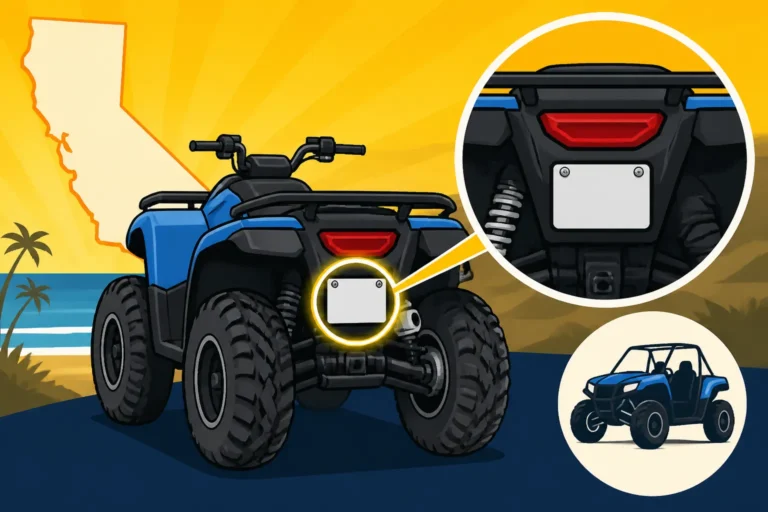
Titling an Off-Highway Vehicle in California
Navigating the world of off-highway vehicles (OHVs) in California can sometimes feel like trying to ride a dune buggy through thick mud – confusing and prone to getting stuck. One of the biggest points of confusion, right up there with deciphering sticker colors, is understanding how to properly title your machine. Many folks think getting an OHV registered means it's also titled, but that's not always the case, and failing to secure a proper title can lead to some major headaches down the line, especially when you're trying to sell or prove ownership. This guide is here to untangle the intricacies of titling your ATV, UTV, dirt bike, or any other OHV in the Golden State, ensuring you're cruising confidently, both on the trails and with your paperwork.
Understanding the Difference: Title vs. Registration in California
Let's start by clearing up a common misconception that trips up a lot of OHV owners. In California, your OHV's title and its registration are two distinct things, though they're certainly related. Think of it this way: one proves you own the machine, and the other proves you're allowed to ride it on public land. It's a fundamental difference that, once understood, makes the rest of the process much clearer.
Why California Separates Title and Registration
The reason California separates the title from the registration really boils down to two main purposes: proving ownership and managing access. Your Certificate of Title is the legal document that establishes you as the rightful owner of your off-highway vehicle. It's like the deed to your house – it signifies who holds legal claim to the property. This document is crucial for buying, selling, or using your OHV as collateral. It's a permanent record of ownership that, ideally, transfers from one owner to the next throughout the machine's life. You might only interact with your title once when you buy the machine and once again when you sell it years later.
Registration, on the other hand, is about your privilege to operate that OHV on public lands within California. It’s tied to the biennial (two-year) sticker system, be it a Green, Red, or Tan sticker, which you renew every couple of years. This fee-based system helps fund the state's Off-Highway Motor Vehicle Recreation (OHMVR) Division, supporting trail maintenance, law enforcement, and other programs that benefit riders. While your registration allows you to enjoy our incredible riding areas, it doesn't, by itself, prove you own the machine. You could, hypothetically, register an OHV that you don't legally own if the title isn't properly transferred, which is exactly why the distinction is so important. Imagine buying a used quad, getting the registration sticker, but then finding out the seller never actually transferred the title to you – suddenly, you're stuck with a machine you can't legally prove is yours.
The Role of the California DMV in Titling OHVs
When it comes to the official record-keeping of OHV ownership, the California Department of Motor Vehicles (DMV) is the agency in charge. While the OHMVR Division might manage the parks and grant programs funded by your registration fees, it’s the DMV that holds the master records for who owns what. They process the applications for new titles, handle title transfers between owners, and issue duplicate titles if yours ever goes missing. This means that every step of securing or transferring your OHV's title will involve direct interaction with the DMV, whether in person, by mail, or through a licensed OHV registration service.
The DMV's meticulous record-keeping is vital for your legal protection. If your OHV is ever stolen, having a clean title in your name with the DMV's records provides essential proof of ownership to law enforcement. Similarly, if you're involved in a dispute over who owns a machine, the DMV's title records are the definitive source. It’s a layer of security that ensures clarity and prevents fraudulent claims. While the process can sometimes feel a bit bureaucratic, remember that each form and verification step is designed to protect both buyers and sellers, ensuring that ownership is clearly established and officially recorded.
When You Need a California OHV Title
The need for a California OHV title isn't a constant thing like your biennial registration sticker. Instead, it typically arises at specific, significant points in your machine's lifecycle, primarily when ownership changes hands or when it's first being brought into the state's official system. Understanding these key moments will help you anticipate the paperwork and ensure a smooth transition.
Buying a New OHV from a Dealer
When you're excitedly picking up that brand-new side-by-side or dirt bike from a California dealership, a lot of the initial titling work is actually handled for you. Dealers are well-versed in the process and often act as an extension of the DMV, submitting the necessary paperwork to establish the first official owner of the machine: you! They will collect your sales tax, registration fees, and the titling fee, and then prepare the Manufacturer's Certificate of Origin (MCO), which is basically the OHV's birth certificate. This MCO, along with your application, gets sent to the DMV.
What you'll typically receive on the day of purchase is temporary registration, allowing you to ride immediately. Your official California Certificate of Title will then be mailed to you directly from the DMV, usually several weeks later. It's a relatively seamless process, but it's still good to understand what’s happening behind the scenes. Make sure you get a copy of all the paperwork the dealer submits, and keep an eye out for your title in the mail. If it doesn't arrive within a reasonable timeframe (which can vary, so ask your dealer for an estimate), that’s your cue to follow up with the DMV.
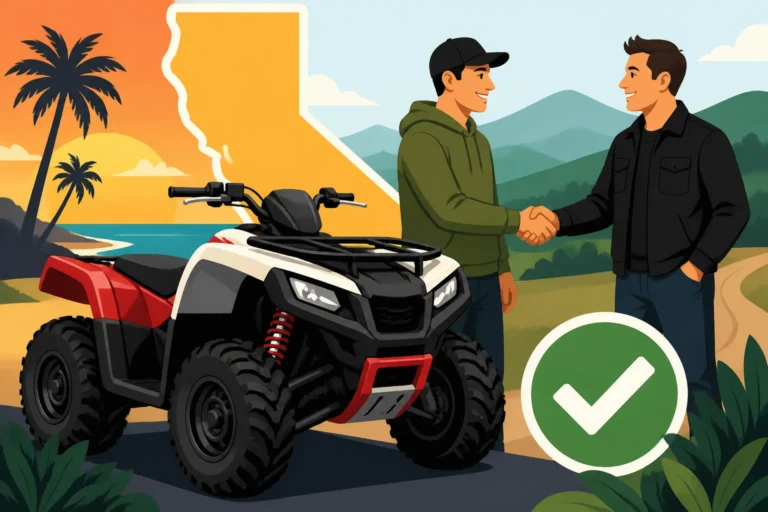
Purchasing a Used OHV from a Private Party
This is where the titling process can get a little more hands-on for you as the buyer, and it's also where things can sometimes go sideways if not handled correctly. When you purchase a used OHV from a private seller in California, the responsibility for transferring the title formally rests with you, the new owner. This critical step ensures that the DMV's records reflect you as the legal owner, which is absolutely essential for your protection. Without a proper title transfer, the machine is still legally considered owned by the previous party, even if you have the keys and are riding it. This can lead to headaches if the machine is ever stolen, in an accident, or if you decide to sell it yourself down the road.
The seller should provide you with their signed-off California Certificate of Title. You'll then take this, along with other required documents, to the DMV to complete the transfer. It’s also important to get a clear [California OHV Bill of Sale Requirements] document, detailing the purchase price, VIN, and both parties' information. This isn't just good practice; it's often a required document for the DMV. You can find reliable templates online, and services like LawDepot offer customizable bill of sale forms that can help ensure you don't miss any critical details. Don't forget that California has a specific timeline for submitting this paperwork to avoid late penalties – generally 10 days from the date of sale for the seller to report the sale, and a similar timeframe for you to submit the transfer of ownership. For more detailed information on this process, check out our guide on [Transferring a California OHV Registration]. And if you're the one selling, make sure you understand your responsibilities as outlined in [Selling an OHV and Signing the California Title].
Bringing an OHV into California from Another State
If you're relocating to the Golden State and bringing your beloved OHV with you, or if you've purchased a machine from an out-of-state seller, you'll need to go through a process to establish California title and registration. This is crucial even if the machine was titled and registered in your previous state. California wants its own record of ownership and to ensure the machine meets its specific emissions and identification standards before it can be legally ridden on public lands here.
The process for [Registering an Out-of-State Machine in California] involves several steps. You'll need to bring your out-of-state title (or registration if the previous state didn't issue titles for OHVs), along with a [California Vehicle Verification on Form REG 31] completed by an authorized verifier. The DMV will review your documents, verify the vehicle's identification numbers, and process the new California title and registration. It's important to remember that not all states title OHVs, which can add a layer of complexity. If your machine was only registered and never titled in its original state, you may need additional documentation, such as an affidavit of ownership, to satisfy the California DMV's requirements. This often means carefully documenting its history, perhaps with previous registration cards or a bill of sale, to prove continuous ownership from the last known record.
Essential Documents for Titling Your OHV
Getting your OHV properly titled in California involves more than just showing up at the DMV with a hopeful smile. You’ll need a specific set of documents, each serving a crucial purpose in establishing ownership and ensuring compliance. Gathering these ahead of time is key to a smooth process and avoiding frustrating multiple trips.
The Application for Title or Registration (Form REG 343)
This is perhaps the most fundamental piece of paperwork you'll need. Form REG 343, officially known as the "Application for Title or Registration," is your formal request to the California DMV to either issue a new title, transfer an existing one, or simply register your OHV. It's a comprehensive form that asks for detailed information about both you and your off-highway vehicle. You'll need to provide your full legal name, address, and contact information, as well as the OHV's Vehicle Identification Number (VIN), make, model, year, and engine size.
Accuracy is paramount when filling out this form. Even minor errors, like a transposed number in the VIN or a misspelled name, can lead to delays and require you to resubmit paperwork. Take your time, double-check every field, and ensure all information matches other supporting documents exactly. If you're unsure about a particular section, it's always better to leave it blank and ask a DMV representative for clarification rather than guessing. We have a detailed breakdown of [What California's Form REG 343 Asks For] that can walk you through each section, helping you navigate it without a hitch. Remember, this form is the backbone of your application, so getting it right from the start is crucial.
Proof of Ownership: Manufacturer's Certificate of Origin (MCO) or Previous Title
Establishing clear ownership is the heart of the titling process, and the DMV requires definitive proof. For a brand-new OHV, this proof comes in the form of the Manufacturer's Certificate of Origin (MCO), sometimes called a Manufacturer's Statement of Origin (MSO). This document is essentially the OHV's birth certificate, issued by the manufacturer, stating that the vehicle has been built and is ready for its first owner. It's a one-time document that you'll surrender to the DMV when you first title the machine. It's incredibly important not to lose this document, as getting a replacement can be a convoluted and time-consuming process involving the dealer and sometimes the manufacturer.
For a used OHV, your proof of ownership will be the previous owner's California Certificate of Title, properly signed off and dated to you, the buyer. This document formally transfers legal ownership. If the previous owner has lost the title, this immediately complicates things. While it’s possible to proceed in some cases, it often requires the seller to first obtain a duplicate title themselves before they can legally transfer ownership to you. Our article on [Buying a Quad With a Lost Title] offers insights into how to navigate such a tricky situation. In addition to the MCO or signed-off title, a [California OHV Bill of Sale Requirements] is strongly recommended, especially for private party transactions. This document formally records the transaction, the agreed-upon price, and confirms both buyer and seller details. LawDepot provides excellent customizable bill of sale templates that can help you create a legally sound document, ensuring all necessary information is captured for your protection and the DMV's records.
Vehicle Verification (Form REG 31)
This step is designed to prevent fraud and ensure that the OHV you're titling is indeed the machine you claim it to be, and that its identification numbers haven't been tampered with. The Vehicle Verification form (REG 31) must be completed by an authorized California DMV employee, a licensed vehicle verifier (often found at registration services), or certain law enforcement personnel like a California Highway Patrol (CHP) officer. They will physically inspect your OHV to verify key identification numbers.
During the verification process, the verifier will cross-reference the VIN (Vehicle Identification Number) and often the engine number on your OHV with the numbers listed on your application and proof of ownership documents (MCO or previous title). They'll also check for any signs of alteration or inconsistencies. This step is mandatory for all OHVs being titled in California for the first time or being transferred from out of state. It's a straightforward process, but it requires you to bring your OHV to a location where a verifier can inspect it, or in some cases, you can arrange for a mobile verifier to come to your location. For a comprehensive overview of what the verifier looks for, consult our guide on [California Vehicle Verification on Form REG 31].
Supporting Documents: Sales Tax and Fees
Beyond the core forms and ownership proof, you'll also need to be prepared for the financial aspects of titling your OHV. California imposes sales tax on OHV purchases, just like any other vehicle. If you bought your OHV from a dealer, they would have collected this tax at the time of sale. For private party sales, you are responsible for paying the sales tax directly to the DMV when you submit your titling paperwork. This is calculated based on the purchase price you declare on your bill of sale, and it's important to be honest here, as under-reporting can lead to penalties. Our article on [California OHV Sales Tax on a Private Purchase] goes into more detail on how this is handled for private sales.
In addition to sales tax, you'll pay various fees associated with the titling and initial registration process. While I can't give specific figures (as these can change), these typically include a titling fee, a registration fee for the two-year sticker, and potentially other small administrative charges. Unlike street-legal vehicles, most OHVs are exempt from smog checks in California, so you generally won't need to worry about a smog certificate for titling purposes, which is one less hurdle to jump!
The Titling Process: Step-by-Step at the California DMV
Once you've gathered all your essential documents, it's time to take the plunge and formally submit everything to the California DMV. While the thought of a DMV visit might induce a groan, being prepared and knowing what to expect can make the process surprisingly smooth.
Preparing Your Paperwork and Appointment Booking
Before you even think about heading to a DMV field office, spend a bit of time organizing your paperwork. Create a physical checklist and ensure you have every required document in hand: your filled-out Form REG 343, your proof of ownership (MCO or signed-off title), your completed Form REG 31 (Vehicle Verification), and your bill of sale if applicable. Having everything neatly organized in a folder will not only make it easier for the DMV clerk but also help you feel more confident.
Next, consider making an appointment. The California DMV offers appointments for most services, and showing up with one can drastically reduce your wait time. You can typically schedule an appointment online. Check out our guide on [California OHV Registration Appointment at the DMV] for tips on how to book and what to expect. While a walk-in is sometimes possible, especially at smaller field offices, it's generally not recommended for complex transactions like titling, as you might face significant delays. When you go, remember to bring your forms, your proof of ID (like a driver's license), and your method of payment for the fees and sales tax.
Submitting Your Application and Payment
When your number is called or your appointment time arrives, you'll present your organized stack of documents to the DMV clerk. They will review everything carefully, checking for completeness and accuracy. This is where those double-checks you did at home really pay off! The clerk will verify the VIN against the documents, confirm the previous owner's signature on the title (if applicable), and ensure all fields on Form REG 343 are correctly filled.
Once they've confirmed everything is in order, they'll calculate the final fees due, including any sales tax for private party purchases and the various titling and registration fees. You'll then make your payment. The DMV accepts various forms of payment, including cash, checks, debit cards, and sometimes credit cards (though it's always wise to check their current accepted methods beforehand). After payment, the clerk will issue you a temporary registration, which usually consists of a printed document that serves as proof that your application is being processed. They may also give you your new registration sticker on the spot if all checks out, or it might be mailed separately. The official title, however, will always be mailed from the DMV's central processing office, typically taking a few weeks to arrive.
Receiving Your California Certificate of Title
The moment you've been waiting for! After patiently waiting a few weeks (the exact timeframe can vary depending on DMV workload), your official California Certificate of Title will arrive in the mail. This document is typically a secure, printed form with various anti-fraud features, clearly stating your name as the registered owner, the vehicle's details (VIN, make, model), and the date the title was issued. It’s a formal and official document, distinct from your biennial registration sticker or card.
Once you receive your title, inspect it immediately to ensure all the information is correct. Check your name, address, and every detail of your OHV to make sure there are no errors. If you find any discrepancies, contact the DMV right away to get them corrected. It's a good idea to make a photocopy or take a clear photograph of both sides of your title for your records, then store the original in a safe, secure place—like a fireproof safe or a safe deposit box—separate from your OHV itself. You won't need to carry it with you when you ride. This document is your ultimate proof of ownership, and keeping it safe is paramount for any future transactions, whether you're selling the machine or using it as collateral for a loan. Our article on [California Issues a Certificate of Title] further describes what this important document looks like and its key elements.
Common Challenges and Troubleshooting Titling Issues
While the titling process often goes smoothly for most, it's not uncommon to encounter a few bumps in the road. Knowing how to anticipate and address these common challenges can save you a lot of stress and ensure you ultimately get that title in your name.
Lost or Missing Titles
One of the most frequent headaches OHV owners face is dealing with a lost or missing title. Maybe you moved and it got misplaced, or perhaps the seller of a used machine can't find theirs. If you are the registered owner and your title has gone missing, the good news is you can apply for a duplicate. This typically involves filling out a form called an "Application for Duplicate Title" (Form REG 227) and paying a fee. You'll need to provide your vehicle's information and affirm under penalty of perjury that the original title is lost or destroyed. The DMV will then process your request and mail a new title to you.
The situation becomes more complicated if you're trying to buy a used OHV from a private seller who doesn't have the title. In California, it's generally best practice for the seller to obtain a duplicate title in their name before they sell the machine to you. This ensures a clean transfer of ownership. If a seller insists on selling without a title, proceed with extreme caution. You might be able to apply for a "bond for title" in some specific, limited circumstances, but this is a much more involved and risky process. For a detailed guide on how to handle this, refer to [Replacing a Lost California OHV Title]. It's always best to insist on a clear, signed-off title from the seller to avoid potential legal quagmires.
Unregistered or Untitled Machines (Barn Finds)
Every now and then, you hear about someone finding a gem of an OHV tucked away in a barn, garage, or forgotten corner of a property – a true "barn find." These machines often come with no current registration and, more significantly, no title. The original owner might be long gone, or the records might be so old they're impossible to trace. This situation presents a unique challenge when trying to establish legal ownership and title it in California.
If you've acquired an OHV with no existing title, you'll generally need to provide the DMV with sufficient evidence to establish ownership history. This can include a detailed bill of sale (even if from a very old transaction), previous registration cards (if any), or affidavits from individuals who can attest to its history and how you acquired it. In some cases, if the machine has truly fallen out of the system, you might need to apply for a "Bonded Title." This involves purchasing a surety bond for a certain value of the vehicle, which protects the state and any previous unknown owners for a set period (usually three years). It's a more complex procedure and usually a last resort. For more information on how to navigate these unique situations, take a look at our article on [Registering a California Quad That Never Had a Sticker]. Services like LawDepot can be invaluable here, offering templates for affidavits of ownership or other legal declarations that can help bolster your case with the DMV.
Discrepancies and Errors on Paperwork
Even with the best intentions, errors can creep into paperwork. Common discrepancies include misspelled names, incorrect addresses, transposed VINs or engine numbers, or inconsistent dates on a bill of sale compared to the title transfer. These seemingly minor mistakes can bring your titling process to a screeching halt at the DMV counter. The DMV's system is designed to be highly accurate, and any mismatch will trigger a flag, requiring correction before they can proceed.
If you discover an error, whether it's before submission or pointed out by a DMV clerk, it's crucial to address it promptly. For simple errors on your own application, you might be able to correct it and initial the change. However, if the error is on a document provided by a seller (like their signed-off title), you might need to contact them to have them make the correction and initial it. This highlights the importance of reviewing all documents thoroughly before leaving the seller's presence. In some cases, if the error is significant or involves a past owner who is unreachable, you might need to submit an affidavit explaining the discrepancy. LawDepot can assist with various legal document templates that can help you draft these explanations clearly and correctly. The key is to be meticulous; take the time to review every piece of information to avoid these frustrating, but often preventable, delays.
Protecting Your OHV Title and What Comes Next
Once you've successfully navigated the titling process and have that shiny new California Certificate of Title in your hands, your job isn't quite done. This document is a valuable asset, and how you protect it, along with understanding its role in future interactions with your OHV, is key to being a responsible owner.
Safeguarding Your Title Document
Think of your OHV title as one of your most important financial documents, right up there with your property deed or birth certificate. It is the definitive proof of your ownership, and losing it can create significant hassles down the line. Therefore, safeguarding your title document is paramount. Do not, under any circumstances, keep your original title on or in your OHV. If your machine were to be stolen or damaged in a remote location, you would lose this crucial document, compounding your problems.
Instead, store your original Certificate of Title in a secure, fireproof location, such as a home safe, a safety deposit box, or a secure filing cabinet. It's an excellent practice to make a photocopy or take a clear digital image of both sides of your title and keep these copies in a separate, accessible location. That way, if the original is ever lost, you'll have all the necessary information readily available when you apply for a duplicate. Protecting your title now will save you a world of potential headaches if you ever need to sell your machine, use it as collateral, or report it stolen.
Understanding Registration Renewal and Future Transactions
It's important to reiterate that your OHV title is a one-time issuance (unless you apply for a duplicate or it changes with a major modification or change of type). Your OHV registration, however, is a recurring, biennial process. Every two years, you'll need to renew your registration and receive a new sticker to legally operate your OHV on public lands in California. This process is entirely separate from your title, though both are recorded with the DMV. Your registration is what lets you enjoy those incredible trails and dunes, and it's what rangers will check for at entry points to places like Glamis or Ocotillo Wells. For more details on the renewal process, including how often you need to update it, check out [California OHV Registration Two-Year Cycle].
When it comes time to sell your OHV, your meticulously safeguarded title becomes the star of the show. A clean, properly signed-off title is absolutely essential for a smooth and legal transfer of ownership to the new buyer. Without it, the buyer cannot easily register or title the machine in their name, severely impacting its resale value and creating significant legal hurdles. Make sure you understand how to properly endorse (sign over) your title to the new owner, and what additional documentation, like a bill of sale, is required. Our guides on [Transferring a California OHV Registration] and [Selling an OHV and Signing the California Title] provide detailed instructions to ensure you handle these future transactions correctly, protecting both yourself and the buyer. By keeping your title secure and understanding its long-term importance, you're setting yourself up for stress-free OHV ownership in California.
OHV Titling Scenarios Comparison
To help clarify the differences and requirements across various common OHV acquisition scenarios, here's a handy comparison table. This should give you a quick overview of what to expect depending on how you come to own your next off-highway vehicle.
| Scenario | Primary Proof of Ownership | Key Forms Required | Typical Verification Need | Sales Tax Collection | Estimated Time to Receive Title |
|---|---|---|---|---|---|
| New OHV (Dealer) | Manufacturer's Certificate of Origin (MCO) | REG 343 | Generally handled by dealer | Collected by dealer at sale | 2-6 weeks |
| Used OHV (Private) | Previous CA Certificate of Title (signed-off) | REG 343, Bill of Sale | Required | Paid to DMV at transfer | 2-6 weeks |
| Out-of-State OHV | Out-of-State Title/Registration | REG 343, Out-of-State Docs | Required | Paid to DMV at transfer (Use Tax) | 2-8 weeks (can be longer) |
| "Barn Find" (No Title) | Affidavit of Ownership, Bill of Sale | REG 343, REG 227 (if duplicate attempted) | Required | Paid to DMV at transfer | Varies greatly (complex) |
Disclaimer
This article is for general informational purposes only and does not constitute professional advice. Laws, prices and regulations vary by location and change over time. Consult a qualified professional for guidance on your specific situation.