Taking an OHV to a California DMV Field Office
Oh, the California DMV! Just uttering those three letters can send shivers down the spine of even the most seasoned OHV enthusiast. We've all been there, standing in line, clutching a stack of papers, wondering if we have everything exactly right to register that new-to-us quad or transfer the title on a side-by-side. It feels like a rite of passage, doesn't it? This guide is here to demystify the process of taking your off-highway vehicle to a California DMV field office, making sure you're as prepared as possible to get what you need done without the usual headache.
Why You Might Need to Visit a DMV Field Office for Your OHV
Let's be honest, nobody wants to spend their precious riding time at the DMV. But for certain crucial OHV transactions in California, a trip to a field office is simply unavoidable. Understanding why you need to go can help you prepare mentally and practically for the visit, ensuring you don't waste a trip. It's often about verifying your machine in person or handling paperwork that can't be processed any other way.
Initial Registration for a New or Used Machine
When you first bring an off-highway vehicle into your life, whether it’s a brand-new toy from a private seller or a trusty used rig from a dusty barn, getting it legally registered in California often starts with a trip to the DMV. While dealerships usually handle the initial registration for new machines they sell, if you buy from a private party, or if you're importing a machine from out of state, the burden falls squarely on your shoulders. This process ensures your machine gets its [Registering an OHV in California] and is legally allowed on public lands.
This initial registration often requires the physical inspection of your vehicle to verify its Vehicle Identification Number (VIN) and ensure it meets California's standards, especially for emission controls. You'll need to present a clear chain of ownership, which usually means a bill of sale and, if applicable, a previous title. For private sales, creating a comprehensive bill of sale is crucial, detailing the buyer, seller, vehicle specifics, and sale price. Resources like LawDepot can be incredibly helpful for generating legally sound documents like a bill of sale to ensure you cover all your bases before you even step foot in the DMV.
Transferring Ownership After a Private Sale
So, you've just bought a used quad or UTV from a private seller, or perhaps you've sold one yourself. Congratulations! But the transaction isn't truly complete until the ownership is legally transferred with the state. This is another prime reason you'll find yourself at a DMV field office. Unlike cars, where some transfers can sometimes be handled through a third-party, OHV transfers often require that in-person touch, especially if there are any discrepancies or if the previous owner didn't quite have all their ducks in a row.
Transferring the title officially puts the machine in your name, which is vital for any future transactions, insurance, or simply proving you're the rightful owner. It's not just about getting a sticker; it's about formalizing that legal change of hands. Be aware that California has strict timelines for [The $28 Transfer Penalty in California], so delaying this step can result in additional fees on top of the standard transfer charges. Having all your documents in order, including the properly signed-over title (or a bill of sale if a title isn't issued for the machine type), will make this process much smoother.
Handling Complex Registration Issues
Sometimes, your OHV journey throws a curveball that only a DMV field office can catch. Think about scenarios like having a [Replacing a Lost California OHV Title], dealing with a machine that has a questionable VIN, or bringing in a truly unique situation like a homebuilt buggy or an inherited OHV that never had a proper paper trail. These aren't your run-of-the-mill transactions, and they almost always require the direct intervention of a DMV representative who can manually review your case and perform the necessary verifications.
Even something as seemingly simple as needing to replace a lost or damaged [Replacing a California ID Plate] might necessitate a visit, especially if other information needs updating simultaneously. These complex issues underscore why understanding the required paperwork and procedures is so critical. A prepared visit can turn a potential bureaucratic nightmare into a manageable task.
Essential Documents to Gather Before Your Visit
Walking into the DMV with a disorganized stack of papers is a surefire way to add hours to your visit. The key to a smooth experience, or at least one that doesn't involve multiple trips, is meticulous preparation of your documents. Think of it as preparing for your big ride: you wouldn't hit the dunes without checking your fuel and tires, right? The same goes for the DMV—ensure you have your "fuel" (documents) topped off and ready to roll.
Proof of Ownership and Purchase
This is the cornerstone of any OHV transaction at the DMV. You absolutely must be able to prove that you own the vehicle and how you acquired it. For most machines, this means the California Certificate of Title. If you're buying a used machine, the seller should sign off on the back of this title to transfer ownership to you. Without a title, things get significantly more complicated, sometimes requiring additional steps like obtaining a bond or providing a strong chain of custody documentation.
For machines that don't traditionally get a title, or in cases of a private sale, a comprehensive bill of sale becomes your primary proof. This document should include the full names and addresses of both buyer and seller, the date of sale, the purchase price, and a detailed description of the OHV, including its make, model, year, and VIN. Using a reliable template from a service like LawDepot can help ensure your bill of sale includes all the necessary legal language and information, protecting both parties and satisfying DMV requirements. Remember, any previous registration cards or manufacturer's certificates of origin also help strengthen your ownership claim.
Identification and Residency Verification
Just like proving your OHV is yours, you need to prove you are you. The DMV requires valid photo identification to process any transaction. This usually means a California Driver's License or ID card. If you're a nonresident looking to register an out-of-state machine in California, or if you're just getting a [California's Nonresident OHV Use Permit], you'll still need valid identification from your home state. The DMV needs to confirm your identity to prevent fraud and ensure accurate records.
In some cases, especially for initial California residency for registration, you might also need to provide proof of your California address. This could include utility bills, a lease agreement, or other official documents showing your current residence. While [Do Nonresidents Need California OHV Registration?] is a common question, if you're making California your home base, the DMV will want to see that reflected in your paperwork.
Vehicle Verification and Emissions
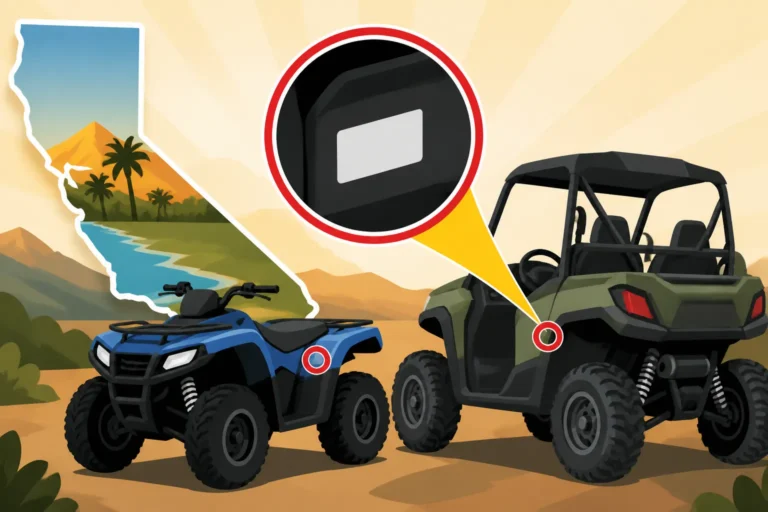
This is where the rubber meets the road—literally. For many new registrations or transfers, the DMV requires a physical inspection of your OHV to verify its details. This process is documented on [California Vehicle Verification on Form REG 31]. A certified DMV employee or authorized vehicle verifier will check the VIN on your machine against your paperwork, ensuring everything matches. They'll also look for key information like the engine number and, critically, the emissions label.
The emissions label is especially important in California because it dictates whether your machine is compliant with the state's stringent air quality regulations, which in turn determines what kind of sticker you get (Green, Red, or Tan). Understanding [What CARB Compliance Means in California] is crucial, as the verifier will be looking for this specific information. Without a proper emissions label, or if your machine doesn't meet the requirements, you could face significant hurdles in getting your OHV registered for use on public lands. Make sure you know [California OHV Emissions Label Location] on your specific machine before your visit.
The Vehicle Verification Process at the DMV
Alright, you've gathered your documents, you've triple-checked everything, and you're ready for the big day. But what exactly happens when your OHV actually gets inspected at the DMV? This isn't just a quick glance; it's a specific process designed to ensure that the machine you're registering is the exact machine on your paperwork and that it meets California's standards. Don't underestimate this step; it's where many people hit a snag if they're not prepared.
What a DMV Verifier Looks For
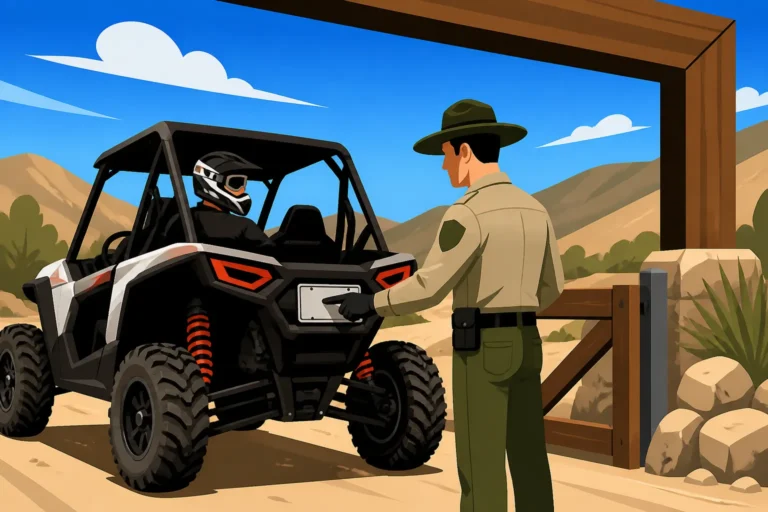
When a DMV employee, or an authorized vehicle verifier, approaches your off-highway vehicle, they're not just kicking the tires. They're performing a methodical check against the information on your [What California's Form REG 343 Asks For] and your other ownership documents. Their primary focus is the Vehicle Identification Number (VIN). They'll locate it on the frame of your ATV, UTV, or dirt bike and carefully compare it, character by character, to the VIN on your title and registration application. Any discrepancy, even a single digit, can halt the process in its tracks.
Beyond the VIN, they'll often check the engine number, especially if there's any ambiguity or a missing VIN. More importantly, in California, they are looking for the emissions control label, often called the CARB (California Air Resources Board) label. This label confirms the vehicle's compliance with California's emissions standards and is critical for determining if your machine qualifies for a [California's Green Sticker Explained], [Red Stickers and What Changed in California], or the newer [California's Tan Sticker Machines]. If this label is missing, illegible, or indicates non-compliance, you could face significant challenges getting your OHV registered for public land use. They also verify the make, model, and year to ensure consistency across all documentation.
Preparing Your OHV for Verification
Bringing your OHV to the DMV for verification might sound a bit odd, but it's a necessary step. First and foremost, ensure your machine is reasonably clean, especially around the areas where the VIN and emissions labels are located. A dirty, muddy machine makes it difficult for the verifier to do their job, potentially causing delays or even a refusal to complete the inspection. Locate your VIN and emissions label before you go and make sure they are clearly visible and legible. Sometimes, a little brush with a damp cloth is all it takes.
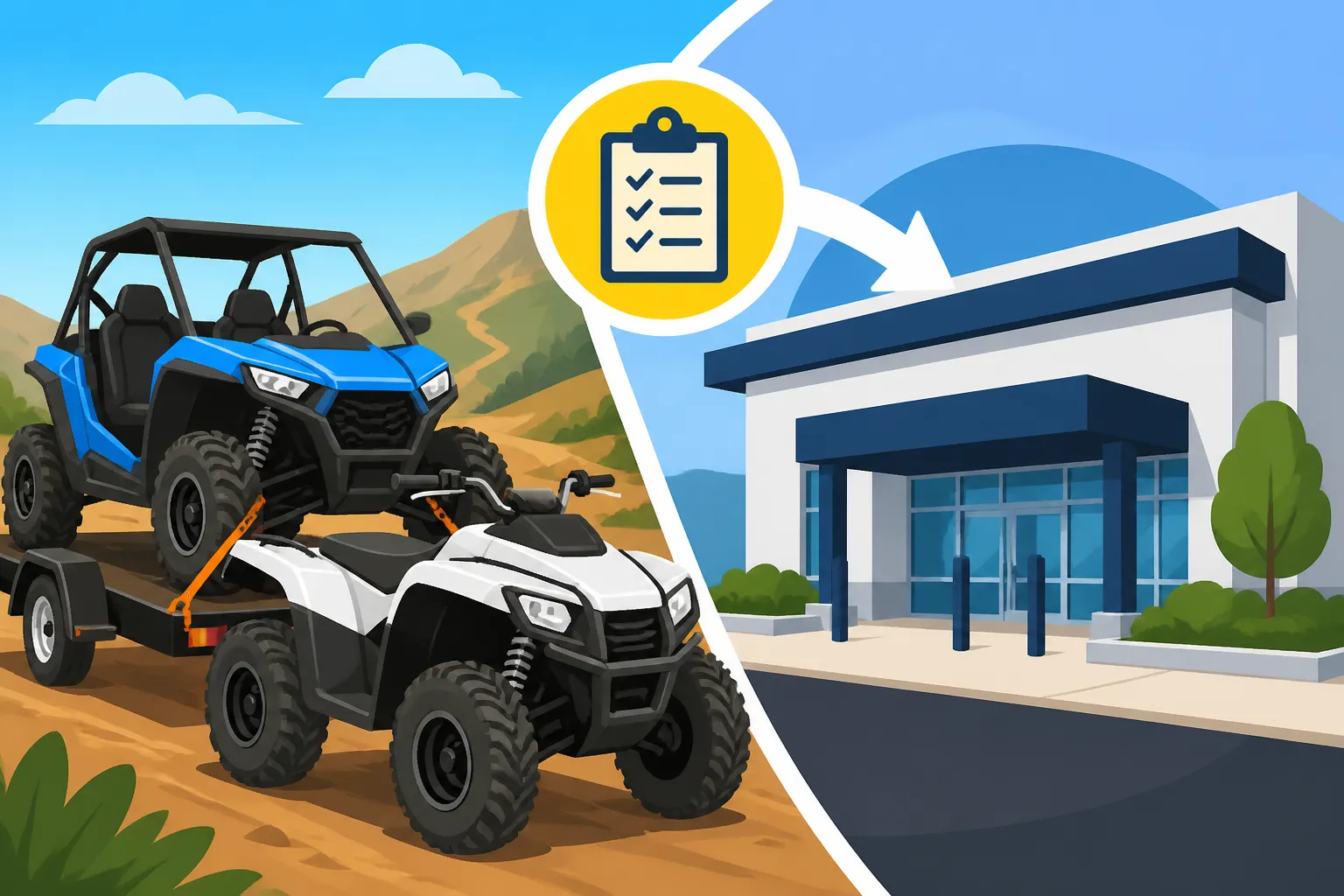
Secondly, ensure your OHV is in a condition where it can be safely moved, even if it's just a few feet for the verifier. While they won't be test-driving it, they might ask you to move it slightly to access a specific area. If your machine is non-operational, you might need to arrange for a mobile verifier, but for most situations, bringing it on a trailer to the DMV parking lot is the standard. Confirming that your machine has the correct type of spark arrester can also be helpful, as this is a requirement for riding on California's brush-covered public lands and is occasionally checked during verification.
Navigating the DMV Field Office: Tips for a Smoother Visit
Facing the DMV can feel like preparing for battle, but with the right strategy, you can minimize the stress and emerge victorious with your OHV paperwork in order. It's all about understanding the system and making smart choices before and during your visit. We want you to spend more time on the trails and less time in line, so let's talk about how to achieve that elusive "smooth DMV experience."
Making an Appointment and Best Times to Go
This is perhaps the single most important piece of advice for any DMV visit: make an appointment! The California DMV offers an online appointment system, and utilizing it can save you hours of waiting. Simply search for "DMV appointment" on their website, select your desired service (like "vehicle registration"), and choose a date and time that works for you. Showing up without an appointment, especially for complex OHV transactions requiring a verifier, is practically begging for a multi-hour ordeal. [California OHV Registration Appointment at the DMV] is key to a less painful experience.
If, for some reason, an appointment isn't feasible, or if you're dealing with a last-minute emergency, timing is everything. Generally, mid-week days (Tuesday, Wednesday, Thursday) tend to be less busy than Mondays and Fridays. Avoid the first hour the office opens and the lunch rush. The middle of the afternoon, say between 2 PM and 4 PM, can sometimes offer a slightly shorter wait, but this isn't a guarantee. Try to go during off-peak seasons if your schedule allows, avoiding major holidays or the immediate weeks surrounding them.
What to Expect During Your Visit
Even with an appointment, be prepared for a multi-step process. First, you'll check in at the information desk, where your appointment will be confirmed, and you'll often be given a queue number. This is a good time to double-check that you have all your forms filled out, especially [What California's Form REG 343 Asks For], which is the application for title or registration. You'll then wait for your number to be called at a service window. This is where a DMV technician will review your paperwork, calculate fees ([California OHV Registration Cost]), and guide you through the next steps.
For OHV verification, once your paperwork is initially processed, you'll be directed to a specific area in the parking lot where verifiers conduct inspections. This is when your OHV, presumably on a trailer, will be physically checked. The verifier will often sign off on your [California Vehicle Verification on Form REG 31] right there. After verification, you might return to a different window or the original one to finalize the transaction, pay any applicable fees, and receive your temporary registration and potentially your new ID plate or sticker. Remember, patience is a virtue, and staying calm and organized will go a long way.
Common Pitfalls and How to Avoid Them
The DMV is a master of finding reasons to send you home. Don't let them! One of the most common pitfalls is incomplete or incorrect paperwork. Double-check every blank on every form. Ensure signatures are exactly as they appear on ID, and dates are correct. Using a reputable service like LawDepot to generate legal documents like a bill of sale or power of attorney can significantly reduce errors that would lead to rejection. Another frequent issue is missing required documents; did you forget the old title? Or proof of emissions? Have a checklist and review it thoroughly.
Vehicle verification issues are another big one. If the VIN is obscured, corroded, or doesn't match, you'll hit a wall. Make sure your OHV is ready for inspection. Finally, unexpected fees can also throw you off. California has various fees, including the base registration, a CHP fee ([The $10 CHP Fee on a California OHV]), and potential penalties if you're late with registration or transfer ([California OHV Late Registration Penalty]). Be prepared for the full cost, and remember that [Why California Will Not Prorate Your Fee] means you'll pay for the full two-year cycle regardless of when you register. Always call ahead if you have unique circumstances or doubts about specific requirements.
Alternative Options to a Field Office Visit
While there are many situations that absolutely demand a trip to the DMV field office, it's worth knowing when you might be able to bypass the experience altogether. California offers a few alternatives for certain types of OHV transactions, which can save you time and hassle if your situation qualifies. It's always great to have options, especially when one of those options involves not going to the DMV!
When You Can Avoid the DMV Altogether
For many routine transactions, especially renewals, you can happily avoid the physical trip to the DMV. If your OHV is already registered in California and you simply need to renew its [California's Biennial OHV Registration Fee], you can often do this online or by mail. [Renewing a California Green Sticker Online] has become a popular and convenient option for many riders, allowing you to pay your fees and receive your new sticker in the mail without ever setting foot in an office. Similarly, many authorized dealers can handle initial registrations for new OHVs purchased directly from them, taking that burden off your shoulders.
Another scenario where you might avoid the DMV is if you're simply replacing a lost [Replacing a California ID Plate]. Often, this can be handled through the mail or online once the initial registration is established. Understanding when [Renewing Without Going to a Field Office] is an option can save you a significant amount of time and frustration. However, if there are any changes to ownership, the vehicle itself, or if the registration has lapsed for an extended period, an in-person visit is usually required.
Services Available Through Third-Party Registrars or Mail
While not as common for OHVs as for street-legal vehicles, some third-party vehicle registration services are authorized to process certain transactions. These private businesses can often handle renewals and some basic transfers for a convenience fee. They can be a good option if you absolutely cannot make it to a DMV office during business hours, or if you prefer to pay a little extra to avoid the lines and complexities. It's always wise to confirm what services they can provide for OHVs specifically, as their capabilities can vary.
Mail-in options are primarily for renewals of existing registrations where no changes to ownership or vehicle information are needed. You'll receive a renewal notice in the mail, and you can simply return it with your payment. While this is convenient, be aware that mail can be slower, and if there are any issues with your payment or paperwork, it can take longer to resolve compared to an in-person visit. Always keep a copy of anything you mail in for your records. The important thing is to understand the limitations of these alternatives; complex issues like [California OHV Registration Without a Title] or [Registering an Out-of-State Machine in California] will almost always require a personal appearance at a field office.
| Transaction Type | DMV Field Office Required? | Online/Mail Option Available? | Third-Party Registrar Option? | Common Scenarios |
|---|---|---|---|---|
| Initial Registration (Private Sale) | Yes (for verification) | No | Limited | Buying a used OHV from a person, bringing an out-of-state machine to CA |
| Title Transfer (Private Sale) | Yes (often) | No | Limited | Buying or selling a used OHV, changing ownership records |
| Lost/Missing Title | Yes | No | No | Need to establish legal ownership without original title |
| Vehicle Verification | Yes | No | No | Initial registration, significant vehicle modification, title discrepancy |
| Registration Renewal | No | Yes | Yes | Renewing current [California OHV Registration Two-Year Cycle] |
| Replacing Lost ID Plate | No (often) | Yes | Yes | Need a new What the ID Plate Looks Like for an already registered OHV |
| Name/Address Change | No (often) | Yes | Yes | Updating personal information associated with registration |
| Complex Issues (e.g., homebuilt) | Yes | No | No | Unique circumstances requiring manual review and approval |
Disclaimer
This article is for general informational purposes only and does not constitute professional advice. Laws, prices and regulations vary by location and change over time. Consult a qualified professional for guidance on your specific situation.