California OHV Registration for a Youth Quad
Trying to figure out the maze of California OHV registration for anything can be a headache, but when you're dealing with a youth quad, it can feel even more confusing. You're trying to get your young rider out on the trails safely and legally, but the rules seem designed to make it as hard as possible. This guide will walk you through everything you need to know about registering a youth quad in California, cutting through the jargon so you can get that sticker and hit the dirt with confidence.
Understanding Youth Quad Registration in California
It's easy to think that because a quad is small, or for a child, it might fall under some special exemption. Unfortunately, that's rarely the case in California. The state's Off-Highway Motor Vehicle (OHV) laws are pretty comprehensive, and almost every machine that leaves the pavement needs to be registered.
The Basics: Why Even a Small Quad Needs a Sticker
California's Department of Motor Vehicles (DMV) and the Off-Highway Motor Vehicle Recreation (OHMVR) Division are very clear: if your quad is designed exclusively for off-highway use and you plan to ride it on public lands, it needs to be identified. This applies whether it's a full-size sport quad, a utility side-by-side, or that perfect little 90cc quad you bought for your budding enthusiast. The sticker you get isn't just a pretty decal; it's your permission slip to access state vehicular recreation areas (SVRAs), National Forest trails, and Bureau of Land Management (BLM) open riding areas. Without it, you're not only risking a hefty fine but also missing out on the funds that your registration fees contribute to maintaining and expanding these incredible riding opportunities. You might be surprised how much goes into keeping those trails open and safe! [What California OHV Fees Pay For]
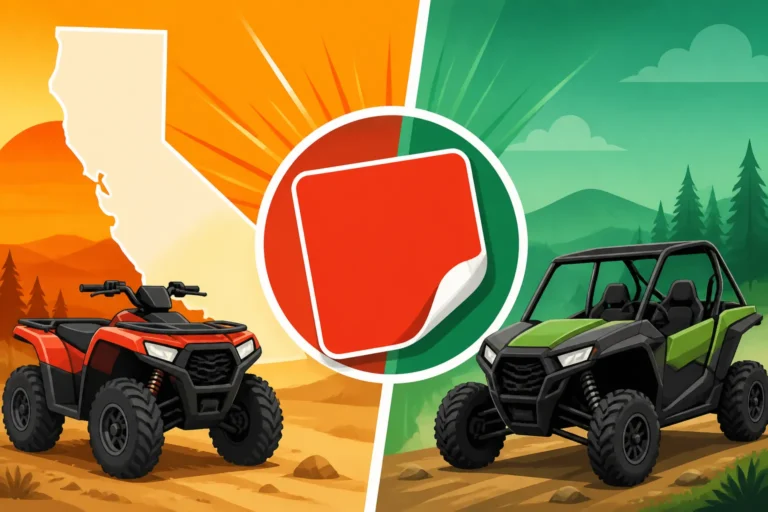
The type of sticker your youth quad receives — Green, Red, or even Tan — depends on a few factors, primarily its emissions compliance and model year. Modern youth quads are often designed to meet the strict emission standards that qualify them for a Green Sticker, allowing year-round access to most OHV parks and trails. However, if you've got an older, perhaps carbureted youth machine, it might fall into the Red Sticker category, which means certain seasonal riding restrictions. Don't worry, we'll dive into what those mean specifically for youth quads. Even if you only plan on riding on private land, understanding these rules is crucial, because the moment you venture onto a designated public trail or road, that sticker becomes non-negotiable.
Key Paperwork You'll Need
This is often where the real frustration begins. The California DMV isn't exactly famous for making things simple, and finding a clear, concise list of required documents can feel like a scavenger hunt. For a youth quad, just like any other OHV, you'll generally need three main things: proof of ownership, vehicle verification, and a completed application for title or registration. Each of these has its own quirks and potential pitfalls. You might be thinking, "It's just a little quad, why do I need so much?" But the state treats all OHVs with the same level of bureaucratic rigor, whether it's a 50cc beginner machine or a 1000cc side-by-side.
Imagine showing up to the DMV, waiting in line, only to be told you're missing one obscure form or a signature. It happens all the time! Having all your ducks in a row before you even set foot in a field office or mail anything is absolutely critical. This preparation saves you precious time, frustration, and potentially multiple trips. Sometimes, securing things like a proper bill of sale can be tricky, especially if you bought the quad from a private seller who wasn't overly concerned with formal documentation. That's where resources like LawDepot can be incredibly helpful. They offer standardized, legally sound templates for documents like a bill of sale, ensuring you have all the necessary information and signatures right from the start.
Navigating the Registration Process for a Youth Quad
Once you understand why you need to register, the next step is to tackle the how. It's a multi-stage process that, if broken down, isn't as daunting as it first appears. Let's walk through the specifics.
Proving Ownership: Bill of Sale and Title
This is arguably the most critical step. The DMV needs to know, without a shadow of a doubt, that you are the rightful owner of that youth quad. If you bought the quad new from a licensed dealer in California, they usually handle all the initial paperwork for you, including submitting the manufacturer's certificate of origin (MCO) or manufacturer's statement of origin (MSO) and the sales tax. This is often the easiest route, as the dealer is well-versed in the requirements. [Registering a Quad Bought From a California Dealer]
However, if you bought the youth quad from a private seller, you'll need a robust bill of sale. This isn't just a scribble on a napkin; it needs to clearly identify the buyer and seller, the vehicle (including the VIN), the purchase price, and the date of sale. If there's an existing California title, the previous owner should sign it over to you. If there's no title, perhaps because it was never originally registered or was purchased out-of-state without a titling requirement, the bill of sale becomes even more vital. In some cases, you might even need a "Statement of Facts" (Form REG 256) explaining why certain documents aren't available. Don't underestimate the power of a professional-looking bill of sale; using a template from a service like LawDepot can provide peace of mind that you've covered all the bases and created a document the DMV will accept. It helps establish a clear chain of ownership, which is paramount. [California OHV Bill of Sale Requirements]
Getting Your Youth Quad Verified
Even a youth quad needs to undergo a vehicle verification. This isn't a safety inspection, but rather a process where a qualified individual physically inspects your quad to confirm its Vehicle Identification Number (VIN) and engine number match your ownership documents. They also check for specific emissions labels, which are crucial for determining its sticker eligibility. This verification typically happens on California's Form REG 31.
You have a few options for getting this done. You can bring your quad to a California DMV field office, where a DMV employee can perform the verification. However, this often means trailering the quad and making an appointment, which can be inconvenient. Alternatively, you can use the services of the California Highway Patrol (CHP) or a privately licensed vehicle verifier. Many OHV dealerships also have staff who are licensed verifiers. For many quad owners, especially with smaller youth machines, finding a local licensed verifier or making an appointment at a nearby OHV dealer is often the most straightforward path. They understand the nuances of off-highway vehicles and can quickly get your Form REG 31 stamped and signed. [California Vehicle Verification on Form REG 31]
Completing Form REG 343: Application for Title or Registration
This is the central application form for all OHVs in California. Form REG 343, officially titled "Application for Title or Registration," asks for a lot of information, from the vehicle's make, model, and year to your personal details. It's important to fill this out completely and accurately, as any missing information can lead to delays. You'll need to specify whether you're applying for a new registration or a transfer of ownership, and provide details about the vehicle's use and any liens.
Pay close attention to sections asking about the vehicle's original purchase date and price, as this will determine sales tax liability if it's a recent private party purchase and tax hasn't been paid. For a youth quad, the process is identical to a full-size machine, so don't leave anything blank assuming it doesn't apply. If you're unsure about a specific section, it's always better to ask a DMV representative or a licensed verifier than to guess and risk having your application rejected. Remember, this form is the backbone of your application, so take your time and be thorough. [What California's Form REG 343 Asks For]
Sticker Types for Youth Quads and What They Mean
California employs a color-coded sticker system to identify OHVs and regulate their use on public lands. For youth quads, understanding which sticker your machine qualifies for is paramount to knowing where and when your child can ride.
Green Sticker Eligibility for Youth Machines
The Green Sticker is the golden ticket for year-round OHV recreation in California. It signifies that your off-highway vehicle meets the state's stringent emissions standards. For most modern youth quads, especially those purchased new within the last decade or so, qualifying for a Green Sticker is generally straightforward. These machines are typically manufactured with cleaner-burning engines and catalytic converters designed to comply with California Air Resources Board (CARB) regulations.
If your youth quad has a "2003 and newer" model year and is certified by CARB, it will almost certainly receive a Green Sticker. This means unrestricted access to all designated OHV areas in California, regardless of the time of year. This freedom is a huge advantage, as it removes the worry of seasonal closures that apply to other sticker types. When you're filling out your registration paperwork, the emissions information found on your quad's frame (often near the engine) or in its owner's manual will be key to proving its Green Sticker eligibility. This is what the verifier will be looking for. [California's Green Sticker Explained] and [Green, Red and Tan: California's Three Stickers]
Red Sticker and Older Youth Models
The Red Sticker is where things can get a bit more complicated, especially for older youth quads. This sticker is issued to OHVs that do not meet California's emissions standards for year-round riding. Generally, this applies to machines that are model year 2002 and older, or those 2003 and newer that are not CARB compliant. While many modern youth quads are Green Sticker eligible, if you have an older, perhaps vintage, youth machine that doesn't meet the latest standards, it will likely be assigned a Red Sticker.
The primary implication of a Red Sticker is that your quad will be subject to seasonal riding restrictions. This means you might not be able to ride in certain areas during specific "non-season" months, typically from May through September, when air quality concerns are higher. However, these restrictions usually don't apply at "open" riding areas, such as the vast Imperial Sand Dunes (Glamis) or Ocotillo Wells SVRA, which remain open year-round for Red Sticker machines due to their unique geographical and climate conditions. It's crucial to check the rules for the specific riding area you plan to visit, as they can vary. If you have an older youth quad, be prepared for this possibility and plan your riding adventures accordingly. [California Red Sticker Rules Today]
Tan Sticker: Sanctioned Events for Young Riders
The Tan Sticker is a specialized registration type that's far less common for general recreational riding but is absolutely essential for youth riders involved in organized, sanctioned competitive events. This sticker is specifically for competition OHVs that are not eligible for a Green or Red Sticker because they are built exclusively for closed-course competition and do not meet the emissions standards for recreational use.
If your child is participating in motocross races, grand prix events, or other organized competitions on a dedicated race quad, it might need a Tan Sticker. These machines are designed for maximum performance, not for trail riding, and are not typically sold to the general public for recreational use. The Tan Sticker allows these vehicles to be transported to and operated at sanctioned competitive events on private or designated public land without needing a Green or Red Sticker. It's a way for the state to acknowledge the specialized nature of competitive OHVs. If you're involved in youth racing, your event organizer can provide more specific guidance on whether a Tan Sticker is appropriate for your child's machine. [California Tan Sticker Eligibility]
Common Pitfalls and Essential Tips for Youth Quad Registration
Even with all the information in hand, the registration process can still throw a few curveballs. Knowing what to watch out for can save you a lot of grief.
Avoiding Common Mistakes
One of the most frequent reasons for a rejected application is simply incomplete paperwork. It’s easy to overlook a signature box, a date, or a specific piece of information. Double-check everything before you submit it. Make sure the VIN on your bill of sale, title (if applicable), and vehicle verification form all match exactly. Any discrepancy, even a single digit, can trigger a flag and send you back to square one.
Another common issue arises with the bill of sale itself, especially in private party transactions. Many people use informal notes or receipts, which might lack the detailed information the DMV requires. For instance, if the bill of sale doesn't explicitly state the quad's VIN, the DMV cannot definitively link the transaction to the vehicle. This is where using a standardized form, perhaps one you can customize from a platform like LawDepot, can make a huge difference. These templates are designed to capture all the legally required information, reducing the chances of a rejection due to an inadequate bill of sale. Finally, ensure your vehicle verification is performed by an authorized person; a buddy who just "knows" what to do won't cut it. [California OHV Registration Paperwork Checklist]
Costs and Fees to Expect
Registering a youth quad in California involves several fees, and while I can't give you exact current figures, I can tell you about the types of costs you'll encounter. First, there's the biennial OHV registration fee itself, which is paid every two years. On top of that, you'll likely pay a California Highway Patrol (CHP) fee, which contributes to the CHP's enforcement and safety programs related to OHVs. If you bought the quad in a private sale, you might also owe sales or use tax on the purchase price, unless you've already paid it.
Beyond these, there could be a small service fee if you register through a private registration service rather than directly through the DMV. If you're transferring ownership, there's a transfer fee, and if you delay in submitting your transfer paperwork, late penalties can apply. It's always a good idea to visit the official California DMV website or call them for the most up-to-date fee schedule. Don't be surprised if the total cost is a bit more than just the base registration fee; these various smaller fees add up. [California OHV Registration Cost]
What Comes Next: The Sticker, Plate, and Title
Once your application is processed and all fees are paid, the DMV will issue you an Off-Highway Vehicle Identification Plate, commonly known as an ID plate. This isn't a typical license plate, but a small, rectangular metal plate with your unique OHV identification number. You'll also receive a current year sticker (Green, Red, or Tan) that adheres to this plate. In California, OHVs get a plate, not a decal directly on the plastic, which can sometimes surprise new owners. This plate must be securely mounted in a clearly visible location on the rear of the quad, typically bolted to a fender or a rear frame member. [Why California Issues a Plate, Not a Decal]
In addition to the ID plate and sticker, you will also receive a Certificate of Title for your youth quad, assuming it didn't already have one and you applied for it. This is your official proof of ownership, a crucial document that you should keep in a safe place, not on the machine itself. When you sell the quad later, this title will be signed over to the new owner, completing the transfer of ownership. Make sure the information on your title matches your ID plate and the details of your quad exactly. This combination of the ID plate, current sticker, and title means your youth quad is officially ready for legal operation on California's public OHV lands, and your young rider can hit the trails with all the proper permissions. [Titling an Off-Highway Vehicle in California]
Disclaimer
This article is for general informational purposes only and does not constitute professional advice. Laws, prices and regulations vary by location and change over time. Consult a qualified professional for guidance on your specific situation.