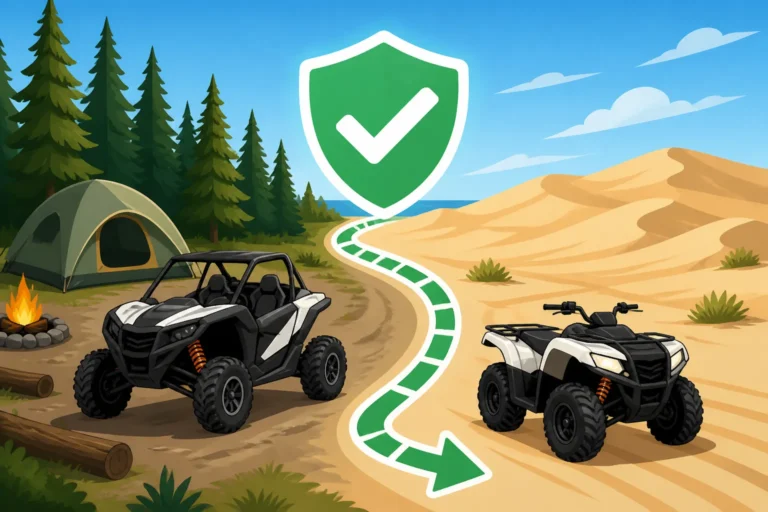
Riding From Gordon’s Well to the Sand
Alright, let's talk about the Imperial Sand Dunes – specifically, getting from Gordon's Well to that glorious expanse of sand. It's a common scene: you've loaded up the family, endured the drive, and finally pulled into Gordon's Well, ready to unleash your ATV or UTV. But then you look around, see the dunes beckoning, and realize there are roads, campgrounds, and other vehicles everywhere. How do you actually get to the open sand without running afoul of the law or getting lost? This guide is here to untangle the confusion and make sure your journey from staging to shredding is as smooth as freshly groomed sand.
Understanding the Gordon's Well Area and Access Points
Gordon's Well is more than just an entry point to the vast Imperial Sand Dunes Recreation Area (ISDRA); it's a whole microcosm of the dune riding experience. For many, it's the starting line for an epic weekend of sand blasting. But unlike some other, more direct access points, Gordon's Well has a unique setup that can sometimes leave newcomers scratching their heads about the best way to hit the sand. It’s a place where a bit of local knowledge, or at least a good map and a clear understanding of the rules, goes a very long way in making your trip enjoyable and citation-free.
What Makes Gordon's Well Unique for Dune Riders
Gordon's Well stands out for a few reasons that make the approach to the dunes slightly different from, say, the main Glamis entrance at Gecko Road. Here, you'll find a more dispersed layout, with various campgrounds, designated staging areas, and even some scattered commercial operations. This area serves as a gateway to the southern reaches of the ISDRA, offering a different vibe and often a bit more room to breathe than the bustling central Glamis sections. The key distinction is the network of both paved and unpaved access roads that crisscross the immediate vicinity, creating a buffer between your truck and trailer and the unadulterated dunes. You can see the towering sand from almost anywhere, but actually getting your machine to it involves navigating these specific pathways.
This unique setup often means you're dealing with a mix of vehicle traffic – everything from full-size RVs and tow rigs to Jeeps and, of course, other OHVs. It's not just a free-for-all from the moment you unload. There's a structure to the entry, and understanding that structure is crucial. Think of it less like an open field and more like a network of capillaries feeding into a main artery. Each of these smaller routes, whether it's a paved section or a graded dirt track, plays a role in channeling riders safely and legally to the primary riding areas. Knowing which one to take will save you time, stress, and potential headaches with the authorities.
The Immediate Challenges of Getting to the Sand
The biggest frustration for many at Gordon's Well is that deceptive visual of the dunes right there, seemingly within reach, yet separated by a labyrinth of roads and designated zones. You see the massive piles of sand, feel the excitement building, and then realize you're not entirely sure which dirt track is a legitimate route and which might lead to private property or an area where OHVs are restricted. It’s easy to pull off the main road, unload your machines, and instinctively want to point them directly towards the nearest dune face, but that could land you in trouble.
The landscape at Gordon's Well includes established roads and washes that serve as designated connectors. The challenge lies in discerning these from informal trails that might have been created by previous riders but are not officially sanctioned. Veering off a designated path, even if it looks like a shortcut, can result in hefty fines from the Bureau of Land Management (BLM) rangers who patrol the area. These officials are not just looking for registration and safety equipment; they're also enforcing strict rules about where you can and cannot ride to protect both the environment and public safety. So, while the sand might be calling your name loudly, patience and adherence to the marked routes are your best friends in this initial transition from paved ground to open dunes.
Navigating Designated Routes to the Dunes
Once you're at Gordon's Well and ready to ride, the next step is crucial: finding and sticking to the designated routes that lead you safely and legally into the vastness of the Imperial Sand Dunes. These aren't just random dirt paths; they are specific corridors maintained and monitored by the Bureau of Land Management (BLM) to ensure organized access, reduce environmental impact, and enhance rider safety. Ignoring these routes, even inadvertently, can lead to quick enforcement action, which nobody wants on their dune adventure. The beauty of these routes is that once you understand them, the transition is seamless, opening up miles of riding possibilities.
Identifying the Legal Paths for OHVs
At Gordon's Well, your primary legal paths to the dunes are typically marked wash roads or graded dirt routes. These aren't always grand, obvious highways, but they will be identifiable. Look for signs from the BLM, or simply observe where the majority of other experienced riders are heading. One common artery for riders is Gordon's Well Road itself, and specific turn-offs from it that lead directly into the open riding areas. These designated routes are designed to guide you through the initial flatter areas, past any sensitive habitats or private property, and directly to where the real dune riding begins. Think of them as the official on-ramps to the sand highway.
It's paramount to understand that these routes are not merely suggestions; they are mandates. The BLM actively manages this area, and they have specific Motor Vehicle Use Maps (MVUMs) that delineate exactly where motorized travel is permitted. While not all areas might have the same level of detailed maps as a national forest, the principle is the same: stay on the marked path. For a broader understanding of how these maps function in other recreational areas, you might find it useful to learn about [Reading a Motor Vehicle Use Map for a Forest]. The routes often follow natural washes or established tracks that have been in use for years, but formal signage helps confirm their legitimacy. When in doubt, always err on the side of caution and look for official indicators before venturing off.
Rules for Using Designated Access Routes
Even on these designated access routes within the ISDRA, you're not completely off the hook regarding rules. While you might feel the urge to hit the throttle as soon as you see sand, there are speed limits on many of these connector roads, especially in areas where vehicle traffic is mixed or near camping zones. These limits are in place for everyone's safety, as visibility can be limited by dust, and there are often pedestrians or other slow-moving vehicles. Respecting these limits is part of being a responsible rider. Don't be that person kicking up massive dust clouds through a camping area or flying past families trying to get to their rigs.
Beyond speed, staying strictly on the marked path is non-negotiable. Do not try to cut across open desert or undeveloped land to reach a dune faster. Not only can this lead to immediate fines, but it also causes environmental damage and can disturb protected areas. While we're talking about direct access to dunes, it's a good time to remember that crossing public paved roads outside the designated riding area has its own strict rules. For context, if you ever had to cross a highway, you'd need to know [California Rules for Crossing a Public Road]. However, within the ISDRA at Gordon's Well, the routes are generally contained, but the principle of designated travel remains. Finally, a critical point for any rider entering the ISDRA: you absolutely need the right permits. Make sure you understand [California OHV Permits Explained], including any specific ISDRA visitor permits required in addition to your state registration, to avoid any unwelcome surprises from rangers.
The Rules of the Road (or lack thereof) for OHVs
When you're riding your ATV or UTV at Gordon's Well and transitioning onto the sand, it's easy to assume that all "road rules" disappear. While the rules are certainly different from cruising down a paved highway, it's not a free-for-all. California has specific regulations for off-highway vehicle (OHV) use on public lands, even on designated access routes within recreation areas like the Imperial Sand Dunes. Understanding these distinctions is crucial, particularly if you're an out-of-state visitor or if you're used to riding in areas with more lenient rules. The key takeaway is that even though it feels like a wide-open playground, there are still boundaries and requirements to ensure everyone's safety and the preservation of the riding area.
Why Your OHV Isn't "Street Legal" Here
Let's get one thing clear right off the bat: the routes leading from Gordon's Well staging areas to the open dunes, even if they're graded dirt roads, are part of the off-highway vehicle area. Your ATV or UTV, regardless of any modifications you've made, is not considered "street legal" in the traditional sense on these paths, nor on any public paved road in California, unless specifically designated as a combined-use highway. California has some of the strictest laws regarding making an OHV street legal, and generally, the answer is a resounding no for ATVs and UTVs. If you're wondering [Are ATVs Street Legal in California?] or [Can You Make a UTV Street Legal in California?], the short answer for general public roads is almost always negative.
This means that even if you're on what appears to be a road, you're operating under OHV rules, not conventional vehicle code. This is an important distinction, especially for visitors from states like Arizona or Utah where UTVs might be legally plated for street use. Unfortunately, [A Utah Plate That Means Nothing in California] and [An Arizona Street-Legal UTV in California] will not grant you permission to ride on California's paved public roads or to ignore California's OHV regulations within the dunes. Your out-of-state street plate provides no special privileges here; you must still adhere to California's OHV registration, equipment, and operating laws. The ISDRA is an OHV park, and your machine must comply with OHV requirements.
Necessary Equipment for Dune Riding (Beyond Registration)
Beyond the crucial matter of valid registration – whether it's a California Green Sticker, Red Sticker, or a Nonresident OHV Use Permit – there's a list of essential equipment that isn't just a good idea, it's legally required for riding in the Imperial Sand Dunes and most other California public lands. The most visible and often checked item for dune riders is the whip flag. This isn't just a decoration; it's a critical safety device designed to increase your visibility over the rolling dunes, particularly when cresting hills or navigating busy sections. Make sure you know [California Dune Flag Requirements] and pay close attention to [California Whip Height Requirements], as there are specific rules about how tall it must be and where the flag should be positioned on the whip.
Another non-negotiable for California OHV riding is a proper spark arrester on your exhaust. This device prevents sparks from escaping your exhaust system and potentially igniting brush, which is a serious concern in California's arid landscapes. Rangers will check for this, so ensure your machine is compliant. Familiarize yourself with [California Spark Arrester Rules] and be aware of [California Noise Rules at an SVRA Gate], as excessive noise can also lead to citations. Helmets are also mandatory for all riders on OHVs on public land, regardless of age, and safety courses are often required for younger riders. Look into [California Helmet Law for ATV Riders] and [California Helmet Law for UTV Passengers] to ensure everyone in your group is protected and compliant. Many riders choose to upgrade their machines with robust aftermarket parts from brands like SuperATV, not just for performance, but often for enhanced safety and durability in the harsh dune environment, from reinforced roll cages to specific mounts for whips and lighting.
Essential Preparations for Your Gordon's Well Ride
A successful day or weekend at Gordon's Well, culminating in an exhilarating ride on the sand, hinges significantly on your preparation. It's not enough to simply have a machine and a desire to ride; you need to ensure everything is in order, from your vehicle's paperwork to your personal safety gear. The desert environment, while stunning, is also unforgiving, and being caught unprepared can quickly turn a fun outing into a stressful ordeal. Taking the time before you even leave home to check off these crucial items will save you immense hassle and allow you to focus on the pure joy of riding the dunes.
Getting Your Machine and Paperwork in Order
First and foremost, your OHV needs to be properly registered for California's public lands. If your machine is from California, you'll need a current Green Sticker or Red Sticker. The [California's Green Sticker Explained] article can give you the full rundown on eligibility, while [Red Stickers and What Changed in California] will detail the rules for machines with that identification. For out-of-state visitors, a [California's Nonresident OHV Use Permit] is typically required, as most other state registrations are not reciprocated in California. Make sure you purchase this permit and display it correctly.
Beyond your state OHV registration, the Imperial Sand Dunes Recreation Area (ISDRA) also requires a specific visitor permit. This is separate from your OHV registration and is essential for accessing the dunes. Information on [ISDRA Permits and California's October Season] will guide you on how and when to purchase these. It's crucial to carry physical copies of all your registration and permits with you while riding. While digital copies on your phone might seem convenient, cell signal can be spotty, and rangers will expect to see hard copies. So, be prepared by following the advice in [Carrying Registration Paper on the Sand]. And finally, before you even load up, do a thorough pre-ride check of your machine: tire pressure (which you'll adjust for sand later), fluid levels, brake function, and ensuring all your safety gear (helmets, goggles) is in good condition.
Safety First: Tips for a Smooth Transition
Once you're at Gordon's Well and your machine is ready, there are still a few vital safety considerations to ensure your ride from the staging area to the open dunes is as smooth and safe as possible. The most immediate adjustment you'll need to make is to your tire pressure. Riding on soft sand requires significantly lower tire pressure than trail riding or street driving to increase your tire's footprint and prevent getting stuck. Consult your OHV manual or experienced dune riders for recommended PSI ranges, but generally, it's much lower than pavement pressures. SuperATV also offers various tire and wheel setups designed for optimal sand performance, which can further enhance your grip and floatation.
| Item | Why it's Important for Gordon's Well to Sand |
|---|---|
| Proper OHV Registration | Required by law (Green/Red Sticker or Nonresident Permit) |
| ISDRA Visitor Permit | Specific permit required for Imperial Sand Dunes |
| Whip Flag | Critical for visibility over dunes; legally required |
| Spark Arrester | Prevents wildfires; legally required |
| Helmet (All Riders) | Mandatory safety gear; legally required |
| Tire Pressure Adjustment | Essential for traction and preventing getting stuck in sand |
| Physical Paperwork | Rangers require visible, accessible documents |
| Awareness of Designated Routes | Prevents fines, environmental damage, and getting lost |
| Staying Vigilant | High traffic areas near staging and access points |
| Emergency Supplies | Water, first aid, communication device are crucial in the desert |
Staying aware of your surroundings, particularly in the bustling areas near staging and access points, is paramount. These can be high-traffic zones with other riders, pedestrians, and support vehicles. Keep your speed in check until you're well into the open dunes. If you're unfamiliar with the area, it's wise to avoid riding after dark or to stick to well-known routes with experienced riders. Always have a map, a GPS, or at least one person in your group who knows the layout of the dunes. Lastly, the desert environment demands that you carry adequate emergency supplies: plenty of water, a first-aid kit, and a reliable communication device (like a satellite messenger, as cell service can be spotty) are absolute must-haves for any dune adventure. These preparations aren't just about compliance; they're about ensuring a safe, fun, and memorable experience for everyone.
Disclaimer
This article is for general informational purposes only and does not constitute professional advice. Laws, prices and regulations vary by location and change over time. Consult a qualified professional for guidance on your specific situation.