Oceano Dunes: California’s Only Sand Beach Ride
Oceano Dunes offers a rare California riding experience: a place where off-highway vehicles meet coastal sand, shifting dunes, ocean weather, and changing access rules. That mix can make trip planning confusing, especially for first-time visitors. This guide explains how to prepare, ride more safely, understand access limits, and make the most of a visit near Pismo Beach.
What makes Oceano Dunes different
A coastal riding area with changing conditions
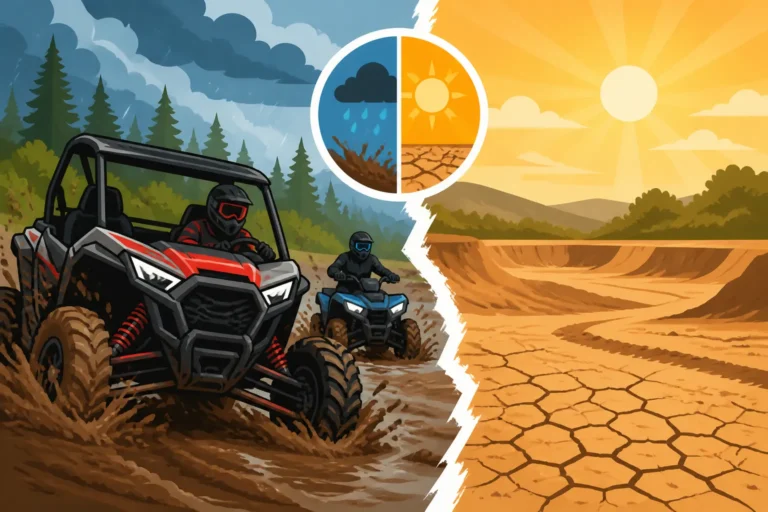
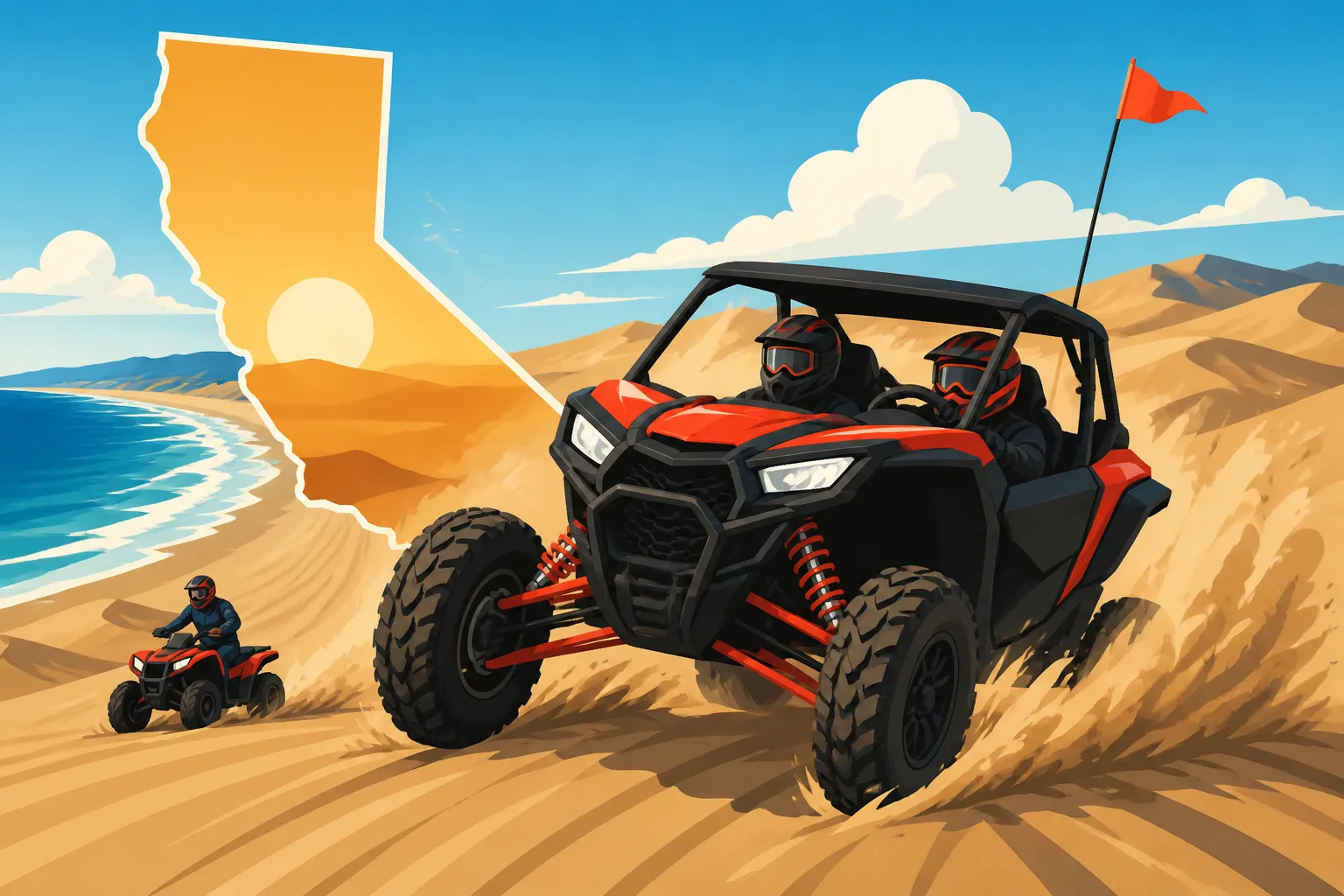
Oceano Dunes State Vehicular Recreation Area, commonly called Oceano Dunes SVRA, is in San Luis Obispo County on California’s Central Coast. Unlike an inland riding area, it combines open sand, a shoreline, and nearby communities. The scenery is part of the draw, but the coast also makes conditions change quickly: fog can roll in, wind can reduce visibility, and the sand can feel very different from one part of a ride to another.
The beach and dunes are not a single, unrestricted playground. The areas available to vehicles, the routes to reach them, and the boundaries riders must respect can be affected by park rules, habitat protections, weather, and other management decisions. Before leaving home, check the latest information from California State Parks and follow posted signs and ranger instructions when you arrive. A map or an old trip report is useful background, not proof that a route is open today.
Oceano is often described as California’s only sand-beach riding experience because riders can encounter coastal beach and dunes in the same general recreation area. That description should not be mistaken for a promise that every visitor can drive on every stretch of beach or enter every dune. For comparisons with other places to ride, see [California Dune Riding Areas], then check each area’s current access rules separately.
A different kind of ride from a forest trail
A sand ride demands different judgment from a ride on packed dirt. The surface can change under your tires, and a line that looks firm from a distance may be soft, rutted, or cut by water. Sand also makes it easy to lose a sense of speed and distance. Riders who are comfortable on familiar forest roads sometimes find that a coastal dune takes more attention than they expected.
There is no single “best” line that stays best all day. Wind, tides, traffic, and the movement of other vehicles can reshape the surface. A slope that seemed manageable on the way out may be harder when you return, especially if the machine is hot, the rider is tired, or the sand has become churned up. Give yourself room to slow down and assess a feature instead of committing because another rider went through first.
That changing surface is part of the appeal, but it is also why a successful visit starts with modest expectations. A first ride can be about learning where the firm sand is, understanding how the machine responds, and finding a comfortable pace. You do not need to climb the biggest dune or cover the most ground to have a good day.
Plan access before you head to the coast
Find out where vehicle entry is allowed
The access point and route you use matter. Visitors commonly plan around the Oceano entrance near Pier Avenue, but the exact path from the entrance toward the riding area and beach can be affected by signs, barriers, or temporary restrictions. Read the entry information before you travel and pay attention to what is posted on arrival. For a closer look at that approach, see [Oceano Dunes Entry From Pier Avenue].
Do not assume that a paved street, beach access point, or stretch of sand is open to OHVs just because it appears physically passable. Legal access depends on the area’s rules and designated routes. If a gate is closed or a sign directs you another way, do not ride around it or treat tire tracks as permission. A route can look well-used and still be closed to motor vehicles.
It helps to separate the trip into three questions: where can you enter, where may you ride, and where can you park or camp? Those answers may not be identical. Confirm them independently, especially if you are arriving with a trailer, planning a beach ride, or expecting to camp. For practical context about the transition from the entrance to the sand, read [Driving Onto the Sand at Oceano].
Check closures, boundaries, and habitat protections
Oceano’s natural environment is part of the riding experience and a reason access can be carefully managed. Sensitive habitat and wildlife protections can affect where vehicles may travel. Temporary fencing, signs, and marked boundaries are not suggestions to work around; they define areas that visitors must avoid. If a marker is difficult to interpret, stop and ask a park employee rather than guessing.
Snowy plovers and other coastal wildlife are among the considerations that shape how parts of the area are managed. A boundary that was in a different place on your last visit may have changed, and seasonal protections can influence available routes. Learn the basics in [Oceano Dunes and California's Snowy Plover] and [Snowy Plover Fencing and Your Route], then treat the on-site markers as the final practical guide to where you can go.
Online maps are helpful for preparing, but they may not show a temporary closure or a newly marked boundary. Apps such as onX Offroad can help you understand the broader area and organize a route plan, but use them as a planning aid rather than as permission to ride. Confirm route access with current park information and signs at the site. If your preferred route is closed, turn around and choose an authorized alternative.
Prepare your ATV or UTV for sand
Check the machine before loading it
A machine that behaves well on hard ground can reveal problems quickly in soft sand. Before the trip, check the tires, brakes, steering, throttle, cooling system, battery, belts where applicable, and visible fasteners. Look for loose or damaged parts that could become a breakdown once you are away from the entrance. A basic pre-ride inspection is much easier at home than on a windy stretch of beach.
For a UTV, pay close attention to the tires, seat belts, cage, doors or nets, and any required safety equipment. For an ATV, check that the controls move freely and that the machine is appropriate for the rider’s size and experience. Carry tools and basic recovery supplies that match your vehicle and the kind of riding you expect to do. If you are not sure how to handle a repair or recovery, avoid riding farther than you can safely manage.
Tire pressure is a common sand-riding question, but there is no one setting that works for every machine, tire, load, and condition. Follow the manufacturer’s guidance and make changes cautiously. Do not let air out casually without a reliable way to reinflate the tires before returning to firmer surfaces or traveling on a trailer. Too little pressure can increase the risk of a tire coming off the bead or being damaged.
Pack for a coastal day, not just a ride
A beach can feel cool and damp even when inland weather is warm. Bring layers, eye protection, gloves, and enough drinking water for everyone in your group. Windblown sand can be uncomfortable, and a foggy morning may reduce visibility. Sunscreen still matters on overcast days, particularly when the light reflects off sand and water.
Plan for communication gaps. Cell coverage may vary, and a phone can be difficult to use with gloves or in blowing sand. Agree on a meeting point, decide what the group will do if someone gets separated, and carry a charged phone in a protective case. For a larger group or a ride in unfamiliar terrain, consider radios that everyone knows how to use. Keep paper or offline copies of important details if you do not want to rely on a signal.
Bring more than the bare minimum for the ride itself. Include water, snacks, a first-aid kit, a basic tool kit, a tire repair option, and a way to contact help. Store loose items securely so they do not fall out or distract the driver. The goal is not to prepare for every imaginable emergency; it is to make a manageable problem—like a flat tire, a delayed return, or a separated rider—less stressful.
| Trip-planning item | What to confirm or bring | Why it matters |
|---|---|---|
| Access | Current entrance details, open routes, and posted boundaries | Access may change, and not every visible route is authorized |
| Vehicle | Tires, brakes, steering, cooling, restraints, and basic tools | Sand puts sustained demands on the machine |
| Rider safety | Helmet, eye protection, gloves, water, and suitable clothing | Wind, sand, sun, and fatigue can affect comfort and control |
| Navigation | Current park information, an offline plan, and a group meeting point | Cell service and digital maps may not answer every on-site question |
| Environmental care | Waste bags and respect for fences and marked habitat | Visitors share the area with sensitive coastal wildlife |
Ride sand with patience and a plan
Start slowly and leave space
If you are new to sand, begin on open, manageable ground where you have room to learn how the machine responds. Keep your speed controlled, look farther ahead than the front tires, and avoid abrupt steering or braking when possible. A rider who stares at the patch of sand directly under the vehicle can miss a rut, a person, or another vehicle approaching from the side.
Leave generous space between machines. Sand can obscure small bumps and make braking feel different from a hard-packed trail. Following too closely gives the rider ahead little room to react and leaves you less time to respond if they slow down or turn. In a group, set a pace that the least experienced rider can maintain comfortably and pause at clear, agreed-upon places.
Do not let the excitement of arriving at the dunes turn into pressure to keep up. A rider who needs a break should say so early. If someone is struggling with control, move to an open, safe spot and regroup rather than trying to coach them while everyone continues moving. A calm first hour often makes the rest of the visit more enjoyable.
Read the sand, surf, and other riders
Ocean-side sand is not uniform. It may be firmer near the water at some times and soft or cut up in other places, but conditions shift with tides and weather. Never treat a particular band of beach as reliably safe just because it was firm on a previous visit. Watch for water, erosion, traffic, and any signs that mark an edge or restricted area.
The surf adds a hazard that is easy to underestimate. Stay well clear of water and do not ride into wet channels, wave run-up, or areas where an escape route could be cut off. A shallow-looking pool can conceal soft sand, and a passing wave can change the surface while you are deciding what to do. Tide timing is especially important if your plan involves traveling near the shoreline; see [Tides and Riding the Oceano Sand] before making that part of your route.
Other visitors may be walking, riding bicycles, operating vehicles, or watching from the beach. Slow down around people and give them room. Avoid sudden turns that throw sand toward others, and do not assume that someone has seen or heard you. A dune or shoreline can create blind spots, so keep speed low where sight lines are limited and yield when you cannot clearly judge who has the right of way.
Know when to turn around
A steep slope, soft patch, crowded area, or uncertain boundary is a good reason to pause. If you cannot see what lies beyond a crest, do not charge over it. Approach unfamiliar terrain cautiously, and turn back if you cannot confirm that the route is open or the slope is within your ability. The fact that another rider has made a track does not mean it is safe for your vehicle or skill level.
If a vehicle becomes stuck, the first step is to keep people safe. Stop other traffic from crowding the recovery, make sure everyone is away from wheels and moving parts, and use equipment only as intended. Never attach a recovery strap to an unsuitable point or stand in the path of a loaded strap. If you do not have the right gear or experience, ask for help rather than improvising a risky pull.
Fatigue is another reason to call the ride early. Sand riding takes concentration, and a tired driver may misjudge speed, spacing, or a slope. Decide before the trip how the group will handle a shortened ride. Ending while everyone is still comfortable is a better outcome than pushing on until a minor mistake becomes a serious incident.
Understand registration, permits, and riding rules
Sort out machine identification and paperwork
California-registered OHVs generally need to meet the state’s applicable identification and registration requirements when used in places where those rules apply. Requirements depend on the machine, its registration status, and the rider’s circumstances. If you are bringing a machine from outside California, check the rules for nonresident use rather than assuming that a plate or decal from another state will automatically be accepted.
Keep relevant paperwork accessible and protected from sand and water. Before leaving home, confirm that the registration information matches the machine and that you know what documents you need to carry. If your machine has an unusual title history, a missing registration document, or an out-of-state status, resolve the question before the trip. These guides may help: [California OHV Registration Paperwork Checklist] and [California's Nonresident OHV Use Permit].
A registration or permit does not give a rider permission to use a closed route or ignore park rules. It addresses a different part of the trip: whether the machine or rider has the required identification or authorization. Keep those questions separate when preparing. For trip-specific access, follow current State Parks information and signs; for registration questions, use the relevant state guidance.
Follow local requirements and posted instructions
Rules can address more than where a machine is registered. Riders may need to follow requirements for helmets, sound, spark arresters, youth supervision, and safe operation, depending on the vehicle and setting. Do not assume that a rule you encountered at another California riding area applies in exactly the same way at Oceano. Review the applicable rules for your machine and riders before arriving.
Signs and instructions from park staff are important even when they affect a route you planned to use. If a barrier is in place, do not move it. If a ranger directs you away from a section, comply and ask a question once you are safely stopped. Trying to argue or negotiate while blocking access can make a simple misunderstanding harder to resolve.
If you have a specific uncertainty—such as whether an out-of-state vehicle identification is valid, what youth riders must carry, or whether a particular safety item is required—get an answer before the trip from the appropriate agency. A short check at home is easier than discovering a paperwork issue in the entry area. Keep a record of the guidance you relied on and remain ready to follow more recent posted instructions.
Camping and making a longer visit work
Check camping arrangements separately from riding access
Camping near the dunes can make an early start easier and give your group more time to explore the coast, but it is a separate planning question from whether you can ride. Confirm where camping is allowed, how vehicle access works, and whether reservations or special restrictions apply to your intended dates. Conditions and available areas can change, so do not rely only on a friend’s past setup or an old online post.
If you are considering camping on the beach, understand the practical demands before you commit. Sand can make it difficult to level equipment, anchor a tent, move a loaded trailer, or keep gear clean. Wind can pick up unexpectedly, and the proximity of the ocean means you need to pay attention to water and changing shoreline conditions. For detailed trip-planning context, see [Camping on the Beach at Oceano Dunes].
Set camp in the area permitted by current rules and avoid spreading equipment into travel paths or marked habitat. Secure lightweight items before wind carries them away, keep food and waste contained, and leave the site clean when you depart. If your group includes children or inexperienced drivers, choose a setup that gives them a clear, safe place to walk without crossing active vehicle traffic.
Plan around nearby communities and services
Oceano, Grover Beach, and Pismo Beach are close enough to shape the feel of a trip, but they are not a substitute for carrying what you need into the riding area. Fuel, food, lodging, and supplies may be available in the broader area, yet each errand takes time and can disrupt a planned riding window. Build in time for traffic, unloading, checking in, and getting everyone ready.
Think through your trailer and tow vehicle before departure. Make sure you know where you can legally park, turn around, or unload, and do not count on finding room for a large trailer wherever you arrive. A crowded entrance or access area can be stressful if the driver is trying to make decisions on the spot. Agree on a backup plan with your group in case the preferred parking or camping arrangement is unavailable.
The coast is also worth enjoying without a machine. Consider setting aside time for a walk, a meal in town, or a quiet break away from the vehicle. That can be especially helpful for mixed groups where not everyone wants to ride for the same length of time. A flexible itinerary makes it easier to adapt if weather or access changes the riding plan.
Protect the coastal environment and ride responsibly
Treat fences and closures as firm boundaries
Fencing, signs, and marked corridors help protect sensitive areas and guide visitors through a complex landscape. They are not obstacles to bypass for a better view or a shorter route. Riding outside an authorized area can damage habitat and may put the group in conflict with park rules. If a fence seems to block a route shown on an older map, follow the current boundary and choose another route.
The same care applies to wildlife. Give animals space, avoid pursuing or surrounding them, and do not stop in a way that blocks a marked route or creates a crowd. Keep food and rubbish contained, and pack out what you bring in. Small choices matter in a heavily visited coastal place, where repeated disturbance can affect both the natural setting and other visitors’ experience.
Digital tools can support responsible planning, but they cannot replace attention to the land. onX Offroad may be useful for reviewing a general route and saving information for offline reference, while State Parks information and on-site markers should guide decisions about current access. If the two appear to conflict, do not rely on an app track to cross a closed or uncertain boundary.
Keep the experience enjoyable for everyone
A responsible rider leaves room for other people to enjoy the beach. Slow down near pedestrians, keep noise in check, and avoid unnecessary high-speed passes near campsites or busy access points. Be predictable: signal your intentions where practical, do not swerve across a group’s path, and pause in a safe place if you need to regroup or check your route.
The social side of riding matters as much as the machine setup. In a group, agree that anyone can call for a stop, and do not shame a rider who is uncomfortable with a route. New riders learn faster when they can ask questions without pressure. If you are the experienced person in the group, model patient decision-making rather than showing off or encouraging someone to take a slope beyond their comfort.
When you leave, take a moment to check your site and vehicle. Collect trash, make sure equipment is secured, and confirm that no one is leaving behind a tool, document, or piece of safety gear. A good Oceano trip is not just about the ride. It is also about returning safely, following the rules, and helping keep this unusual coastal recreation area available for responsible visitors.
Disclaimer
This article is for general informational purposes only and does not constitute professional advice. Laws, prices and regulations vary by location and change over time. Consult a qualified professional for guidance on your specific situation.