California OHV Registration for a Sand Rail
Trying to register a sand rail in California can feel like navigating a maze, especially if it's a custom build or has an engine swapped in from another machine. Many sand rail owners face the frustration of not having a traditional Manufacturer's Certificate of Origin or a clear VIN, leaving them wondering how to prove ownership and meet California's stringent OHV requirements. This comprehensive guide will walk you through the specific steps and considerations for successfully registering your sand rail with the California DMV, ensuring you're ready to hit the dunes or trails legally.
The Unique Challenges of Registering a Sand Rail in California
Sand rails are incredible machines, built for speed and thrills in the open desert or on the dunes. But their very nature — often custom-fabricated, pieced together from various components, or imported as a kit — presents a unique set of hurdles when it comes to getting them officially registered in California. Unlike a factory-produced ATV or UTV, which comes with standard paperwork and a clear VIN, a sand rail often requires a more involved process to establish its identity and ownership in the eyes of the DMV.
Sand Rails Aren't Always "Standard"
The biggest difference you'll encounter with a sand rail is its origin. Many are truly custom-built projects, crafted in a home garage or by a small fabrication shop. Others might be "kit cars" where a chassis is bought, and the owner installs the engine, transmission, and other components themselves. This means that a conventional Manufacturer's Certificate of Origin (MCO) – the document that comes with a brand-new vehicle – is often nonexistent. Instead, you're left with bills of sale for the engine, the chassis, the transaxle, and various other parts. This patchwork of documentation can be daunting to present to the DMV, which is accustomed to streamlined processes for mass-produced vehicles.
Furthermore, some older or custom sand rails may not have a clear, state-assigned Vehicle Identification Number (VIN) or frame number. While every vehicle is supposed to have one, custom builds can sometimes slip through the cracks or have numbers that aren't recognized by the state system. Proving that your unique creation is indeed your property, and establishing its bona fides for official identification, becomes a critical first step. Without a clear chain of ownership and a recognizable identifier, the registration process can grind to a halt before it even begins.
Key California OHV Requirements
Even with its custom nature, your sand rail still needs to meet California's fundamental Off-Highway Vehicle (OHV) requirements to be ridden on public lands. This isn't just a suggestion; it's a legal mandate that helps fund the state's OHV programs and ensures that all riders contribute to the maintenance and safety of designated riding areas. The core of this system is the California OHV registration, which involves a fee and results in the issuance of an ID plate and an annual sticker.
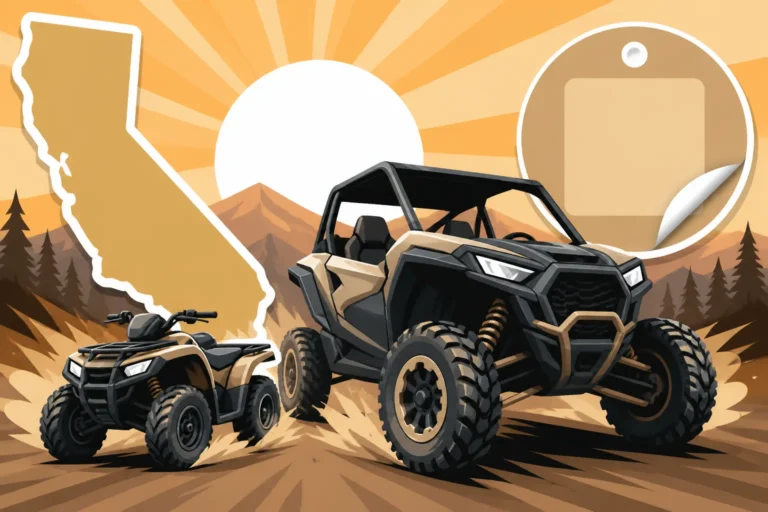
The most visible part of compliance is the sticker your sand rail will display. California utilizes a color-coded system: the Green Sticker, Red Sticker, and sometimes a Tan Sticker. Which one your sand rail receives largely depends on its engine's model year and its compliance with California's emissions standards, particularly those set by the California Air Resources Board (CARB). A Green Sticker allows year-round riding in all approved OHV areas. Red Stickers have seasonal restrictions in some areas, while Tan Stickers are typically for competition-only vehicles at sanctioned events. Understanding these [Green, Red and Tan: California's Three Stickers] is paramount, as it dictates where and when you can legally enjoy your sand rail. The entire process begins with ensuring you have a solid foundation for registration, no matter how unique your machine.
Step-by-Step Registration Process for Your Sand Rail
Navigating the California DMV system can feel like a bureaucratic tangle, especially when you're trying to register something as non-standard as a sand rail. The key is to be prepared and understand each step. It's not impossible, but it does require diligence and the right paperwork. Think of it as gathering all the pieces of a puzzle before you even open the box.
Gathering Your Documentation
Before you even think about setting foot in a DMV field office, you need to arm yourself with a comprehensive stack of documents. For a typical factory-built OHV, this might just be a Manufacturer's Certificate of Origin (MCO) and a bill of sale. For a sand rail, it's often more complex.
First and foremost, you need proof of ownership. If you bought a complete, already-built sand rail from a private seller, you'll need a properly filled-out Bill of Sale signed by both parties, clearly identifying the vehicle, its VIN (if it has one), and the purchase price. For custom builds, this is where it gets tricky. You'll need documentation for the major components: the chassis, the engine, and potentially the transaxle. This could include individual bills of sale for each component, receipts from fabricators, or even affidavits stating how and when you acquired parts. If you've never had a formal title or registration, you might need a "Statement of Construction" detailing how and when the sand rail was assembled. Websites like LawDepot offer templates for various legal documents, including comprehensive bills of sale or affidavits of ownership, which can be a great starting point for formalizing these records, especially for parts you might have acquired years ago. Having clear documentation, even if it's for individual components, helps establish a credible ownership chain.
Next, you'll need a [California Vehicle Verification on Form REG 31]. This form must be completed by an authorized vehicle verifier, which can be a DMV employee, a licensed vehicle verifier, or sometimes even law enforcement. They will physically inspect your sand rail to verify the VIN (or assign one if necessary, which is common for custom builds), engine number, and confirm other details. This step is crucial for custom sand rails that might not have a manufacturer-stamped VIN or where the existing number needs official recognition. They'll also check for any visible California Air Resources Board (CARB) emission labels if applicable.
Finally, you'll need to fill out [What California's Form REG 343 Asks For], the Application for Title or Registration. This is your primary application form where you detail all the information about your sand rail, including its characteristics, how you acquired it, and the fees you expect to pay. Make sure all information is accurate and consistent with your supporting documents. Being meticulous here can save you a lot of headache down the line.
The Application and Fees
Once you have all your documentation in order, you're ready to proceed with the actual application and fee payment. The process generally takes place in person at a California DMV field office, as sand rails often require verification and manual processing due to their unique nature.
When you submit your Form REG 343, along with your proof of ownership and the completed REG 31, you'll be assessed a series of fees. These fees typically include the base OHV registration fee, a California Highway Patrol (CHP) fee, and an Off-Highway Vehicle Trust Fund fee. The current fees can vary, so it's always best to check the official DMV website for the most up-to-date figures, but be prepared for the total [California OHV Registration Cost]. Keep in mind that California OHV registration operates on a two-year cycle, expiring on June 30th of the expiration year. This means you'll pay for two years upfront. The DMV will not prorate your fee, so even if you register in the middle of a cycle, you pay the full biennial amount.
For custom-built sand rails that have never been registered, the DMV might also need to assign a VIN. This is an additional step that usually involves a more thorough inspection and an administrative fee. Be prepared to explain the construction process and provide all receipts for major components to support your application for a new VIN. Having a clear record, possibly organized using templates from a service like LawDepot, can simplify this discussion with the DMV technician. Once all fees are paid and paperwork is accepted, the DMV will process your registration and prepare your ID plate and title.
What to Expect at the DMV Field Office
Visiting the DMV can sometimes feel like a test of patience, but for unique situations like registering a sand rail, it's often the only way. It's highly recommended to make an appointment before you go. This can significantly reduce your wait time and ensure you get dedicated attention for your somewhat unusual request. You can typically schedule an appointment online.
When you arrive for your appointment, ensure you have all your original documents, including bills of sale, receipts, photos of the build process (if custom), and your completed forms (REG 343 and REG 31). The DMV staff will meticulously review your paperwork. They'll scrutinize your proof of ownership, looking for any gaps or inconsistencies. For custom builds, be ready to explain the origins of major components and how they came together. This is where your detailed records, perhaps even an affidavit of construction you drafted using a legal document service, will be invaluable.
A key part of the visit, especially for first-time registrations or custom builds, is the vehicle verification. While you may have already had a verifier complete the REG 31 form, the DMV might conduct a further check or ask clarifying questions during your appointment. They'll confirm the VIN (or assign one if it's a new build), engine number, and ensure the vehicle appears to match its description. Once everything is approved and fees are paid, the DMV will issue your official [California Issues a Certificate of Title] and an OHV ID plate. The title is your legal proof of ownership, so ensure all the details are correct before you leave. The ID plate is similar to a license plate but specifically for OHVs, and it must be displayed properly on your sand rail. This physical evidence of registration confirms your machine is ready for the dunes.
Special Considerations for Sand Rails
Sand rails, by their very nature, often fall outside the typical box of OHVs that zip through the registration process. Their custom construction, varied engine sources, and specific usage mean that a few extra details need close attention to ensure full compliance with California law. These considerations can make the difference between a smooth registration and a frustrating denial.
Engines and Emissions Compliance
One of the most significant areas of scrutiny for sand rails, especially those with swapped engines or custom builds, is California's stringent emissions regulations. [What CARB Compliance Means in California] is a critical piece of the puzzle. The type of sticker your sand rail ultimately receives – Green, Red, or occasionally Tan – is directly tied to its engine's model year and its emission certification status.
Generally, if your sand rail has an engine that is model year 2002 or older, it will typically qualify for a Green Sticker, provided it meets the other basic requirements like having a spark arrester. These older engines pre-date the more restrictive emissions standards applied to newer OHVs. However, if your sand rail features a newer engine (model year 2003 and newer), it must be certified by CARB to meet California's emission standards for off-highway vehicles. If it's not CARB-certified, it will likely be assigned a Red Sticker. A Red Sticker means your riding is restricted to certain times of the year in most OHV areas. The Tan Sticker is even more specific, generally reserved for competition-only machines that operate under a special permit for sanctioned events. When bringing a custom-built sand rail, especially one with a modern engine, it's vital to have documentation proving the engine's origin and emissions compliance. Without it, you could face significant challenges, or even be denied registration for public land use.
Proof of Ownership for Custom Builds
As we touched on earlier, establishing a clear chain of ownership for a custom-built sand rail is arguably the most challenging part of the registration process. Since there's no single manufacturer providing an MCO, you become the de facto "manufacturer" in the eyes of the DMV, and you need to prove ownership of the individual components.
This typically involves a detailed "Statement of Construction" or an affidavit where you attest to the assembly of the vehicle, listing all major components (chassis, engine, transmission) and attaching copies of their respective bills of sale or receipts. It's crucial to obtain and keep every single receipt for major parts you purchase. If you sourced parts from a private party, ensure you get a robust bill of sale. Services like LawDepot can provide templates for these types of documents, helping you create formal and legally sound records, even for transactions that might have been informal initially. This thorough documentation is not just for your records; it's what you'll present to the DMV to demonstrate how your unique sand rail came into being and that you legally own every piece of it. If your sand rail has never had a VIN, the DMV will assign one during the verification process, but only once they are satisfied with your proof of component ownership. This step solidifies your [Titling an Off-Highway Vehicle in California].
Safety Equipment and Sound
Beyond the paperwork, your sand rail needs to meet certain operational requirements for safe and legal use on California's public lands. One of the most common requirements, especially for riding in brush-covered areas or the dunes, is a [California Spark Arrester Rules]. This device is mandatory on all OHVs to prevent wildfires by trapping hot carbon particles from the exhaust. Without an approved spark arrester, you risk a citation and immediate removal from public riding areas.
Sound limits are another key factor. California has strict noise regulations for OHVs, generally 96 decibels for machines manufactured after 1998 and 101 decibels for older machines. Custom exhausts are common on sand rails, but they must comply with these limits. Rangers at OHV parks frequently conduct sound checks, and a loud machine can lead to a ticket. For dune riding, specific safety equipment like an eight-foot whip and flag are mandatory to enhance visibility in the undulating terrain. Your flag must be at least six by twelve inches and securely mounted within ten inches of the whip's top. Always ensure your sand rail is equipped with these safety items before heading out to popular destinations like Glamis or Oceano Dunes. Being prepared with all safety gear, alongside your valid California OHV registration, means you're not just legal, but also ready for an enjoyable and safe ride.
Disclaimer
This article is for general informational purposes only and does not constitute professional advice. Laws, prices and regulations vary by location and change over time. Consult a qualified professional for guidance on your specific situation.