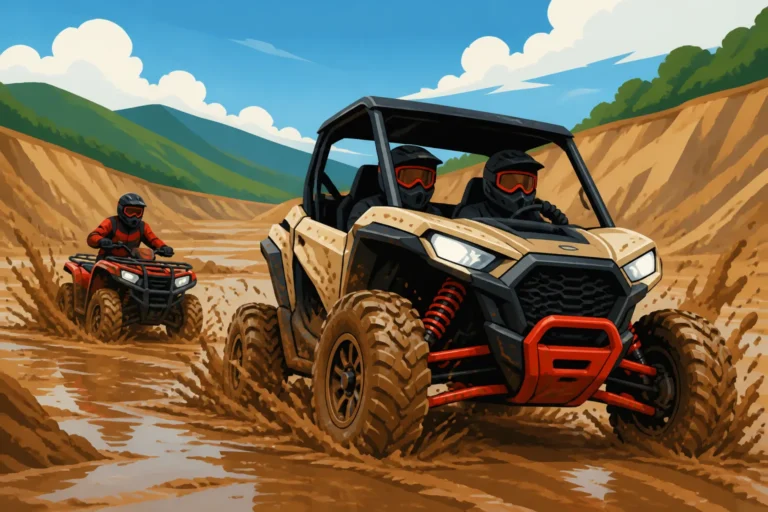
Buttercup for a First Glamis Trip
Buttercup can look like the gentler corner of Glamis, but soft sand, changing conditions, and busy weekends can surprise a first-time rider. This guide explains how to plan a Buttercup trip, prepare your ATV or UTV, understand permits and basic dune etiquette, and decide whether the area is a comfortable fit for your group.
What to expect at Buttercup
Where Buttercup fits into a Glamis trip
Buttercup is part of the Imperial Sand Dunes Recreation Area in southeastern California, near the Arizona border and the I-8 corridor. It is commonly treated as a distinct riding and camping area within the wider dunes, rather than simply another name for the Glamis staging area. For a first visit, that distinction matters: the dunes cover a large area, and the place you unload or camp affects where you ride and how you navigate back.
Before you leave home, identify your intended staging or camping area on a current official map. Don’t assume that a familiar “Glamis” pin will take you to Buttercup, or that a nearby road gives you permission to drive across open desert. Roads, access points, boundaries, and signed restrictions matter. Imperial Sand Dunes, California’s Biggest Dune Field offers broader context for the recreation area, while Glamis and the Imperial Sand Dunes helps explain how the larger destination fits together.
The broad desert landscape can make distances feel deceptively short. A dune that looks close may take time to reach, and a turn behind a ridge can make camp hard to spot. Make a return plan before the group spreads out: agree on a meeting point, identify a recognizable landmark, and decide what to do if riders become separated.
Is Buttercup suitable for beginners
“Beginner-friendly” depends less on the name of the riding area than on the terrain you choose, your machine, and your comfort in sand. Some riders arrive at Buttercup hoping for a quiet introduction to dunes; others are there to climb, jump, or travel quickly. Those different riding styles can share the same broad landscape, so a first-timer should resist the urge to follow the most aggressive rider in the group.
Start on terrain that matches the least experienced person, not the most confident one. A new rider on a quad may need time to learn how the front end responds in soft sand. A UTV driver may be comfortable on a wide open stretch but less prepared for steep approaches, blind crests, or traffic crossing from the other side. Let each person build confidence gradually, and treat turning around as a normal decision rather than a failure.
If you’re new to dunes, consider making the first ride short and conservative. Ride in good visibility, keep to terrain you can read ahead, and avoid following tracks blindly over a ridge. A set of tracks shows where someone went; it doesn’t tell you whether the route is safe, legal, or appropriate for your machine.
Plan the route, permits, and camp before you go
Use official maps and navigation together
Download or save the official recreation-area information you need before heading into the dunes. Cell service can be unreliable, and navigation becomes harder when the landscape has few fixed landmarks. An app such as onX Offroad can be useful for reviewing routes and keeping your position visible, but use it as a navigation aid—not as a substitute for official maps, posted signs, or closures.
Check that your group can use its maps offline before leaving service. If you use onX Offroad, familiarize yourself with the map and saved areas at home rather than trying to learn the app while moving through sand. Carry a second navigation option as well, such as a paper map or another device. Keep your phone secured against dust and impacts, and make sure at least one other person in the group knows how to find camp.
Agree on a simple navigation routine. For example, riders can stop at a designated meeting point after a set stretch, confirm everyone is together, and check the route before continuing. If someone loses sight of the group, the plan should be to stop somewhere safe and communicate—not to ride faster in an attempt to catch up.
Check permits, vehicle paperwork, and site rules
Riding in the Imperial Sand Dunes requires understanding both vehicle identification requirements and recreation-area permit rules. California OHV registration or an accepted out-of-state credential is not the same thing as a dunes permit. Likewise, a dunes permit does not replace required vehicle identification. Review California Rules for Riding Imperial Sand Dunes and ISDRA Permits and California’s October Season before setting out so you know which rules apply to your vehicles and planned dates.
If you are towing your ATV or UTV, don’t overlook the tow vehicle. The recreation-area permit rules may apply to vehicles entering the dunes area, not just the machine you ride. Confirm the requirements for your tow vehicle and any vehicles traveling with your group. Why Your Tow Vehicle Needs a California Dune Permit explains why this detail can be easy to miss.
Permit types, purchase options, and display instructions can differ. Read the conditions attached to the permit you obtain, and keep the required proof accessible. A phone photo may be handy as a backup, but don’t assume it replaces the required display or original paperwork. For permit options and what they cover, see What the $55 Off-Site Weekly Dune Permit Covers and check the official permit information before your trip.
Choose camp with the return ride in mind
A good camp location can make a first trip feel much easier. Think about how far you’ll need to travel to reach the terrain you want, whether your group can identify the camp from multiple directions, and how you’ll handle a return after dark or in blowing dust. If you’re camping with several vehicles, agree on a clear boundary for the camp area and keep parked vehicles out of travel paths.
Arriving in daylight gives you time to set up, check equipment, and orient yourself before riding. If you arrive late, unloading a machine and immediately heading into unfamiliar dunes can add unnecessary pressure. Make camp first, check the route, and save the exploration for when everyone can see the terrain clearly.
Prepare your machine and riders for sand
Make sure your ATV or UTV is ready
Soft sand puts different demands on a machine than pavement or packed dirt. Before leaving, inspect tires, wheels, steering, brakes, throttle, lights, belts where applicable, and fluid levels. Carry the basic tools and recovery equipment suited to your vehicle, and know how to use them before you need them. For a UTV, check seat belts and the condition of doors or side restraints; for a quad, confirm that the rider can control the machine comfortably.
Tire pressure is one of the topics riders often discuss before a sand trip, but there is no single setting that suits every machine, tire, load, and riding style. Follow the vehicle and tire manufacturer’s guidance, and understand the trade-offs before making adjustments. Lower pressure can affect handling and increase the chance of a tire coming off the bead. Soft Sand and Tire Pressure is a useful starting point for thinking through the issue.
Do not use a new trip as the time to test unfamiliar repairs, modifications, or riding equipment. If the machine has been sitting, run it and check for leaks before loading it. Secure cargo so it cannot shift, and avoid carrying loose items that could fall into the sand or interfere with controls.
Pack for heat, dust, and a slower pace
The desert can be tiring even when the ride itself seems easy. Bring more drinking water than you expect to use, plan regular breaks, and keep water accessible while riding. Pack sun protection, eye protection, gloves, and clothing suitable for dust and changing conditions. A helmet should fit properly and be worn as required; passenger and restraint rules also apply to UTV riders.
Heat can affect judgment and coordination before a rider realizes how tired they are. Watch for headache, unusual fatigue, nausea, dizziness, or confusion, and stop riding if someone appears unwell. Don’t wait until the group reaches the far side of the dunes to ask whether everyone has enough water. Heat Risk on Desert Sand covers the specific challenges of desert conditions.
Dust can reduce visibility, especially when several machines move through the same area. Leave space, slow down when you can’t see clearly, and avoid parking where other riders are likely to crest or turn. Keep a charged phone, but plan as though you may not have reliable service. Tell someone outside the riding group where you expect to be and when you plan to return.
Ride with care and build confidence gradually
Follow dune etiquette and stay within your limits
Dunes have blind crests, changing slopes, and traffic moving in more than one direction. Approach a crest cautiously and avoid charging over the top when you cannot see the other side. Don’t stop on a ridge where approaching riders may not be able to see you. If you need to pause, move to a visible, safe location away from active travel lines.
Give other machines room, especially when visibility is poor. Avoid cutting across another rider’s line or following so closely that you cannot react to a sudden stop. Keep children and inexperienced riders under close supervision, and make sure everyone understands the group’s signals and meeting points before engines start. Riding Etiquette on a Busy Dune provides more detail on sharing space safely.
A first trip is not the time to prove that you can climb every slope. Pick a route you can assess from below, leave room to turn around, and don’t attempt a feature simply because another machine made it look easy. If the approach is hidden, the descent looks uncomfortable, or your machine is struggling, choose a different line or return to camp.
Keep the group together without rushing
Set a pace that allows the least experienced rider to keep up safely. Have a lead rider who knows the route and a sweep rider who stays behind the group. Agree on what each person should do if the group separates—such as stopping at the last known meeting point rather than continuing to wander.
Use short, predictable stops to check that everyone is ready to continue. If a rider is having trouble, adjust the plan rather than pressuring them to keep up. A shorter loop with everyone comfortable is a better first ride than a long excursion that leaves someone exhausted or anxious.
Before heading out, tell the group what conditions would end the ride: declining visibility, a mechanical problem, heat symptoms, or a rider who no longer feels confident. A clear turnaround rule helps prevent a common first-trip frustration: continuing just because the group has already come a long way.
| First-trip question | Practical approach |
|---|---|
| Where should we stage or camp? | Confirm the location on an official map and check access information before departure. |
| Can beginners ride at Buttercup? | Potentially, if they stay within their skill level and choose terrain carefully. |
| What should we do if we lose sight of camp? | Use a pre-agreed meeting point and navigation plan; don’t ride randomly in search of it. |
| Is California registration the same as a dunes permit? | No. Check vehicle identification and recreation-area permit requirements separately. |
| Should we ride a steep dune on the first outing? | Only if the rider, machine, visibility, and route are all appropriate; there is no need to test limits. |
| What is the simplest way to reduce stress? | Arrive with daylight, water, working equipment, saved maps, and a conservative ride plan. |
Know when to call it a day
Turn back if the wind, dust, heat, or traffic makes it difficult to see and ride comfortably. Don’t let a planned route or a group’s excitement override what the conditions are telling you. If someone is tired, uncomfortable, or struggling with the machine, take a break in a safe place and reassess together.
For a first visit, success doesn’t mean covering the most ground. It means getting familiar with the area, returning to camp safely, and leaving enough energy to enjoy the rest of the trip. Once you understand how your group handles the sand and navigation, you can make a more informed plan for the next ride.
Disclaimer
This article is for general informational purposes only and does not constitute professional advice. Laws, prices and regulations vary by location and change over time. Consult a qualified professional for guidance on your specific situation.