Osborne Lookout and the Big Dunes
The view from Osborne Lookout can make the Glamis dunes look close enough to reach in minutes, but sand, changing routes, crowds, and vehicle rules can complicate that plan. This guide explains how to approach the lookout, what to expect around the big dunes, and how to prepare for a safer ride in California’s Imperial Sand Dunes.
Where Osborne Lookout Fits Into a Glamis Trip
Understanding the lookout and surrounding dunes
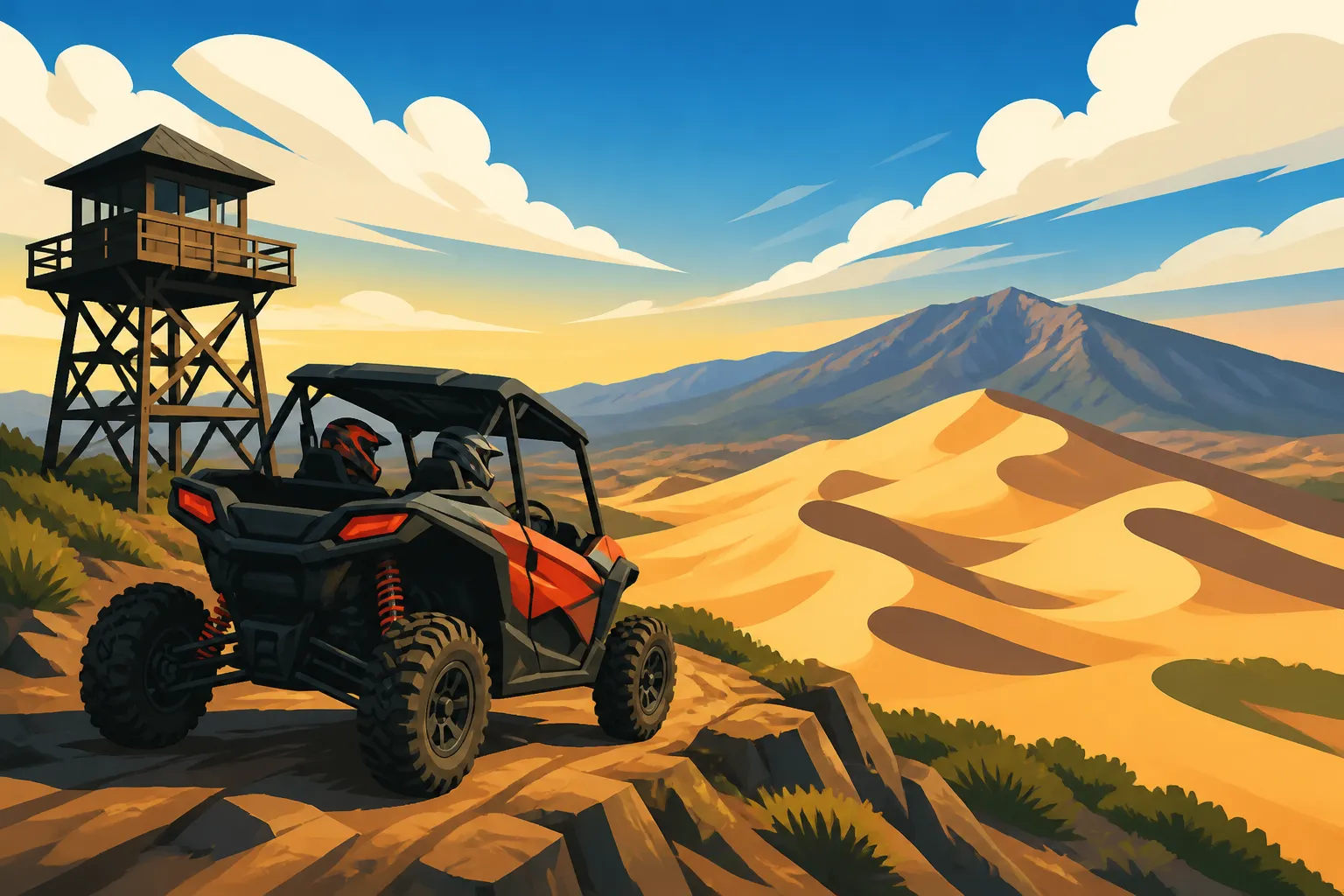
Osborne Lookout is a well-known viewpoint in the Imperial Sand Dunes Recreation Area, often called Glamis. It gives riders and visitors a place to take in the dune field and get their bearings before heading out. The dunes stretch across a broad part of Imperial County, and the landscape can feel much larger once you leave the road and start riding.
The lookout is best treated as a landmark, not as a promise that every dune or route in view is easy to reach. A ridge that looks nearby may involve soft sand, steep faces, blind crests, or a longer ride than expected. From a high point, distances are hard to judge, especially when the terrain is rolling and there are few familiar objects to provide scale.
For first-time visitors, the main value of a viewpoint is perspective. You can see how dune ridges and open bowls connect, notice how wind has reshaped the sand, and talk through a conservative plan with your group before setting off. It is still important to use an official map and follow posted signs; a view from above cannot tell you whether a route is open or what conditions are like on the other side of a ridge.
Planning your approach to Osborne Lookout
Many Glamis trips begin near Highway 78, with visitors continuing toward the recreation area and its established access points and camping areas. The best approach can depend on where you are staying, what is open, and any current restrictions. Before you leave paved roads, check official recreation-area information and signs at the entrance. Do not assume that a route you remember from a previous visit remains open or passable.
A navigation app can help you keep track of your position, but downloaded maps and offline navigation matter in remote areas where cell service can be inconsistent. Some riders use onX Offroad to review mapped routes and orient themselves before a trip. Treat any digital route as a planning aid rather than permission to travel: compare it with official maps and obey closures, boundary markers, and on-site directions.
If you are meeting friends, agree on a specific meeting point and a backup plan before anyone rides away. “We’ll meet near the big dune” is easy to misunderstand when the horizon is a wall of similar ridges. Share the landmark, the approximate time, and what your group will do if a rider is delayed or loses contact. It is also helpful to decide in advance whether the group will turn back together if one machine has trouble.
Preparing for the Big Dunes
Choose a route that matches your experience
The big dunes can be exciting for experienced riders, but the terrain is not automatically suitable for every machine or rider. Sand can soften or shift, and the shape of a slope may hide a sharp drop or another rider approaching from the far side. A line that looked manageable from the bottom may become intimidating once you are climbing it.
If you are new to dune riding, start in terrain where you can see more of the area and avoid committing to a steep climb simply because other riders are doing it. Keep your first ride shorter than you think you need. That gives you time to learn how your ATV or UTV responds to sand, check temperatures and fuel, and adjust your plan while everyone is still fresh.
Experienced groups should still agree on sensible limits. Talk about who will lead, who will ride at the back, what signals you will use, and where you will regroup. If a rider is unsure about a slope, turn around or choose another route. There is no prize for cresting a particular dune, and a cautious decision can prevent a rollover, collision, or difficult recovery.
Get your machine and safety gear ready
Before leaving camp, check tires, steering, brakes, throttle, lights, belts, and fuel. For a UTV, inspect seat belts and the condition of the cage and doors. For an ATV, make sure the rider can reach the controls comfortably and understands how to stop and turn on loose sand. A basic check is easier at camp than in a hot, exposed wash with the rest of the group waiting.
Wear a helmet and suitable eye protection, and bring water, gloves, and clothing that can handle blowing sand. Dune visibility can change quickly when wind picks up or several machines are moving through the same area. A flag or whip helps make a vehicle more visible around dune crests; review California Dune Flag Requirements and California Whip Height Requirements before the trip.
Noise and exhaust equipment can also matter on public land. Check your machine against the applicable sound and spark-arrester rules before travelling, rather than hoping to sort it out at a checkpoint. California Sound Limits for OHVs Explained and Spark Arresters on California Public Land offer related guidance.
| Before you ride | What to check | Why it matters |
|---|---|---|
| Route plan | Official map, open access, meeting point, turnaround plan | A visible dune is not necessarily an open or practical route |
| Machine | Tires, controls, brakes, fuel, lights, belts, and safety equipment | A small problem can become difficult to handle in soft sand |
| Rider gear | Helmet, eye protection, gloves, water, and appropriate clothing | Sand, heat, and reduced visibility can make a short ride demanding |
| Required paperwork | Registration or identification and applicable recreation permits | Requirements may differ by vehicle and rider circumstances |
| Group communication | Lead and sweep riders, regroup points, and emergency plan | Cell service may be unreliable away from developed areas |
Riding Safely Around Osborne Lookout
Read the terrain before crossing a ridge
The most important dune-riding habit is to avoid cresting a ridge without knowing what is on the other side. A steep drop, another vehicle, or a crowded bowl can be hidden from view. Approach a crest slowly enough to stop before reaching the blind edge, check the line, and proceed only when you can see that it is clear. Never assume another rider can see you coming.
Keep a generous following distance. Sand can hide ruts, and a rider may slow or turn unexpectedly while climbing. If someone becomes stuck or needs help, stop in a visible, safe location rather than gathering at the base of a slope where other riders may be approaching. Do not park just beyond a crest, where you may be invisible to traffic coming over the top.
Wind can make the dunes more difficult to read. Blowing sand can obscure tracks and reduce visibility, while changing slopes may make a familiar line feel different from one visit to the next. If you cannot clearly see your route or other riders, pause somewhere safe and reassess. A break, a shorter loop, or a return to camp is often a better choice than pressing on in poor conditions.
Expect crowds, closures, and changing conditions
Glamis can be busy during popular riding periods, and the same open bowl may attract riders travelling in different directions. Look well ahead, keep your speed appropriate to visibility, and avoid sudden cross-traffic. If you are riding with children or less experienced drivers, choose a quieter area and keep the group within sight. The big dunes are not the place to assume everyone will follow the same line.
Sand conditions also change with wind, weather, and traffic. Do not rely on a track from a prior visit as proof that a route is safe or open today. Check current notices and respect barriers. For broader planning, Imperial Sand Dunes, California’s Biggest Dune Field provides context on the recreation area, while California Desert Riding Safety covers hazards worth considering before a desert outing.
Permits and vehicle identification are another part of trip planning. Requirements can depend on where the vehicle is registered, what kind of identification it carries, and how the recreation area is being used. Review California Rules for Riding Imperial Sand Dunes and [California OHV Permits Explained] before you travel. Keep required paperwork accessible, and follow any local instructions about where permits or identification must be displayed.
Making the Viewpoint Part of a Better Trip
Build a practical day plan
A good plan starts with the group, not the dune. Consider how much experience each rider has, whether everyone is on a suitable machine, and how long they are comfortable riding in sand. Set a turnaround time and carry enough water and fuel for the planned outing, with a margin for delays. A ride that begins late in the day can leave little time to deal calmly with a stuck vehicle or a navigation mistake.
Use Osborne Lookout as a natural point to pause and check in, if it is accessible and permitted for your route. Take a moment to confirm that everyone is present, review the map, and decide whether to continue or head back. If someone is tired or uneasy, adjust the plan rather than treating the original route as a commitment. The best ride is one where the whole group finishes safely.
Leave room for ordinary desert logistics, too. Tell someone who is not riding where you expect to be and when you plan to return. Keep phones charged, but do not make cell service the only part of your emergency plan. If your group is large, divide into manageable riding units and avoid spreading out so far that the lead rider cannot tell whether the last vehicle is still following.
Know when to turn back
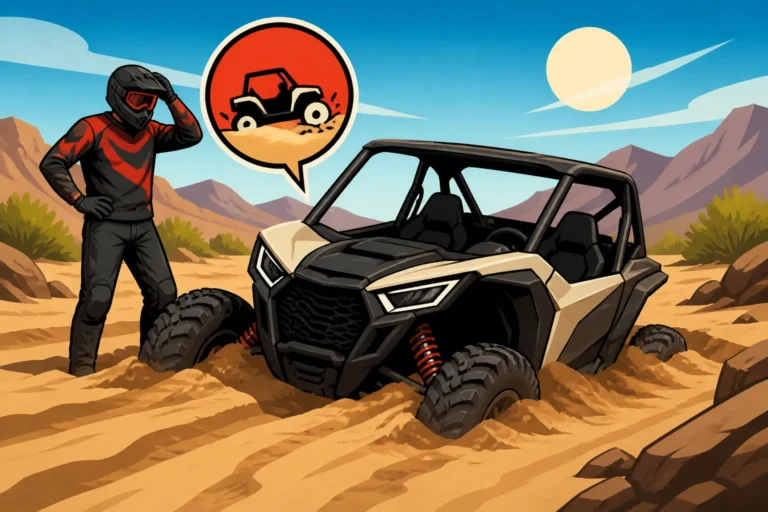
Turning back is a riding decision, not a failure. A machine that is running hot, a rider who is becoming dehydrated, worsening visibility, or an uncertain route are all good reasons to shorten the trip. If a vehicle becomes stuck, avoid spinning the tires continuously, which can dig it in further. Stop, assess the situation, and use suitable recovery equipment and a careful plan rather than asking people to push from a dangerous position.
If someone is injured or a vehicle cannot be moved safely, prioritize the people involved and contact emergency services when needed. Give rescuers the clearest location information you can, including a nearby named landmark and your map position if available. Do not send one person off alone without a clear plan, especially in heat or poor visibility.
For visitors unfamiliar with the area, exploring a smaller section before attempting a longer ride is often the most rewarding approach. Learn how your machine handles the sand, establish a reliable return route, and leave the most challenging lines for a day when the group and conditions are right. The view from Osborne Lookout is memorable, but a well-planned return to camp is what makes the whole day work.
Disclaimer
This article is for general informational purposes only and does not constitute professional advice. Laws, prices and regulations vary by location and change over time. Consult a qualified professional for guidance on your specific situation.