Glamis on Thanksgiving Weekend
Thanksgiving weekend at Glamis can turn a simple dune trip into a logistical puzzle: traffic builds, campsites fill, and it is easy to lose track of your group in the open sand. A little preparation makes the difference. This guide covers when to arrive, how to plan camp and routes, what to check before riding, and how to handle the holiday crowds more safely.
Plan Your Glamis Thanksgiving Trip Before You Leave
Choose your arrival time and meeting plan
Thanksgiving is a busy time at the Imperial Sand Dunes, and the trip can feel crowded well before you reach the riding area. If your group is traveling in separate vehicles, agree on a meeting point before anyone loses cell service or gets caught in a traffic line. Share the location in writing and decide what to do if someone arrives late; “we’ll find you near camp” is not much of a plan in a large, unfamiliar dune field.
Allow more time than your route estimate suggests. Delays may come from holiday traffic, vehicle lines, setting up camp, or stopping to sort out gear. If you are towing a trailer, think through where you will pull over safely and whether the whole group can reach the same camp area without needing to make a last-minute route decision.
It also helps to choose a backup meeting point outside the dunes, such as a clearly identified public location in the surrounding area. Keep the plan simple: who is leading, who is following, where the group will regroup, and how you will communicate if phones stop working. A downloaded map in an app such as onX Offroad can help everyone orient themselves, but it should support—not replace—a shared plan and visible landmarks.
Confirm permits, vehicle papers, and park information
Before packing, check the current requirements for the riding area and the route you plan to use. A California registration, an out-of-state permit, and a dune access permit are not necessarily interchangeable. If you are visiting from another state, review [California's Nonresident OHV Use Permit] and [California OHV Reciprocity: Only Two States] rather than assuming your home-state sticker covers every California riding area.
Check whether permits apply to the off-highway vehicle, the tow vehicle, or both, and understand how any required permit must be displayed. Rules and access details can change, so confirm them through the relevant official land manager before leaving home. The practical detail that causes headaches is not merely buying the right permit; it is having proof available and displaying it as directed.
Carry registration and permit paperwork in a place where it will not be buried under camping gear. Keep a paper copy as a backup, and make sure each driver knows where it is. For a broader overview of what may apply to visitors, see [California OHV Permits Explained] and [ISDRA Permits and California's October Season].
Choose a Camp Area and Navigate the Dunes Carefully
Pick camp based on your group, not just the view
A camp location that looks perfect on a map may be awkward for a family with young riders, a large trailer, or someone who needs a quieter place to rest. Think about the group’s actual needs: access for the tow vehicle, room to park, space between camp and active riding, and how easy it will be to identify your camp when you return. At a busy holiday gathering, a distinctive flag or another visible marker can save time—provided it is set up safely and follows applicable rules.
Consider whether your group wants to be close to active riding or would prefer a less hectic base. Being near the action can make it easier to head out for short rides, but it may also mean more noise, traffic, and people moving through the area. A camp farther from the busiest activity may feel calmer, but everyone should know how to get back without relying on a single person’s memory.
Before you arrive, look at the area’s available access points and decide which one best fits your travel direction and vehicle setup. The names [Gecko Road, Glamis and Buttercup] and [Gordon's Well and Dunebuggy Flats] may come up while you are comparing areas, but do not assume that a familiar name tells you everything about access, conditions, or current restrictions. Check current land-manager information and confirm your intended route before driving into the dunes.
Prepare for navigation when cell service is unreliable
Do not count on being able to call, text, or load a map everywhere. Download the area you need before the trip, charge your phone, and bring a vehicle charger or power bank. If several people are riding, have more than one person carry a usable map. An app such as onX Offroad can be useful for keeping a group oriented when service is limited, especially when riders have saved the relevant map in advance.
Set practical boundaries for the group. For example, agree that nobody rides beyond a named landmark or continues alone to look for a route back. Establish a regrouping point and a time to check in, and make sure everyone knows what to do if separated. For children and inexperienced riders, keep the plan especially simple and keep them with a responsible adult.
Maps help, but they cannot tell you whether a route is currently open, safe for your vehicle, or suitable for your group. Use posted signs and current official information, and avoid treating tracks on a screen as permission to travel anywhere. If someone in your party prefers a paper backup, mark the camp and planned meeting point before you leave. That small step can prevent a tense search when several similar-looking dune features are in view.
Ride Safely During a Crowded Holiday Weekend
Adjust your riding to traffic and visibility
The dunes can look spacious, but a busy weekend brings more riders, vehicles, and changing lines of sight. Cresting a dune without knowing what is on the other side can put you directly into the path of another machine. Slow down as visibility narrows, avoid blind crests, and leave room to react when approaching bowls, intersections, or popular stopping places.
Keep your group together without riding so close that one person’s sudden stop causes a collision. Agree on a pace that the least experienced rider can manage, and make sure everyone knows the route and regrouping points. If someone is struggling, take a break in a safe spot rather than pressuring them to keep up. Fatigue, dehydration, and the stress of navigating crowds can make a ride harder than it seemed at camp.
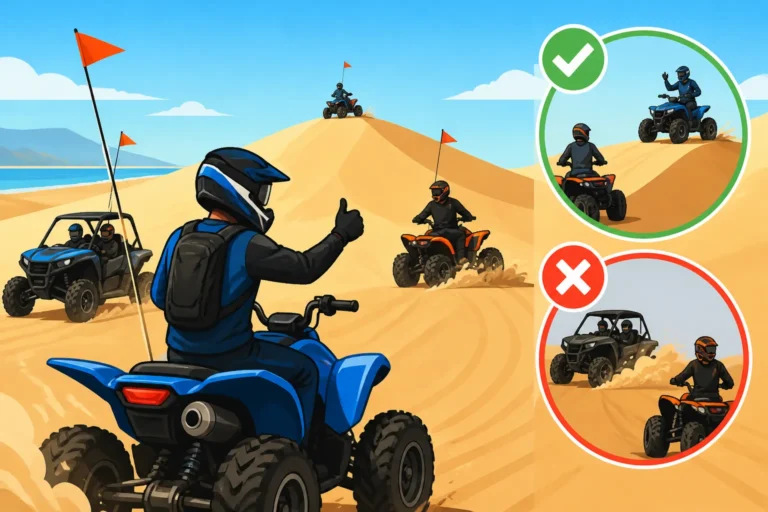
Visibility equipment matters on the dunes. Check the current requirements for flags and whips, and make sure yours are securely attached and easy to see. Review [California Dune Flag Requirements] before the trip, particularly if your machine or setup has changed since your last visit. Check vehicle condition as well: tires, brakes, lights, fuel, and basic recovery gear are easier to address at home than in the sand.
Set clear rules for youth riders and passengers
Do not assume that a child who is comfortable riding at home can safely handle the same machine in a crowded dune environment. Match the machine to the rider’s size and ability, use appropriate protective equipment, and confirm applicable age, supervision, and safety-certificate rules before travel. [What a Teenager Needs Before a Glamis Weekend] is a useful starting point for families planning around young riders.
Passengers also need clear attention. A quad designed for one rider should not become a two-person ride simply because the trip feels short. For a side-by-side, use the seating positions and restraints intended for the occupants, and make sure children are properly secured and able to sit safely. Review [California Rules for Riding With Kids on Board] and [California ATV Passenger Ban Explained] when planning who will ride in each machine.
Give young riders a plan for what to do if they become separated: stop in a safe place, stay with their vehicle if appropriate, and seek help from a trusted adult or an official. They should know the camp marker and the name of the adult leading the group. A child who can repeat the plan calmly is better prepared than one who has only been told to “stay close.”
Pack for Camp, Conditions, and a Smooth Return
Bring supplies for more than the ride itself
Holiday trips often involve long days outside, so pack for camp as carefully as you pack for riding. Bring drinking water, food, warm layers for cooler periods, sun protection, first-aid supplies, and a way to keep essential items dry and easy to find. Keep a separate, accessible bag for documents and chargers instead of scattering them among riding gear.
Plan fuel and recovery needs conservatively. Bring only properly secured fuel in suitable containers, and know how your group will respond if a machine runs low or becomes stuck. Carry basic tools and recovery equipment that match your vehicle and the experience of the people using it. If nobody in the group knows how to use a recovery strap or winch safely, do not treat the equipment as a substitute for a plan.
Think about noise, rest, and camp manners, too. Thanksgiving weekends can bring neighboring groups close together, so keep equipment and conversations considerate, follow posted quiet-hour rules where they apply, and store food and trash securely. A little courtesy goes a long way when a temporary camp becomes your neighborhood for the weekend.
Make an exit plan before the last day
The trip is not finished when the machines are loaded. Before leaving camp, check for personal belongings, trash, loose equipment, and anything that could fall from a trailer. Walk around the tow vehicle and trailer after securing the load, and confirm that lights and connections are working. If several vehicles are leaving together, agree on a safe regrouping point rather than stopping unpredictably along the route.
Plan for the return drive with the same patience you used on arrival. Riders may be tired, vehicles may be dusty, and a long weekend can make everyone eager to get home. Give drivers time to rest, secure machines properly, and avoid rushing to make up time after delays. If someone in the group is too tired to drive safely, adjust the plan.
For a final check, use this simple table as a reminder:
| Before the trip | At camp | Before each ride | Before leaving |
|---|---|---|---|
| Confirm permits and access information | Mark camp clearly and agree on a meeting point | Check gear, machine condition, and fuel | Secure machines and trailer loads |
| Download maps and share the route plan | Keep documents and first aid accessible | Review the ride boundary and regrouping plan | Check lights, connections, and loose items |
| Coordinate arrival times and backup plans | Store food and trash responsibly | Keep the group at a manageable pace | Leave the area clean and drive rested |
A Thanksgiving trip to Glamis is easier when the group agrees on the basics before the first machine hits the sand. Confirm access and permit details, choose camp with your group’s needs in mind, prepare for limited connectivity, and make safety rules clear to every rider. For additional planning ideas, see [California Desert Riding Safety] and [Glamis From October to April].
Disclaimer
This article is for general informational purposes only and does not constitute professional advice. Laws, prices and regulations vary by location and change over time. Consult a qualified professional for guidance on your specific situation.