Forest Roads Open to Highway Vehicles Only
It’s a beautiful day, you’re out in the breathtaking California wilderness, and you spot what looks like the perfect dirt road winding through the trees – calling your name, practically begging for your ATV or UTV to explore it. Your heart races with the thought of the adventure ahead. Then you see the sign: "Highway Vehicles Only." Talk about a deflating moment! It's a common frustration for off-road enthusiasts to encounter these seemingly inviting paths that are, frustratingly, off-limits to our beloved machines. This guide will help you understand what those signs truly mean, why these designations exist, and how you can find the incredible trails and roads that are open to your off-highway vehicle (OHV) in California.
Understanding "Highway Vehicles Only" on Forest Roads
When you see a sign on a forest road that explicitly states "Highway Vehicles Only," it's not just a suggestion; it's a legal directive. This designation isn't about the physical makeup of the road—its dirt or gravel surface—but rather the legal status of the vehicles permitted to travel on it. For your off-highway vehicle (OHV), like a dirt bike, ATV, or UTV, this can feel like a direct slap in the face, especially when the path looks perfectly suited for an off-road adventure.
What Constitutes a "Highway Vehicle" in California?
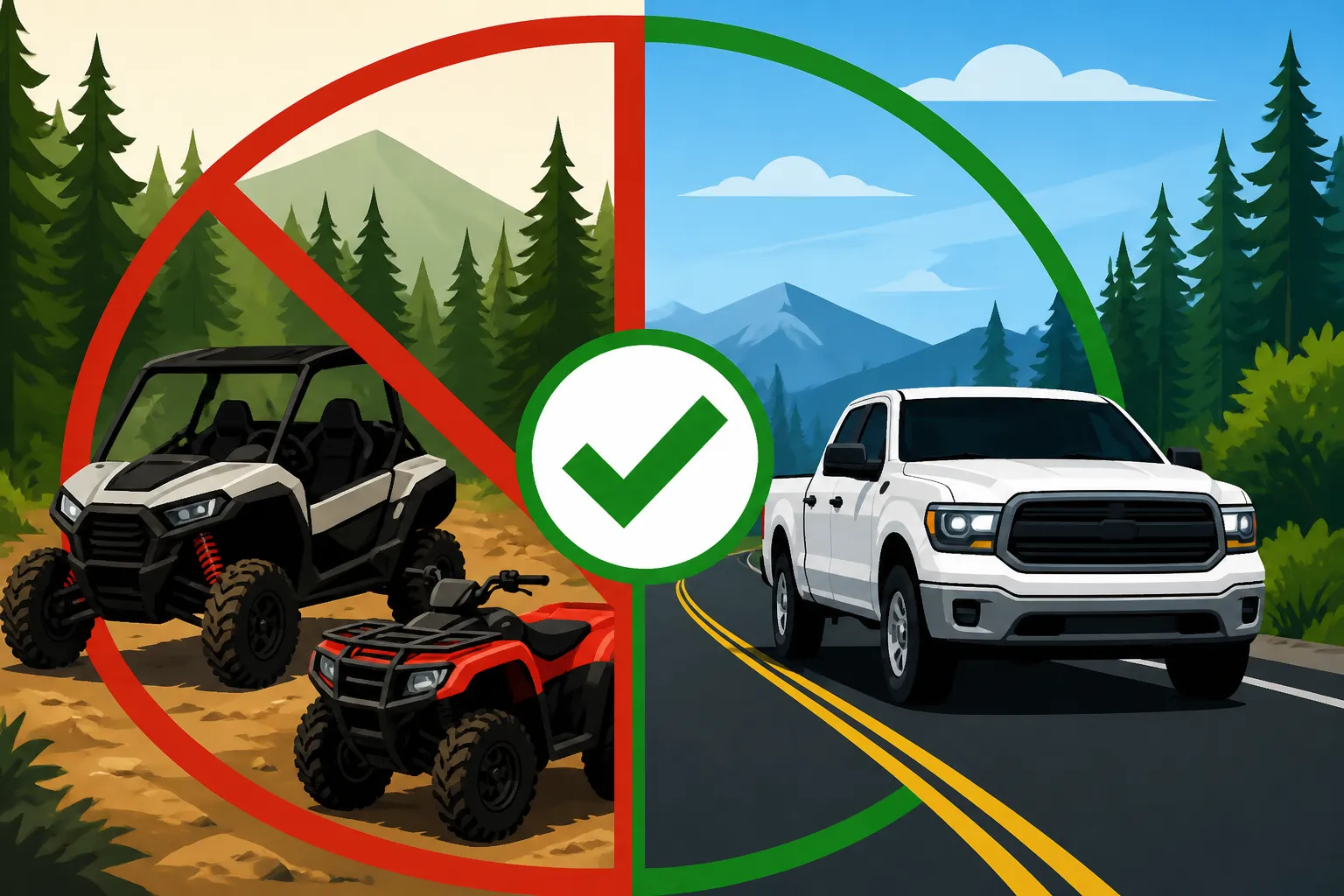
In California, a "highway vehicle" is, quite simply, any vehicle that is manufactured and registered for legal use on public paved roads and highways. Think cars, pickup trucks, passenger vans, and most motorcycles. These vehicles have specific features mandated by law, such as Department of Transportation (DOT) approved tires, headlights, brake lights, turn signals, mirrors, and often, an emissions system designed for on-road use. Crucially, they possess a valid street-legal registration and license plates issued by the Department of Motor Vehicles.
This is where the distinction becomes critical for OHV owners. Most ATVs and UTVs, while incredibly capable off-road, are not built to meet these rigorous street-legal standards in California. Even if your UTV has a windshield or a horn, it typically lacks the comprehensive design and certification needed to be considered a "highway vehicle" here. The intention of its design is for off-highway use, which is why we register them with green or red stickers, not standard license plates. [Registering an OHV in California]
Why Your ATV or UTV Doesn't Qualify
Your cherished ATV or UTV, even if it has a California Green Sticker or Red Sticker, is legally classified as an off-highway vehicle. These stickers permit you to ride on designated off-highway routes and areas, not on roads designated for highway vehicles. The sticker system is designed to identify and regulate machines used solely for recreation away from paved public roads. Trying to use your OHV on a "Highway Vehicles Only" road is akin to trying to drive your snowmobile on a city street in July—it's simply not what it's built or legally permitted for.
The frustration is understandable, especially when some aftermarket companies, like SuperATV, offer parts and accessories that might make your UTV seem more "road-worthy," such as turn signal kits or mirrors. While these are fantastic for improving safety and signaling on trails and in mixed-use OHV areas, they don't magically transform your UTV into a street-legal vehicle under California law. The state has very strict definitions, and most factory ATVs and UTVs simply don't make the cut for full street legality. [Are ATVs Street Legal in California?] It’s not about how capable your machine feels, but how it’s legally recognized for public road use.
The Logic Behind "Highway Vehicles Only" Designations
It can certainly feel arbitrary when you see a wide, well-maintained dirt road marked for highway vehicles only, knowing your OHV could handle it with ease. However, these designations aren't made on a whim. They stem from a complex interplay of safety concerns, environmental considerations, maintenance funding structures, and established legal frameworks, primarily managed by agencies like the U.S. Forest Service and Bureau of Land Management (BLM) in conjunction with state regulations.
Safety First: Sharing the Road
One of the primary reasons for limiting certain forest roads to highway vehicles is safety. These roads, though unpaved, are often multi-use thoroughfares where full-sized vehicles like passenger cars, logging trucks, fire apparatus, and recreational vehicles might be traveling at higher speeds than you'd typically find on a designated OHV trail. Your ATV or UTV, by its nature, offers less visibility, different handling characteristics, and less crash protection than a standard highway vehicle. Imagine a large logging truck coming around a blind corner on a narrow dirt road; the potential for a severe accident with an OHV is significantly higher.
These roads might also be vital access routes for residents, emergency services, or industrial operations (like timber harvesting). Mixing high-speed, heavy highway traffic with smaller, slower, and less protected OHVs on the same road creates an unacceptable risk profile. The designation helps to minimize these risks by segregating different types of traffic where safety cannot be otherwise assured, particularly on roads that might not be suitable for lower-speed recreational riding due to their primary function.
Environmental Protection and Resource Management
Beyond safety, environmental factors often play a crucial role. While we love exploring, OHVs can have a different environmental footprint than highway vehicles. Forest roads, even those open to cars, are designed with specific drainage and erosion control measures. Unregulated OHV use, especially if riders were to veer off the main road, could lead to accelerated erosion, damage to sensitive habitats, and disturbance of wildlife.
The "Highway Vehicles Only" designation ensures that traffic remains on routes that are explicitly managed for that type of impact. These roads might traverse critical wildlife corridors, areas with sensitive plant species, or watersheds that need extra protection from off-road disturbances. It's about maintaining the ecological balance of these precious natural areas, ensuring that public access doesn't inadvertently lead to long-term harm. For example, some areas might be habitat for endangered species, and controlling vehicle access helps protect these fragile ecosystems.
Funding, Maintenance, and Legal Frameworks
Another often overlooked aspect is how these roads are funded and maintained. Many forest roads are maintained using funds specifically allocated for "highway" infrastructure, not off-highway vehicle recreation. The legal mandate and funding streams dictate what types of vehicles are permitted. If a road is maintained with funds designated for conventional highway traffic, allowing OHVs could be seen as a misuse of those funds or create additional maintenance burdens not covered by the existing budget.
Federal agencies like the U.S. Forest Service and the Bureau of Land Management publish detailed Motor Vehicle Use Maps (MVUMs) for the lands they manage. These maps are the definitive legal document specifying which roads, trails, and areas are open to motorized vehicles, and what types of vehicles are permitted on each. These designations are rooted in federal regulations and often developed through extensive planning processes that consider environmental impact, safety, and community needs. Ignoring a "Highway Vehicles Only" sign is not just a polite request; it's a violation of federal and state regulations, which can result in fines and other penalties. [Motor Vehicle Use Maps and Reading Them]
Unlocking OHV Access: Finding Roads and Trails Where You Can Ride
The good news is that California offers an incredible array of off-highway vehicle opportunities, even if some forest roads are off-limits. The key is knowing where to look and understanding the resources available to help you plan your adventure. Don't let those "Highway Vehicles Only" signs dampen your spirit; they just mean you need to pivot to the right kind of adventure.
The Indispensable Motor Vehicle Use Map (MVUM)
If you're planning to ride on federal lands (National Forests, BLM land), the Motor Vehicle Use Map (MVUM) is your absolute best friend. Seriously, I cannot stress this enough. MVUMs are legally binding documents that show every single road, trail, and area that is open to motorized travel, and critically, what type of motorized vehicle is allowed. They are usually black and white, sometimes a bit daunting to read at first glance, but they contain all the information you need.
You can find MVUMs for free on the U.S. Forest Service or BLM websites for the specific national forest or district you plan to visit. Many ranger stations also have printed copies available. The map will typically use different line types and symbols to indicate:
- Roads open to all vehicles (highway legal and OHVs).
- Roads open only to highway-legal vehicles (our "Highway Vehicles Only" roads).
- Trails open to vehicles 50 inches or less in width (like most ATVs and narrower UTVs).
- Trails open to motorcycles only.
- Trails open to mountain bikes or hikers only.
- Areas where cross-country travel is permitted (rare in California, usually for specific desert zones).
Spend some time learning to read these maps before you go. It’s like a treasure map for legal riding! [Reading a Motor Vehicle Use Map for a Forest]
Green Dot Roads and Mixed-Use Designations
While less common than dedicated OHV trails, some areas do have "Green Dot Roads" or other explicitly designated "mixed-use" roads. These are roads, often unpaved, where both highway-legal vehicles and properly registered OHVs are permitted. The "Green Dot" system, while not universal across all California forests, is an example of how some areas might identify routes open to OHVs. Always consult the MVUM or local ranger district to confirm current designations, as rules can change.
On these mixed-use roads, remember that you are sharing the space with larger, faster vehicles. It's crucial to maintain a keen awareness of your surroundings, drive defensively, and adhere to any posted speed limits or traffic laws. Even if your UTV is a beast off-road, exercising caution on a mixed-use road is paramount for everyone's safety. [Green Dot Roads and What They Allow]
California's State Vehicular Recreation Areas (SVRAs)
If you're looking for guaranteed OHV access, California's State Vehicular Recreation Areas (SVRAs) are purpose-built for off-road recreation. Managed by California State Parks’ Off-Highway Motor Vehicle Recreation (OHMVR) Division, these parks offer thousands of acres of designated trails, open riding areas, and facilities specifically designed for OHV use. They include places like Oceano Dunes (the state's only beach riding park), Hungry Valley, Hollister Hills, Ocotillo Wells, and Glamis (part of the Imperial Sand Dunes).
At an SVRA, you won't encounter "Highway Vehicles Only" signs on the trails, because the entire park is dedicated to off-highway riding. They cater to a wide range of skill levels and machine types, from dirt bikes to ATVs, UTVs, and even sand rails. These are fantastic places to fully unleash your machine and enjoy the sport without worrying about legal ambiguities. [Where to Ride an OHV in California] Many SVRAs also have amenities like camping, restrooms, and sometimes even beginner training courses.
Essential Tips for Navigating Forest Road Rules
Understanding the rules and finding the right places to ride can feel like a puzzle, but with a few key strategies, you can ensure your California OHV adventures are both thrilling and legal. It’s all about preparation and knowing your resources.
Your Pre-Ride Checklist: Maps, Calls, and Machine Status
Before you even load up your machine, make checking the legal status of your intended riding area part of your routine. Always, always, always consult the official Motor Vehicle Use Map (MVUM) for any federal land you plan to visit. Print it, download it to your phone, or grab a paper copy from the ranger station. These maps are the law, and they'll clearly delineate "Highway Vehicles Only" roads from designated OHV routes. Don't rely on generic online maps or old information from friends.
If you're still unsure after reviewing the MVUM, don't hesitate to contact the local Forest Service or BLM ranger district office directly. A quick phone call can clear up any confusion and prevent a frustrating (or expensive) encounter with law enforcement. They are there to help you understand the rules and enjoy the land responsibly. Lastly, ensure your OHV itself is in compliance with California's registration (Green or Red Sticker), spark arrester, and sound limit regulations. A machine with aftermarket components from companies like SuperATV might enhance performance but always double-check they meet local sound and safety requirements. [California Spark Arrester Rules]
Don't Assume: The "Looks Rideable" Trap
This is perhaps the most common pitfall for riders. Just because a dirt road looks like a fantastic trail for your ATV or UTV doesn't mean it's legal. Many "Highway Vehicles Only" roads are unpaved, wide, and well-maintained, giving every appearance of being an ideal off-road playground. But remember, the designation is about the legal status of the road and the vehicles permitted, not its physical surface.
Falling into the "looks rideable" trap can lead to costly citations and can even put you and others in danger. Rangers and law enforcement actively patrol these areas, and ignorance of the rules is not an acceptable defense. Always defer to official signage and the MVUM. If there's no clear indication that OHVs are permitted, assume they are not. It’s better to be safe than sorry and find a designated trail where you can ride worry-free.
When in Doubt, Seek Out Designated OHV Parks and Trails
If you want to eliminate any doubt and simply focus on the thrill of riding, gravitate towards areas explicitly managed for OHVs. As mentioned, California's State Vehicular Recreation Areas (SVRAs) are fantastic choices. Similarly, many BLM areas, especially in the desert regions, have extensive networks of designated OHV routes. These areas are designed for you to enjoy your off-highway vehicle without the constant worry of accidentally straying onto a "Highway Vehicles Only" road.
There are also numerous privately owned OHV parks and tracks that offer incredible riding experiences. While they often come with an entry fee, they provide a controlled environment where the rules are clear, and you can focus purely on enjoying your ride. By choosing designated OHV areas, you contribute to their continued funding and maintenance through your registration fees and entrance costs, helping to preserve these vital riding opportunities for all of us.
Here’s a quick overview of vehicle types and their general access:
| Vehicle Type | California OHV Sticker/Plate | Typical Forest Road Access (Check MVUM!) | Legal Road Use Beyond Forest Roads |
|---|---|---|---|
| Car/Truck/SUV | Standard California Plate | "Highway Vehicles Only" roads, mixed-use roads, some designated OHV routes | All paved public roads (with valid registration/license) |
| Street-Legal Motorcycle | Standard California Plate | "Highway Vehicles Only" roads, mixed-use roads, some designated OHV routes | All paved public roads (with valid registration/license) |
| ATV (Quad) | Green or Red Sticker | Only designated OHV trails and mixed-use roads | Very limited (e.g., crossing a road, specific combined-use routes) [California Rules for Crossing a Public Road] |
| UTV (Side-by-Side) | Green or Red Sticker | Only designated OHV trails and mixed-use roads | Very limited (e.g., crossing a road, specific combined-use routes) [Can You Make a UTV Street Legal in California?] |
| Dirt Bike | Green or Red Sticker | Only designated OHV trails and mixed-use roads | Very limited (e.g., crossing a road, specific combined-use routes) |
Remember, this table is a general guide. The MVUM is the definitive source for any specific forest or BLM land. Always verify current conditions and rules before you head out.
Disclaimer
This article is for general informational purposes only and does not constitute professional advice. Laws, prices and regulations vary by location and change over time. Consult a qualified professional for guidance on your specific situation.