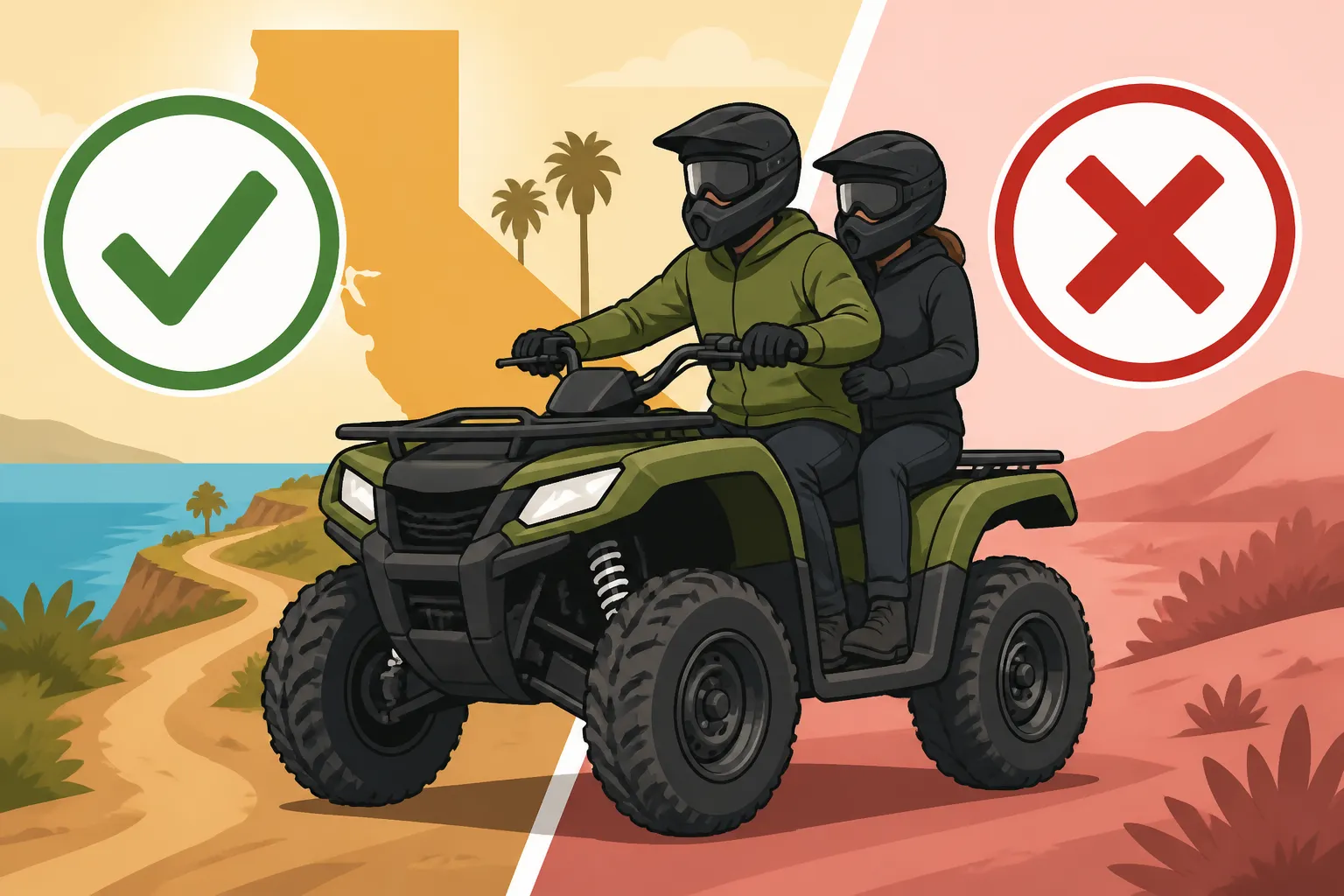
Can You Ride Double on a Quad in California?
It's a question that echoes across every campground and staging area in California: "Can I just squeeze my kid on behind me?" or "My buddy wants to come along, is that cool?" The temptation to share the thrill of an ATV ride with a passenger is completely understandable, especially when you're out exploring the incredible landscapes California has to offer. But when it comes to riding double on a quad in the Golden State, the answer is almost always a resounding "no," and misunderstanding this rule can lead to significant headaches and even dangerous situations. This guide will meticulously unpack California's regulations on ATV passengers, clarify the distinctions between different off-highway vehicles, and help you navigate the rules to ensure your rides are both legal and safe.
The Core Rule: Why Most Quads Are Single Rider in California
Let's cut right to the chase: for the vast majority of all-terrain vehicles (ATVs), California law specifies a single rider. This isn't just a suggestion; it's a deeply ingrained safety principle that dates back to how these machines were designed and the inherent risks involved when you add a second person to a setup meant for one. It's a frustration many riders share, especially families with young kids eager to join in the fun, but the reasoning is rooted firmly in safety and vehicle dynamics.
The Law's Interpretation of "Passengers" on ATVs
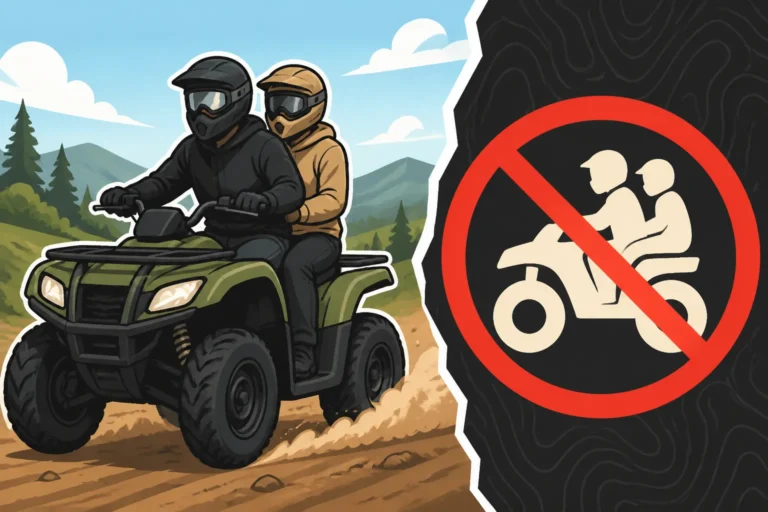
California Vehicle Code (CVC) 38506 is the key regulation here, and it's quite clear: "No operator of an all-terrain vehicle shall carry a passenger when operating the all-terrain vehicle on public lands." This regulation reflects the fundamental design of most ATVs. Think about your typical quad: it has a single, long seat, but it's really intended for the operator to shift their weight and control the machine. There are no dedicated passenger footpegs, no separate handholds, and the ergonomics are all about one person. Trying to squeeze another person, even a small child, onto that seat fundamentally alters how the ATV behaves and how the operator can control it. It’s a common misconception that if there's enough room on the seat, it must be okay. Unfortunately, that's not how the law or vehicle design interprets it. [California ATV Passenger Ban Explained] explicitly covers this point, delving into the specifics of why this rule is in place.
Safety Concerns Behind the Ban
The "why" behind California's single-rider rule for most ATVs is all about safety. When you add a passenger to a machine designed for one, you dramatically change its center of gravity. ATVs are meant to be ridden actively, with the operator leaning, shifting weight, and counter-steering to maintain balance and control, especially during turns, climbs, and descents. A passenger, even if trying their best to cooperate, restricts this movement. Their weight can make the ATV top-heavy, increasing the risk of rollovers, particularly on uneven terrain or during sharp turns.
Imagine attempting a quick evasive maneuver or an emergency stop with a passenger on board. The added weight and the passenger's potential to shift unexpectedly can make the ATV incredibly difficult to manage. The operator's ability to steer and brake effectively is compromised, and the risk of both riders being ejected from the vehicle increases significantly. These aren't just theoretical dangers; they're factors that have contributed to countless accidents over the years. Even seemingly innocuous additions like a cargo box or a makeshift seat are typically not going to pass muster with a ranger or legally override the single-rider rule. It's about protecting both the operator and any potential passenger from serious harm. [California Helmet Law for ATV Riders] further reinforces the state's focus on rider safety, ensuring that even single riders are properly protected.
Exceptions and Nuances: When a Passenger Might Be Allowed
While the single-rider rule applies broadly to most ATVs, there are specific situations and types of off-highway vehicles where carrying passengers is not only allowed but expected. Understanding these distinctions is crucial for anyone planning a group ride or considering buying a machine for multiple people. It's not about finding loopholes, but about recognizing vehicles explicitly designed for more than one.
Two-Up ATVs (Tandem ATVs) and How They Differ
The primary exception to the single-rider ATV rule comes in the form of what are commonly known as "two-up" or "tandem" ATVs. These machines are purpose-built by manufacturers to safely accommodate an operator and one passenger. How can you tell the difference? A true two-up ATV will have several key design features:
- Extended Seat: The seat will be noticeably longer and often sculpted to provide a distinct, comfortable space for the passenger behind the operator.
- Dedicated Passenger Handholds: Strong, integrated handholds will be present for the passenger to grip securely. These aren't just grab handles for cargo; they are specifically placed and designed for human hands.
- Separate Passenger Footpegs or Footrests: Crucially, a two-up ATV will have separate footpegs or floorboards for the passenger, allowing them to keep their feet safely away from the wheels and exhaust, and providing a stable platform independent of the operator's foot position.
Manufacturers like Can-Am, Polaris, and Arctic Cat (among others) produce these models, recognizing the desire for shared riding experiences. These are typically larger, more stable machines, often utility-focused or touring models, designed with the added weight and dynamics of a second person in mind. However, it's vital to remember that adding aftermarket accessories like extended seats, backrests, or footpegs – even high-quality ones from brands like SuperATV – to a standard, single-rider ATV does not magically convert it into a legal two-up machine in California. The original manufacturer's design and intent are paramount. If your quad wasn't sold as a two-up model from the factory, you generally cannot legally carry a passenger on public land.
Side-by-Sides (UTVs) as Multi-Passenger Vehicles
This is where the game changes entirely. Side-by-sides, also known as Utility Terrain Vehicles (UTVs) or Recreational Off-highway Vehicles (ROVs), are inherently designed for multiple occupants. Unlike ATVs, UTVs feature:
- Automotive-Style Seating: They typically have bench seats or bucket seats, similar to a car, allowing for two, four, or even six passengers, depending on the model.
- Seat Belts: Every occupant in a UTV is required to wear a seat belt, just like in a car. This is a non-negotiable safety feature. [California Seat Belt Rules in a UTV] highlights the importance of this regulation.
- Roll Cage: UTVs come equipped with a factory-installed roll cage, offering a significant layer of protection in the event of a rollover.
- Steering Wheel and Foot Pedals: The controls are automotive-style, making them familiar to most drivers and enhancing control.
Because of these design differences, UTVs are perfectly legal for carrying the number of passengers they were designed for, provided everyone is properly seated and belted. This makes UTVs an excellent choice for families or groups who want to ride together. When considering a UTV, always check its manufacturer's specifications for maximum passenger capacity.
For those with younger children, special rules apply. [A Child Passenger in a California Side-by-Side] offers detailed guidance on age limits and appropriate seating for kids in UTVs, ensuring everyone stays safe and compliant. Accessories from SuperATV, such as windshields, roofs, or cargo solutions, enhance the UTV experience but don't alter its fundamental multi-passenger design, which is what makes them legal for group rides.
Here’s a quick comparison of ATVs and UTVs regarding passenger capacity:
| Feature | Most ATVs (Quads) | Two-Up ATVs | Side-by-Sides (UTVs/ROVs) |
|---|---|---|---|
| Primary Design Intent | Single operator | Operator + 1 passenger | Multiple occupants (2, 4, 6+) |
| Seating | Single, long saddle seat | Extended saddle seat with distinct passenger area | Automotive-style bucket or bench seats |
| Passenger Foot Rests | None (operator's feet only) | Dedicated passenger footpegs/footrests | Integrated floorboards |
| Passenger Hand Holds | None | Dedicated passenger handholds | Integrated grab handles or roll cage for bracing |
| Seat Belts | Not typically present | Not typically present | Required for all occupants |
| Roll Cage | No | No | Yes (factory installed) |
| Legal in California? | No passengers on public land (unless factory two-up) | Yes, 1 passenger on public land | Yes, passengers up to rated capacity on public land |
Penalties, Enforcement, and What to Expect
Ignoring California's rules about ATV passengers isn't just a minor infraction; it can lead to direct consequences that impact your wallet and your riding privileges. Rangers and other law enforcement personnel at riding areas are well-versed in these regulations and don't hesitate to enforce them, all in the name of safety. It's much better to understand the rules upfront than to learn them the hard way at a checkpoint.
Fines and Citations for Violating Passenger Rules
If you're caught riding a single-rider ATV with a passenger on California public lands, you can absolutely expect to receive a citation. The specific fine amount can vary, but it's typically a monetary penalty that can put a serious damper on your fun weekend. These aren't just warnings; they are legal tickets that go on your record and require payment. Furthermore, depending on the severity of the situation or if other rules are being broken, law enforcement may even ask you to remove your machine from the riding area, effectively ending your trip. Imagine driving all the way to [Oceano Dunes: California's Only Sand Beach Ride] or [Glamis and the Imperial Sand Dunes] only to be turned away because you brought an extra person on a single-rider quad. It's a frustrating but entirely avoidable situation. Authorities at popular SVRAs like [Hungry Valley SVRA North of Los Angeles] and [Hollister Hills, California's Oldest SVRA] are particularly vigilant about enforcing these rules, especially during busy weekends when safety is a paramount concern.
Why Street Legal Conversions Don't Change ATV Passenger Rules
Here's another crucial point of confusion for many riders: just because you might make modifications to an ATV to allow for limited "street legal" use (which is a whole complex topic in California itself, and generally not simple for ATVs), it does not change its fundamental passenger capacity on designated OHV trails. [Are ATVs Street Legal in California?] clarifies that even if you manage to register your ATV for some specific on-road travel, the CVC 38506 rule about passengers on public lands still applies when you're off-highway. The modifications you might make, whether for street use or for performance, don't override the state's safety-driven passenger regulations for ATVs.
Accessories from companies like SuperATV, while fantastic for enhancing your machine's performance, durability, or utility, are designed to work within the existing legal framework. For example, SuperATV might offer heavy-duty axles or lift kits, but these are for improving the machine's capability as a single-rider ATV (or multi-rider UTV) for its intended purpose. They are not intended to, nor do they legally, convert a single-rider quad into a two-person vehicle in the eyes of California law. The core design and manufacturer's intent regarding passenger capacity remain, regardless of aftermarket add-ons.
Responsible Riding and Alternatives
Understanding the rules is one thing, but planning your adventures to comply with them while still maximizing your fun is another. California's vast network of OHV trails and riding areas offers incredible experiences, and with a little foresight, you can ensure everyone in your group gets to enjoy them safely and legally. It’s all about making informed choices before you even load up the trailer.
Planning for Group Rides and Passenger Needs
If you're heading out with friends or family and someone wants to ride along, the most straightforward solution is to ensure every rider has their own machine. This is the simplest way to comply with the single-rider ATV rule. If you have younger children who aren't old enough or experienced enough to operate their own ATV, a multi-passenger UTV becomes an invaluable asset. Investing in a UTV, or renting one for the day, allows the whole family to experience the trails together in a vehicle designed for shared adventure. Many rental shops in popular riding areas like [Pismo Beach Rental Row] offer both ATVs and UTVs, making it easy to accommodate different group sizes and preferences.
Before you even leave home, take a moment to review the specific rules for the riding area you plan to visit. While state laws are overarching, some SVRAs or BLM lands might have additional specific regulations. You can find this information on the official websites for places like [California's State Vehicular Recreation Areas] or through local BLM offices. Knowing before you go can prevent disappointment and ensure a smooth, enjoyable trip. [California OHV Areas and What They Allow] is a great resource for understanding diverse regulations across the state's riding spots.
The Importance of Safety Education
Beyond just legality, safety education is paramount for all off-highway vehicle enthusiasts. Taking an approved ATV Safety Course is not only highly recommended but often mandatory for younger riders in California. These courses, taught by certified instructors, cover crucial topics such as proper riding techniques, risk assessment, environmental responsibility, and, yes, passenger rules. They instill good habits and a strong understanding of how to operate these powerful machines safely.
For example, [California ATV Safety Certificate Requirements] details who needs a certificate and what the course entails. Even experienced adult riders can benefit from a refresher, as new techniques, vehicle technologies, and regulations emerge. Understanding vehicle dynamics – how an ATV handles with weight shifts, how to navigate obstacles, and how to react in emergency situations – is fundamentally reinforced in these courses. This knowledge helps riders appreciate why the passenger rules exist and empowers them to make safer decisions for themselves and their riding companions. Whether you're a seasoned veteran or a first-time rider, prioritizing safety education is the best way to ensure your time on California's trails is both thrilling and secure.
Disclaimer
This article is for general informational purposes only and does not constitute professional advice. Laws, prices and regulations vary by location and change over time. Consult a qualified professional for guidance on your specific situation.