Montana LLC Plates and What Happens
Many off-road enthusiasts dream of an easy path to making their beloved ATVs and UTVs street legal, especially those who live in states with notoriously strict rules like California. It’s a common frustration to have a perfectly capable machine but be confined to dirt trails or the back of a trailer for transport. This frustration often leads people down a rabbit hole of creative solutions, one of the most talked-about being the Montana LLC loophole. This guide is going to peel back the layers on this strategy, explaining why it's so appealing, and more importantly, what actually happens when you try to use a Montana LLC plate for your off-highway vehicle (OHV) in the Golden State.
The Allure of the Montana LLC for OHV Owners
Let's be honest, California isn't exactly known for making things easy for OHV owners. Between strict emissions regulations, sales tax that feels like it could buy another quad, and the general complexity of registration, many riders look for any way to simplify their lives and save a buck. This is where the legend of the Montana LLC comes into play, a siren song for those looking to bypass what they see as burdensome California regulations.
The idea is deceptively simple: you form a Limited Liability Company (LLC) in Montana, purchase your ATV or UTV through that LLC, and then register the vehicle in Montana. Because Montana has no sales tax, you instantly save a significant chunk of change on the purchase price. Furthermore, Montana has historically been more lenient about what qualifies as "street legal," meaning you could potentially register your OHV with a standard vehicle plate, implying it could be legally driven on public roads. For California residents, this sounds like a dream come true – a way to avoid high sales tax, bypass California's strict OHV registration, and potentially even drive their UTV or quad to the trailhead without having to trailer it. Many imagine simply bolting on a Montana plate and driving off into the sunset, free from the complexities of [California's Green Sticker Explained] or the seasonal restrictions of the Red Sticker. It's a tempting thought, especially when you consider the investment in a top-tier machine, perhaps accessorized with robust parts from a company like SuperATV, and envision it cruising down a highway rather than being perpetually trailered.
Why a Montana LLC Plate Doesn't Work in California
While the Montana LLC strategy might seem brilliant on paper, the reality in California is a harsh dose of cold water. California's vehicle codes and enforcement agencies are well aware of this "loophole" and have specific rules designed to prevent residents from skirting local laws by registering vehicles out-of-state. It boils down to one critical factor: residency.
California has very clear definitions for what constitutes a "resident" for vehicle registration purposes. If you live in California and your vehicle is "primarily operated" or "garaged" in California, it needs to be registered in California, regardless of where you legally own the LLC that holds the title. The state doesn't care that your Montana LLC is a legitimate business entity; if you, the driver, reside here and the vehicle resides here, California wants its piece of the pie and for you to adhere to its regulations. This applies directly to your OHV, even if it has a valid Montana plate. Think about it from California's perspective: if everyone could just set up an out-of-state LLC to avoid sales tax and registration fees, the state would lose massive revenue and control over vehicles on its roads and trails. This is why [A Montana LLC Plate in California] is simply not a magic bullet.
Furthermore, California explicitly differentiates between off-highway vehicles and street-legal vehicles. Simply having a Montana license plate does not magically convert your ATV or UTV into a street-legal vehicle in California. The state's vehicle code is incredibly specific about what modifications and certifications are required for a vehicle to be street-legal, and most OHVs simply don't meet these criteria. We're talking about things like full DOT-approved lights, turn signals, mirrors, horn, windshield, specific tire types, and emissions compliance that are rarely found on a factory-built ATV or UTV. Even if you've added some fantastic aftermarket lighting and mirrors from a brand like SuperATV, that alone isn't going to cut it. California views OHVs as such, and that classification dictates where and how they can be operated. An [An Arizona Street-Legal UTV in California] faces similar hurdles because California applies its own rules to vehicles primarily operated within its borders.
The Consequences of Using a Montana LLC Plate in California
So, you've decided to roll the dice and ride your Montana-plated OHV in California. What can you actually expect? Unfortunately, the consequences can range from inconvenient to downright costly, and they often negate any perceived savings you might have gained from the initial sales tax avoidance.
Tickets, Fines, and Impoundment
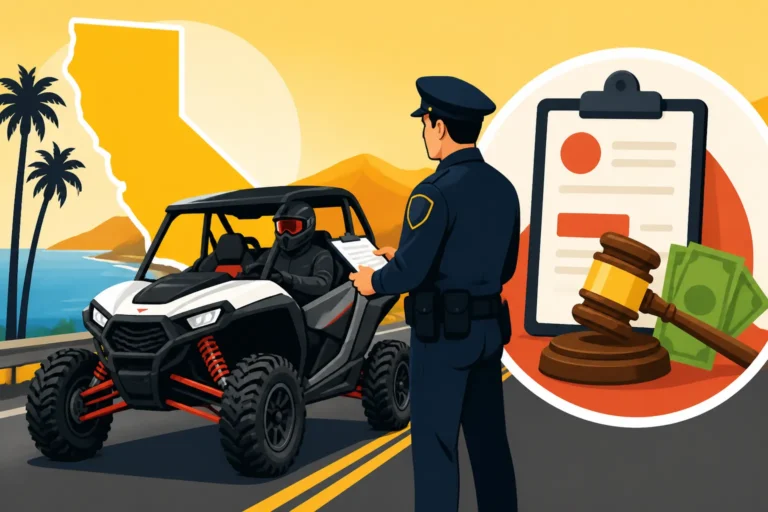
The most immediate risk is being stopped by law enforcement—be it the California Highway Patrol (CHP), local sheriffs, or even rangers in an OHV park. They are well-versed in the Montana LLC strategy. If they determine you are a California resident operating a vehicle primarily garaged in California with out-of-state plates, you're likely to receive a citation for improper registration. These fines can be substantial. Beyond a simple ticket, your vehicle could be impounded, leaving you with towing and storage fees on top of the initial fine. This means a great day of riding could turn into a very expensive headache, and you'll still have to deal with the underlying registration issue. Imagine planning a trip to Glamis, only to have your machine impounded at the gate because of improper plates; it's a real buzzkill.
Back Sales Tax, Penalties, and Fees
One of the primary motivations for the Montana LLC is to avoid California sales tax. However, if California authorities catch wind of your scheme, they can (and often will) come after you for the full amount of sales tax you would have owed if you had purchased and registered the vehicle in California. On top of that, they can add significant penalties and interest for non-compliance. This isn't just a minor oversight; it's seen as deliberate tax evasion, and the state doesn't take kindly to it. You might think you saved 8% on the purchase, but end up paying 10-12% (or more) in back taxes and penalties. This completely negates the financial benefit and adds a layer of legal complexity you likely didn't anticipate. This is a crucial aspect when considering [California OHV Registration and Sales Tax].
No Street-Legal Status
Crucially, despite the Montana plate, your OHV is still not street legal in California. Operating it on public streets or highways where OHVs are not explicitly permitted will lead to further citations. California has very limited provisions for OHVs on public roads, such as designated [California's Combined-Use Highways] or crossing a road at a right angle, but these are exceptions, not the rule. Even if you have the best suspension and a full complement of accessories from SuperATV, your UTV or ATV is still classified as an off-highway vehicle by the state of California. You will still face [California Fines for Riding on a Highway] if you try to use your Montana-plated OHV like a regular car.
The Inevitable California Registration
Ultimately, if you're a California resident and plan to operate your OHV in California, you'll likely have to register it properly in California anyway. This means going through the full [Registering an OHV in California] process, paying the sales tax (plus penalties if you tried to avoid it), and obtaining a California Green, Red, or Tan sticker, depending on your machine's characteristics. This is often the outcome for those who tried the Montana LLC route, adding more cost and hassle than if they had just done it correctly from the start.
Here's a quick comparison of the perceived benefits vs. the reality:
| Feature | Perceived Montana LLC Benefit | California Reality |
|---|---|---|
| Sales Tax | Avoid California sales tax entirely. | California will likely pursue back sales tax, plus penalties and interest. |
| Street Legal Status | Machine becomes street legal due to Montana plate. | Your OHV remains an OHV; California does not recognize it as street legal for residents. |
| Registration Ease | Simple Montana registration, bypass CA DMV complexity. | You'll still face CA registration requirements, potentially with added penalties. |
| Legal Operation | Freedom to ride anywhere with a plate. | Restricted to designated OHV areas; street use results in fines/impoundment. |
| Enforcement Risk | Low risk, out-of-state plates are rarely checked. | High risk; CA law enforcement is vigilant about out-of-state plates on resident vehicles. |
| Financial Cost | Significant savings on purchase and ongoing fees. | Potentially higher costs due to fines, back taxes, penalties, and impound fees. |
Legitimate Ways to Register and Enjoy Your OHV in California
Instead of trying to navigate complex and ultimately risky workarounds, it's far better to understand and comply with California's OHV laws. While they might seem daunting, they ensure access to some of the most incredible riding areas in the country.
Proper California OHV Registration
The first step is always proper registration. Depending on your OHV's model year and emissions compliance, it will typically qualify for a Green, Red, or Tan sticker.
- Green Sticker: These are for OHVs that meet California's emissions standards and can be operated year-round in all designated OHV areas. Machines built before 2002 generally fall into this category, as do many newer models certified by the California Air Resources Board (CARB). [California's Green Sticker Explained] delves into this more.
- Red Sticker: This applies to OHVs that do not meet California's emissions standards for year-round use. These machines have seasonal use restrictions, typically limiting riding to certain months in specific regions. [California's Red Sticker Rules Today] explains the current rules and what to expect.
- Tan Sticker: This is for competition-only machines that are never intended for recreational use and are operated under a [California's Sanctioned Event Permit Explained].
When you purchase an OHV, you'll typically go through the [Titling an Off-Highway Vehicle in California] process, which includes paying sales tax and getting your initial registration. If you're moving to California, you'll need to go through [California OHV Registration After Moving to the State].
Understanding Street Legal Limitations
It's critical to understand that for the vast majority of ATVs and UTVs, [Street Legal ATVs in California: The Short Answer] is a resounding "no." While some states allow UTVs to be made street legal with certain modifications, California has not adopted these broader allowances. Simply put, [Can You Make a UTV Street Legal in California?] usually leads to frustration. Even with extensive modifications, including aftermarket parts from reputable companies like SuperATV that might enhance performance or safety off-road, these machines typically cannot meet California's stringent street-legal requirements for vehicles that are primarily driven on public highways.
California's vehicle codes are designed to ensure safety and emissions compliance for vehicles sharing the road with cars and trucks. OHVs are built for a different purpose, with different safety standards, tire types, and emissions controls. Trying to force them into a street-legal mold in California is an uphill battle, often an impossible one. Even the ID plate California issues for OHVs is fundamentally different from a standard license plate; [Why a California OHV Plate Is Not a License Plate] explains this distinction clearly.
Riding Legally on Public Land
The best and safest way to enjoy your OHV in California is to ride in designated OHV areas, such as the various State Vehicular Recreation Areas (SVRAs) or Bureau of Land Management (BLM) lands. These areas are specifically designed and managed for off-highway recreation. Before you head out, always ensure your machine has the correct, current California OHV sticker displayed, along with any other required safety equipment like spark arresters and a whip flag if you're hitting the dunes.
By understanding California's rules and registering your OHV correctly, you can avoid legal troubles and focus on what truly matters: enjoying the incredible riding opportunities the state has to offer. Trying to game the system with a Montana LLC might seem clever, but in the long run, it's almost always a recipe for headaches, heavy fines, and a lot of unnecessary stress.
Disclaimer
This article is for general informational purposes only and does not constitute professional advice. Laws, prices and regulations vary by location and change over time. Consult a qualified professional for guidance on your specific situation.