A Wide UTV on Narrow California Trails
There's nothing quite like the feeling of hitting the trail in your UTV, whether you're tackling rocky climbs or flying across open desert. But if you own one of the newer, wider side-by-sides that have become so popular, you've probably already run into the frustrating reality that not all California trails are built for your machine. This guide will help you understand California's OHV width restrictions, where to find trails that accommodate wider vehicles, and what options you have for navigating the state's diverse off-road landscape.
Understanding California's OHV Width Restrictions
Modern UTVs have evolved dramatically, offering more comfort, capability, and often, a wider stance for stability. While this is fantastic for performance and safety in many scenarios, it creates a significant challenge when faced with trails originally designed for narrower ATVs or dirt bikes, or even older, smaller side-by-sides. California, with its vast network of public lands managed by various agencies, has a patchwork of rules, and width restrictions are one of the most common.
Why Trails Have Width Limits
Trail width limits aren't arbitrary; they exist for several important reasons, primarily focused on environmental protection and user safety. Narrow trails help prevent riders from going off-route, which protects sensitive flora and fauna, prevents erosion, and maintains the integrity of the trail itself. When wider vehicles consistently travel beyond the designated trail edges, it can lead to widening of the trail, damage to vegetation, and soil compaction, all of which contribute to environmental degradation. Furthermore, many trails, especially in forested or mountainous areas, were originally cut decades ago for motorcycles, horses, or even just foot traffic, long before modern UTVs were conceived. These trails may have natural bottlenecks, tight switchbacks, or purpose-built gates designed to keep larger vehicles out. Imagine a pristine single-track trail suddenly being torn up by a machine too wide to fit; it ruins the experience for everyone and can lead to trail closures.
Common Width Limits You'll Encounter
In California, you'll most commonly encounter width restrictions of 50 inches, 60 inches, and sometimes 72 inches. The 50-inch rule is particularly prevalent, often inherited from older regulations designed for traditional ATVs. Many older trails within national forests, state parks, and even some State Vehicular Recreation Areas (SVRAs) still adhere to this limit. This is where many modern UTV owners feel the pinch, as popular models often exceed this. For example, many sport UTVs come from the factory at 64 inches, 72 inches, or even wider. Some areas are beginning to designate trails for wider machines, but these are not always as common or extensive as the narrower trails. It’s crucial to remember that these limits are measured from the widest points of your vehicle, usually the tires or outer fender flares, not just the track width. So, if you've added aftermarket wheels or tires that push your stance out, you'll need to factor that into your overall measurement.
How Width Limits Are Enforced on Trails
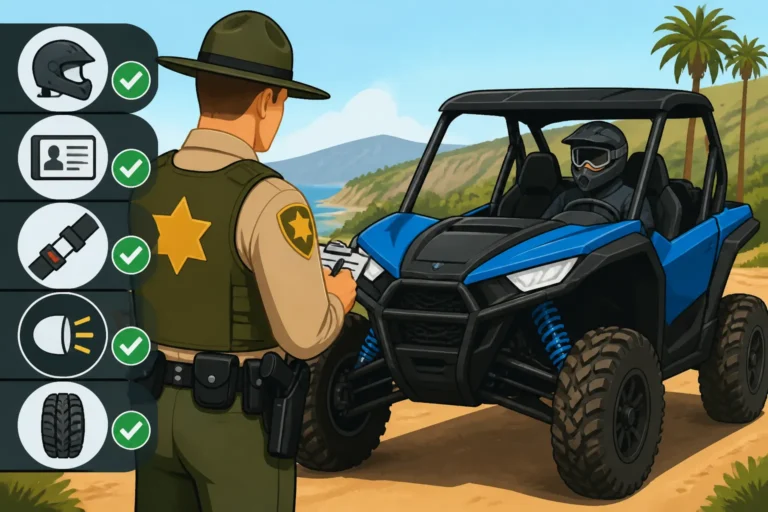
Enforcement of width limits is serious business on California's public lands. Park rangers, forest service officers, and other land managers are vigilant, and they have various methods to check your machine. The most direct method is physical barriers: gates, large rocks, or strategically placed trees that simply won't let a wider vehicle pass. If you encounter one of these, it's a clear signal that the trail is not for your machine. Trying to go around these barriers is a quick way to earn a citation for off-roading outside designated routes. Rangers also conduct patrols, and they're well-versed in identifying common UTV models and their factory widths. They might even carry a tape measure, especially at popular trailheads or checkpoints. At SVRAs like Hollister Hills or Ocotillo Wells, staff at the entrance gates or roving patrols often check vehicles to ensure compliance with all regulations, including width. If your vehicle is found to be over the limit on a restricted trail, you could face hefty fines, be turned around, or even have your vehicle impounded in severe cases. Remember, ignorance of the rule is rarely an acceptable excuse when it comes to enforcement.
Finding Out About Trail Width Before You Ride
One of the biggest frustrations for OHV enthusiasts is showing up at a trailhead, only to discover their machine is too wide for the designated routes. This is particularly vexing after a long drive and with a loaded trailer. Thankfully, there are reliable ways to get this information before you even load up. Doing your homework beforehand is not just about avoiding disappointment; it's about being a responsible rider and ensuring you're recreating legally and safely.
Official Sources for Trail Information
When planning your California OHV adventure, always consult official sources. These are the most accurate and up-to-date resources for trail conditions, closures, and critical rules like width restrictions. For State Vehicular Recreation Areas (SVRAs), the California State Parks OHMVR Division website is your go-to. Each SVRA typically has a dedicated page with maps, rules, and alerts. Similarly, for national forests and Bureau of Land Management (BLM) lands, their respective websites are invaluable. These sites often provide downloadable maps, contact information for local ranger stations, and any special orders or temporary closures. Don't rely solely on third-party apps or outdated guides, as conditions and rules can change. A quick call to the local ranger station or SVRA office can often clarify any ambiguities and give you the most current information, especially if there have been recent weather events or maintenance closures. Always double-check before heading out.
The Importance of Motor Vehicle Use Maps (MVUMs)
For riding in national forests, Motor Vehicle Use Maps (MVUMs) are absolutely essential – they are the law. An MVUM explicitly designates which roads and trails are open to motorized vehicles, what types of vehicles are allowed (e.g., highway-legal only, OHV, ATV, motorcycle), and any applicable restrictions, including width limits. These maps typically use a system of lines and symbols to convey this information. You’ll see designations for trails open to vehicles 50 inches or less, or those open to vehicles 60 inches or less, and so on. Understanding [Motor Vehicle Use Maps and Reading Them] is a critical skill for any OHV enthusiast planning to ride in a national forest. They are free and can often be downloaded from the U.S. Forest Service website for the specific forest you plan to visit, or picked up at a ranger district office. Carrying a physical copy is always a good idea, as cell service can be spotty in remote areas.
Checking SVRA Rules and Local Park Regulations
Beyond national forests, California has a robust system of SVRAs and local parks that offer OHV riding. Each of these facilities has its own set of rules and regulations, which are usually posted on their websites and at entry points. For instance, you might find that Prairie City SVRA has different width allowances than Carnegie SVRA. Many SVRAs, like Hungry Valley, have developed extensive trail networks with clearly marked signs indicating what type of vehicle is permitted. Some SVRAs have specific areas or loops designated for wider vehicles, while others remain strictly 50 inches. Always check the official website or call the park office directly for the specific area you plan to visit. Don't assume that because one SVRA allows your wide UTV, all of them will. The same goes for local county parks or privately managed OHV areas; their rules can vary widely. Websites like the California State Parks OHV Program site often provide links to individual SVRA pages where you can find detailed information, maps, and even specific trail ratings. You might find that some SVRAs have detailed [California Trail Maps and Where to Get Them] that highlight width restrictions.
Options for Wide UTV Owners in California
So, you've got a wider UTV and you love it – as you should! It's a fantastic machine. The challenge, then, becomes finding places to legally and enjoyably ride it within California's diverse landscape of trails. While the 50-inch rule feels omnipresent, there are indeed many places and strategies that allow you to make the most of your wider rig. It just requires a bit more intentional planning.
Riding Designated Wide-Friendly Trails
The good news is that land managers are increasingly recognizing the popularity of wider UTVs and are working to provide suitable riding opportunities. Many of California's most popular desert areas, especially those managed by the Bureau of Land Management (BLM), tend to have more open terrain with fewer width restrictions. Areas like the Imperial Sand Dunes Recreation Area (Glamis) or much of Ocotillo Wells SVRA are prime examples where wider vehicles are not an issue. These vast open spaces and wide wash trails are perfect for exploring without worrying about squeezing through tight spots. Additionally, some State Vehicular Recreation Areas (SVRAs) have specific "mixed-use" or "wider vehicle" trails. For instance, the Upper Ranch at Hollister Hills SVRA offers trails that can accommodate wider machines, while the Lower Ranch tends to have more motorcycle and ATV-specific trails. Always consult the specific park's map and rules to identify these designated wider trails. As you plan your trips, prioritize these known wide-friendly areas to avoid frustration.
Aftermarket Solutions and Their Implications
While many aftermarket components are designed to enhance performance, some can inadvertently widen your UTV beyond legal trail limits. Lift kits, offset wheels, and longer A-arms are common modifications that can push your machine's width out. For example, a quality lift kit from a brand like SuperATV might improve ground clearance and suspension travel, but if it also increases your track width significantly, you need to be aware of the new overall dimension. Conversely, some riders who primarily ride on 50-inch restricted trails might look into "narrowing kits" or specific A-arm replacements designed to bring their UTV's width down. However, these modifications can be expensive, may affect handling characteristics, and aren't available for all models. Before making any such modifications, thoroughly research their impact on width, performance, and safety. Always remember that any modification should be considered in conjunction with the specific trail regulations you intend to adhere to. If you're going to invest in a significant change, make sure it genuinely solves your problem and doesn't create new ones.
Considering a Different Machine for Narrow Trails
For some dedicated riders who frequently encounter 50-inch restricted trails, the most practical solution might be to invest in a second, narrower machine. Many riders own both a wide sport UTV for open desert riding and a smaller, 50-inch ATV or UTV for tighter, technical trails. This allows them the flexibility to ride anywhere without compromise. Options for 50-inch or narrower machines include older ATVs, specific utility quads, or compact UTVs designed to meet these limits. Another consideration might be a dirt bike, which can access even the narrowest single-track trails. While this isn't a viable option for everyone, it's a common strategy among seasoned California OHV enthusiasts who want to explore the full range of trails the state has to offer. Before making such a significant decision, thoroughly evaluate your primary riding areas and the frequency with which you're encountering width-restricted routes. It's an investment, but it could unlock a whole new world of riding opportunities.
Practical Tips for Riding a Wide UTV in California
Navigating California's diverse OHV landscape with a wider UTV requires a bit more diligence and planning than with a narrower machine. It's not just about finding trails that technically fit your width, but also about being prepared for potential challenges and respecting the rules and fellow riders. Being a good steward of the land and a courteous trail user ensures that these precious riding areas remain open for everyone to enjoy.
Measuring Your Machine Accurately
Before you even leave your driveway, you need to know the exact width of your UTV. Don't rely on manufacturer specifications alone, especially if you've made any modifications. Grab a tape measure and accurately measure your vehicle from the widest point, typically the outside edge of your tires or fender flares. If you have a specific aftermarket component like a SuperATV A-arm kit, ensure you're measuring the final width after installation. This precise measurement will be your guide when checking trail rules and maps. Write it down and keep it handy, perhaps in your glove box or with your registration paperwork. It might seem like a small detail, but arriving at a trailhead confident in your vehicle's dimensions can save you a lot of hassle and potential fines. Remember, a couple of inches can make all the difference between a legal ride and a frustrating turn-around.
Navigating Gates and Obstacles
Even on trails that are technically rated for wider vehicles, you might encounter narrow spots, gates, or other natural or man-made obstacles. These can be particularly challenging for wider UTVs. Approach all gates and potential choke points slowly and with caution. If a gate has a specific width opening, don't attempt to force your way through if you're even a hair wider; you'll likely damage your machine or the gate itself. Look for designated bypasses if available, but only use them if they are clearly marked as legal routes. When navigating tight sections with rocks or trees, always have a spotter if possible. Communication with your passengers is key. Taking your time, assessing the path, and making small, precise steering adjustments can prevent costly damage to your UTV and the surrounding environment. Remember, even a trail marked for your width might have a few spots that require extra care.
Respecting the Rules and Other Riders
Ultimately, riding a wide UTV on California trails comes down to respect: respect for the rules, respect for the environment, and respect for other trail users. Always carry your [California OHV Registration Paperwork Checklist] and any required permits. Stick to marked trails and never attempt to forge new paths, especially if your vehicle is too wide for the designated route. This not only protects the ecosystem but also ensures these trails remain open for future generations. Be mindful of other riders, including those on narrower machines like dirt bikes and ATVs, or even mountain bikers and hikers. Share the trail responsibly, yield when necessary, and maintain appropriate speeds. Understanding [What Rangers Check at Hollister Hills] or other SVRAs can give you an idea of the scrutiny you might face. By being a responsible and prepared rider, you contribute positively to the OHV community and help preserve access to California's incredible off-road opportunities, even with your wider UTV.
| Width Category | Typical Max Inches | Common Machine Types | Where You'll Find These Limits | Enforcement Examples |
|---|---|---|---|---|
| Narrow ATV/UTV | 50 inches | Traditional ATVs, narrow utility UTVs, some smaller sport UTVs | National Forest single track, older SVRA trails, some BLM trails | Physical gates, bollards, "50-inch max" signs, ranger patrols |
| Mid-Width UTV | 60 inches | Some older sport UTVs, many utility UTVs, cross-over models | Designated "mixed-use" trails in SVRAs, newer forest roads | Less common than 50", but still present on some MVUMs |
| Wider Sport UTV/Buggy | 72 inches+ | Modern sport UTVs, sand rails, larger custom builds | Open desert areas (Glamis, Ocotillo Wells), wide graded roads, designated OHV parks | Generally fewer restrictions in truly open areas, but can still be excluded from specific trails |
| Open Desert | Unlimited | All UTVs, buggies, full-size 4x4s | Imperial Sand Dunes (Glamis), some BLM open riding areas | Limited to specific open riding areas, not on defined trails |
Disclaimer
This article is for general informational purposes only and does not constitute professional advice. Laws, prices and regulations vary by location and change over time. Consult a qualified professional for guidance on your specific situation.