California Noise Rules at an SVRA Gate
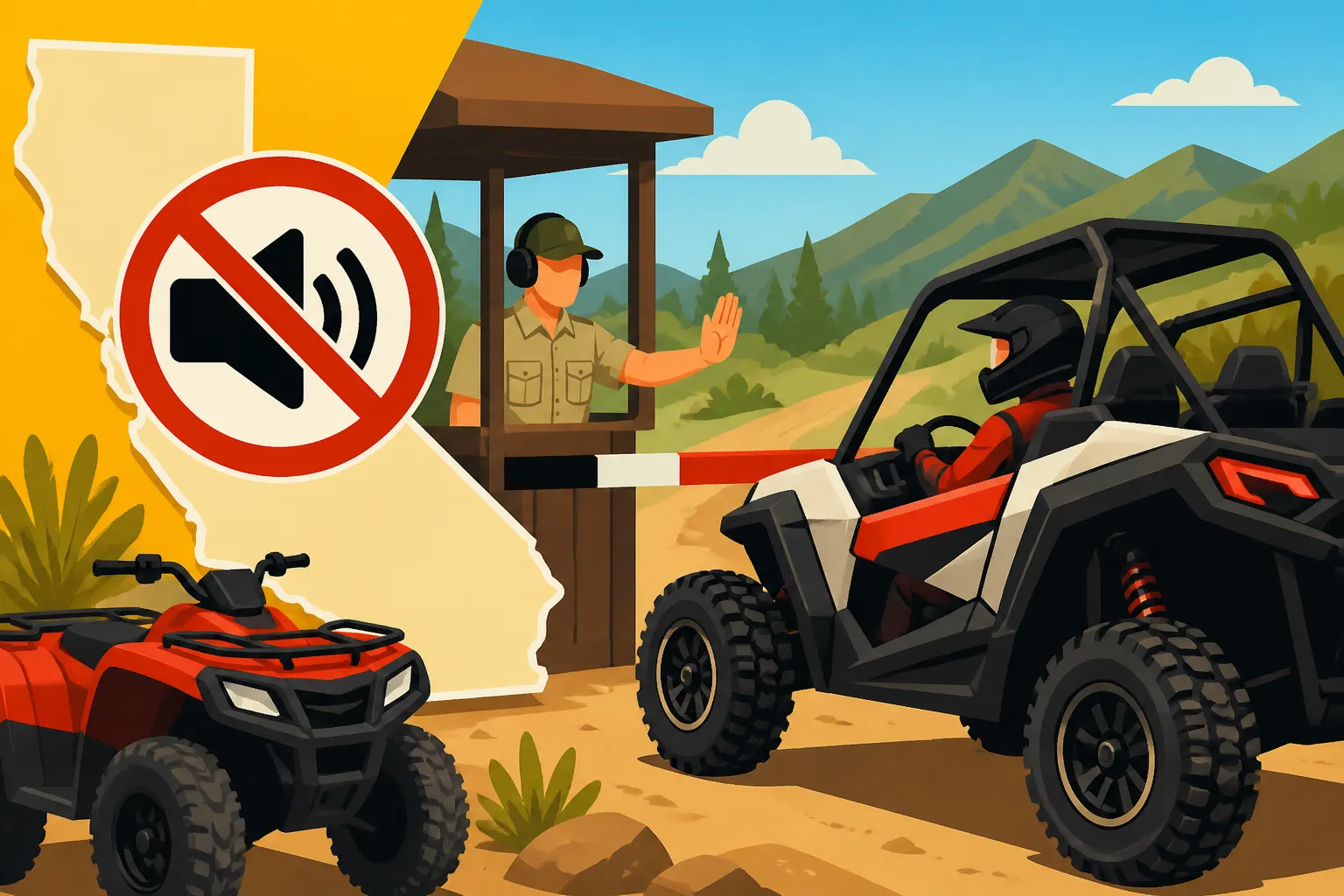
There's nothing quite like the excitement of loading up your ATV or UTV, trailering it across California, and anticipating a fantastic day or weekend of riding at one of our incredible State Vehicular Recreation Areas (SVRAs). But that feeling can quickly turn to a gut punch when you roll up to the gate, full of optimism, only to be told your machine is too loud. It's a frustrating, common scenario that leaves many riders scratching their heads, wondering why their pride and joy is suddenly a problem. This guide will walk you through California's OHV noise rules, what rangers look for at the gate, and how to ensure your machine meets the standards so your next adventure starts with a smile, not a turn-around.
Why Noise Matters at California SVRA Gates
Imagine the scenario: you've planned this trip for weeks, maybe even months. You've packed the cooler, checked the oil, and woken up before dawn to hit the road. You drive for hours, the anticipation building with every mile, picturing yourself tearing through the dunes or carving up a dusty trail. Then, at the entrance to your chosen SVRA, a ranger or gate attendant flags you down, pulls out a decibel meter, and within minutes, delivers the news: "Sorry, your machine is too loud." It's deflating, to say the least. All that effort, time, and fuel – wasted. This isn't just about a minor inconvenience; it's about a significant disruption to your plans and a real blow to your enjoyment.
The Frustration of Being Turned Away
The financial and emotional investment in an OHV hobby is substantial. From the cost of the machine itself to the trailer, gas, maintenance, and all the gear, it adds up. To have all of that rendered useless for a planned outing because of a noise violation at the gate can feel incredibly unfair, especially if you didn't even realize your machine was out of compliance. Many riders modify their machines for performance or aesthetics, not always realizing the impact on sound output. When you're standing at the gate, after a long drive, facing the prospect of turning around, it's easy to feel angry or confused. You might think, "But it's just a little louder, what's the big deal?"
Community Relations and Environmental Concerns
The "big deal" often comes down to protecting the very places we love to ride, and the communities surrounding them. California's SVRAs, while designated for off-highway vehicle recreation, often border residential areas, quiet parks, or sensitive wildlife habitats. Excessive noise from OHVs can be a major nuisance for nearby residents, leading to complaints and pressure on park management. These complaints can, and have, led to stricter regulations, reduced riding hours, or even permanent closures of sections of riding areas. [The 2026 Closure at California's Oceano Dunes] is a stark reminder of how environmental and community concerns can impact riding access.
Furthermore, persistent loud noise can disrupt wildlife, affecting their breeding patterns, foraging habits, and overall stress levels. By adhering to noise limits, we're not just avoiding a fine or a turned-away trip; we're actively participating in the responsible stewardship of our riding areas, helping to ensure they remain open and accessible for future generations. It's about being good neighbors and good environmentalists, allowing everyone to enjoy California's natural beauty, whether they're on an OHV or simply seeking peace and quiet.
Understanding California's OHV Sound Limits
California has specific, legally mandated sound limits for off-highway vehicles, and these are what rangers at SVRA gates and out on the trails will enforce. These aren't arbitrary numbers; they're set to balance the excitement of OHV recreation with the need for environmental protection and community peace. Ignorance of the law, while common, won't get you past the gate.
The Two Main Decibel Limits
Essentially, California operates with two primary decibel limits for OHVs, largely depending on the machine's model year. For most newer machines, particularly those manufactured after January 1, 1998, the strict limit is 96 decibels (dB). This is the standard you'll typically encounter. However, older machines, specifically those manufactured before January 1, 1998, are given a slightly more lenient allowance of 101 dB. This distinction recognizes that older engine and exhaust technologies often produced more noise, and retrofitting them to meet modern standards might be impractical or impossible.
It's crucial to know which category your machine falls into. If you have a classic quad from the early 90s, you might have a bit more wiggle room than someone with a brand-new side-by-side. These limits are part of [California's ATV Sound Limits Explained] regulations, and they apply across all public OHV riding areas in the state. Don't assume that because your machine is older, it can be excessively loud; there's still a limit.
| Machine Model Year | Maximum Decibel Limit (dB) |
|---|---|
| On or after January 1, 1998 | 96 |
| Before January 1, 1998 | 101 |
How Rangers Conduct a Sound Check
The sound check isn't just someone listening to your machine and making a judgment call. There's a standardized, precise procedure that rangers follow to determine compliance. This process, often referred to as a "20-inch test" or "SAE J1287 test," is designed to be consistent and fair.
First, the ranger will use a calibrated decibel meter. They will position the microphone of this meter exactly 20 inches (about 50 cm) from the outlet of your machine's exhaust pipe, typically at a 45-degree angle to the pipe's axis, and at the same height as the exhaust opening. The location for the test is also important: it's usually conducted in an open, quiet area, free from obstructions or reflective surfaces that could skew the reading.
Next, you'll be instructed to rev your engine to a specific RPM. For two-stroke engines, the test is usually conducted at 1/2 of the engine's maximum rated RPM. For four-stroke engines, it's typically at 3/4 of the maximum rated RPM. This isn't just full throttle; it's a specific engine speed designed to simulate a common operating range. The ranger will then take a reading. If that reading exceeds the 96 dB or 101 dB limit for your machine's model year, you're out of compliance. You can learn more about this process in [California Sound Test Procedure]. This meticulous approach ensures that the test is as objective as possible, giving you a clear pass or fail based on measurable data. [Measuring Sound at 20 Inches] and [How a Ranger Measures Your Exhaust Noise] cover these specifics in detail.
What to Do If Your Machine Is Too Loud
Discovering your machine is too loud can be disheartening, but it's a fixable problem in most cases. The key is understanding the common causes and knowing what steps you can take to bring your OHV into compliance. Often, the very modifications riders make for performance or sound appeal are the ones that push them over the legal limit.
Common Culprits: Aftermarket Exhausts and Modifications
Let's be real: many of us love the growl of a performance exhaust system. The stock muffler on your UTV might feel too restrictive, or the sound from your quad might not be aggressive enough for your taste. So, you swap it out for an aftermarket system from a company like SuperATV, or another popular brand, promising more horsepower and a richer tone. While these systems can deliver on performance and sound character, they very frequently exceed California's strict decibel limits.
Many aftermarket exhausts are designed for maximum flow, which often translates to higher noise output. Some even come with removable baffles or inserts that, when taken out, make the machine significantly louder. It's a common practice to remove these for a "better" sound, but doing so almost guarantees you'll fail a sound check. Exhaust leaks, even small ones, can also contribute to increased noise, so it's worth checking your header pipes and muffler connections. This issue is so prevalent that it's a major topic in [Aftermarket Exhaust and California Sound Checks].
Solutions and Prevention
The good news is that if your machine is too loud, you have options beyond buying a new one.
- Re-install Baffles/Inserts: If your aftermarket exhaust came with a baffle or spark arrester insert that you removed, put it back in. This is often the quickest and cheapest way to reduce decibels significantly. Many aftermarket companies design these inserts specifically to help meet sound requirements in various states.
- Purchase a Compliant Aftermarket System: Some aftermarket manufacturers, including certain lines from SuperATV and others, do offer "quiet core" or "forest service approved" exhaust systems. These are designed to enhance performance while staying within legal sound limits. It might mean a different sound than you originally envisioned, but it ensures you can actually ride where you want to go. Always look for systems explicitly stating compliance with sound regulations.
- Check for Leaks: Perform a thorough inspection of your entire exhaust system. Look for cracks in the header, loose muffler clamps, or rusted-through sections. Even a small leak can allow sound to escape, increasing the overall decibel reading. Repairing these can make a noticeable difference.
- Revert to Stock Exhaust: If all else fails, or if you prefer a guaranteed pass, re-installing your machine's original stock exhaust system is usually a surefire way to meet the noise limits. Manufacturers design stock systems to comply with the regulations in place at the time of sale. While it might not offer the same performance boost as some aftermarket options, it provides peace of mind at the gate.
- Pre-Ride Sound Check: Invest in an inexpensive decibel meter (many smartphone apps can give you a rough idea, but a dedicated meter is better for accuracy) and conduct your own sound check before heading out. Test it the same way a ranger would (20 inches, proper RPM). This proactive step can save you a lot of grief.
By taking these steps, you can transform a gate denial into a green light for your next adventure.
Beyond the Gate: Staying Compliant on the Trail
Passing the gate check is a great start, but California's noise rules don't end there. Compliance is an ongoing responsibility that applies throughout your ride, not just at the entrance. Rangers patrol [California's State Vehicular Recreation Areas] and other public riding lands, and they are authorized to conduct sound checks at any point on the trail.
Why Continuous Compliance Matters
Think of it this way: the gate check is the first line of defense, but it's not the only one. Just because you got in doesn't mean you're immune to further scrutiny. Rangers might be stationed at popular intersections, overlooks, or even just patrolling a section of trail, observing machines. If your OHV sounds excessively loud to them, they can stop you and perform a roadside sound test, using the exact same procedure as at the gate.
A violation discovered on the trail carries the same weight as one at the gate. You could receive a citation, which can result in a significant fine. [California Fines for a Loud Machine] can put a real damper on your day, or even your entire trip, costing you money that could have been better spent on gas or new gear. Beyond the legal consequences, riding an overly loud machine on the trail contributes to the very issues that lead to stricter regulations and potential closures – noise complaints from other users, nearby residents, and environmental advocates. Maintaining a compliant machine is a matter of respect for other riders, the environment, and the future of our sport.
The Role of Spark Arresters
While not directly a noise rule, spark arresters are a critical component often related to your exhaust system and are just as strictly enforced in California. A spark arrester is a device fitted to the exhaust system that prevents glowing embers or sparks from exiting the exhaust pipe. These sparks, even tiny ones, can be a major source of wildfires, especially in California's dry brush and forests.
Most aftermarket exhausts, particularly those marketed for off-road use, should come with an integrated or optional spark arrester. However, sometimes they are removed, become clogged, or fall into disrepair. Riding on any "brush-covered" land in California without a functioning, U.S. Forest Service approved spark arrester is illegal and can lead to hefty fines. Often, if a ranger is checking your sound, they'll also quickly verify your spark arrester. They go hand-in-hand in terms of regulatory compliance and responsible riding. Always ensure your spark arrester is in place and in good working order. You can find more information on this essential requirement in [California Spark Arrester Rules] and [Spark Arresters on California Brush-Covered Land].
Finding Compliant Parts and Resources
Navigating the world of OHV parts and modifications to ensure compliance with California's noise rules can feel like a puzzle. You want the performance, the look, and the sound you desire, but you also need to avoid getting turned away at the gate or cited on the trail. The good news is that there are resources and reputable manufacturers who understand these challenges.
OEM vs. Aftermarket for Sound Compliance
When it comes to noise, Original Equipment Manufacturer (OEM) parts are almost always your safest bet. The exhaust system that came with your quad or UTV from the factory was designed and tested to meet all applicable emissions and noise regulations for the state it was sold in. If you're running a stock exhaust, it's highly likely you'll pass a California sound check, provided it's in good repair with no leaks.
However, many riders seek to upgrade, and this is where aftermarket parts come into play. The challenge with aftermarket systems is that while some are explicitly designed to be sound-compliant, many prioritize performance or aggressive sound aesthetics over strict adherence to regulations. This doesn't mean all aftermarket options are bad; it just means you need to be a discerning consumer. Brands like SuperATV, known for a wide range of OHV accessories, produce many parts. When considering an exhaust from them or any other company, specifically look for language that mentions "quiet core," "Forest Service Approved," "meets SAE J1287 standards," or "CARB compliant." These phrases are indicators that the manufacturer has designed the system with regulatory compliance in mind.
Checking the Approved List
For spark arresters, there's a clear path to compliance: the U.S. Forest Service maintains an official list of approved spark arresters. This list typically includes specific models and part numbers that have been tested and certified to effectively prevent sparks. Before purchasing an aftermarket spark arrester or an exhaust system with an integrated arrester, it's a wise move to cross-reference it with the latest Forest Service list, or at least ensure the manufacturer explicitly states compliance. [California Approved Spark Arrester List] can be a valuable resource.
Unfortunately, there isn't a widely published, official "sound-approved exhaust" list in the same way there is for spark arresters. This puts the onus on the rider to research and verify. Look for reviews, forum discussions, and manufacturer specifications that explicitly address decibel levels. If a manufacturer is vague about noise compliance, that's often a red flag. When in doubt, reach out to the manufacturer directly or consult with a reputable OHV dealer who understands California's specific regulations. Making an informed choice upfront can save you a lot of headache and expense down the road.
Disclaimer
This article is for general informational purposes only and does not constitute professional advice. Laws, prices and regulations vary by location and change over time. Consult a qualified professional for guidance on your specific situation.