California Combined-Use Highway List
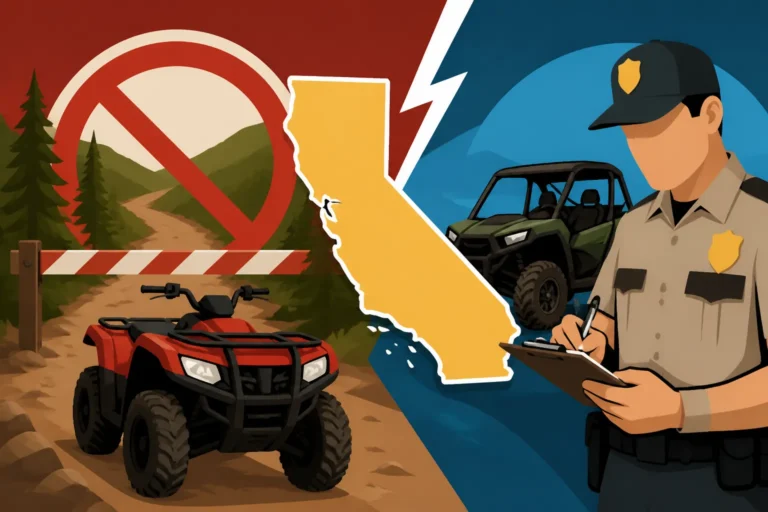
The dream of hopping on your ATV or UTV and cruising down a paved road in California is one many off-road enthusiasts share. Unfortunately, the reality for most of the state's vast network of roads is a hard no, which can be incredibly frustrating. This guide is here to unravel the complex and often confusing world of California's combined-use highways, shedding light on what they are, where you might find them, and what it truly means to operate your off-highway vehicle (OHV) on such a designated segment.
The Lingering Question of Street Legality for OHVs in California
Let's just be real for a moment: California is incredibly strict when it comes to off-highway vehicles and public roads. Many riders, understandably, find this infuriating. You've invested in your machine, perhaps added some fantastic aftermarket parts from places like SuperATV to enhance its performance and capability, and you just want to get from Point A to Point B without having to trailer it every single time. It feels like a common-sense solution to just make a few modifications and hit the asphalt, right?
The core issue is that, in California, an ATV or UTV is designed, manufactured, and sold exclusively for off-highway use. It lacks the safety equipment and design features required for registration as a street-legal vehicle. This isn't just about blinkers and a horn; it's about crashworthiness, emissions, and a whole host of other regulations that factory-built OHVs simply don't meet. Even if you install a full turn signal kit, mirrors, and a horn, those modifications don't magically transform your OHV into a street-legal vehicle in the eyes of the California Department of Motor Vehicles (DMV). So, the general rule of thumb remains: if it's not registered as a highway vehicle, it doesn't belong on a highway. This is why the concept of "combined-use highways" is so critical and, frankly, so limited – it's one of the only exceptions to this very firm rule. [Are ATVs Street Legal in California?] delves deeper into this often-disappointing reality.
Demystifying California's Combined-Use Highways
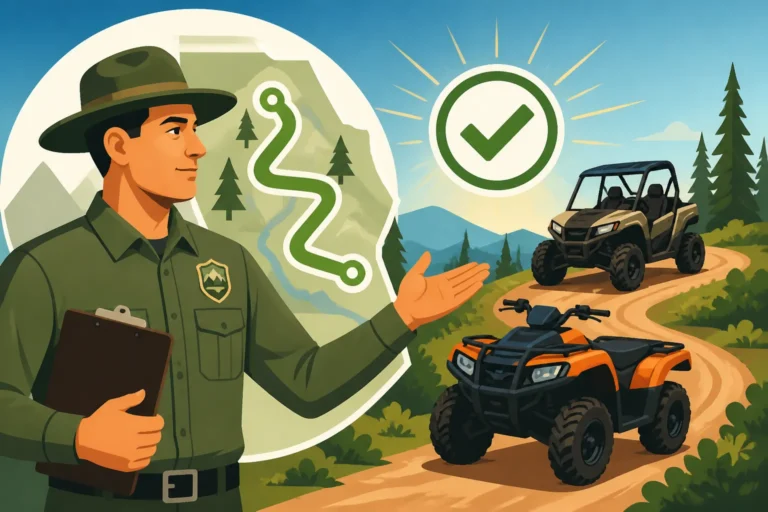
So, what exactly are these elusive combined-use highways? In simple terms, a combined-use highway is a specific, limited segment of a public road that has been officially designated by a local authority, with approval from the California Highway Patrol (CHP), for shared use by both highway-licensed vehicles and off-highway vehicles. It's not a free-for-all; it's a very targeted solution to a specific problem: connecting otherwise isolated OHV trails or designated riding areas. Think of it as a small, legal bridge between two dirt segments, not an open invitation to cruise through town.
The legal framework for these designations comes from [What California's CVC 38026 Lets an Agency Designate]. This Vehicle Code section allows local agencies to designate portions of a highway for combined use, but it's not an easy process. There are specific safety considerations, speed limits, and signage requirements that must be met. The idea isn't to create new recreational opportunities on paved roads, but to facilitate access to existing off-highway areas.
Perhaps the most significant limitation you'll encounter is [California's 3-Mile Combined-Use Cap]. These designated segments are almost always very short, usually no more than three miles in length. This cap is in place to ensure that OHV use on paved roads remains incidental and focused on accessing trails, not for prolonged travel or daily commuting. You won't find a long, scenic highway opened up for UTVs; it's typically just enough road to get you from a campsite to a trailhead or across a piece of private land that separates two public riding areas. This specific restriction is a major reason why California's combined-use highway list is so sparse and why you won't be taking your quad on a road trip anytime soon.
The Scarcity of Combined-Use Routes
It's natural to wonder why, given the vastness of California, there aren't more of these combined-use routes. The answer lies in a combination of factors. First, safety is paramount. Mixing OHVs, which often have different handling characteristics and speeds than highway vehicles, with regular traffic creates inherent risks that local agencies and the CHP are very cautious about. Second, there's a legislative and bureaucratic hurdle. Designating a combined-use segment requires studies, public hearings, and the aforementioned CHP approval, which can be a lengthy and complex process. Finally, local communities often have concerns about noise, dust, and general disruption, leading to resistance against such designations. This all contributes to the very limited number of combined-use routes across the state, making them a rare exception rather than a common convenience.
Navigating and Identifying Combined-Use Segments Legally
Finding and utilizing a combined-use highway segment isn't as simple as pulling out your smartphone and looking for a list. Since these are locally designated, there isn't one universal, dynamic list maintained by the state. You often have to do your homework.
How to Identify a Combined-Use Highway
When you're out exploring, designated combined-use segments will be clearly marked with signage. These signs typically state that the road is open to OHVs and will often specify the permitted speed limit (which might be lower than the posted speed limit for cars) and the exact boundaries of the combined-use segment. Without clear, official signage, you should absolutely assume the road is off-limits to your OHV.
Your best bet for finding these segments is to:
- Check local ordinances: Before heading out, research the specific county or city you plan to ride in. Their public works or parks and recreation departments might have information on designated routes.
- Consult OHV area maps: Maps for State Vehicular Recreation Areas (SVRAs) or National Forests often highlight connecting routes, which may include short combined-use highway segments. For example, some National Forests may designate certain [Riding a Forest Road Legally in California] as mixed-use, and these might connect to a small segment of paved road.
- Look for official announcements: Local OHV clubs, community boards, or the websites of specific riding areas might announce new or existing combined-use designations.
It's crucial to understand that a combined-use designation is not a blanket permission to take your OHV on any paved road in the vicinity. It's specific to the designated segment and its stated purpose of connecting trails.
Rules of the Road for OHVs on Combined-Use Routes
Even on a designated combined-use highway, you are not exempt from rules designed to ensure safety and compliance. Here's what you need to keep in mind:
- Registration is paramount: Your OHV must be properly registered with the California DMV and display the appropriate Green Sticker, Red Sticker, or California OHV ID Plate. [Registering an OHV in California] and [California's Green Sticker Explained] cover these requirements in detail. Without current registration, you're not riding legally, period.
- Nonresidents need a permit: If you're visiting California from out of state, your OHV must either have a valid OHV registration from Oregon or Nevada (the only two states with reciprocity), or you must purchase [California's Nonresident OHV Use Permit]. This applies even to short combined-use segments.
- Helmets are required: While some states have differing helmet laws, in California, riders and passengers of OHVs on public land (including combined-use highways) are generally required to wear a safety helmet. [Helmet Rules on California Public Land] provides the full breakdown.
- Maintain speed limits: The designated segments will have specific speed limits for OHVs, which you must strictly adhere to. These limits are often much lower than what a regular highway vehicle might be allowed to travel.
- Follow all traffic laws: You are essentially sharing the road with cars, trucks, and motorcycles. This means obeying stop signs, traffic signals, yielding the right-of-way, and riding on the far right side of the road when possible.
- Purpose of travel: These segments are for accessing OHV areas, not for running errands or joyriding. The spirit of the law is connection, not general transportation.
- Insurance: While California does not require OHV insurance for off-road use, if you are operating on a designated combined-use highway, it's a wise decision to carry liability insurance. [California OHV Insurance Requirements] offers more information. Aftermarket parts from companies like SuperATV can significantly increase the value and capability of your machine, making liability coverage even more important to protect your investment and others.
Failure to follow these rules can lead to significant penalties. [California Fines for Riding a Public Road] can be steep, ranging from hundreds to thousands of dollars, along with potential impoundment of your vehicle.
To summarize the key differences, here's a table comparing a standard street-legal vehicle with an OHV on a designated combined-use highway:
| Requirement | Standard Street-Legal Vehicle (Car/Motorcycle) | OHV on Designated Combined-Use Highway |
|---|---|---|
| Registration | Highway Registration (Plates, Tabs) | California OHV Registration (Sticker/Plate) |
| Driver's License | Valid Driver's License | Valid Driver's License |
| Insurance | Mandatory Liability Insurance | Liability Insurance Highly Recommended |
| Helmet | Mandatory (Motorcycle), Optional (Car) | Mandatory (All OHV Riders/Passengers) |
| Speed Limit | Posted Highway Speed Limit | Designated OHV Speed Limit (Often Lower) |
| Purpose of Travel | General Transportation | Connecting OHV Trails/Areas |
| Vehicle Design | Street-Legal (Lights, Mirrors, Horn, Emissions) | Off-Highway (May have minimal accessories) |
The Reality: Why a Comprehensive California Combined-Use Highway List is Elusive
If you've been hoping for a definitive, statewide list of every combined-use highway segment in California, I'm afraid you're likely to be disappointed. The truth is, such a comprehensive, centralized list simply doesn't exist in an easily accessible, regularly updated format. This lack of a single resource is a major point of frustration for riders, who often feel like they're trying to find a needle in a haystack.
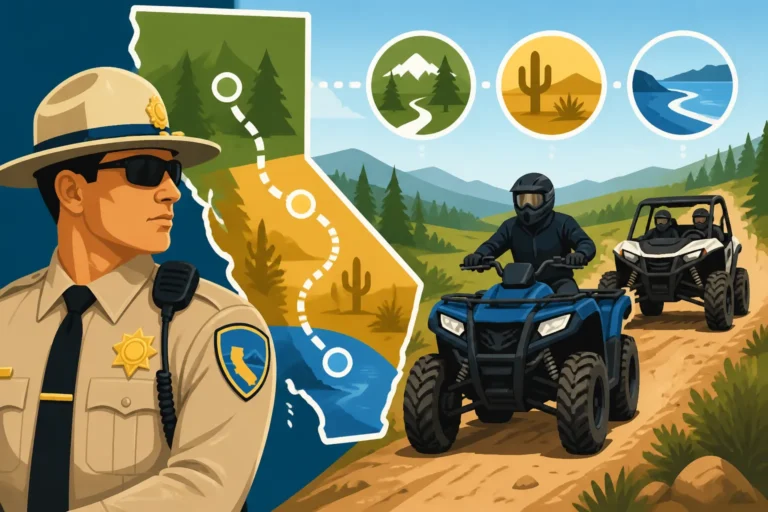
The reason for this decentralization is inherent in the designation process itself. Each combined-use segment is approved at the local level (county or city), often in consultation with the CHP and local OHV groups. This means that a segment of road designated in Mono County near Bishop, like those that might facilitate access to national forest trails, will have its own specific local ordinance and signage, independent of a similar designation in San Bernardino County, which might connect trails near the popular Johnson Valley OHV area. The information isn't compiled into a single state database that riders can simply look up. This means the onus is always on you, the rider, to diligently research the local regulations for the specific area you plan to visit. Relying on outdated information or assumptions could easily lead to a citation. [Riding County Roads Around Bishop] and [Riding County Roads Around Lone Pine] are good examples of areas where local designations might apply, but always require current verification.
The lack of a centralized list also underscores just how rare these combined-use segments truly are. They are niche solutions for very specific access problems. California's primary stance remains that OHVs are for off-road use, and significant changes to this policy, such as widely opening up paved roads, are not on the horizon. So, while it's tempting to dream of a future where your rugged UTV, perhaps outfitted with heavy-duty control arms and a full skid plate package from SuperATV, can traverse long stretches of highway, the reality is that combined-use segments will likely remain short, localized, and few and far between. Always check current local maps and ordinances, and when in doubt, keep your OHV on the trailer until you reach a designated off-highway riding area.
Disclaimer
This article is for general informational purposes only and does not constitute professional advice. Laws, prices and regulations vary by location and change over time. Consult a qualified professional for guidance on your specific situation.