Sticker Checks at Ocotillo Wells
There's nothing quite like rolling into Ocotillo Wells for a fantastic day of desert riding, but that little knot of anxiety can form when you see a ranger checkpoint. We all know the feeling – did I forget something? Is my sticker valid? This guide is going to walk you through exactly what rangers at Ocotillo Wells are looking for when it comes to your OHV registration and identification, helping you confidently breeze through any inspection and get straight to the fun.
The Essentials: What Rangers are Really Checking for at Ocotillo Wells
When you pull up to an entrance or encounter a ranger out on the trails at Ocotillo Wells SVRA, their primary goal isn't to ruin your day. It's to ensure everyone is operating safely and legally, which helps keep the park open and funded for all of us. They're typically focused on a few key identification elements that prove your machine is properly registered and equipped for public land use in California. It's often a quick visual scan, but they're well-trained to spot anything amiss.
Your California OHV Identification Sticker
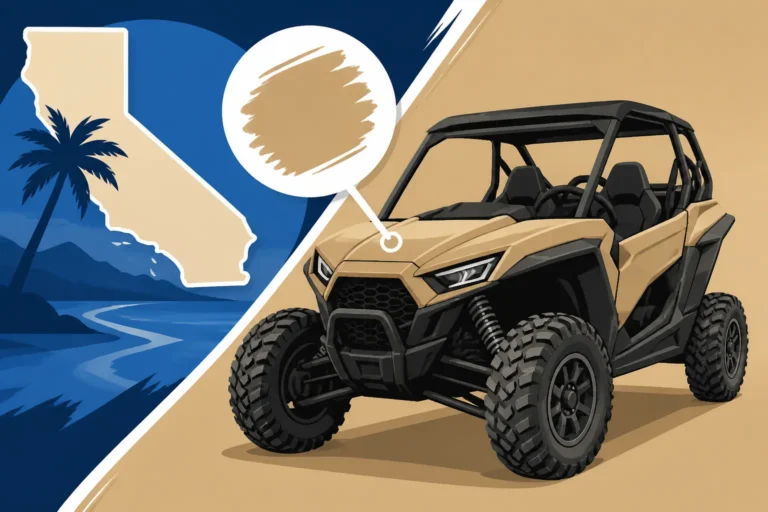
This is probably the most obvious thing a ranger looks for: that colorful decal prominently displayed on the left side of your machine. California uses a clear system of stickers – Green, Red, and even the less common Tan – to denote registration and, in some cases, your machine's emissions compliance and riding season limitations. Without a valid, visible sticker, you're immediately looking at a potential citation, and nobody wants that. They'll check the color and the expiration date.
They're not just glancing at the color; they're checking the month and year printed on it. All California OHV stickers expire on June 30th of the expiration year, regardless of when you initially registered. So, even if you just got your sticker in May, it's still going to have that June 30th date. A sticker that's expired, even by a day, is an expired sticker. They're also looking for proper placement; it needs to be clearly visible on the lower left side of the machine, usually on the frame or fender, not tucked away or covered by mud. Understanding [California's Green Sticker Explained] is crucial, as it’s the most common and grants year-round access for compliant machines. Similarly, if you have a Red Sticker, rangers know to look for those specific model year designations and understand the [Red Stickers and What Changed in California] rules. Knowing [California's Tan Sticker Eligibility] is also helpful if your machine falls into that unique category for sanctioned events.
The California OHV Identification Plate
While many people associate the stickers with registration, many California OHVs also receive a permanent identification plate. This is often bolted to the machine, typically on the front or rear, depending on the type of OHV. This plate usually bears the identification number that matches your registration paperwork. It's similar to a license plate but specifically for off-highway vehicles. Rangers will verify that this plate is present, legible, and matches the registration you carry.
The identification plate is particularly common on ATVs and UTVs. Unlike a temporary decal, this plate is meant to stay with the machine for its entire life in California. The purpose of the plate, as opposed to just a sticker, is to provide a more permanent form of identification, especially in cases where stickers might peel off or get damaged. This is why [California Issues a Plate, Not a Decal] for many OHVs. It's another layer of verification that your machine isn't just a random vehicle out on public land, but a properly registered one. Make sure it's clean enough to be read and securely fastened, especially if you've been tackling some gnarly trails or bombing through deep washes.
Proof of Ownership and Other Documentation
While the sticker and plate are the first things rangers look for, they can and often do ask for further proof that you are the rightful owner or are authorized to operate the machine. This usually means carrying a copy of your current registration certificate. This small piece of paper confirms the identification number, your name, and the expiration date, matching what they see on the sticker and plate.
Imagine the scenario: you're out with a buddy, and you're riding his side-by-side while he's on his dirt bike. If a ranger stops you, they'll want to ensure you have permission to be riding that specific machine. Having the owner's registration certificate, or even a simple letter of authorization if you're borrowing a machine, can prevent a lot of headaches. While you typically won't be asked for a bill of sale or title on the trail, it's good practice to have those documents readily accessible back at camp or at home, especially for transfer purposes. Should you ever need to create formal documents for selling or buying an OHV, services like LawDepot can assist in drafting a comprehensive bill of sale or other essential agreements to keep your records in order. [Carrying Registration Paper on the Sand] isn't just a suggestion; it's a solid way to avoid issues.
| Identification Element | Purpose | Common Location | Ranger Check Focus |
|---|---|---|---|
| OHV Sticker (Green/Red/Tan) | Proof of current registration; emissions compliance | Lower left side of machine | Color, expiration date, proper placement |
| OHV Identification Plate | Permanent unique identifier; matches registration | Front or rear of machine | Legibility, secure attachment, matching number |
| Registration Certificate | Official proof of ownership/registration details | Carried by operator (physical or photo) | Matching ID number, owner info, current validity |
Why Ocotillo Wells Checks are So Common
You might feel like you get stopped more often at Ocotillo Wells compared to other riding areas, and there's a good reason for that perception. Ocotillo Wells SVRA is unique in many ways, and its operational needs often lead to more frequent and thorough checks by park rangers. It's not about singling out riders; it's about maintaining the integrity and safety of a truly special place.
Maintaining a Free and Open Riding Area
Ocotillo Wells is one of California's few State Vehicular Recreation Areas (SVRAs) that doesn't charge a day-use or entrance fee. This incredible access is sustained by the California OHV Trust Fund, which is primarily supported by our OHV registration fees. When rangers conduct sticker checks, they're essentially ensuring that everyone using the park is contributing to its upkeep. Without these fees, the trails wouldn't be maintained, facilities wouldn't be available, and the very existence of places like [Ocotillo Wells: California's Free SVRA] would be threatened.
The rangers are, in a way, protecting your access. If too many unregistered machines are using the park, it undermines the funding mechanism that keeps it open and free. It’s a bit of a vicious cycle: if revenue drops due to unregistered riders, services suffer, which could lead to calls for fees or even closures. So, those checks are a fundamental part of the park's operational strategy, ensuring that the burden of maintenance and management is shared by all who enjoy the trails and dunes. Every time a ranger checks your sticker, they're making sure the system works.
Ensuring Safety and Environmental Compliance
Beyond funding, sticker checks are a critical tool for enforcing safety and environmental regulations. OHVs, especially older or modified ones, need to meet specific criteria to operate on public lands. This includes things like spark arresters to prevent wildfires and noise limits to minimize disturbance to other users and wildlife. An unregistered machine often hasn't been through the proper channels, meaning it might not meet these essential standards.
Rangers at Ocotillo Wells are particularly vigilant about things like [California Spark Arrester Rules] because a single spark can devastate vast areas of the fragile desert ecosystem. They're also listening for excessive noise, checking for compliance with [California Noise Rules at an SVRA Gate]. These are not arbitrary rules; they are designed to protect both the natural environment and the safety of all park visitors. A properly registered machine is generally assumed to meet these basic requirements, making the initial sticker check a quick way to filter for potential issues. It's all part of the holistic approach to managing public lands responsibly.
Preparing for a Smooth Sticker Check at Ocotillo Wells
Nobody wants their riding day interrupted by a lengthy stop at a checkpoint. The good news is that with a little preparation, you can make any interaction with a ranger quick, pleasant, and entirely uneventful. It’s all about having your ducks in a row before you even leave home.
Before You Go: A Quick Checklist
Before you even load up your rig, take a moment to confirm these key items. It’s a small investment of time that pays off big when you encounter a ranger.
- Check Your Sticker's Expiration Date: All California OHV registrations expire on June 30th every two years. Double-check your sticker to ensure it’s current. If it's passed the [California's June 30 Expiration] date, you'll need to renew it promptly. The [California OHV Registration Renewal Fee] is a small price to pay for peace of mind and avoiding a citation.
- Verify Sticker and Plate Placement: Make sure your sticker is firmly attached to the lower left side of your machine and is clearly visible. The ID plate should also be securely bolted and readable. If either is peeling, covered in mud, or missing, take care of it beforehand.
- Gather Your Paperwork: Have your current OHV registration certificate easily accessible. While a digital photo on your phone might be accepted in a pinch, having the physical paper is always best. If you're riding a machine that isn't registered in your name, carry a copy of the owner's registration and a letter of permission. LawDepot can be a helpful resource if you need a template for a letter of authorization.
- Confirm Spark Arrester and Muffler: Ensure your machine has an approved spark arrester and a working muffler. Rangers will often do a visual check and may even perform a sound test if your machine seems excessively loud. This is crucial for fire prevention and noise compliance.
- Helmets for Everyone: California law requires all riders and passengers on OHVs to wear a helmet on public lands, regardless of age. Make sure everyone in your group has a properly fitting, DOT-compliant helmet. This falls under [California Helmet Law for ATV Riders] and similar rules for UTVs.
What to Expect at a Checkpoint
When you approach a ranger checkpoint, or if a ranger pulls up alongside you on the trail, remain calm and cooperative. They're doing their job, and a respectful attitude goes a long way.
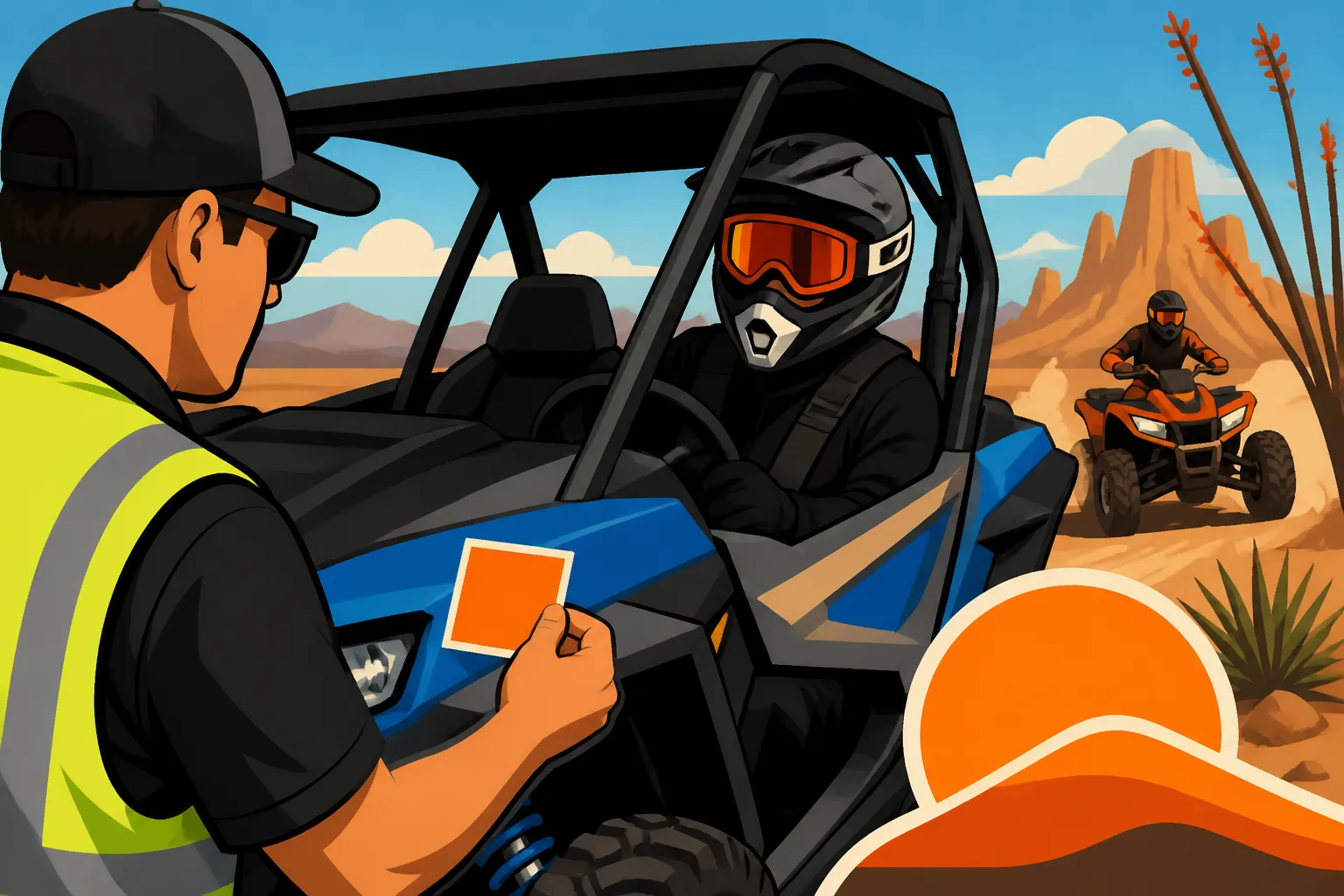
Typically, they’ll signal you to stop. Have your registration ready to present. They will likely ask for it and then visually inspect your sticker and plate. They might also briefly check your spark arrester and listen for excessive noise. If you're riding a UTV, they might check for seatbelts and ensure children meet [California Minimum Age to Ride on Public Land] and passenger requirements. They might also ask where you started from and where you're headed. Answer truthfully and politely. Most checks are very quick, often lasting only a minute or two, allowing you to get back to enjoying [Ocotillo Wells: California's Free SVRA] with minimal delay. If everything is in order, they'll wave you on, and you'll be back to the desert wind in no time.
Common Issues and How to Avoid Them
Even seasoned riders can sometimes overlook something simple, leading to an unnecessary hassle. Being aware of the most common reasons riders run into issues at Ocotillo Wells can help you avoid them entirely.
Expired Registration: The Number One Offender
This is by far the most frequent issue rangers encounter. Time flies, and it's easy to forget that your OHV registration, just like your car's, needs to be renewed. All California OHV stickers, whether green, red, or tan, expire on June 30th. It doesn't matter if you registered your machine in July or May; the expiration date is always the same for that two-year cycle.
The penalty for an expired registration can be a significant fine, not to mention the frustration of potentially having your riding day cut short. To avoid this, mark your calendar for June and set reminders. The DMV typically sends renewal notices, but don't rely solely on that, especially if you've moved. If you forget and your sticker is expired, you'll also be facing a [California OHV Late Registration Penalty] in addition to the base [California OHV Registration Cost]. It's always cheaper and less stressful to renew on time. You can often renew online or by mail, avoiding a trip to a field office.
Missing or Illegible Identification
A sticker that's peeled off, faded beyond recognition, or covered in so much mud it's unreadable is just as problematic as not having one at all. The same goes for your OHV identification plate. If it’s fallen off, been damaged, or is too dirty to read, it defeats its purpose.
The desert environment at Ocotillo Wells can be tough on stickers and plates. Sun, sand, and impacts can take their toll. Regularly inspect your machine to ensure these vital identifiers are intact and legible. If your plate goes missing, you'll need to request a replacement. It's a minor inconvenience compared to a citation for not having proper identification. Remember, rangers are looking for clear, visible proof of registration. If they can't easily read it, they'll likely stop you for a closer look, potentially delaying your fun.
The Wrong Sticker or Unclear Paperwork
Sometimes, riders genuinely misunderstand the California OHV sticker system. For example, trying to ride a machine that should have a Red Sticker with only a Green Sticker, or not understanding the nuanced rules for certain model years or engine types, can lead to issues. While [Green, Red and Tan: California's Three Stickers] might seem complex, knowing which one applies to your machine is essential.
Another common paperwork issue arises when a machine has recently been purchased but the registration hasn't been transferred, or if the rider doesn't have the appropriate documentation to prove they can operate it. While rangers don't typically ask for your title on the spot, having your new registration card with your name on it is crucial. If you've just bought a machine, make sure you've initiated the transfer of ownership promptly. If you're borrowing a friend's OHV, a simple, dated note from them authorizing you to use it, along with a copy of their registration, can prevent a lot of questions. As mentioned before, LawDepot is a practical tool for quickly generating such documents, offering peace of mind to both borrowers and lenders. Being prepared with clear paperwork for [What California's Form REG 343 Asks For] or verification on [California Vehicle Verification on Form REG 31] can save you from a stressful encounter.
Disclaimer:
This article is for general informational purposes only and does not constitute professional advice. Laws, prices and regulations vary by location and change over time. Consult a qualified professional for guidance on your specific situation.