Registering an Out-of-State Machine in California
Moving an off-highway vehicle (OHV) to California from another state often feels like navigating a labyrinth blindfolded. You've got your trusty quad or side-by-side, maybe you've ridden it for years in Arizona or Nevada, and now you're faced with California's unique registration rules, which can be confusing and frustrating. This comprehensive guide will walk you through every step of registering your out-of-state OHV in California, addressing common pitfalls and offering practical advice to get you back on the trails.
Understanding California's OHV Registration System
California's approach to off-highway vehicle registration is unlike many other states, and understanding its foundation is key to a smooth process. It's not just about getting a sticker; it's about adhering to a comprehensive system designed to manage a massive recreational population, protect fragile ecosystems, and ensure rider safety across the state's diverse terrain.
Why California Cares About Out-of-State Machines
When you bring an OHV into California, the state views it as a new addition to its vast network of off-road enthusiasts. This isn't merely about collecting fees, though that is a part of it. California has some of the most stringent environmental regulations in the nation, particularly concerning air quality and land use. Every OHV operating on public lands in California is expected to meet certain standards, and registration is the mechanism to ensure compliance. The money collected through registration fees is channeled back into maintaining and expanding riding areas, managing wildlife, and funding law enforcement presence in popular riding spots. Without proper registration, California has no way of tracking these vehicles, ensuring they meet emissions standards, or collecting the funds necessary to support the very trails you want to ride. So, while it might feel like bureaucratic red tape, it's part of a larger, established system.
Imagine you've just moved from, say, Texas, where your quad was registered with a simple plate, and you're eager to hit the dunes at Glamis. California requires a specific form of identification, an ID plate and an annual or biennial sticker, to operate on its public lands. This system ensures that all riders contribute to the maintenance and oversight of these riding areas. It's how the state keeps tabs on the sheer volume of machines and tries to mitigate environmental impact in sensitive areas.
Green, Red, and Tan Stickers: A Quick Refresher
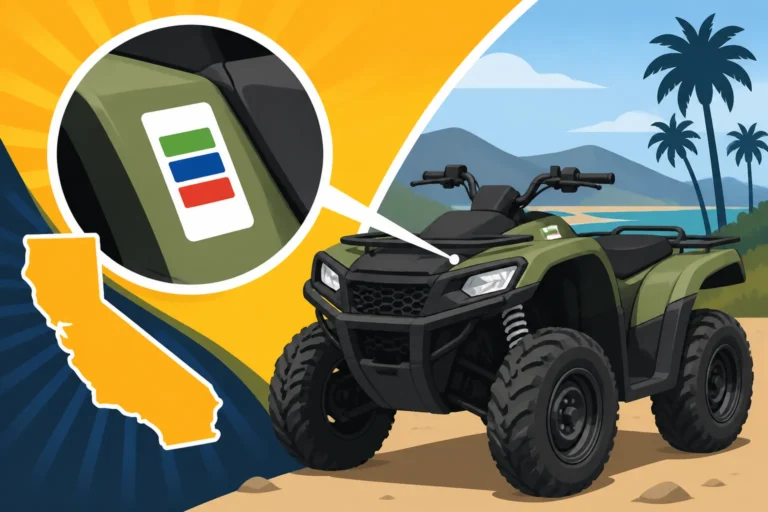
California utilizes a color-coded sticker system – Green, Red, and Tan – to designate when and where an OHV can be operated on public lands. This system primarily revolves around the vehicle's emissions compliance and model year. Understanding these distinctions is paramount for any out-of-state owner, as it directly impacts your riding opportunities once you're registered in California. The sticker your machine receives will dictate its seasonal access to certain riding areas.
- Green Sticker: This is the most coveted sticker, indicating that your OHV meets California's stringent emission standards and can be ridden year-round in all designated OHV areas. Generally, machines built before 2002 or those specifically certified to California's emission standards (CARB compliant) qualify for a Green Sticker. Most older machines will easily fall into this category, but some newer ones might too if they were built to California specifications.
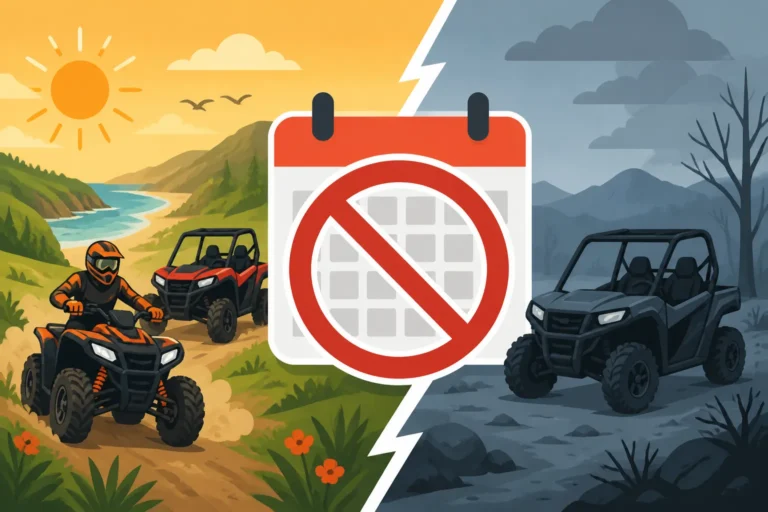
- Red Sticker: This sticker is assigned to OHVs that do not meet California's emission standards for year-round use, but are still considered eligible for off-highway recreation. Red Sticker machines are restricted to specific riding seasons, typically between October 1 and May 31, in areas managed by the state and federal government. There are some exceptions for sanctioned events. As of [Red Sticker Machines After January 2025], there have been significant changes to how these stickers are issued, primarily impacting newer machines that aren't CARB-compliant. Many newer out-of-state machines will likely fall into this category, meaning your riding calendar will be limited.
- Tan Sticker: The Tan Sticker is a specialized permit for competition OHVs that are not compliant with California's emissions standards but are used exclusively at sanctioned events. This is typically for high-performance race machines that would never pass regular emissions requirements and are not intended for general recreational riding. You won't often encounter this for casual trail riding or dune trips.
For an in-depth look at this system, check out [Green, Red and Tan: California's Three Stickers]. When you bring your machine in, its model year and original emissions certification will be crucial in determining which sticker you'll ultimately receive. This classification will then dictate your riding access.
Reciprocity: What California Honors (and Doesn't)
Here's where many out-of-state riders hit their first major roadblock: California has extremely limited reciprocity with other states regarding OHV registration. While some states have agreements to honor each other's registrations, California only has such an arrangement with two of its neighbors: Oregon and Nevada. If your OHV is currently registered in either Oregon or Nevada, and that registration is current and valid, you might be able to ride in California without needing to obtain a California OHV sticker for a temporary visit.
However, if you're moving to California, even from Oregon or Nevada, you are generally expected to register your OHV in California once you establish residency. This reciprocity is typically for visiting riders, not new residents. For any other state – Arizona, Utah, Idaho, Texas, or anywhere else – your existing OHV registration, decal, or plate will not be honored on California's public lands. This means if you move here from Arizona with a current OHV registration, you will still need to go through the full California registration process to ride legally.
This lack of widespread reciprocity often catches new residents off guard, leading to confusion and, sometimes, citations for those who unknowingly venture onto California trails without proper identification. The rationale behind this selective reciprocity ties back to California's unique funding and environmental mandates. The state wants to ensure that all machines operating within its borders meet certain criteria and that their owners contribute to the state's OHV trust fund. For a detailed breakdown of which states California honors, see [California OHV Reciprocity: Only Two States]. It's a critical piece of information to understand before you even load your machine onto a trailer.
The Initial Steps: What You Need Before You Go to the DMV
Before you even think about stepping foot into a California DMV field office, there's a good amount of preparatory work you'll need to do. Moving an OHV into the state and registering it isn't always as straightforward as it might seem. Gathering your documentation, understanding verification requirements, and grappling with California's emissions standards are crucial initial hurdles.
Gathering Your Existing Out-of-State Paperwork
The foundation of successfully registering your out-of-state OHV in California lies in having all your existing paperwork in order. The California Department of Motor Vehicles (DMV) needs a clear chain of ownership and proof that you legally own the machine. This typically starts with your original out-of-state title. This document is paramount as it proves who the legal owner is and provides critical vehicle identification information, such as the VIN.
Beyond the title, you should have your most recent out-of-state registration card, even if California doesn't honor it for ongoing use. This helps establish a history of ownership and compliance in your previous state. If you recently purchased the OHV, a bill of sale is absolutely critical, especially if it was a private party transaction. This document should clearly state the buyer, seller, date of sale, purchase price, and a detailed description of the OHV, including the VIN. Ensure the seller's signature is on it. If you're coming from a state that doesn't issue titles for OHVs, or if your title is missing, this becomes a more complex situation that we'll address later. However, aim to have everything you can possibly get your hands on. If you're preparing for a private sale to a new owner in California, a robust bill of sale from a service like LawDepot can ensure all the necessary legal details are covered, making the transfer process smoother. For more on what's required, review [California OHV Bill of Sale Requirements].
The Importance of Vehicle Verification
One of the non-negotiable requirements for registering an out-of-state OHV in California is a physical vehicle verification. This isn't just a casual glance; it's a formal process where a qualified individual physically inspects your OHV to confirm its Vehicle Identification Number (VIN) matches your ownership documents. This process serves multiple purposes: it helps prevent the registration of stolen vehicles, confirms the vehicle's identity, and allows the DMV to accurately record critical information about your machine.
Who can perform this verification? Typically, it can be done by a California DMV employee at a field office, a California Highway Patrol (CHP) officer, or a licensed vehicle verifier. For OHVs, bringing your machine to a DMV field office where they have facilities to inspect OHVs is a common route. Be aware that not all DMV offices are equipped for OHV verification, so it's wise to call ahead or check online. During the verification, the individual will locate the VIN on your OHV – often stamped on the frame – and compare it to your title and application forms. They will also typically check for an emissions label if applicable, which is crucial for determining your sticker type. Without a completed and signed [California Vehicle Verification on Form REG 31], your registration application will not be processed. It’s a mandatory step to prove your machine is what you say it is.
Emissions Compliance: CARB and California's Strict Rules
Perhaps the most significant hurdle for many out-of-state OHV owners is California's strict emissions compliance, governed by the California Air Resources Board (CARB). CARB sets the standards for air quality in the state, and this extends to off-highway vehicles. For an out-of-state OHV, its emissions certification status will largely determine whether it qualifies for a Green or Red Sticker. This often comes as a surprise to riders who have never had to consider such details in their previous state.
Generally, an OHV must have an emissions label from the manufacturer that explicitly states it is "California compliant" or "50-state compliant" to qualify for a Green Sticker if it's a newer model. Machines manufactured before 2002 are typically exempt from the more stringent CARB standards for new machines and almost always qualify for a Green Sticker regardless of their original state. However, for machines built in 2003 or later, if there's no California-specific emissions label, it will likely be classified as a Red Sticker machine. This means its use will be restricted to certain seasons on public lands.
The verification process (Form REG 31) will include a check for this emissions label. If your machine lacks this specific certification, even if it runs clean and passes local emissions tests in your previous state, it might not meet California's criteria for year-round unrestricted use. This is a critical distinction that can significantly impact when and where you can ride. Understanding [What CARB Compliance Means in California] is essential, as it's the foundation of California's sticker system and often the most confusing part for newcomers. Do your research on your specific machine's model year and emissions certification before you head to the DMV to avoid disappointment.
Navigating the DMV for Out-of-State OHV Registration
With your paperwork in hand and your understanding of California's unique OHV system, the next major step is to tackle the California Department of Motor Vehicles (DMV). This can feel like a daunting task, but being prepared with the correct forms and knowing what to expect can significantly streamline the process.
Required Forms for an Out-of-State Transfer
When you arrive at the California DMV, you'll need a specific set of forms to initiate the registration of your out-of-state OHV. Having these pre-filled, or at least understanding what information they require, will save you a lot of time and potential headaches.
The primary document is the Application for Title or Registration (Form REG 343). This form is your official request to the state of California to title and register your OHV. You'll need to provide detailed information about your machine, including the VIN, make, model, year, and engine size. You'll also fill in your personal information as the owner. It's crucial to be meticulous and accurate when completing this form, as any discrepancies could lead to delays. If you've just purchased the machine and need to formalize the transaction, a template from a service like LawDepot for a bill of sale can be incredibly useful to supplement your REG 343 submission, especially if the original bill of sale was less formal.
Alongside the REG 343, you'll need the Vehicle Verification (Form REG 31), which we discussed earlier. This form must be completed and signed by an authorized verifier who has physically inspected your OHV. Additionally, you may need a Statement of Facts (Form REG 256) if there are any unusual circumstances, such as a missing title from your previous state or specific tax exemptions you believe you qualify for. For any new residents, particularly those who have recently purchased their OHV and are bringing it into California, be prepared to prove that sales tax was either paid to California or another state, or that you are exempt. The DMV will want to collect any applicable California sales or use tax. Make sure you understand [What California's Form REG 343 Asks For] to prepare adequately.
The DMV Field Office Visit: What to Expect
Visiting a California DMV field office can sometimes be an exercise in patience. For complex transactions like registering an out-of-state OHV, it's almost always a necessity, as online options are limited for initial registration. The first piece of advice: make an appointment. Walking in without one can lead to extremely long wait times, often stretching for hours. You can usually schedule an appointment online or by phone.
When you go, bring all your original documents: your out-of-state title, registration, bill of sale, driver's license, and any completed California forms (REG 343, REG 31, REG 256). It's also a good idea to bring copies of everything for your records. You will likely need to bring your OHV with you for the physical verification if you haven't had it verified by a CHP officer or licensed verifier beforehand. Many DMV offices have a designated area for vehicle verifications, but you should confirm this when you make your appointment or call ahead. The staff at the DMV will review your paperwork, process the application, and collect any applicable fees and taxes. They may ask detailed questions about your OHV, its history, and how long you've resided in California. Be prepared to answer honestly and clearly. For more tips on making your visit efficient, refer to [California OHV Registration Appointment at the DMV]. Patience and thorough preparation are your best allies here.
Understanding the Fees Involved
Registering an out-of-state OHV in California comes with a set of fees, which can sometimes be more extensive than what you might be accustomed to in other states. It's wise to understand these costs beforehand so there are no surprises at the DMV counter. The primary fee you'll pay is for the biennial OHV registration. This covers the actual sticker and ID plate that identify your machine as legally registered in California. This fee supports the state's OHV program, funding trail maintenance, law enforcement, and other services.
In addition to the base registration fee, you'll also typically encounter a California Highway Patrol (CHP) fee. This is a separate charge that contributes to the CHP's efforts in patrolling OHV areas and ensuring rider safety and compliance. If your OHV was recently purchased, and you didn't pay California sales tax on it at the time of purchase (for instance, if you bought it out-of-state and then moved), you will likely be assessed California use tax. This tax is equivalent to the state's sales tax and applies to goods purchased out-of-state and brought into California for use. The DMV will calculate this based on the purchase price listed on your bill of sale. There might also be a small fee for the issuance of a new California Certificate of Title if your out-of-state title is being converted. Be aware that if there are any errors or missing information, or if you apply past a certain deadline, late penalties could apply, although these are more common for renewals or transfers between California residents. For a detailed breakdown of what to expect, check out [California OHV Registration Cost]. Having an estimate of these costs can help you budget and avoid any last-minute financial surprises.
Common Challenges and How to Overcome Them
Registering an out-of-state OHV in California, while manageable, can throw a few curveballs your way. Being aware of the most common challenges and knowing how to address them can save you immense frustration and time.
Missing Titles or Incomplete Paperwork
One of the most frequent hurdles for out-of-state OHV owners is dealing with a missing title or incomplete paperwork. Perhaps your previous state didn't issue titles for OHVs, or the original title was lost, or the bill of sale from a private seller is informal and lacks critical details. California's DMV is very particular about establishing a clear chain of ownership. If you cannot produce an original, properly assigned title, the process becomes significantly more complicated.
If your state didn't title OHVs, you'll typically need to provide a certified record of ownership from that state, along with a comprehensive bill of sale. If the title is simply lost, you'll usually need to apply for a duplicate title from your previous state's DMV before you can register in California. In some extreme cases where obtaining a duplicate isn't feasible, California may allow for a "bonded title" process, which involves purchasing an indemnity bond to protect the state and future buyers if a prior claim to ownership emerges. This is a more involved and costly process. For any private party sales, particularly if you're the buyer bringing the machine into California, ensuring you have a detailed, legally sound bill of sale is crucial. Tools like LawDepot can provide customizable templates that meet state requirements, helping to avoid issues with incomplete information. Always aim to have as much documentation as possible, and if in doubt, contact the California DMV directly for guidance on your specific situation. You can find more information about this challenging scenario in [California OHV Registration Without a Title].
Machines That Don't Meet CARB Standards
As previously discussed, California's CARB emissions standards are a significant factor for OHV registration. If your out-of-state machine, particularly a newer model (generally 2003 and newer), does not have a "California compliant" or "50-state compliant" emissions label, it will likely be classified as a Red Sticker machine. This is a common challenge for riders moving from states with less stringent emissions regulations. The consequence is that your OHV will be restricted to specific riding seasons (typically October 1 to May 31) in most state and federal OHV recreation areas.
For many, this seasonal restriction is a major disappointment, especially if they're used to year-round riding. There are generally no modifications you can make to an existing engine to make it "CARB compliant" in the eyes of the DMV once it's been designated a Red Sticker machine. The determination is primarily based on the original manufacturer's certification and the emissions label. While some highly specialized competition-only machines might be able to obtain a Tan Sticker for sanctioned events, for the average recreational rider, a Red Sticker means accepting the seasonal limitations. It's vital to be realistic about this. If your machine falls into the Red Sticker category, prepare to plan your California riding adventures around the cooler months. Reviewing [Red Sticker Machines After January 2025] can give you a clearer picture of how these rules apply.
Sales Tax and Use Tax Implications
Another area that often catches new California residents by surprise is the application of sales or use tax on their OHV. If you purchased your OHV out-of-state, especially recently, and are now bringing it into California, the state will likely assess use tax. This tax is essentially California's sales tax applied to items purchased outside the state for use within California, where California sales tax was not originally paid. The DMV will calculate this based on the purchase price documented on your bill of sale or other ownership transfer documents.
For example, if you bought a side-by-side in Arizona, paid Arizona sales tax, and then moved to California, you might still owe California use tax if the Arizona sales tax rate was lower than California's. California typically charges the difference. If you paid no sales tax in the other state (common in private party sales or states with no sales tax), you'll likely pay the full California use tax when you register your OHV. There are usually provisions for vehicles owned and used for a certain period outside of California before moving, which might exempt you from some or all of the use tax. However, these rules can be complex and are often subject to interpretation by the DMV. Always have proof of purchase price and any sales tax paid in your previous state ready. It’s an unavoidable part of registering a newly introduced vehicle to the state. For a detailed look at this, consult [California Use Tax on an Out-of-State Quad].
After Registration: What to Know About Your New California OHV ID
Once you've successfully navigated the California DMV, submitted all your paperwork, and paid your fees, you'll finally be issued your California OHV identification. This isn't just a piece of paper; it's your ticket to legally ride on designated public lands throughout the state. Understanding how to display your new ID, when and how to renew it, and the specific limitations of your sticker is crucial for continued compliance.
Receiving and Displaying Your ID Plate and Sticker
After processing your registration, the California DMV will issue you an Off-Highway Vehicle Identification Plate and a corresponding colored sticker. This plate is not a traditional license plate but a specific identification for OHVs. The ID plate typically measures about 4×7 inches and is made of durable material, designed to withstand off-road conditions. Along with the plate, you'll receive your Green, Red, or Tan sticker, which you'll affix to the plate.
Proper display of this ID plate and sticker is critical. For most OHVs, such as quads (ATVs) and side-by-sides (UTVs), the ID plate must be securely mounted and clearly visible on the left rear fender. This is a common location and is easily checked by rangers and law enforcement. For dirt bikes, the plate is usually mounted on the left fork leg. The goal is for the plate and sticker to be easily seen and read by anyone inspecting your vehicle, even from a distance. Ensure it's mounted firmly, as vibrations and impacts from off-road riding can cause it to come loose or be lost. If you're wondering exactly where to bolt it on, you can find more specific guidance in [Where the ID Plate Mounts on a Quad]. Failure to properly display your ID can result in a citation, even if your registration is current.
Renewing Your California OHV Registration
Unlike traditional vehicle registrations that might expire on your birthday, California OHV registrations operate on a fixed two-year cycle, expiring on June 30th of the expiration year. This means that no matter when you initially register your out-of-state OHV, its first registration period might be shorter or longer than two full years, but subsequent renewals will fall into this biennial June 30th cycle. You will receive a renewal notice in the mail well in advance of the expiration date, reminding you to renew.
Renewing your registration is generally much simpler than the initial out-of-state process. Often, you can renew by mail, online, or at a DMV field office or authorized private service provider. You won't typically need a new vehicle verification unless there's a specific issue or change to your machine. The renewal process primarily involves paying the biennial registration fee and the CHP fee. Keeping your address updated with the DMV is essential to ensure you receive your renewal notices on time. For a deeper dive into the renewal process and what to expect, check out [Renewing California OHV Registration]. Missing the renewal deadline can result in late penalties, so marking your calendar is a good idea.
Understanding Your Sticker's Limitations (Green, Red, Tan)
Once your out-of-state OHV is officially registered and you have your shiny new California ID plate and sticker, it’s important to fully understand the implications of the color of that sticker. This is especially true for Red Sticker machines, which often comprise a significant portion of out-of-state transfers.
- Green Sticker: If your OHV received a Green Sticker, congratulations! You have the most flexibility. Green Sticker machines can be operated year-round in all designated OHV recreation areas in California, provided the area is open to OHVs. This includes state vehicular recreation areas (SVRAs), National Forests, and Bureau of Land Management (BLM) lands.
- Red Sticker: If your OHV received a Red Sticker, it means your riding will be seasonally restricted. Red Sticker machines are generally only allowed to operate on public lands between October 1st and May 31st. During the summer months (June 1st to September 30th), their use is restricted. This seasonal limitation is in place because these machines typically do not meet the stricter year-round emissions standards, and higher temperatures can exacerbate air quality issues. Some areas or sanctioned events may have specific exemptions, but as a general rule, plan your summer riding for areas outside of California or on private land. This is a critical point that often surprises riders who are new to California.
- Tan Sticker: The Tan Sticker is primarily for competition-only machines used at sanctioned events. If your out-of-state machine somehow qualifies for this (which is rare for a recreational vehicle), its use is strictly limited to these events.
Understanding these limitations is not just about avoiding fines; it's about respecting the environmental regulations that allow OHV recreation to continue in California. Always check the specific rules of any riding area before you go, as local restrictions can also apply.
| Sticker Type | Eligibility (Generally) | Riding Access (Public Land) | Key Limitation |
|---|---|---|---|
| Green | CARB Compliant / Pre-2002 | Year-round, all designated OHV areas | None (related to sticker color) |
| Red | Non-CARB Compliant (2003+) | Seasonal (Oct 1 – May 31) in most designated OHV areas | Restricted during summer months (June 1 – Sept 30) |
| Tan | Competition Only | Limited to sanctioned events | Not for general recreational use; specific permits needed |
Special Situations for Out-of-State Machines
Beyond the standard registration process, several unique scenarios frequently arise when dealing with out-of-state OHVs in California. Understanding these specific situations can help you avoid common misunderstandings and ensure you remain compliant with California law.
Non-Residents Visiting California
If you're a non-resident of California and plan to visit the state temporarily with your OHV, you generally have two paths:
- Reciprocity: If your OHV is currently registered in Oregon or Nevada, and that registration is valid and current, California will honor it for temporary recreational use. You usually won't need to obtain a California OHV sticker or permit. This is a significant advantage for riders from those two specific states.
- California Non-Resident OHV Use Permit: For all other out-of-state visitors (e.g., from Arizona, Utah, Idaho, Texas, etc.), you will need to purchase a California Non-Resident OHV Use Permit to legally operate your OHV on designated public lands within the state. This permit is a temporary identification, typically valid for two years, and costs a nominal fee. It's designed to ensure that even temporary visitors contribute to the maintenance and management of California's OHV areas. You can often purchase these permits online through the California OHMVR Division website or at authorized vendors located near popular riding areas. Failure to obtain this permit if you're from a non-reciprocal state can result in fines and citations. For more detailed information, including where to purchase the permit, see [California's Nonresident OHV Use Permit]. This permit is crucial for visitors to avoid issues.
Street Legal Conversions and California Realities
A common question among OHV enthusiasts, especially those moving from states with more lenient regulations, is whether they can make their ATV or UTV "street legal" in California. The short and often disappointing answer is: generally, no. California has extremely strict laws regarding what can be registered for on-highway use, and off-highway vehicles, as defined by the state, are explicitly designed and manufactured for off-road use only.
Unlike some other states that allow for "street legal kits" or modifications to convert OHVs for limited on-road use, California explicitly prohibits the registration of ATVs and UTVs for full street-legal operation. While there are very limited exceptions for specific "combined-use" highways and roads designated by local agencies, these are typically short segments connecting trails and are not for general commuting or cruising. Such routes are rare and come with stringent rules, including speed limits and the need for a valid driver's license. The state does not issue full license plates for OHVs, nor does it allow them to be reclassified as street-legal vehicles after modifications. This is a significant difference from many other states and can be a major adjustment for new residents. For a clear understanding of the limitations, check out [Are ATVs Street Legal in California?].
Dealing with a Lienholder on an Out-of-State Title
If your out-of-state OHV still has a lien against it (meaning you haven't fully paid off a loan and a bank or financial institution holds the title), registering it in California requires an extra step. The California DMV will need to obtain the original title from your lienholder to process the new California title and registration. This can sometimes add delays to the process, as it involves communication between the California DMV and your bank.
You will typically need to inform your lienholder that you are moving to California and intend to register the OHV in the state. They will then have a process for releasing the original out-of-state title to the California DMV. Sometimes, the lienholder will mail the title directly to the California DMV upon request, and once the California DMV receives it, they can complete your registration and issue a new California title, showing the lienholder's interest. It's crucial to initiate this communication early and follow up, as banks can sometimes be slow to respond. The California DMV cannot issue a clear title to you if a lien exists and the original title is not properly released. For more on how to manage this, consult [California OHV Registration for a Machine With a Lien]. Be prepared for potential bureaucratic back-and-forth between the state and your lender.
Planning Your First California Ride
With your out-of-state OHV finally sporting its new California ID plate and sticker, you're ready to hit the trails! However, California's vast and diverse OHV landscape comes with its own set of rules, safety protocols, and considerations. Planning your first ride involves more than just knowing where to go; it's about ensuring you're safe, compliant, and respectful of the environment.
Where You Can Ride Your Newly Registered OHV
California boasts an incredible array of OHV opportunities, from vast desert dunes to mountainous trails and dense forest paths. The state manages a network of State Vehicular Recreation Areas (SVRAs), alongside extensive lands managed by the Bureau of Land Management (BLM) and the U.S. Forest Service. Each of these agencies, and sometimes specific locations within them, will have its own set of rules and designated riding areas.
- State Vehicular Recreation Areas (SVRAs): These are state-managed parks specifically designed for OHV recreation. Examples include Glamis (Imperial Sand Dunes), Oceano Dunes (the only beach riding in California), Hungry Valley, Hollister Hills, and Ocotillo Wells. SVRAs are typically well-maintained, offer amenities like restrooms and camping, and have clear signage regarding trails and rules.
- Bureau of Land Management (BLM) Lands: Much of California's desert and high desert areas are managed by the BLM, offering extensive open riding areas, particularly popular for sand dunes and wide-open desert trails. Popular BLM areas include the Imperial Sand Dunes Recreation Area (Glamis), Jawbone Canyon, and much of the Mojave Desert.
- U.S. Forest Service Lands: California's national forests (like the Sierra National Forest or San Bernardino National Forest) offer a different kind of OHV experience, with miles of designated trails through wooded and mountainous terrain. These areas often have stricter rules regarding trail designation, fire restrictions, and seasonal closures.
It is absolutely crucial to check the specific rules and maps for your chosen riding area before you go. This is especially true if you have a Red Sticker machine, as many areas will enforce the seasonal riding schedule. Websites for the California Department of Parks and Recreation (OHMVR Division), BLM, and the Forest Service are invaluable resources. For a general overview of California's riding destinations, refer to [Where to Ride an OHV in California].
Safety Gear and Best Practices in California
California takes OHV safety seriously, and there are specific laws regarding safety gear and operational practices that all riders must follow, regardless of where their machine was originally registered. Adhering to these rules is not just about avoiding fines; it's about protecting yourself and others on the trails.
- Helmets: Helmets are mandatory for all OHV riders and passengers on California public lands, regardless of age. The helmet must be properly fitted, securely fastened, and meet DOT safety standards. While some enclosed Recreational Off-Highway Vehicles (ROVs/side-by-sides) might have a waiver for adults if they have proper roll cages and seatbelts, generally, assuming a helmet is required is the safest approach. [California Helmet Law for ATV Riders] is a great resource to confirm the specifics.
- Seatbelts/Restraints: For side-by-sides (ROVs), all occupants must wear a seatbelt or harness if the vehicle is equipped with one.
- Spark Arresters: All OHVs operating on public lands in California must be equipped with a U.S. Forest Service-approved spark arrester. This device prevents hot carbon particles from escaping the exhaust, which can ignite dry vegetation and cause wildfires. Rangers frequently check for these, especially in brush-covered areas.
- Eye Protection: Eye protection is strongly recommended and often required, especially for ATV riders.
- Lights: If riding at night, your OHV must be equipped with working headlights and taillights.
- Flags/Whips: In open desert or dune environments (like Glamis), a safety flag on a whip, extending at least eight feet from the ground, is often mandatory to increase visibility in dusty or hilly terrain.
Beyond the legal requirements, practicing responsible riding, staying on designated trails, riding within your skill level, and carrying a first-aid kit, water, and communication devices are always highly recommended.
Understanding California's Noise and Emissions Rules on the Trail
Even after successfully registering your OHV, your compliance doesn't end there. California's OHV areas are routinely patrolled by rangers and law enforcement who conduct checks for various violations, including noise and emissions. Many out-of-state riders are unfamiliar with these trailside checks.
- Noise Limits: California has specific decibel limits for OHVs, and rangers are equipped with sound meters to enforce these limits at trailheads or within riding areas. For most newer machines, the limit is 96 decibels. Older machines (pre-1998) may have a slightly higher limit of 101 decibels. Aftermarket exhausts that make your machine significantly louder than stock are a common reason for citations. Be aware that a ranger can pull you over and perform a sound test on the spot. If you fail, you could face a fine. For details on how they measure sound, refer to [California Noise Rules at an SVRA Gate].
- Spark Arresters: As mentioned above, spark arresters are mandatory. Rangers will often conduct visual inspections to ensure your exhaust system has a properly functioning, USFS-approved spark arrester. A missing or modified arrester can lead to a citation.
- Emissions Labels: While the initial registration process confirms your sticker type (Green or Red), rangers may still verify your machine's emissions label, especially if there's any doubt about its classification or if it appears to be illegally modified.
These checks are part of California's ongoing effort to mitigate the environmental impact of OHV recreation and ensure a harmonious experience for all users of public lands. Being aware of these rules and ensuring your machine is compliant before you head out is crucial for an enjoyable and uninterrupted ride.
Disclaimer
This article is for general informational purposes only and does not constitute professional advice. Laws, prices and regulations vary by location and change over time. Consult a qualified professional for guidance on your specific situation.