Permit Season From October to April
The Imperial Sand Dunes permit season has a defined window, but the permit you need depends on more than the calendar. California registration, a nonresident OHV permit and a dune recreation permit serve different purposes. Knowing which applies to your machine—and where each must be displayed—can help prevent a paperwork problem from interrupting your ride.
When California’s dune permit season runs
The Bureau of Land Management says the official permit season for the Imperial Sand Dunes Recreation Area runs from October 1 through April 15 each year. That is the season for dune recreation permits; it is not a promise that every area or route will be open throughout the entire period.
Before you travel, check current information from the Bureau of Land Management about access, closures and permit requirements for your destination. Conditions and management decisions can affect where riding is allowed. The season dates alone do not confirm that a particular route is open or that your chosen permit covers every activity you have planned.
This calendar matters most when you are organizing a trip around the dunes. A visit early in the season and one near its end fall within the stated permit window, but you should still confirm that your permit is valid for your dates. If you are comparing shorter coverage with a season option, check the current terms directly with the Bureau of Land Management. The options, prices and purchase arrangements are not interchangeable assumptions to make from the season dates.
For a broader look at how the calendar fits into dune access, see ISDRA Permits and California’s October Season. If you are comparing a short stay with several trips, On-Site Versus Off-Site Weekly Permits and When the Dune Season Permit Beats Buying Weekly may help you identify the questions to ask before choosing. Confirm current details with the agency before relying on an older plan or an old permit.
The permit season is also separate from a general promise that all riding will be permitted. Public-land access can depend on designated routes, closures and area-specific rules. The Bureau of Land Management manages its own public lands and OHV areas, so check with the land manager responsible for the place you intend to ride.
Separate the dune permit from California OHV identification
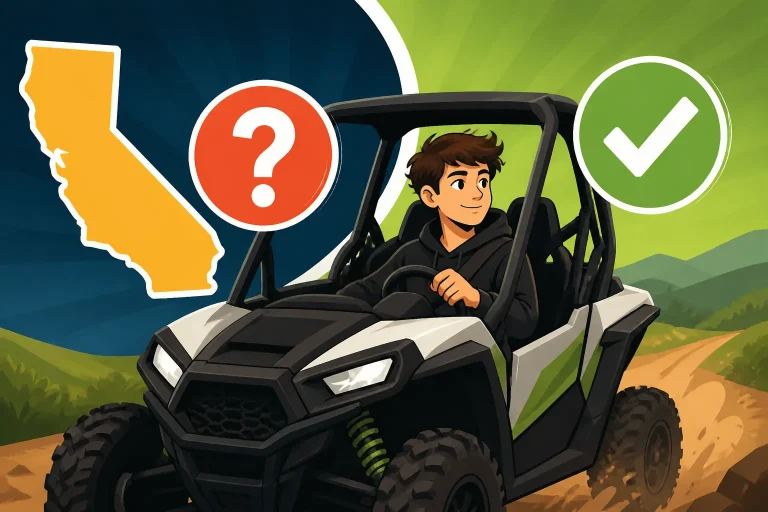
One common source of confusion is treating every permit, sticker and registration card as if it did the same job. They do not. A dune recreation permit concerns access under the applicable dune program. California OHV identification and a California nonresident OHV use permit are separate state-level matters.
| Item | What it relates to | What to confirm |
|---|---|---|
| Imperial Sand Dunes recreation permit | The dune permit season and riding at the area | Valid dates, coverage and current access conditions with the Bureau of Land Management |
| California OHV registration or identification | California identification for an OHV, where applicable | Whether your machine and circumstances require California registration or identification |
| California nonresident OHV use permit | State requirements for some nonresident OHV use | Whether your home-state documents qualify or a California permit is needed |
| Registration card or identification certificate | Proof of valid California OHV registration | Carry it when applicable and keep it available for inspection |
According to the California DMV, the identification certificate, also called a registration card, is proof of valid California OHV registration. A recreation-area permit should not be treated as a substitute for that document where California registration applies. Conversely, having state identification does not by itself answer whether you also need a dune permit.
Nonresidents should check their home-state paperwork before setting out. The California DMV says nonresident OHV owners must carry a valid out-of-state driver’s license to establish residency. To operate without a California permit, they must also provide proof of current home-state OHV registration or its equivalent. Confirm whether your documents meet the requirement and whether a state permit is needed in your situation.
California’s nonresident OHV use permit program is administered by the Off-Highway Motor Vehicle Recreation Division of California State Parks. According to California State Parks, the required fee for that permit is $30 as of November 2026. That is not a quoted price for an Imperial Sand Dunes recreation permit. Check each program separately, rather than assuming one payment covers both.
For more on state requirements, see California’s Nonresident OHV Use Permit and California OHV Reciprocity: Only Two States. Those topics can help you frame the reciprocity question, but you should verify your own registration and permit status with the responsible agency. If you are still unsure which document applies, What California Charges Visitors to Ride can help distinguish the state-level issue from the dune-area permit.
Choose and display the permit before riding
Sort out the paperwork before you reach the dunes. Start with your travel dates, the area you plan to use and the machine’s current registration or home-state documents. Then confirm the current dune permit rules with the Bureau of Land Management and any California OHV requirement that applies to you.
A practical pre-trip check:
- Confirm your dates. Make sure the permit covers the days you plan to ride and falls within the official season.
- Check the land manager’s current rules. Look for access changes, closures and any area-specific permit conditions.
- Check the machine’s documents. Determine whether California identification, current home-state registration or a California nonresident permit applies.
- Confirm display instructions. Follow the instructions for the specific permit you have; do not assume a dune permit is displayed the same way as a state sticker.
- Keep proof accessible. Carry the registration card or other applicable proof so you can show it if requested.
For an ATV, the California Department of Parks and Recreation says the California Nonresident OHV Use Permit must be affixed to the left rear quadrant on a permanent plastic or metal frame member, where it is visible to outside inspection. This placement rule is for the California nonresident permit. Do not apply it automatically to a different permit; follow the issuing program’s current display instructions.
California has a separate placement rule for its Green and Red Stickers. According to the California DMV and Department of Parks and Recreation, an ATV’s sticker must be securely fastened to the left rear quadrant on a permanent plastic or frame member and remain clearly visible from the rear. If you need help identifying the state sticker rather than a recreation permit, see Displaying a Permit on the Left Side and Green, Red and Tan: California’s Three Stickers.
The documents also serve different purposes when a ranger or other official checks them. A sticker or permit affixed to a machine may be inspected externally, while a registration card is proof of registration that you should have available. Keep your paperwork organized and avoid relying on a phone photo unless the issuing agency confirms that it is accepted. For more on what to carry, see Carrying Paperwork on the Sand.
Plan for the ride, not just the permit
A valid permit does not cancel other riding rules. Give yourself time to check the machine, rider requirements and route conditions before leaving camp. In a busy dunes area, these practical checks can matter as much as having the right paperwork.
If you are riding an ATV, account for the rider’s age and supervision requirements. California State Parks says operators under 18 must have an appropriate ATV safety certificate, be directly supervised by an adult who holds one, or take a prescribed safety training course under the direct supervision of a certified instructor. The same division says a child under 14 must always be accompanied and directly supervised by a parent, guardian or authorized adult. Because the rules depend on the rider’s age and circumstances, confirm the applicable requirement before the trip.
UTV operators have a different threshold. According to the California Department of Parks and Recreation’s Off-Highway Motor Vehicle Recreation Division, a person must be at least 16 to operate a recreational off-highway vehicle without direct supervision in the vehicle by a parent, guardian or adult authorized by them. All occupants must wear seatbelts or safety harnesses whenever the UTV is in motion, according to California State Parks.
A single-rider ATV is not a way to carry an extra passenger. California State Parks says passengers are prohibited unless the ATV is specifically designed and provided by its manufacturer for multiple riders. Check the machine’s design and instructions rather than deciding that a short ride or a slow pace makes an extra passenger acceptable.
For rides near camp, account for the speed rule as well. According to the California Department of Parks and Recreation, the maximum speed within 50 feet of a campsite, campground, or group of people or animals is 15 miles per hour. Reduce speed around camp and keep a careful lookout for pedestrians, parked vehicles and other riders.
A quick equipment check is worthwhile, particularly before a long trip or a change in terrain. On National Forest lands, the USDA Forest Service requires OHVs to have a properly installed, approved spark arrester. California’s noise limits also depend on when a machine was manufactured: the California Department of Parks and Recreation sets a maximum of 96 dBA for OHVs manufactured on or after January 1, 1986, and 101 dBA for those manufactured before that date, measured from 20 inches. Confirm land-specific equipment rules before riding beyond the dunes.
The simplest way to avoid a permit mix-up is to treat the trip as a set of separate checks: season dates, dune access, state OHV identification and rider rules. If one of those is unclear, resolve it with the agency that administers it before you leave. Then keep the permits displayed as instructed and carry the proof that cannot be attached to the machine.
Sources
- California Department of Parks and Recreation, Off-Highway Motor Vehicle Recreation Division — OHV Sound Regulations (checked November 2, 2026)
- California Department of Parks and Recreation — Nonresident OHV Use Permits (checked November 2, 2026)
- California Department of Parks and Recreation Off-Highway Motor Vehicle Recreation Division — ATV Safety Training & FAQs for ROVs (checked November 2, 2026)
Disclaimer
This article is for general informational purposes only and does not constitute professional advice. Laws, prices and regulations vary by location and change over time. Consult a qualified professional for guidance on your specific situation.