Testing Your Exhaust at 20 Inches
Testing Your Exhaust at 20 Inches
A loud exhaust can turn a planned ride into a failed sound check, but checking noise at home is not as simple as holding a phone near the muffler. California uses different limits based on when an OHV was manufactured, and the measurement distance matters. Here’s what the 20-inch test means, what you can check before riding, and where a home reading has limits.
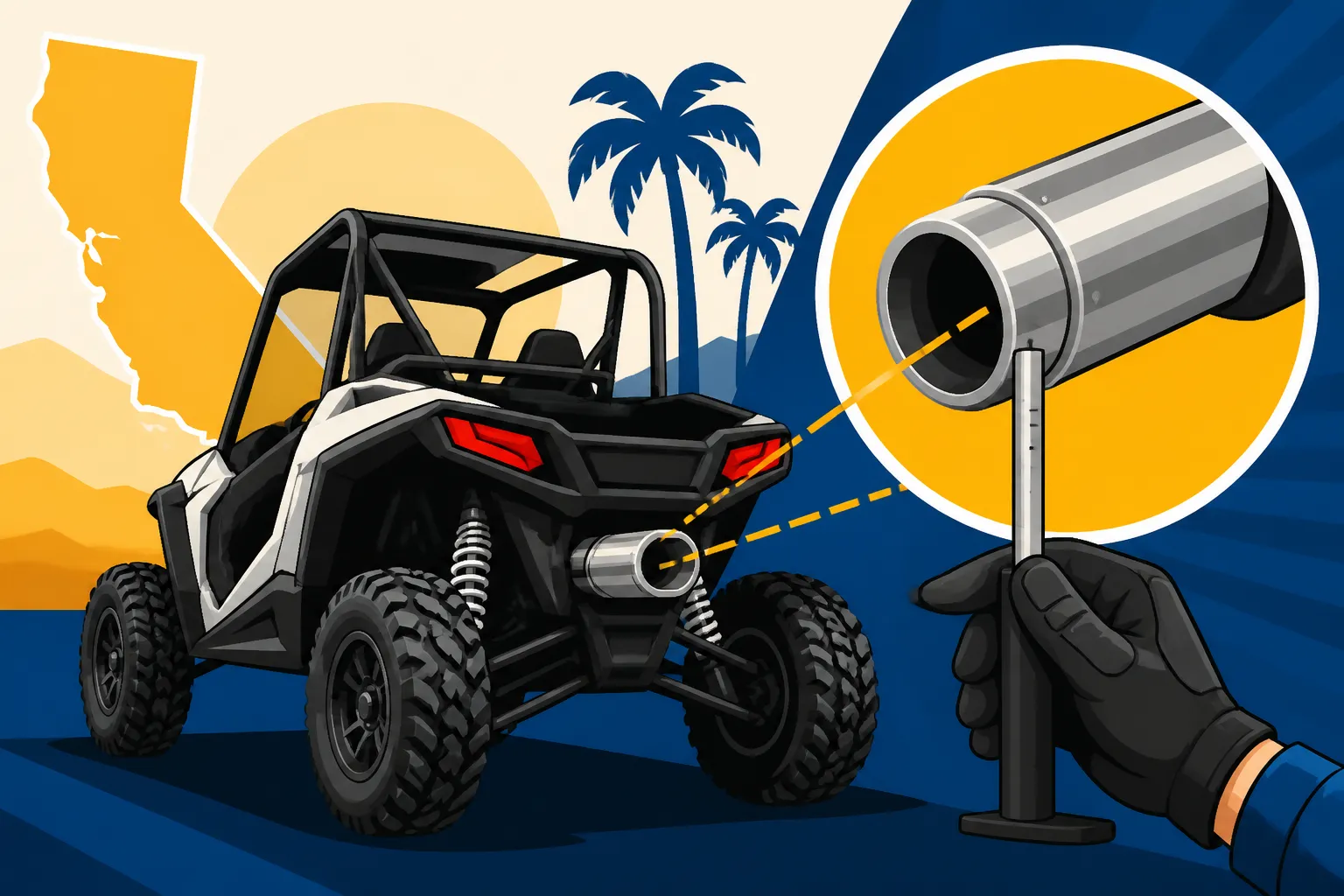
California’s exhaust limits and the 20-inch measurement
California sets maximum noise levels for off-highway vehicles, including ATVs and UTVs. According to the California Department of Parks and Recreation, vehicles manufactured on or after January 1, 1986, have a maximum limit of 96 dBA, measured from 20 inches away. Vehicles manufactured before January 1, 1986, have a maximum limit of 101 dBA at that same distance.
| OHV manufacture date | Maximum noise level | Measurement distance |
|---|---|---|
| On or after January 1, 1986 | 96 dBA | 20 inches |
| Before January 1, 1986 | 101 dBA | 20 inches |
The limits are not interchangeable. A machine built before the cutoff does not use the lower limit, while a machine built on or after it does not get the higher one. If you are unsure which limit applies, check the machine’s manufacture date and confirm the applicable rule with California State Parks. For more detail on the two thresholds, see California ATV Sound Limits Explained, 96-Decibel Limit on a California Trail, and One Hundred One Decibels for Older Machines.
The distance is part of the test, not a convenient suggestion. A reading taken closer to the exhaust can be higher; a reading taken farther away can be lower. Neither result should be treated as comparable to a reading made at the specified distance. California State Parks identifies 20 inches as the measurement distance for the state noise limits. The distance alone, however, does not tell you every detail of an official test setup.
That distinction matters when you are checking your own vehicle. A meter’s display might show a number that looks precise, but it only describes the sound measured in the conditions where you used it. It does not establish that the machine would receive the same reading in a ranger’s test or that your home setup matches the official procedure. For the measurement question specifically, see Measuring Sound at 20 Inches.
A machine close to its applicable limit deserves particular care. Readings can vary with the meter, its position, the surrounding noise and the way the machine is operated during the check. A result below the limit in one setting is useful as a warning or screening signal, but it is not a guarantee for every inspection. If you are near the limit, treat that as a reason to investigate further rather than as a comfortable pass.
How to make a useful home check
A home noise check can help you spot an obvious problem before you load up. It is most useful when you treat it as a consistent comparison—not as a substitute for an official measurement.
- Identify the correct limit. Find the machine’s manufacture date and use the applicable threshold. California State Parks sets the 96 dBA limit for OHVs manufactured on or after January 1, 1986, and the 101 dBA limit for machines manufactured before that date, both measured at 20 inches.
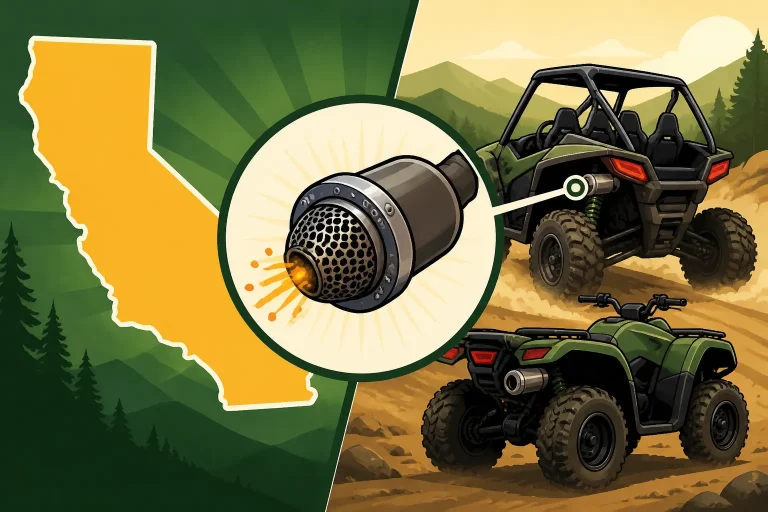
- Check the exhaust system first. Look for loose parts, visible damage, missing components or a change from the exhaust setup you have used before. A meter reading can tell you that sound is high; it cannot diagnose why.
- Use the specified distance consistently. California State Parks gives a measurement distance of 20 inches. Keep that distance consistent between checks and don’t compare a reading taken at a different distance as if it were the same test.
- Keep a note of the setup. Record the meter used, where you measured, and any relevant conditions you can reproduce. This helps you compare readings after a repair or adjustment without assuming that the result is an official compliance determination.
- Investigate a high or inconsistent reading. Check for an exhaust problem and consult a qualified repair professional or the appropriate official testing guidance before riding in an area where sound rules apply.
A consumer sound meter can be useful for an initial check, but choosing a product does not make the test official. If you shop for a meter through Amazon or another retailer, consider it a screening tool: follow its instructions, keep the setup consistent, and do not rely on a single reading as proof of compliance. A phone app may also help you notice a change, but the displayed value should not be mistaken for a formal test result.
There is a practical trade-off here. A home check can save time by revealing that an exhaust has become louder after a repair or modification. But a reading is only as useful as the conditions under which it was taken. If you cannot reproduce the specified distance, or if background noise makes the reading hard to interpret, it may be better to have the machine inspected instead of trying to draw a firm conclusion from a questionable result.
For details about how an official field check may differ from a home measurement, see How a Ranger Measures Your Exhaust Noise. Avoid assuming that an official tester will operate your machine or position equipment in a particular way unless the current official procedure says so.
Exhaust changes, repairs and other compliance checks
An aftermarket muffler or exhaust modification can affect noise, but the name of a part or a seller’s description does not tell you whether your finished machine will meet California’s sound limit. A change that sounds modest to the rider can still produce a different meter reading. Conversely, a home reading that appears acceptable does not prove that the machine will test the same way elsewhere.
If the exhaust has been changed, compare the machine’s condition with the manufacturer’s information and any applicable California requirements. Check that components are present, properly installed and in good condition. If you are diagnosing a machine that has suddenly become louder, start with a repair inspection rather than trying several unverified modifications in succession. The related topic Aftermarket Exhaust and California Sound Checks covers this issue in more detail.
Sound compliance is only one part of preparing an OHV for public land. In particular, noise and spark-arrester requirements serve different purposes. The USDA Forest Service requires OHVs operated on National Forest lands to have a properly installed, approved spark arrester. Passing a sound check does not establish that the machine has the required arrester, and having an arrester does not establish that it meets the noise limit. Review Spark Arresters on California Public Land separately if your ride includes National Forest land.
Emissions are another separate question. The California Air Resources Board governs emissions for off-highway recreational vehicles under Title 13 of the California Code of Regulations, Sections 2410 through 2419.4. A noise meter cannot confirm emissions compliance. If a modification changes more than exhaust sound, check the applicable emissions rules rather than treating a quiet reading as an all-purpose approval.
Before heading out, consider where you plan to ride and which rules apply there. California State Parks manages state-owned vehicular recreation areas and designated trails through its Off-Highway Motor Vehicle Recreation Division, while the Bureau of Land Management oversees its own public lands and OHV areas. A sound check does not replace checking the rules for the specific area. For one example of the issue at a state recreation area, see California Noise Rules at an SVRA Gate.
What to do if your ATV or UTV is too loud
If your machine exceeds the limit that applies to it—or is close enough that you cannot trust your home reading—avoid treating the displayed number as something to explain away. Check the exhaust for damage, loose fittings or missing parts, and have a qualified repair professional inspect it if you cannot identify the cause. After the work, repeat your home check using the same distance and setup. A lower reading can show that the repair changed the result, but it still cannot guarantee an official pass.
Be cautious about making adjustments based only on sound by ear. Riders become accustomed to their machine, and nearby vehicles or open terrain can affect how loud an exhaust seems. If a meter reading and your impression do not match, rely on a properly conducted measurement or professional assessment rather than guessing.
If an official check finds that a machine is too loud, ask what procedure was used and what result was recorded. Confirm which manufacture-date limit applies to your vehicle and whether the measurement followed the relevant official process. If the problem is a repair issue, address it before returning to the area. For the consequences and enforcement side, see California Fines for a Loud Machine.
A reliable pre-ride routine is straightforward: know the machine’s manufacture date, use the correct threshold, inspect the exhaust, and treat a home meter as an early warning rather than a legal certificate. That approach cannot guarantee how an official check will turn out, but it can help you catch a problem before you arrive at the riding area.
Sources
- California Department of Parks and Recreation, Off-Highway Motor Vehicle Recreation Division — OHV Sound Regulations (checked November 2, 2026)
- California Air Resources Board — Off-Highway Recreational Vehicle Emissions Certification Requirements (checked November 2, 2026)
Disclaimer
This article is for general informational purposes only and does not constitute professional advice. Laws, prices and regulations vary by location and change over time. Consult a qualified professional for guidance on your specific situation.