California Sound Test Procedure
California sound testing can feel unpredictable if you do not know what the inspector is measuring. The key is that it is a controlled, stationary test—not a guess based on how loud your ATV or UTV sounds while riding. Here is how the procedure generally works, what to check beforehand, and what to do if your machine does not pass.
What the California sound test measures
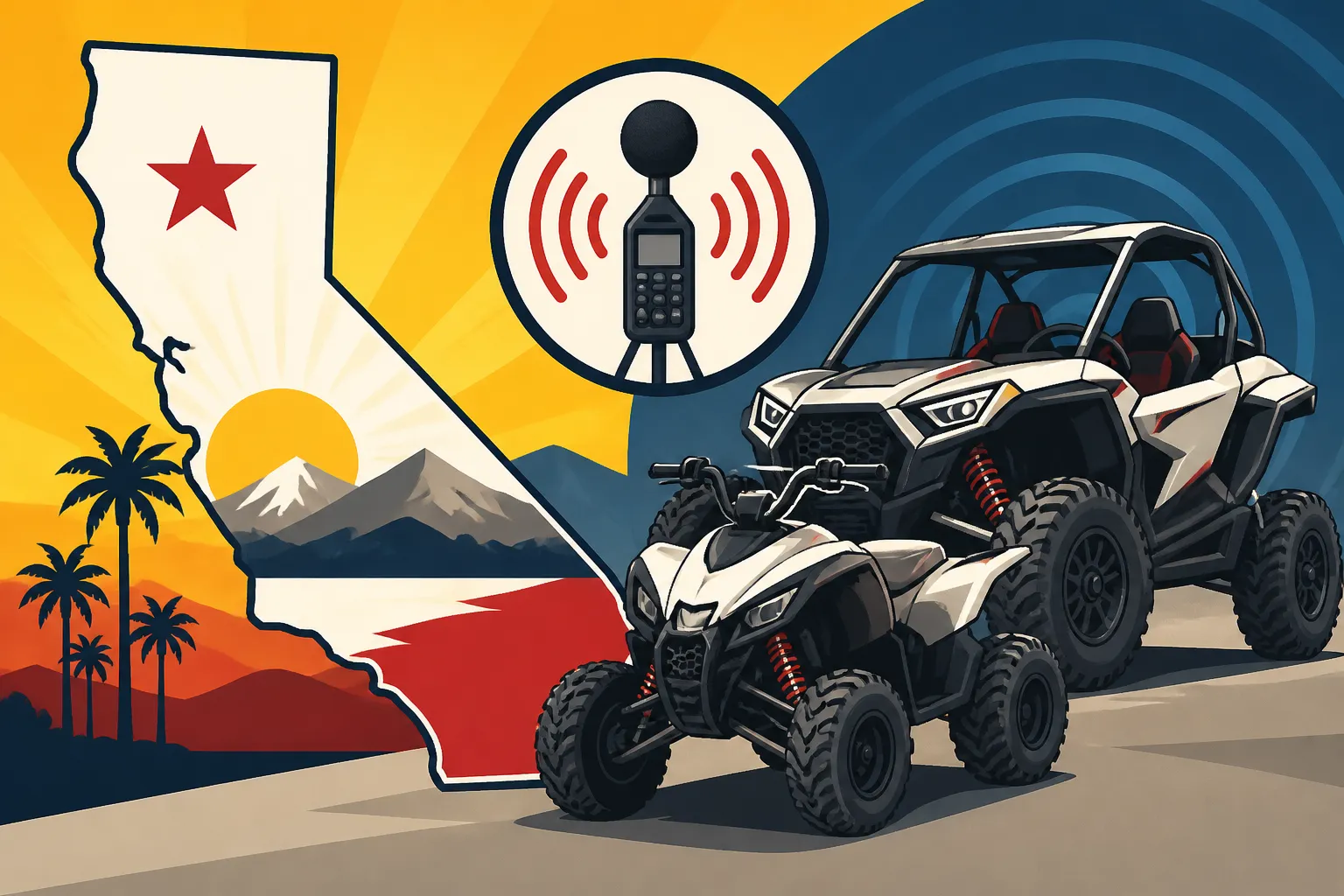
California uses a standardized stationary sound test for many off-highway vehicles. Rather than measure noise as you ride past, an inspector checks the sound produced by your machine while it is stationary and its engine is run at a prescribed speed. The process is designed to make readings more consistent than a subjective judgment about loudness.
A sound meter measures sound pressure in decibels, usually written as dB or dBA. The test reading is compared with the limit that applies to the machine. The applicable limit can depend on the vehicle’s type, age, or other classification, so do not assume that one number applies to every ATV or UTV. For background on the thresholds, see California Sound Limits for OHVs Explained and California’s ATV Sound Limits Explained.
A standardized test still has practical limits. A reading can be affected by the condition and placement of the meter, the test location, wind, nearby noise, and whether the engine is held at the correct speed. That is why an inspector should follow the prescribed procedure rather than simply rev the engine and decide whether it sounds acceptable.
A few terms help clarify what is being measured:
- Sound level: The reading from the sound meter during the test.
- Test position: The prescribed distance and angle between the meter’s microphone and the exhaust outlet.
- Test RPM: The engine speed required by the procedure for the machine being tested.
- Applicable limit: The sound threshold used to assess that particular vehicle.
The California procedure commonly associated with off-highway sound testing uses a microphone positioned 20 inches from the exhaust outlet at a 45-degree angle. The engine is tested at a specified RPM, not simply at idle and not at an arbitrary high rev. The inspector should use the required method and equipment; the exact setup can depend on the applicable standard and machine.
That detail matters because a sound reading is not meaningful on its own. A meter held too close, pointed directly into the exhaust flow, or used while the engine is at the wrong speed may produce a different result. For the same reason, a phone app may help you notice that an exhaust has become louder, but it cannot reliably confirm that your machine will pass an official test.
How the test is generally performed
The specific sequence may vary with the inspection setting and vehicle, but a properly controlled test follows a consistent pattern: the machine is positioned safely, the sound meter is set up at the prescribed location, and the engine is brought to the required speed. The inspector then records the reading and compares it with the applicable limit.
| Test element | What generally happens | What can affect the result |
|---|---|---|
| Machine position | The ATV or UTV is stationary on a suitable surface | Nearby walls, vehicles, or other sound-reflecting surfaces |
| Microphone position | The microphone is placed at the prescribed distance and angle from the exhaust outlet | Incorrect distance, height, or direction |
| Engine speed | The engine is held at the RPM required by the procedure | Guessing the RPM or revving inconsistently |
| Sound reading | The meter records the exhaust noise during the test | Wind, background noise, meter setup, or an unstable reading |
| Assessment | The result is compared with the limit that applies to the machine | Using the wrong vehicle classification or threshold |
The 20-inch distance and 45-degree angle are useful reference points, but they do not mean that every rider can reproduce an official test by measuring from the tailpipe at home. The official method also depends on the correct engine speed, suitable test conditions, and properly used equipment. If your machine has more than one exhaust outlet, the inspector may need to assess the outlets according to the applicable method; do not assume that testing only one side is enough.
The prescribed RPM is an especially important part of the test. A machine can sound relatively quiet at idle but much louder when the throttle is held at the test speed. Conversely, a brief, uncontrolled burst of throttle is not a substitute for holding the engine at the specified RPM. The inspector may use the vehicle’s specifications or another approved method to establish that speed.
Here is what a rider can reasonably expect:
- The machine is placed in a safe test position. It should be stable, with the transmission in the appropriate position and the area clear of people and loose equipment.
- The inspector checks the sound meter setup. The microphone is positioned in relation to the exhaust outlet, and the testing area should allow a reliable reading.
- The engine is brought to operating condition and the required speed. Follow the inspector’s directions. Do not try to anticipate the throttle input or hold the engine at an improvised RPM.
- The meter takes a reading. The inspector may repeat a measurement if the reading is unstable or the setup needs adjustment.
- The result is assessed against the correct limit. If the machine exceeds the applicable threshold, ask what part of the test or vehicle classification you should review before making changes.
An inspector should not need to place the microphone directly in the exhaust stream. The test measures sound around the outlet at a prescribed position; it is not a measurement of exhaust gas. If you are unsure how the test is being set up, ask politely before the engine is revved.
How to prepare your ATV or UTV
Preparation is mostly about making sure the exhaust is in good condition and the machine is tested as intended. A vehicle that passed in the past can become louder as parts wear, loosen, or are replaced. Check it before a trip rather than waiting until you are at a gate or inspection point.
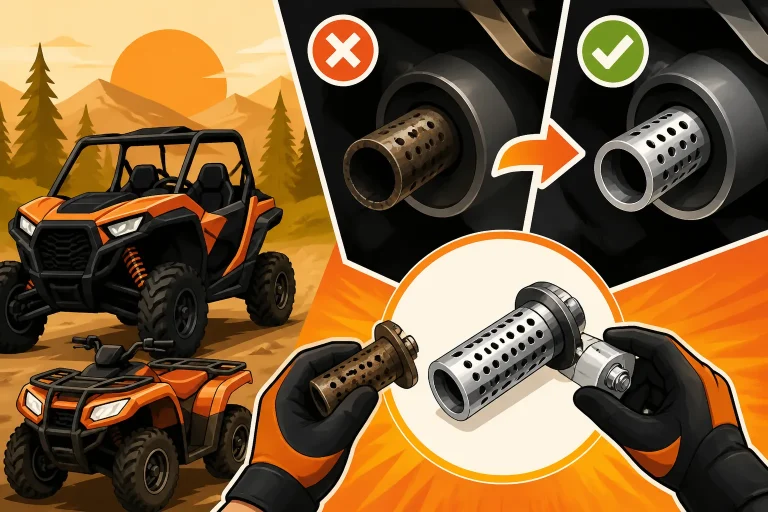
Start with the exhaust system. Look for a cracked muffler, loose joints, missing fasteners, damaged packing, or a leak where the header and muffler connect. A leak can increase noise and may also make the engine run poorly. Check that any required spark arrester is installed and in sound condition; noise testing and spark-arrester checks are separate matters. See California Spark Arrester Requirement Explained for the arrester requirement.
Next, confirm that the exhaust components are appropriate for your machine. A replacement muffler or modified exhaust may not reduce sound enough simply because it is marketed for off-road use. Keep the paperwork and product details for parts you install, but do not treat a label or purchase receipt as proof that the machine meets California’s sound limit. The outcome depends on the actual test reading and applicable threshold.
A practical pre-ride check:
- Inspect the muffler, exhaust joints, and mounting points for damage or looseness.
- Listen for a new ticking, puffing, or unusually sharp exhaust note that may indicate a leak.
- Check that the spark arrester is present and seated correctly if one is required where you ride.
- Avoid removing internal components or altering the exhaust before the test.
- Make sure the engine is in normal operating condition and follow the inspector’s instructions.
- Check the current rules for the specific riding area, because sound compliance does not replace other access requirements.
Some riders use a handheld meter to get a rough idea of whether a machine has become louder. If you buy one through a retailer such as Amazon, treat it as a screening tool, not an official pass/fail test. Consumer meters can differ in accuracy, calibration, settings, and microphone quality. Phone apps are even less dependable for this purpose. A home reading can help you spot a major change after an exhaust repair, but it cannot guarantee the result of a standardized test.
Do not try to “tune” a machine by repeatedly revving it in a driveway near other people. Apart from creating noise, improvised testing may use the wrong distance, microphone angle, engine speed, or surroundings. If you need a dependable measurement before an event or trip, ask a qualified repair shop or the relevant riding-area authority what testing method it uses.
It also helps to distinguish a sound issue from a general mechanical issue. A loud exhaust might come from a damaged muffler, but it could also be caused by a loose connection, failed gasket, or an unsuitable replacement part. Fixing the source is more useful than adding a temporary wrap or relying on an improvised insert. Any repair should be compatible with the machine and should not compromise safe exhaust flow or required equipment.
If your machine does not pass
If the reading is over the applicable limit, ask the inspector to explain the result and confirm that the correct test procedure and vehicle limit were used. Stay calm and do not keep revving the engine in an effort to get a different reading. A changing result may indicate that the setup or engine speed needs attention, but it does not establish which reading is valid.
Before spending money on replacement parts, check the simple possibilities:
- Is the muffler securely attached, with no obvious leak at a joint?
- Is the exhaust damaged, modified, or missing a component?
- Is the machine being tested at the required RPM?
- Is the sound meter positioned and operated according to the test method?
- Was the correct limit selected for the machine?
If a repair is needed, ask a mechanic to inspect the exhaust and recommend parts intended for your model. Keep records of the work, but understand that repairs do not automatically establish compliance; the machine still needs to meet the applicable sound threshold. For a deeper explanation of the measurement itself, see Testing Your Exhaust at 20 Inches and How a Ranger Measures Your Exhaust Noise.
Do not assume that passing once means the machine will remain compliant indefinitely. Exhaust packing wears, fasteners loosen, and damage can happen during transport or riding. A quick inspection before leaving home can catch many problems while there is still time to fix them. If you ride in brush-covered areas, remember that sound compliance is separate from spark-arrester rules and trail-access restrictions.
A passing sound reading also does not make every route or riding area open to your vehicle. Check the specific area’s requirements, including registration or permit rules, equipment rules, and closures. For example, California’s Nonresident OHV Use Permit covers a different requirement from exhaust sound limits.
The most reliable approach is straightforward: keep the exhaust in good repair, use the correct parts, and let the test be conducted with the prescribed microphone position and engine speed. If there is a problem, verify the setup and classification first, then repair the machine and have it checked again rather than relying on a phone reading or a quick rev by ear.
Disclaimer
This article is for general informational purposes only and does not constitute professional advice. Laws, prices and regulations vary by location and change over time. Consult a qualified professional for guidance on your specific situation.