Riding County Roads Around Bishop
The dream of riding your ATV or UTV from a remote campsite right into town for a burger and some gas is a common one, especially in stunning places like the Eastern Sierra. But for many off-highway vehicle (OHV) enthusiasts in California, the reality of strict road-use laws can quickly turn that dream into a complicated headache. It often feels like you need a legal degree just to figure out where you can legally put a tire on pavement. This guide is here to untangle the complexities of riding your OHV on county roads specifically around Bishop, providing clarity on what’s allowed, what’s not, and how to enjoy the incredible landscape safely and legally.
The Complex Landscape of OHV Road Use in California
Let’s be honest, California has a reputation for being tough on OHV enthusiasts when it comes to street legality, and for good reason. Most of our off-highway vehicles, whether they’re roaring ATVs or versatile side-by-sides, are simply not built or registered for typical road use. This creates a significant hurdle for riders who want to connect trails or grab supplies without having to trailer their machine everywhere. It’s a frustrating reality for many, especially when you see riders in other states seemingly having an easier time of it.
Why Most OHVs Aren't Street Legal by Default
The fundamental issue is that ATVs and UTVs are manufactured and classified for off-highway recreation, not for the pavement. They typically lack critical safety and emissions equipment required for highway vehicles. Think about it: a dirt bike doesn't have turn signals, a horn, mirrors, or DOT-approved tires like a street motorcycle. A UTV, while appearing more like a car, usually isn't designed to meet federal highway safety standards for things like crashworthiness or specific lighting configurations.
Because of these differences, trying to make an OHV truly "street legal" in California, in the same way a car or motorcycle is, is almost impossible for most machines. The state’s vehicle code is very specific, and while some aftermarket companies like SuperATV offer fantastic accessories to enhance safety and trail performance—like mirrors, turn signals, and windshields—these additions typically don't magically transform an off-highway vehicle into a street-legal one under California law. You can explore more about this in [Are ATVs Street Legal in California?]. It’s a common misconception that simply adding a few components will do the trick, but unfortunately, the state’s classification system is much more rigid.
Limited Exceptions: Combined-Use Highways and Crossings
While full street legality is largely out of reach, California does provide very specific and limited exceptions that allow OHVs to operate on certain public roads. These aren't broad permissions; rather, they're carefully carved-out allowances designed to help riders access trails or make short connections.
One of the primary exceptions is the concept of a "combined-use highway." These are specific segments of public roads that local authorities, with the approval of the California Highway Patrol (CHP), have designated for shared use by both highway vehicles and OHVs. These designations are rare and usually apply only to very short distances, often just a few miles, to connect a trail system or allow access to a service road. You can dive deeper into this topic by reading [California's Combined-Use Highways].
Another common allowance is the ability to cross a public road. This means you can traverse a highway at approximately a 90-degree angle to get from one section of a trail to another, provided it's done safely and legally, often at designated crossings. You can't just drive down the road for miles; it's strictly a crossing maneuver. It’s crucial to understand these distinctions, as misinterpreting them can lead to citations. For more information on this, check out [California Rules for Crossing a Public Road]. These exceptions are meant to facilitate off-highway recreation, not to convert OHVs into daily commuters.
The Role of Local Jurisdictions
This is where areas like Bishop become particularly interesting. While the state sets the overarching rules, local jurisdictions—like Inyo County—have the authority to designate specific county roads for OHV use. This power is outlined in the California Vehicle Code (CVC) 38026, which allows cities and counties to establish ordinances permitting OHV operation on certain roads under their jurisdiction, provided they get the necessary approval from the CHP.
Without such a local ordinance and CHP sign-off, a county road, even if it’s a dirt road, is generally considered a public highway where OHVs are restricted. This means that just because a road looks "off-road friendly" doesn't mean it's legal for your ATV or UTV. The process for designating these roads is often complex, involving local planning, public input, and traffic safety assessments. It's not a quick or easy process, which is why true combined-use roads are not as common as riders might wish. Understanding that local decisions shape your riding options is critical, especially when planning a trip to a new area.
Navigating County Roads Around Bishop: Specifics and Permissions
The Bishop area, nestled in Inyo County, is a prime example of a place where understanding local road rules can unlock incredible riding opportunities. The dramatic landscapes of the Eastern Sierra offer endless trails, but connecting these experiences often requires navigating county roads. Knowing exactly where you stand legally is paramount to enjoying your adventure without unwelcome surprises.
Understanding Inyo County's Approach to OHV Access
Inyo County, like other rural counties in California with vast public lands, understands the value of OHV recreation. However, their approach to road access is governed by state law and local needs. While there might not be a blanket "OHVs allowed" sign everywhere, specific segments of county-maintained roads, particularly those leading to trailheads or connecting remote areas, may be designated for mixed use.
Historically, Inyo County has participated in pilot programs and considered various ways to enhance OHV access. For example, some discussions have revolved around allowing limited OHV use on specific paved or unpaved county roads to bridge gaps between vast trail networks. The key is that these are not informal allowances; they are official designations that must be clearly communicated through signage and maps. This is where [Riding County Roads Around Bishop] comes into play, as it focuses on the specific conditions that make riding in this scenic area possible. Always look for official county maps, local visitor center information, or contact the Inyo County Roads Department for the most up-to-date information on designated routes.
Identifying Legally Permissible Routes
So, how do you actually know which roads around Bishop are open to your OHV? This is perhaps the most crucial question for any rider planning an excursion. Simply looking at a paper map or a satellite image isn't enough; you need official information.
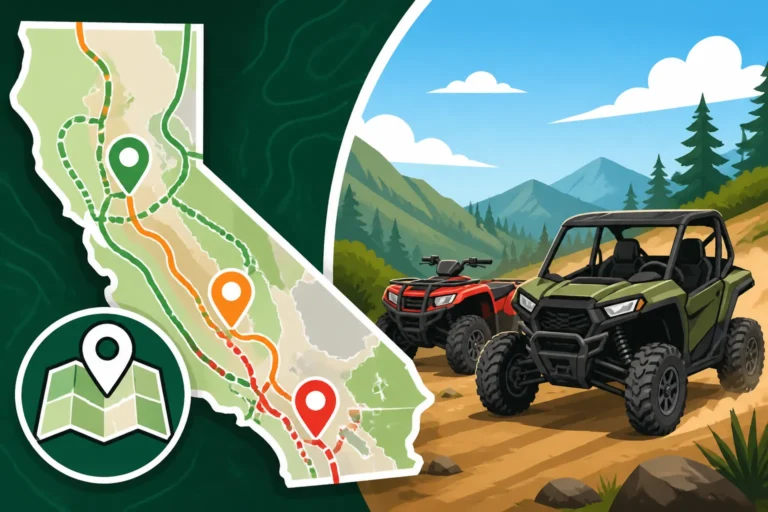
The most reliable sources come from the land management agencies themselves, such as the U.S. Forest Service (USFS) and the Bureau of Land Management (BLM). These agencies publish Motor Vehicle Use Maps (MVUMs) that are the definitive guide for legal motor vehicle travel on their lands. MVUMs clearly show which roads are open to licensed vehicles, which are open to OHVs, and which are closed to all motorized traffic. They are legally binding, and ignoring them can lead to significant fines. You can often find these maps at ranger stations, BLM field offices, or download them from agency websites. Many GPS apps also incorporate MVUM data.
Beyond federal lands, for county roads, you need to consult Inyo County's specific ordinances or maps. Local visitor centers in Bishop are often excellent resources for this kind of information, as they cater to recreational users and frequently have current maps and advisories. Never assume a dirt road is open simply because it’s unpaved or remote. Always look for official signage—green dot signs often indicate routes open to OHVs in some forest areas, but local county signs will be specific. When in doubt, it’s always better to ask or find an alternative route than to risk a citation for illegal road use.
Equipment Requirements for Permitted Road Use
Even if you find a county road around Bishop where OHV use is explicitly permitted, your machine still needs to meet certain equipment standards to be legal for that use. This isn't about transforming your machine into a street-legal vehicle, but rather ensuring it has basic safety features required when sharing space with other traffic, even if infrequently.
First and foremost, your OHV must have current California OHV registration, typically indicated by a [California's Green Sticker Explained] or [Red Stickers and What Changed in California] decal, and the corresponding ID plate. For the Imperial Sand Dunes Recreation Area (ISDRA), even visitors need permits, but that's a different story for different dunes.
When it comes to the machine itself, you'll generally need:
- Headlights and Taillights: Functional and illuminated during operation, especially during dawn, dusk, or adverse weather.
- Brakes: Fully operational brakes on all wheels.
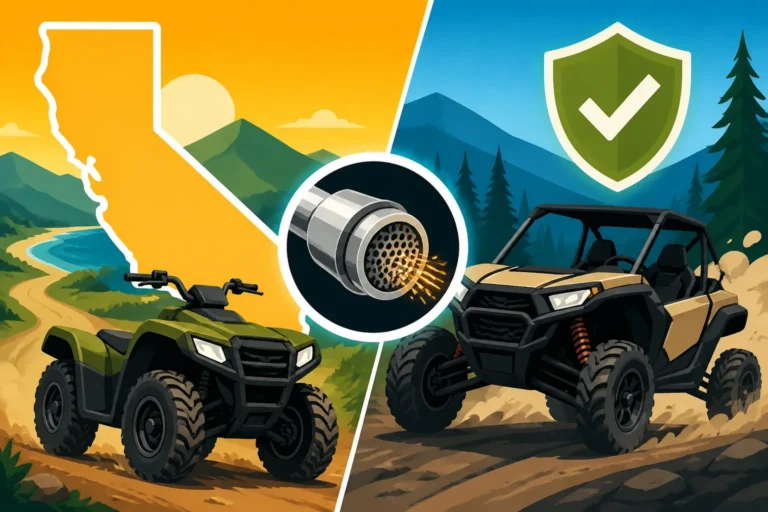
- Muffler and Spark Arrester: A properly functioning exhaust system with a U.S. Forest Service approved spark arrester is mandatory on all public lands in California to prevent wildfires. This is non-negotiable, especially in brush-covered areas around Bishop.
- Mirrors: While not always explicitly required for all designated OHV routes, having at least one rearview mirror is a smart safety practice when operating on any shared road. Many riders opt for quality side mirrors, like those available from SuperATV, to improve visibility, especially in UTVs.
- Tires: Your tires must be in good condition, suitable for the terrain, and not pose a safety hazard. While not needing to be "DOT-approved" like highway tires, they need to be structurally sound.
Beyond the machine, remember that safety gear for riders is also a must. Anyone riding an ATV or operating an ROV (side-by-side) on public lands in California must wear an approved safety helmet. This includes adults. You can learn more about this in [California Helmet Law for ATV Riders]. Children often have additional requirements for supervision and safety certificates. It’s not just about avoiding a ticket; it’s about your well-being.
| Equipment Item | Purpose | Requirement for County Roads (where permitted) |
|---|---|---|
| Current OHV Sticker | Legal identification and registration | Yes |
| Headlights/Taillights | Visibility to others | Yes |
| Functional Brakes | Stopping capability | Yes |
| Spark Arrester | Prevent wildfires | Yes (Forest Service approved) |
| Muffler | Noise reduction | Yes |
| Rearview Mirror | Rider situational awareness | Recommended, often implicitly required |
| Helmet | Rider head protection | Yes, for all riders/operators |
Practical Advice and Safety Considerations for Bishop-Area Road Riding
Riding the county roads around Bishop, even on legally designated sections, means sharing space with traditional vehicles. This isn't like being deep on a trail where you might only encounter other OHVs. You'll be alongside cars, trucks, and possibly even farm equipment. Therefore, a heightened sense of awareness and adherence to safe practices are absolutely critical. Your safety, and the safety of others, depends on it.
Essential Gear and Vehicle Preparation
Before you even think about rolling onto a county road, a thorough pre-ride inspection of your ATV or UTV is non-negotiable. Check your tires for proper inflation and damage, ensure all lights are working (headlights, taillights, brake lights, and any turn signals you've added), and verify that your brakes are responsive. Always carry basic tools, a tire repair kit, and a first-aid kit. Even a short jaunt on a county road can encounter unexpected issues.
Beyond the essentials, consider enhancements that improve your visibility and comfort. A sturdy windshield, perhaps one from a brand like SuperATV, can protect you from dust and debris, especially if you're riding for any distance. Bright flags on whips are mandatory in some dune areas, but they also enhance visibility on dusty roads. Eye protection, gloves, and appropriate riding attire are crucial, regardless of how short your road segment might be. The weather in the Eastern Sierra can change rapidly, so layered clothing is a smart choice. Always carry ample water, even for what seems like a quick trip. Cell service can be spotty, so don't rely solely on your phone for navigation or emergencies.
Rider Behavior and Road Etiquette
When you're riding on any county road, even a dirt one, you are operating in a mixed-use environment. This means adhering to traffic laws, even if they feel a bit out of place for your OHV. Always drive on the right side of the road, respect posted speed limits, and be prepared to yield to larger vehicles. Other drivers might not expect to see an OHV, so make yourself as visible as possible.
Dust control is also a significant concern, especially on unpaved roads. Slow down when passing other vehicles, homes, or recreational areas to minimize dust clouds. Excessive dust not only obscures visibility for others but can also be seen as disrespectful to residents and other users. Never ride through private property unless you have explicit permission. The Eastern Sierra is a mix of public and private lands, and trespassing is a serious offense. Remember, you are an ambassador for the OHV community; your actions reflect on all riders.
Planning Your Route and Being Prepared
Spontaneity is fun, but when it comes to riding county roads around Bishop, planning is your best friend. Always consult current maps, including MVUMs and any local county-specific OHV maps, before heading out. Understand exactly which roads are open and for what type of vehicle. Don't rely on memory or outdated information. Technology can help; many GPS units and apps can display MVUM data.
Inform someone of your planned route and estimated return time. This "float plan" is a simple but effective safety measure. Be prepared for contingencies: unexpected weather, a flat tire, or a mechanical issue. Pack snacks, extra water, and a way to signal for help if needed. The beauty of the Eastern Sierra is its vastness, but that also means help can be a long way off. Being prepared allows you to enjoy the stunning scenery and the thrill of the ride without undue worry.
The Bishop Area Experience: Connecting Trails and Towns
The allure of the Bishop area for OHV riders is undeniable. From the vast, open desert landscapes to the high Sierra trails, the riding opportunities are immense. Being able to legally utilize certain county roads can transform a segmented trip into a seamless adventure, making it easier to access remote trailheads or simply refuel and resupply without the hassle of constantly loading and unloading your machine from a trailer.
Seamless Connections to Trail Systems
For riders who've spent countless hours navigating dusty trails and rugged terrain, the ability to transition smoothly onto a short stretch of county road to reach the next trail system is a game-changer. Imagine a scenario where you've just finished a fantastic loop through the hills north of Bishop. Instead of trailering your UTV, you can legally follow a designated county road for a few miles, perhaps passing a charming ranch or an ancient stand of junipers, directly to the entrance of another challenging trail.
This connectivity not only saves time and effort but also enhances the overall experience. It allows for longer, more varied rides, stitching together different types of terrain and scenic views. These designated roads become vital arteries, linking disparate parts of the OHV network and allowing riders to truly explore the breadth of what the Eastern Sierra offers. It turns a series of isolated rides into a grand expedition, making the most of your time in this breathtaking region.
Accessing Amenities in Bishop
If permitted, riding directly into Bishop for necessities offers a level of convenience that's hard to beat. Picture this: you've been out exploring the remote canyons and high desert trails all morning, and your fuel tank is running low, or you're craving a hot meal. Instead of packing up your gear, driving your truck to town, and then heading back, you could, theoretically, ride your OHV on a designated county route directly to a gas station or a local diner.
However, this is where the "if permitted" part is absolutely critical. While some county roads leading into Bishop might be designated, it's highly unlikely that the main streets within the city of Bishop itself would be open to OHVs. Local city ordinances typically prohibit OHVs on municipal streets. So, while you might get close, always be prepared to park your OHV legally and safely at the very edge of town, if allowed, and walk or find alternative transportation for the final stretch to avoid any issues. Always check local signs and city regulations before attempting to ride into the heart of town.
The Evolving Landscape of OHV Access
The rules governing OHV access on public roads are not static. They can, and do, change. What might be allowed today could be restricted tomorrow due to environmental concerns, increased traffic, new legislation, or local community feedback. For example, some pilot programs designed to increase OHV access in certain areas of California have sunsetted or faced revisions. This happened with [California's Inyo County Pilot Ended in 2025], which shows how quickly things can evolve.
For riders, this means staying informed is a continuous process. Before every trip to the Bishop area, make it a habit to check for the latest MVUMs from the Forest Service and BLM. Consult the Inyo County website for any updated ordinances regarding OHV use on their roads. Local ranger stations, visitor centers, and reputable OHV clubs in the area are excellent resources for current information. Being proactive and informed ensures that your ride remains legal, safe, and enjoyable, allowing you to focus on the incredible scenery and the thrill of the adventure rather than worrying about unexpected citations.
Disclaimer
This article is for general informational purposes only and does not constitute professional advice. Laws, prices and regulations vary by location and change over time. Consult a qualified professional for guidance on your specific situation.