Riding a California Forest Service Road
It's incredibly frustrating when you're itching to explore the breathtaking beauty of California's national forests on your ATV or UTV, only to be bogged down by confusion over what roads you can actually ride. You see these wide, winding dirt roads stretching into the wilderness, but the signs can be vague, and the rules seem to change depending on who you ask. This guide is here to clear up that confusion, helping you understand how to legally and safely navigate California's Forest Service roads and unlock countless miles of adventure.
Understanding California Forest Service Roads
When we talk about Forest Service roads, we're generally referring to the network of roads managed by the U.S. Forest Service within National Forests across California. These aren't your typical paved highways; many are gravel, dirt, or even just graded paths, and they range from well-maintained routes to rugged, seldom-used tracks. They're primarily designed for administrative access, logging, and fire suppression, but many are also open to public recreation, including off-highway vehicles (OHVs).
What Defines a Forest Service Road?
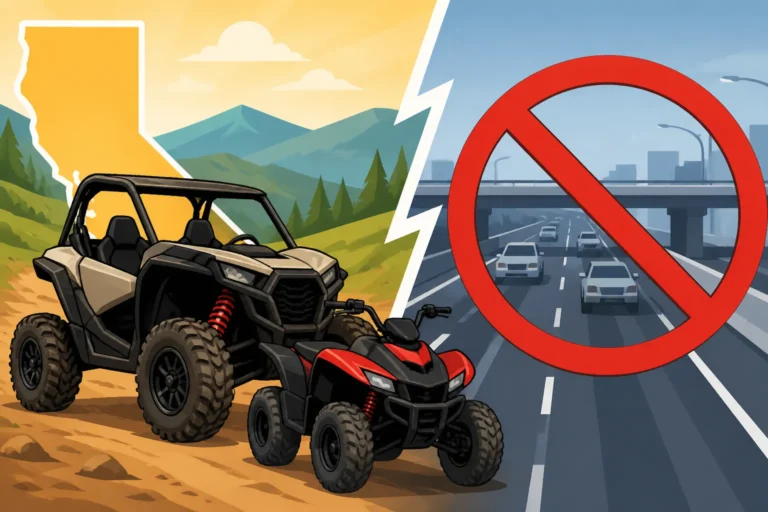
A Forest Service road is essentially any road within a National Forest that's part of the designated transportation system, whether it's maintained for passenger cars or is strictly for high-clearance 4x4s and OHVs. These roads are distinct from state highways or county roads, even if they sometimes connect to them. The key is their management: they fall under federal jurisdiction, specifically the Forest Service. This means a different set of rules and regulations often applies compared to state parks or Bureau of Land Management (BLM) lands.
Often, you'll see these roads marked with a number, like "Forest Road 3N14." This numbering system helps the Forest Service manage and identify them, but it also gives you a critical piece of information when you're trying to figure out where you can and can't ride. Don't assume that just because a road looks like a public thoroughfare, it's open to all vehicles; always check the signs and maps. The terrain can change dramatically, too, from smooth, scenic drives perfect for a leisurely cruise to rocky, challenging climbs that demand a robust machine and skilled driving.
Motor Vehicle Use Maps (MVUMs)
The absolute best tool for understanding where you can ride in a National Forest is the Motor Vehicle Use Map (MVUM). These maps are the law of the land for motorized travel within National Forests. They clearly designate which roads, trails, and areas are open to specific types of motorized vehicles, including OHVs like ATVs and UTVs. If it's not on the MVUM as open, then it's closed to motorized use. This isn't just a suggestion; it's a hard and fast rule, and rangers actively enforce it.
MVUMs are typically black and white and can look a little intimidating at first glance, but once you understand the legend, they become indispensable. They often use different line styles to denote roads open to highway-legal vehicles, roads open to OHVs up to 50 inches in width, and roads open to OHVs over 50 inches. This distinction is crucial, especially if you're riding a wider side-by-side. You can usually find these maps for free at local Forest Service offices or sometimes download them from the Forest Service website. Always make sure you have the most current version, as routes can change due to maintenance, closures, or environmental concerns. Being caught without knowledge of these maps can lead to an unexpected [California Fines for Riding a Public Road] or a closed route.
General Rules for OHVs on Forest Service Roads
Riding your ATV or UTV on Forest Service roads in California isn't a free-for-all. There are specific rules and regulations designed to ensure safety, protect natural resources, and minimize conflicts with other forest users. Understanding these rules is crucial to having a legal and enjoyable ride.
OHV Registration and Stickers
Every OHV, whether an ATV or UTV, needs to be properly registered if you plan to ride it on public lands in California, including Forest Service roads. This typically means having a valid California Green Sticker or Red Sticker displayed on your machine. The type of sticker you need depends on your vehicle's model year and emissions compliance. [California's Green Sticker Explained] covers year-round riding, while a [California Red Sticker Rules Today] often comes with seasonal restrictions, though changes have been made to allow more flexible riding in certain areas.
If you're visiting from out of state, California offers a Nonresident OHV Use Permit. This permit allows out-of-state registered OHVs to operate on California's public lands for a limited time, provided your home state doesn't have a reciprocity agreement with California. Oregon and Nevada are the only two states with true reciprocity. This permit helps ensure that all machines using public lands contribute to their upkeep and management, even if they're not permanently registered here. Don't forget, these fees are what help keep trails open and maintained, so it's an important part of responsible riding.
Helmet and Safety Gear Requirements
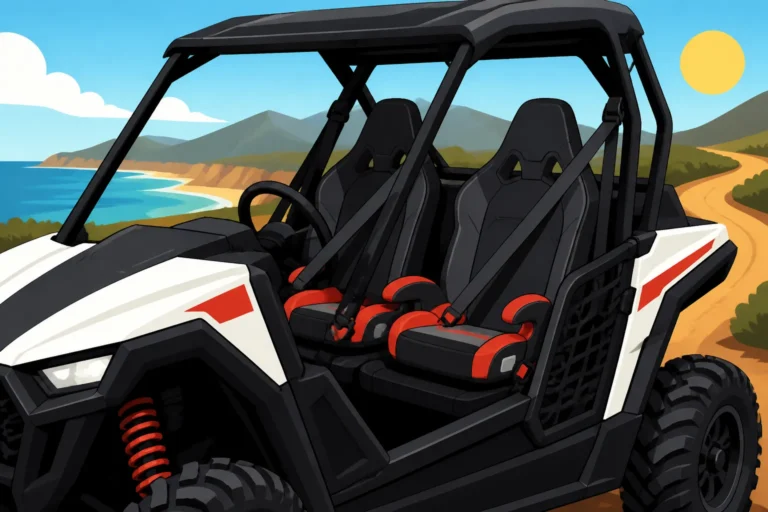
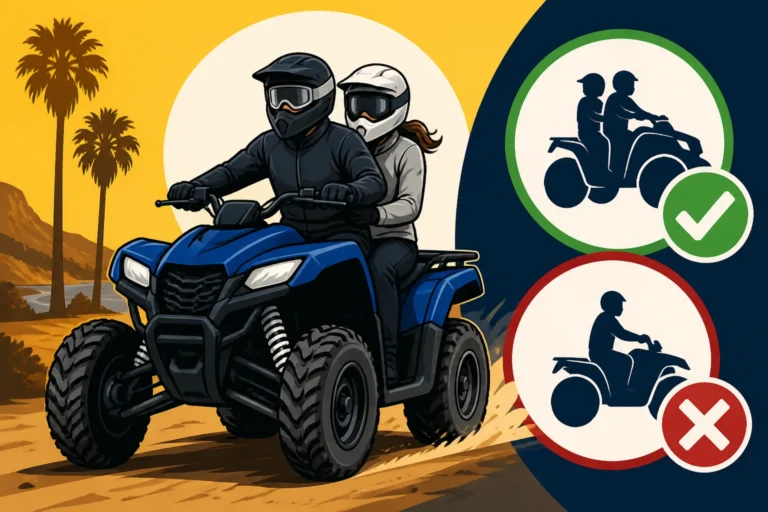
Safety is paramount when riding OHVs, and California has strict helmet laws that apply to Forest Service roads. If you're riding an ATV, everyone, regardless of age, must wear a DOT-compliant helmet. This isn't just a suggestion; it's the law, and rangers will absolutely cite you for non-compliance. For UTVs (or ROVs, Recreational Off-Highway Vehicles), the rules are slightly different. While helmets are highly recommended for all occupants, adults (18 and older) operating or riding in a UTV that has a roll cage and seat belts can sometimes be exempt from the helmet requirement, provided they are wearing the seat belt.
However, any passenger under 18 in a UTV must wear a helmet, even if the UTV has a roll cage and seat belts. This often surprises people, but the intent is clearly to protect younger riders. It's always a good idea to wear a helmet, along with eye protection, gloves, and sturdy riding gear, regardless of the exemption. You can never be too safe. For more details, check out [California Helmet Law for ATV Riders]. Remember, aftermarket accessories from companies like SuperATV, such as upgraded harnesses or full enclosure systems, can add to your safety and comfort on these roads.
Spark Arresters and Sound Limits
Environmental protection and responsible riding also mean adhering to rules about your machine's exhaust system. All OHVs operating on California public lands, including Forest Service roads, must be equipped with a U.S. Forest Service approved spark arrester. This device prevents hot carbon particles from escaping your exhaust and potentially igniting wildfires, which are a major concern in California's forests. Failing to have a proper spark arrester is a serious violation and can result in significant fines.
In addition to spark arresters, there are sound limits your machine must meet. The goal here is to reduce noise pollution and ensure a more enjoyable experience for everyone, from hikers to campers. Generally, machines manufactured after a certain year must not exceed 96 decibels, while older machines might have a limit of 101 decibels. [California Sound Limits for OHVs Explained] covers the specifics. If your machine has a modified exhaust that makes it excessively loud, you could face a citation. It's not just about annoying others; excessive noise can also disturb wildlife and detract from the natural serenity of the forest. Always check your machine's exhaust to ensure it meets these critical requirements before heading out.
Navigating Forest Service Roads
Exploring California's vast network of Forest Service roads requires a bit of preparation and awareness. Knowing how to find the right roads, understand signage, and recognize potential hazards will greatly enhance your riding experience.
Reading Motor Vehicle Use Maps
As mentioned, MVUMs are your primary guide. When you pick up an MVUM, focus on the legend first. It will explain the different line types and symbols that indicate which roads are open to what types of vehicles. For example, a solid black line might represent a road open to all highway-legal vehicles, while a dashed line could mean it's open only to vehicles 50 inches or less in width. A line with dots might signify a route open to all OHVs. Pay close attention to these distinctions, especially if you have a wider UTV. Many trails specifically exclude vehicles over 50 inches wide to protect fragile ecosystems and prevent damage to narrower paths.
These maps also show seasonal closures, which are very common in higher elevations during winter months due to snow. Don't rely solely on online maps or GPS apps, as they may not have the most current or accurate MVUM data. Print a copy or save a digital version that you've downloaded directly from the Forest Service website, and always cross-reference with any physical signage you encounter. Some areas might even have special rules for [California Green Sticker Areas Near a City] or particular forest designations. Knowing how to read these maps is like having a secret key to hundreds of miles of potential adventure.
Interpreting Road Signs and Markings
While MVUMs are authoritative, physical signage on the ground is equally important. Signs on Forest Service roads can indicate everything from the road number and destination to specific restrictions. Look for signs that clearly state "Motorized Vehicle Use," "OHV Access," or "No Motorized Vehicles." A gate that's closed and locked, or a sign indicating "Area Closed," means exactly that: do not proceed. Trying to go around a gate or ignore closure signs can result in hefty fines and damage to the environment. [Riding a Closed Route in California] is strictly prohibited and can lead to severe penalties.
You might also encounter signs related to specific activities, such as "No Camping" or "Seasonal Closure." Be aware of fire danger ratings, which are often posted at forest entrances. These ratings can dictate whether campfires are allowed or even if certain areas are open to the public at all. Always respect "Private Property" signs where a Forest Service road might border private land. While the road itself is public, the land beside it is not. These visual cues are your last line of defense against accidentally breaking the rules, so keep an eye out as you ride.
GPS and Navigation Tools
While MVUMs are essential, modern GPS units and smartphone apps can be incredibly helpful for navigation on Forest Service roads, especially when combined with downloaded MVUM layers. Many dedicated GPS devices and apps allow you to download topographical maps and even overlay MVUM data, giving you real-time feedback on your location relative to legal routes. This can be a lifesaver when you're deep in the forest and unsure of which fork in the road to take.
However, always remember that electronic devices can fail. Batteries die, signals drop, and sometimes the maps aren't perfectly up-to-date. Always carry a physical copy of the MVUM for the area you're riding, along with a compass, as a backup. Share your planned route with someone before you go, and consider carrying a satellite communication device if you're venturing into remote areas with no cell service. Tools from SuperATV like robust GPS mounts can help keep your navigation devices secure on rough terrain, ensuring you can access your maps when you need them most.
Safety and Preparedness on Forest Roads
Riding Forest Service roads offers incredible access to nature, but it also comes with inherent risks. Being prepared for potential challenges and prioritizing safety is crucial for an enjoyable and incident-free adventure.
Essential Gear and Supplies
Before you head out, conduct a thorough pre-ride inspection of your ATV or UTV. Check tire pressure, fluid levels, brakes, and lights. Make sure your spark arrester is clean and your exhaust system is intact. Beyond your machine, you'll need to pack essential supplies for your trip. This includes extra fuel, a basic tool kit, a tire repair kit, and a first-aid kit. Consider carrying a small air compressor to adjust tire pressure for different terrains or fix a slow leak. A tow strap or recovery winch can be invaluable if you get stuck, especially on less-traveled routes. SuperATV offers a wide range of recovery gear, from winches to kinetic ropes, that can be a real lifesaver in these situations.
Beyond mechanical preparedness, think about personal supplies. Always carry plenty of water, high-energy snacks, a map, a compass, and a headlamp or flashlight. Dress in layers to accommodate changing weather conditions, as temperatures can vary wildly between shaded canyons and open ridges. For longer rides, consider bringing a small cooler with food and drinks. It's always better to overpack a little than to be caught unprepared miles from civilization.
Wildlife Encounters and Environmental Stewardship
California's National Forests are home to diverse wildlife, from deer and bears to various bird species. Be aware of your surroundings and ride defensively, especially around blind corners where an animal might suddenly dart out. Give wildlife plenty of space and never attempt to feed or approach them. Remember, you are a visitor in their home.
Environmental stewardship is also critical. Always stay on designated routes as indicated on the MVUM. Riding off-trail can damage fragile ecosystems, disturb wildlife habitats, and contribute to erosion. "Tread Lightly!" is more than just a motto; it's a practice. Pack out everything you pack in, including trash, and properly dispose of human waste. If you stop for a break, choose durable surfaces like rock or existing clearings. Be mindful of fire danger, especially during dry seasons. Never leave a campfire unattended, and make sure it's completely extinguished before you leave. Following these principles ensures these beautiful areas remain accessible for future generations.
Emergency Procedures
Even with the best preparation, emergencies can happen. Have a plan for what to do if you or a member of your group gets injured, your machine breaks down, or you get lost. If someone is injured, assess the situation, administer first aid, and call for help if possible. If you have a satellite communicator, use it. Otherwise, send the most capable member of your group for help, ensuring they know your exact location.
If your machine breaks down and you can't fix it on the spot, stay with your vehicle. It's easier for search and rescue to find a vehicle than an individual wandering through the woods. Signal for help using flags, mirrors, or bright clothing. Having a fully charged cell phone is a good idea, but don't count on cell service in many remote forest areas. This is where a satellite communication device truly shines. Knowing some basic survival skills, like building a shelter or starting a fire, can also be invaluable in a prolonged emergency situation. Always let someone at home know your exact route and expected return time.
| Item | Requirement/Recommendation | Notes for Forest Roads |
|---|---|---|
| OHV Registration | California Green/Red Sticker or Nonresident Permit | Mandatory for public land use. |
| Spark Arrester | USFS Approved | Mandatory to prevent wildfires. |
| Helmet | DOT Compliant | Mandatory for ATVs (all ages), UTV passengers under 18. Highly recommended for all UTV occupants. |
| Eye Protection | Recommended | Protects against dust, branches, debris. |
| Gloves | Recommended | Grip, protection, warmth. |
| Sturdy Footwear/Clothing | Recommended | Protection from elements and impact. |
| Motor Vehicle Use Map (MVUM) | Mandatory (knowledge of) | Essential for legal navigation, carry a physical copy and/or digital. |
| Basic Tool Kit | Recommended | For minor repairs (flat tire, loose bolts). |
| Tire Repair Kit & Air Pump | Highly Recommended | Punctures are common on dirt roads. |
| First-Aid Kit | Highly Recommended | For minor injuries. |
| Water & Snacks | Mandatory | Dehydration and hunger are risks, especially in heat. |
| Extra Fuel | Highly Recommended | Fuel stations can be far apart. |
| Communication Device | Recommended | Cell phone (if service), satellite communicator for remote areas. |
| Recovery Gear | Recommended (e.g., winch, tow strap) | If you get stuck on challenging terrain. |
| Fire Extinguisher | Recommended | Small extinguisher for vehicle or minor brush fires. |
Common Questions and Misconceptions
There are a lot of myths and misunderstandings floating around about riding OHVs on Forest Service roads. Let's clear up some of the most common ones to help you ride confidently and legally.
Are All Forest Roads Open to OHVs?
Absolutely not. This is one of the biggest misconceptions out there. Just because a road is unpaved and in a National Forest does not mean it's open to OHV use. As discussed, the Motor Vehicle Use Map (MVUM) is the definitive authority. Many Forest Service roads are designated for highway-legal vehicles only, or are entirely closed to motorized traffic to protect sensitive resources, ensure wildlife corridors, or provide non-motorized recreational opportunities.
Sometimes, you'll see "Green Dot Roads" in other states, signifying open access. While some California forests use similar designations, always refer to the specific MVUM for the forest you are in. Relying on general assumptions can lead to tickets, environmental damage, and frustrating dead ends. Always confirm your route on the official map before you go, and always respect signage on the ground. You might find some Forest Service roads that are also part of a [California Combined-Use Highway List], allowing for limited street legal travel, but these are exceptions.
Can I Ride My OHV on Any Dirt Road in a National Forest?
No, this is another common pitfall. A "dirt road" in a National Forest could be anything from a designated Forest Service road to a decommissioned logging track, a fire break, or even a private access road. Only designated routes on the MVUM are legal for motorized travel. Riding on undesignated dirt roads, especially those that look like informal paths, is considered off-roading off-trail, which is illegal and environmentally damaging.
It's tempting to explore every enticing path you see, but it's critical to stick to the marked routes. This protects the environment from erosion and habitat destruction, and it protects you from fines and potential vehicle damage from unmarked hazards. If you're unsure if a dirt road is a legal route, err on the side of caution and consult your MVUM or turn back. It's better to be safe than sorry, and to preserve the trails for everyone.
What About Camping and Parking Off Forest Roads?
Generally, dispersed camping (camping outside of designated campgrounds) is allowed in many National Forests, often within a certain distance from a Forest Service road. However, regulations vary significantly by forest, ranger district, and even specific areas within a district. Some areas might have restrictions on how close you can park or camp to a water source, or limits on the duration of your stay. Always check with the local Forest Service office or refer to their specific rules for the area you plan to visit.
Parking your OHV directly off a designated Forest Service road is usually permitted, provided you're not blocking the road, obstructing traffic, or parking in a way that causes resource damage. However, you cannot drive your OHV off the designated road to find a camping spot or parking area unless that specific area is also designated for motorized use on the MVUM. In other words, you ride on the road to get to your spot, then you park. You don't create new tracks by driving off the road into the bushes. Adhering to these rules is vital for responsible use and preserving the beauty of our forests.
Disclaimer
This article is for general informational purposes only and does not constitute professional advice. Laws, prices and regulations vary by location and change over time. Consult a qualified professional for guidance on your specific situation.