Camping on the Sand at Oceano
Camping on the sand at Oceano can turn a beach visit into a memorable overnight trip, but shifting tides, soft sand, wind, and changing access rules make planning essential. This guide explains how to prepare, reach an appropriate camping area, set up safely, and ride responsibly at Oceano Dunes State Vehicular Recreation Area near Pismo Beach.
Understand how beach camping works at Oceano
Know where camping and riding are allowed
Oceano Dunes SVRA is a distinctive place to camp because the beach, open riding area, and overnight camping experience meet in one coastal landscape. It is not a conventional campground with a numbered site, a marked driveway, and a fixed boundary around every campsite. Conditions and the area open for public use can change, so check current park information before setting out and follow posted signs and directions when you arrive.
Do not assume that a stretch of sand is available for camping simply because it looks open. Park rules, closures, environmental protections, and changing beach conditions can affect where vehicles may travel and where people may stay. The park’s posted information and directions from staff are more important than an old map, a previous visit, or a campsite someone describes online. For context on how the area fits into California’s public riding network, see [California's State Vehicular Recreation Areas].
A useful starting point for planning is [Oceano Dunes Reservations and Vehicle Limits]. Check the park’s current reservation and access procedures, and make sure you understand any vehicle limits or arrival requirements that apply to your trip. If a particular camping area is full, closed, or inaccessible, do not try to make your own spot elsewhere. Ask park staff about legal alternatives.
Treat the beach as a changing campsite
Sand is not a stable surface like a paved campsite. Wind can move it around your gear, tires can sink into it, and damp ground near the water can behave differently from dry sand farther inland. A spot that looks comfortable when you arrive may feel exposed after the wind shifts or as the tide changes. Choose a location with room to maneuver and avoid setting up where water may reach you.
Leave space between your camp and the ocean, and do not use a high-water line or a previous camper’s tire tracks as a guarantee of safety. Tides and surf can affect the usable beach, and water can move farther up the sand than expected. Check conditions before choosing where to park and camp, then keep checking while you are there. [Tides and Riding the Oceano Sand] is a helpful topic to review when thinking through beach conditions.
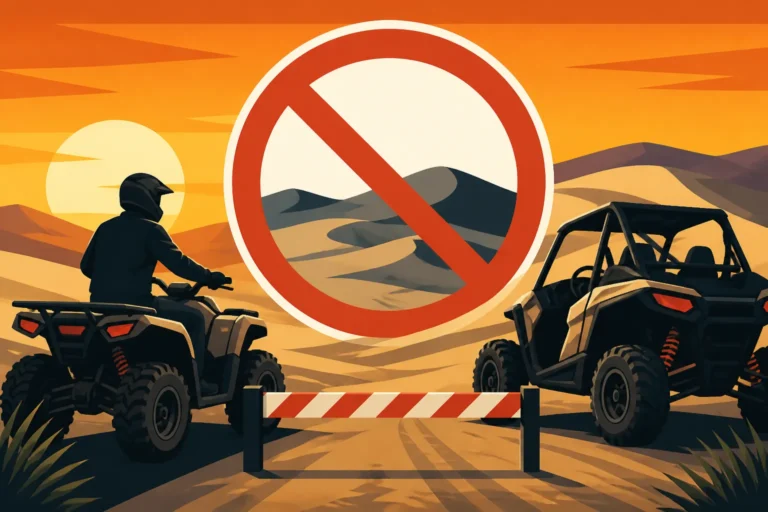
The park is also a sensitive coastal habitat. Snowy plover protections and marked boundaries can affect where you may travel, even if the sand beyond a marker appears open. Avoid fencing, signed closures, and roped-off areas, and never move a barrier to create a route or campsite. For more on how habitat protections shape access, read [Oceano Dunes and California's Snowy Plover] and [Snowy Plover Fencing and Your Route].
Plan your arrival and access
Check access details before leaving home
The drive to Oceano is only part of the trip. Before you leave, confirm the current entrance procedures, operating information, reservation details, and any access restrictions for your intended dates. The beach and dunes are affected by coastal weather and park management decisions, so do not rely solely on a trip plan that worked for someone else in a different season.
Pier Avenue in Oceano is a key access point for visitors heading toward the beach. Study the approach, understand where you are expected to queue or check in, and follow the instructions provided at the entrance. If you are unfamiliar with the area, [Oceano Dunes Entry From Pier Avenue] can help you think through that approach before towing a trailer through town.
Have your required documents ready rather than digging through a glove box at the entrance. Depending on your machine and situation, you may need to show registration or other required identification. Riders visiting from out of state should check whether their paperwork or permit meets California’s requirements. [Carrying Registration Paper on the Sand] covers the practical question of having documents available when riding.
Prepare a route plan without treating a map as permission
A map is useful for understanding the general layout, locating access points, and planning where to meet other people in your group. A navigation app such as onX Offroad can help you review mapped routes and orient yourself, but a map layer does not grant permission to enter a closed area or cross a marked boundary. Confirm what is open with the park and follow signs on site.
Download or save information before you arrive, especially if you expect limited cell service or want to avoid relying on a signal in a busy area. Agree on a clear meeting point in case vehicles get separated, and make sure everyone knows how to return to camp. A mapped location can help your group reconnect, but it should be a backup to a simple plan that all riders understand. [California Trail Maps and Where to Get Them] offers more background on using maps for a riding trip.
If your group includes both campers and riders, plan for the people who are not operating an ATV or UTV too. Decide where they will stay while machines are moving, how children will be supervised, and which routes are off-limits to foot traffic. Keep ride plans conservative if someone is new to dunes or if visibility is poor. As onX Offroad can show your group’s general position on a map, it may be useful for orientation, but use park guidance for current access decisions.
Choose and set up a safer camp
Make a practical campsite checklist
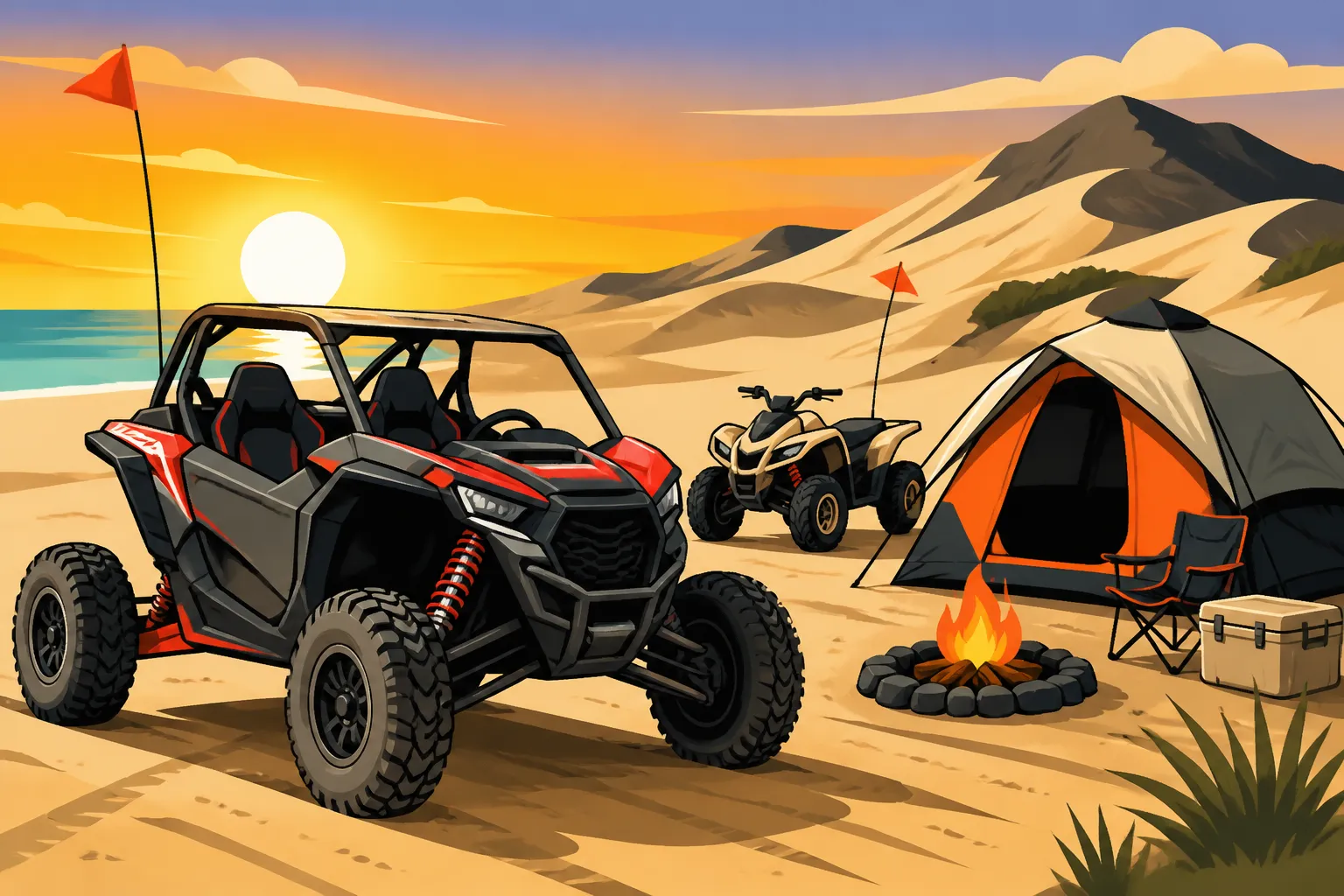
A beach camp needs to be self-sufficient. Bring enough drinking water, food, warm layers, sun protection, lighting, and basic first-aid supplies for your group. Coastal days can feel mild while the wind is blowing, but temperatures and comfort can change after sunset. Pack for both sunny stretches and chilly, damp conditions rather than assuming the beach will stay warm all evening.
Secure loose items before unloading. Wind can turn a lightweight chair, canopy, or empty bag into a problem for neighboring campers. Use equipment suitable for sandy conditions, keep essential supplies accessible, and store food and waste so they do not blow around or attract animals. If you bring a canopy, use a stable setup and take it down if weather or wind makes it unsafe.
Plan for toilets, handwashing, and waste disposal before you need them. Find out what facilities are available for the area you will use, and do not assume that services found at a developed campground will be present on the beach. Pack out litter and dispose of waste according to park instructions. A clean camp is easier to manage, safer for wildlife, and more considerate to the next visitors.
Park vehicles with room and visibility in mind
A vehicle can be both transportation and part of the campsite, but it should not block access or create a hazard for other visitors. Keep a clear path around your camp, leave room for emergency access, and avoid parking where people may not see your machine or trailer. When setting up, think about how you will leave if the sand softens, conditions change, or another vehicle needs space to pass.
At night and during poor visibility, moving vehicles and riders can be difficult to see against the beach. Use lights as required, keep speeds low around camps, and do not treat the area beside someone else’s camp as a shortcut. If children are present, establish a clear boundary where they can play and make sure they are supervised away from active vehicle movement.
Keep your riding equipment organized so it does not become a tripping hazard or drift into the riding area. Store helmets and goggles where sand will not bury them, and check that fuel and maintenance items are secured according to product directions and park rules. A little attention when you arrive can prevent the frustrating scramble of looking for gear after the wind has covered it or night has fallen.
| Planning point | What to check or prepare | Why it matters |
|---|---|---|
| Access | Current entrance procedures and park directions | Access details and open areas may change |
| Camping area | Where camping is permitted and whether reservations apply | The beach is not an unrestricted campground |
| Tide and surf | Forecast and conditions before selecting a spot | Water can reduce safe space on the beach |
| Vehicle paperwork | Required registration or permit documents | Riders may be asked to show proof |
| Camp supplies | Drinking water, warm clothing, lighting, and first aid | Beach facilities and conditions differ from a developed campground |
| Navigation | Saved map, meeting point, and return plan | Cell service and visibility may be limited |
| Habitat boundaries | Signs, fencing, and closures | Protected areas must remain undisturbed |
Ride thoughtfully from a beach camp
Match your ride to the conditions
Dunes and beach sand are not uniform. The surface may be firm in one area and soft or rutted in another, and the texture can change after traffic, weather, or water movement. If you are new to riding sand, begin cautiously and learn how your machine responds before heading into unfamiliar terrain. Do not follow another rider simply because their tracks look easy; the tracks may lead into a route that is unsuitable or closed.
Keep a safe distance from other machines and give riders room to maneuver. Avoid sudden turns near camp or around people who are walking, unloading, or setting up gear. If you are driving a UTV, remember that its size and weight affect where it can safely travel. Choose routes that fit your vehicle and the posted rules, rather than forcing a wide machine through a narrow or crowded space.
Visibility matters on a busy beach. Follow applicable flag and equipment requirements, and make sure your machine is visible to other riders. Review [California Dune Flag Requirements] before your trip so you understand what equipment may be required for dune riding. A flag helps others see a vehicle over rises and around areas where the view is blocked, but it does not replace cautious speed or awareness.
Keep camp and riding areas separate
A campsite can feel private, but the surrounding beach is shared public space. Keep machines away from tents, parked vehicles, and pedestrian areas, and avoid practicing turns or acceleration close to other groups. If someone in your party needs to walk to a vehicle, restroom, or gathering place, do not assume they will be visible to every rider. Agree on a safe walking route and remind riders to watch for people on foot.
Noise and dust can affect neighboring campers, particularly during quiet parts of the day or evening. Avoid unnecessary engine revving, keep maintenance work tidy, and follow park rules about quiet hours and equipment. If your group rides out from camp, agree on a return time and a contact plan so people are not left wondering where the machines have gone.
Do not ride outside designated open areas because a route appears convenient. Barriers and signs can identify closures that are not obvious from the sand itself. Use onX Offroad or another navigation tool to support orientation, but confirm the route against posted park information and on-site instructions. When a boundary is unclear, stop and ask rather than guessing.
Handle common problems before they become emergencies
Prepare for soft sand and changing weather
Getting stuck is a common source of stress for new beach visitors, especially when a vehicle is loaded with camping gear. Before driving onto soft sand, learn the appropriate operating guidance for your vehicle, carry recovery equipment suited to it, and understand how to use that equipment safely. Do not let untrained passengers stand close to a vehicle while someone attempts a recovery.
If you become stuck, pause and assess the situation rather than repeatedly spinning the tires. Spinning can dig the vehicle deeper and make recovery harder. Keep people clear of moving vehicles and recovery lines, and ask for help if the situation exceeds your experience or equipment. A sensible plan includes knowing how to contact park staff or emergency services if conditions make a self-recovery unsafe.
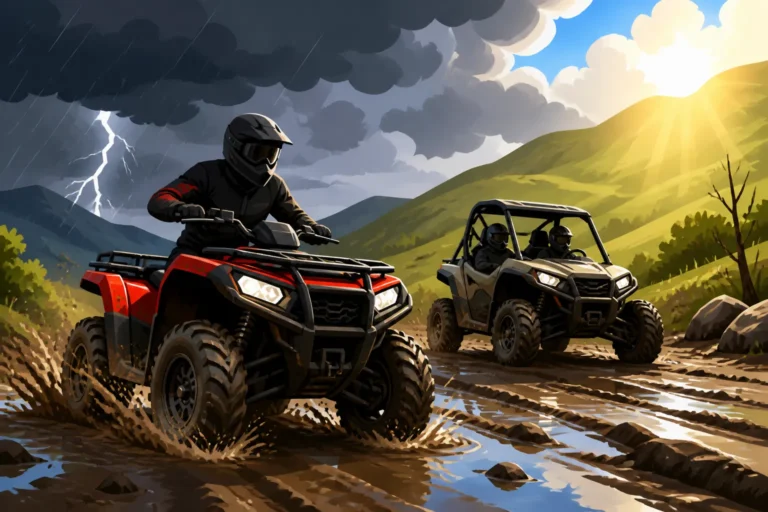
Wind, fog, and temperature changes can make a familiar beach feel very different within a short time. Secure camp before weather worsens, keep lights and warm clothing accessible, and avoid riding if you cannot see clearly enough to travel safely. If conditions are deteriorating, returning to camp or ending the ride early is a good decision, not a failure to make the most of the trip.
Know what to do if plans change
A reservation, route, or camping plan may not work out as expected. Access can be affected by operational changes, weather, crowding, or environmental protections. Before departing, decide what your group will do if the intended area is unavailable. Have a backup plan for lodging or a different destination, and avoid assuming that you can simply camp wherever space appears.
If a machine breaks down, keep people in a safe location and make your vehicle visible to approaching riders. Do not leave a child or inexperienced rider alone while others go for help. If your group separates, use the agreed meeting point and communication plan instead of sending riders in different directions to search.
Before leaving, pack out trash, check around tires and equipment for belongings, and follow instructions for exiting the beach. If you are heading home after a long day, take time to secure machines and trailers before driving. A calm departure helps protect your gear and gives the next visitor a cleaner, safer place to enjoy.
Disclaimer
This article is for general informational purposes only and does not constitute professional advice. Laws, prices and regulations vary by location and change over time. Consult a qualified professional for guidance on your specific situation.