California’s $54 OHV Registration Fee Broken Down
Navigating the world of off-highway vehicle (OHV) registration in California can sometimes feel like trying to solve a puzzle with missing pieces. Many riders just see a total on their bill and wonder, "What exactly am I paying for?" It's a common frustration when you're simply trying to enjoy your passion, but the state asks for a specific amount, and the breakdown isn't always immediately clear. This guide will meticulously break down the $54 OHV registration fee in California, explaining each component, what it funds, and how it appears on your paperwork so you can understand where your hard-earned money is going.
Decoding the Core Components of California's OHV Registration Fee
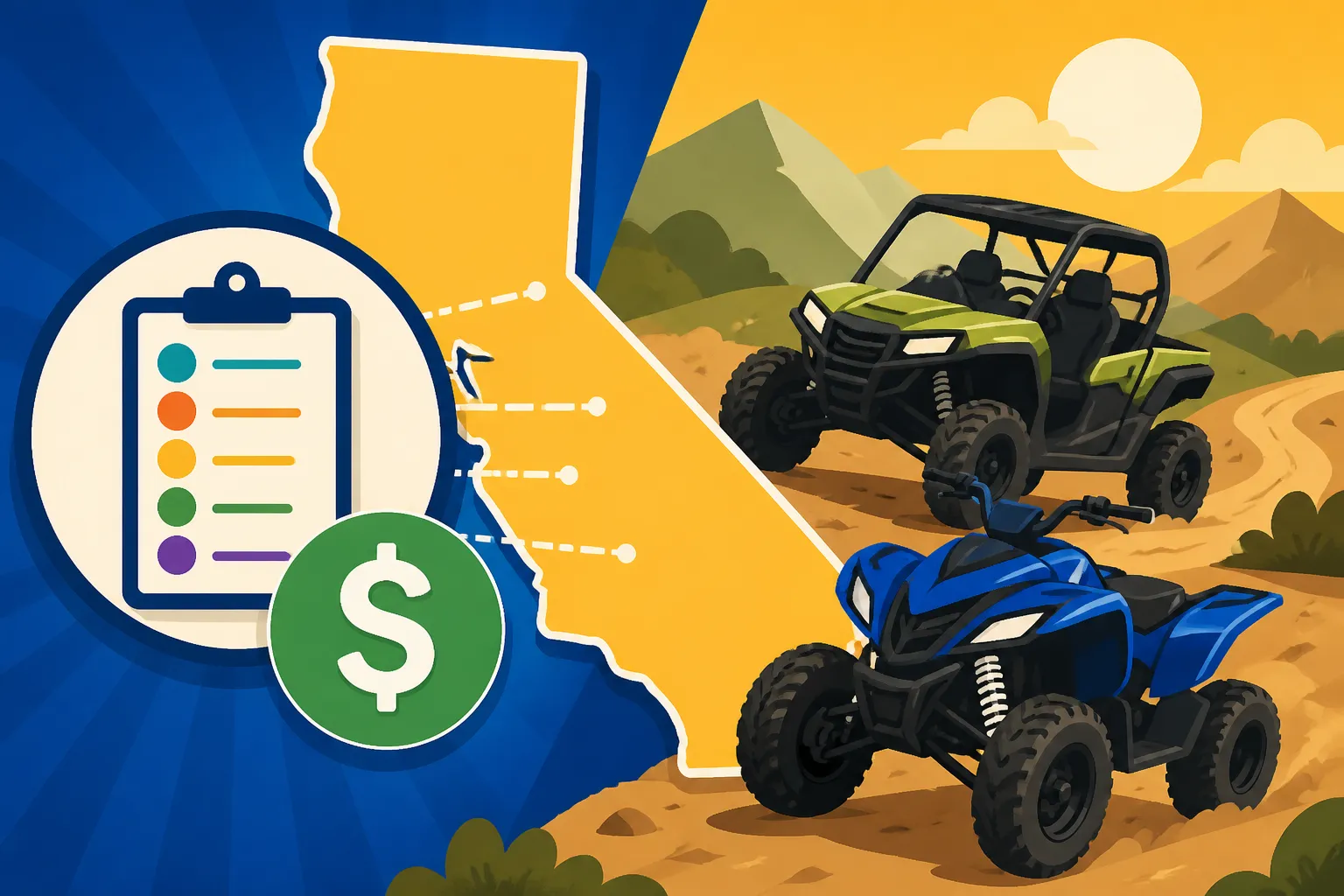
When you renew your OHV registration in California, that $54 isn't just a random number. It's a carefully structured fee designed to support various crucial aspects of the state's extensive off-highway vehicle program. Understanding these individual components can help you appreciate the services and infrastructure your fees maintain, even when it feels like a burden.
The Primary Registration Fee: Supporting the OHV Trust Fund
The largest chunk of your biennial registration fee, a significant $33, goes directly into the Off-Highway Vehicle Trust Fund. Think of this as the lifeblood of California's OHV program. This fund is absolutely essential for keeping trails open, maintaining facilities, and ensuring there are places for us all to ride safely and responsibly. Without this core funding, many of the riding areas we cherish simply wouldn't exist or would fall into disrepair. It's what allows the state to acquire new land for riding, develop new trails, and provide necessary amenities like staging areas, restrooms, and signage. When you hit the dirt at a State Vehicular Recreation Area (SVRA) like Hollister Hills or Ocotillo Wells, a huge portion of what keeps those parks running smoothly comes directly from this fund. It also provides grants to federal, local, and even non-profit entities that manage OHV recreation, helping them with everything from trail grooming to equipment purchases. It's basically the foundation upon which California's entire OHV recreation program is built. You can read more about [What California OHV Fees Pay For] in detail.
The California Highway Patrol (CHP) Fee: Ensuring Safety
Next up, you'll see a $10 fee earmarked for the California Highway Patrol (CHP). For many, the image of the CHP is primarily associated with highway enforcement, so it might seem a bit odd to see them on an OHV registration bill. However, their role extends significantly into the off-highway world, particularly in enforcing safety regulations and investigating incidents in designated riding areas. This $10 goes towards funding their dedicated patrols on OHV lands, helping to ensure that riders are adhering to the rules, preventing accidents, and responding swiftly when unfortunate incidents do occur. They are often the first responders for serious off-road accidents, and their presence helps deter reckless behavior, making the trails safer for everyone. This fee helps cover the costs associated with their specialized equipment, training for off-road environments, and the personnel needed to maintain a law-abiding atmosphere on our beloved trails and dunes. [What the CHP Line on Your Bill Pays For] offers an even closer look at their critical role.
The Local OHV Program Fee: Empowering Counties
Finally, the remaining $11 of your $54 registration fee is allocated to local OHV programs across California. This is a crucial component that often gets overlooked, but it has a direct impact on the ground in many communities. These funds are distributed to counties and local agencies that manage or are impacted by OHV recreation. What do they do with it? Well, it varies greatly depending on the local needs. Some counties might use it to develop and maintain their own local OHV parks or trail systems, providing more accessible riding opportunities closer to home. Others might use it for educational programs targeted at youth riders or to fund local law enforcement efforts that supplement the CHP. It can also support environmental impact studies, signage projects to prevent trespassing on private land, or volunteer programs that help maintain local trail networks. This fee empowers communities to address their specific OHV needs, ensuring that local issues get the attention and resources they deserve.
Seeing the Breakdown on Your Official Paperwork
Knowing what each part of the fee is for is one thing, but actually seeing it on your official documents can still be a moment of confusion. The way the state presents these charges might not always be crystal clear at first glance, leading many to just pay the total without truly understanding the individual line items.
How the $54 Appears on Your Renewal Notice or REG 343
When your biennial OHV registration is due for renewal, you'll typically receive a notice from the California DMV. This notice, or sometimes the Form REG 343 that you might fill out for initial registration or other transactions, will list the various charges. You'll usually see distinct lines for the "OHV Registration Fee," the "CHP Fee," and the "Local OHV Program Fee." While they might not be labeled exactly as I've laid them out above, the amounts will correspond. For instance, you'll often see a line item for "$33 OHV" or similar, followed by "$10 CHP" and "$11 Local." It's these three lines that add up to your basic $54 total.
It can be a little frustrating because sometimes the language on these forms isn't as user-friendly as it could be. You're looking at what essentially feels like a government invoice, and unless you know what each abbreviation stands for, it’s hard to connect it to the benefits. Make sure you always double-check these notices, especially if the total seems higher than expected. Understanding [What California's Form REG 343 Asks For] can help you accurately navigate initial registration paperwork, which is where you'd first encounter these individual charges. When dealing with private sales and ensuring all documentation is in order for registration, you might even find yourself needing forms like a bill of sale. Services like LawDepot can be incredibly helpful for generating legally sound documents quickly, ensuring you have all your ducks in a row before heading to the DMV. Having proper documentation, even for a simple bill of sale between private parties, can make the registration process smoother.
Understanding the Two-Year Cycle and Potential Additional Costs
It's really important to remember that this $54 fee covers a two-year period, not just one. California operates on a [California OHV Registration Two-Year Cycle], meaning you pay once every other year. This biennial structure is designed to simplify the renewal process and reduce administrative overhead, but it also means that when that renewal notice arrives, the number can feel a bit hefty if you're not expecting a two-year charge.
However, it's also critical to understand that your total payment might occasionally be more than $54. This usually happens when other fees or penalties are added to your bill. For instance, if you forget to renew your registration on time, you could be hit with a [California OHV Late Registration Penalty]. These penalties are no fun and can significantly increase your total cost. Similarly, if you're transferring ownership of a used OHV, there might be a [California OHV Transfer Fee] involved, sometimes coupled with a [The $28 Transfer Penalty in California] if the transfer isn't completed within the designated timeframe. These additional charges are separate from the core $54 registration fee but will often appear on the same bill or during the same transaction. So, while the base fee is consistent, always review your full statement carefully to identify any supplementary costs that might be pushing your total higher.
The Impact of Your Registration Dollars: Where the Money Goes
It's easy to focus on the cost, but it's equally important to understand the significant positive impact of your registration dollars. These fees are not just taxes; they are direct investments into the very infrastructure and programs that allow us to enjoy off-roading in California. Without these funds, the landscape of OHV recreation would look drastically different, with fewer accessible areas and diminished resources.
Funding for State Vehicular Recreation Areas SVRAs and Public Lands
The most tangible benefit of your OHV registration fees is the direct funding it provides to California's State Vehicular Recreation Areas (SVRAs) and other public lands. These SVRAs—places like Hungry Valley, Prairie City, and Clay Pit—are specifically managed and maintained for off-highway vehicle use. Your fees directly contribute to the upkeep of trails, the construction of staging areas, the maintenance of restrooms and camping facilities, and the overall management of these dedicated riding zones. This includes everything from grading access roads and repairing erosion damage to ensuring proper signage is in place to guide riders and protect sensitive habitats.
Beyond SVRAs, portions of the OHV Trust Fund are allocated as grants to other agencies, such as the Bureau of Land Management (BLM) and the U.S. Forest Service, which manage vast tracts of public land. These grants help fund OHV-specific projects on federal lands, ensuring that designated trails remain open and safe for riders. So, whether you're shredding the dunes at Glamis or exploring trails in a national forest, a part of your $54 is working to preserve and enhance those very experiences. It’s an investment in the places we love to ride.
Supporting Education, Safety, and Environmental Stewardship
Beyond just maintaining physical spaces, your registration fees also play a vital role in supporting education, safety initiatives, and crucial environmental stewardship efforts. A portion of the funds goes towards developing and distributing safety education materials, promoting responsible riding practices, and funding safety training programs that are particularly important for new and young riders. These programs aim to reduce accidents and ensure everyone understands how to ride safely and legally. For instance, the promotion of helmet use and proper riding gear is often supported by these funds.
Furthermore, California is incredibly diverse environmentally, and OHV recreation must be managed sustainably. Your fees contribute to environmental protection projects, such as habitat restoration in areas affected by erosion, monitoring wildlife, and mitigating the impact of riding on sensitive ecosystems. This includes efforts to control invasive species and rehabilitate areas where OHV use needs to be carefully managed. These efforts ensure that off-roading can continue for future generations while minimizing its footprint on California's natural beauty. It's a balance, and your registration fees are a key part of maintaining that delicate equilibrium, allowing us to enjoy the trails responsibly.
Disclaimer
This article is for general informational purposes only and does not constitute professional advice. Laws, prices and regulations vary by location and change over time. Consult a qualified professional for guidance on your specific situation.