Driving From Los Angeles to Hungry Valley SVRA
Driving from Los Angeles to Hungry Valley State Vehicular Recreation Area is a fairly direct trip north, but traffic, the final turnoff, and hauling an ATV or UTV can make the day feel less simple than it looks on a map. This guide covers the usual route, what to expect on arrival, and how to plan for a smoother visit.
The usual route from Los Angeles to Hungry Valley
Take Interstate 5 north toward Gorman
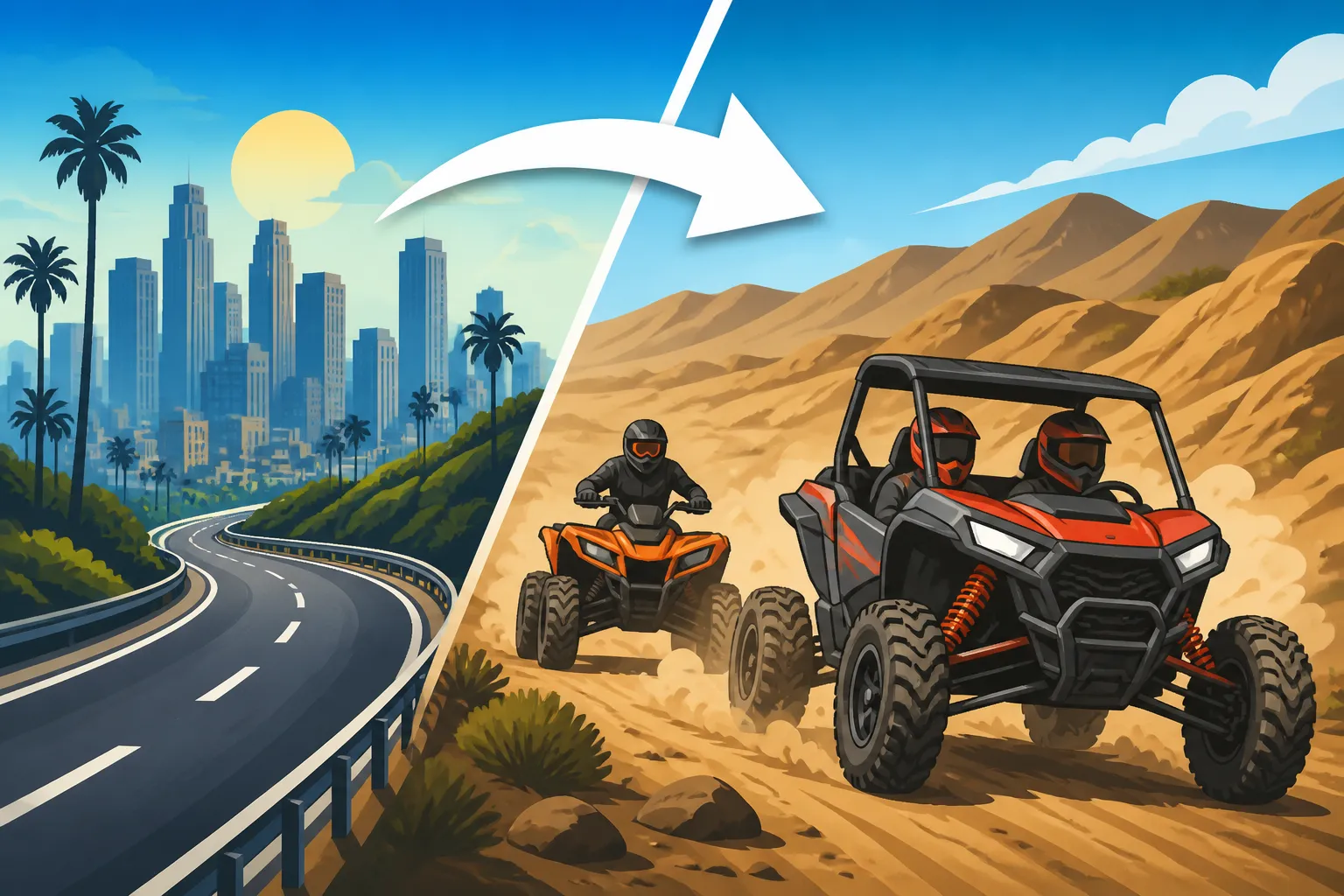
For most Los Angeles starting points, the main route is Interstate 5 north. Depending on where you begin, you may first take local roads or a freeway connection to reach I-5, then continue through the Santa Clarita Valley and past Castaic toward Gorman. The park is near the Tejon Pass area, north of Santa Clarita.
The final approach is commonly via the Smokey Bear Road exit. From there, follow the posted signs toward Hungry Valley SVRA and its entrance. Check the park’s official directions before leaving, and follow signs at the exit rather than relying only on a navigation app. A small route change or a misunderstood turn can be especially frustrating when you’re towing a trailer.
Your exact mileage and drive time depend on your starting neighborhood, traffic, and road conditions. A trip from central Los Angeles can feel very different from one starting in the San Fernando Valley or near Santa Clarita. Build in a cushion for congestion around the northern Los Angeles freeways and for slowing down as you approach the park.
If you’re comparing nearby riding options before committing to the drive, California OHV Areas Near Los Angeles can help put Hungry Valley in context. The park’s location north of the city makes it a practical destination for a day trip, but it’s still worth planning the full drive, unload, and ride rather than treating the journey as a quick hop out of town.
Choose a departure time that fits your day
Los Angeles traffic can turn a straightforward freeway route into a tiring start to a riding day. An early departure may help you avoid some of the busiest periods, but there is no universally quiet time: traffic varies by day, season, incidents, and where you join I-5. Check a live traffic map before you leave and again before the final approach.
Think through the return trip, too. After a full day outside, driving back through traffic while tired can be harder than the morning trip. If you’re riding with children, sharing driving, or towing, consider whether an overnight stay makes more sense than trying to squeeze everything into one day. The park’s Hungry Valley’s Designated Campgrounds information can help you explore the camping option.
A simple plan can make the day feel less rushed: decide when you want to arrive, allow time to check in and unload, and choose a time to stop riding that leaves enough daylight for loading and the return drive. If the schedule starts to feel tight, it’s better to shorten the ride than hurry through loading or drive home exhausted.
Plan for traffic, weather, and towing
Check conditions before you leave
Before setting out, check traffic on I-5, road conditions near Gorman, and the park’s current operating information. A route can look clear on a map but still be affected by a collision, road work, weather, or a temporary closure. If rain or wildfire activity is in the area, confirm that the roads and riding areas you plan to use are open.
Weather can change noticeably between Los Angeles and the park, especially around higher or more exposed sections of the route. Check the forecast for the park itself, not just the city where you’re starting. Bring layers, water, and any weather protection you might need for the ride and for loading at the end of the day.
Look at park maps and notices before you go, and recheck them close to departure. California Trail Closures to Check First offers a broader checklist for planning around closures. For route planning, onX Offroad can be useful for reviewing mapped riding areas and saving information before you lose cell service; compare what it shows with official park information rather than treating a third-party map as confirmation that a route is open.
If you’re towing a trailer
A trailer changes the feel of the trip. Allow more space for braking and lane changes, and keep an eye on your mirrors as traffic compresses. Before leaving home, check the hitch connection, safety chains, lights, tires, and load. Make sure the ATV or UTV is secured so it cannot shift during sudden braking or a rough stretch of road.
The park entrance and roads may be busier on popular riding days, so take turns slowly and watch for pedestrians, parked vehicles, and other trailers. Avoid blocking traffic while you decide where to go. If you’re uncertain about a turn or staging location, pull over only where it is safe and legal to do so, then check your map.
Plan to unload only where permitted and keep your machine on designated riding routes once you’re in the recreation area. Trailering is the way to get an OHV to the park; it doesn’t make public roads part of the ride. Trailering Instead of Riding in California explains the distinction, while Hungry Valley Trails for Beginners can help you think through what kind of riding to plan after you arrive.
| Before you leave | Why it matters |
|---|---|
| Check traffic on I-5 | Congestion can change your arrival time and riding window |
| Confirm the park’s directions and status | Helps avoid a wrong turn or an unexpected closure |
| Check the forecast near Gorman | Conditions may differ from Los Angeles |
| Inspect your trailer and secure the machine | Reduces avoidable problems on the freeway |
| Save maps and key information offline | Cell reception may be inconsistent in some areas |
| Bring registration and required documents | Helps you be ready if staff or rangers ask |
Getting from the entrance to your riding day
Arrive with a clear plan for unloading
When you reach the park, follow signs and staff directions rather than assuming the first open area is the right place to park or unload. Have your trailer and machine paperwork organized, and know where you intend to stage before you start maneuvering. This is especially helpful when other visitors are arriving at the same time.
If you haven’t visited before, take a few minutes to orient yourself before riding. Check the official map, identify permitted routes, and agree on a meeting point with your group. onX Offroad may help you review mapped routes in advance, but use the park’s own maps and posted notices to confirm what is open and allowed. Download or save anything you’ll need before leaving home, since a phone signal is not something to count on everywhere.
Keep a paper or saved copy of your registration information with you. If you’re unsure what documents apply to your machine, California OHV Registration Paperwork Checklist is a useful starting point. Registration rules can depend on the vehicle and its circumstances, so sort out questions before the trip rather than trying to resolve them at the entrance.
Set expectations for a day trip
A day trip is most enjoyable when you leave room for the parts that aren’t riding: arrival, unloading, gearing up, breaks, and loading again. A group that leaves Los Angeles late may arrive with less time on the trails than expected, particularly if traffic is heavy. Pick a realistic riding area and keep a backup plan in case a route is closed or conditions are different from what you expected.
If you’re riding with beginners or children, agree on an easy pace and a clear regrouping plan. Don’t assume everyone will have the same comfort level, range, or energy after the drive. Hungry Valley on a Weekend can help you anticipate the busier-day experience, and Hungry Valley’s Campgrounds and Quiet Hours is worth reviewing if you decide to make the visit an overnight trip.
It also helps to check basic park rules before arrival, including where machines may be ridden and any requirements that apply to your vehicle or rider. Keep your group together where practical, respect closures, and leave time to pack up without rushing. onX Offroad can be one planning aid, but posted signs and official park guidance should take precedence if there’s a conflict.
A practical pre-drive checklist
Prepare the vehicle, trailer, and riders
The most useful preparation is often the unglamorous stuff. Fuel the tow vehicle before reaching the more remote stretch of the route, bring water and snacks, and make sure you have the tools needed for a basic trailer or tire issue. Check that everyone knows where the group is meeting and what to do if vehicles get separated.
For the machine, confirm that it’s ready for transport and that you have the documents you need. Pack helmets and appropriate riding gear where you can reach them without unloading half the trailer. If you’re borrowing or transporting someone else’s machine, confirm who is responsible for the paperwork and that everyone knows how to operate it safely.
Save the park map and directions before leaving, and keep your phone charged. A printed backup can be reassuring when service is weak or a battery runs down. Use a mapping app to monitor the drive, but avoid making complicated route decisions while moving; pull over safely if you need to review directions.
Check the plan again on the day
Before you depart, confirm the entrance route, park status, weather, and traffic one more time. If the planned route is disrupted, use a safe alternative and allow extra time rather than rushing through unfamiliar roads. If the park is closed or access is restricted, don’t try to find an unofficial way in.
A successful ride starts with arriving prepared, not with trying to fit every possible trail into one visit. Give yourself enough time to get oriented, follow posted requirements, and return to the trailer before fatigue sets in. For a first visit, a shorter ride with an unhurried drive home is often a better experience than an overly ambitious schedule.
Disclaimer
This article is for general informational purposes only and does not constitute professional advice. Laws, prices and regulations vary by location and change over time. Consult a qualified professional for guidance on your specific situation.