California’s Coastal Riding Versus Desert Riding
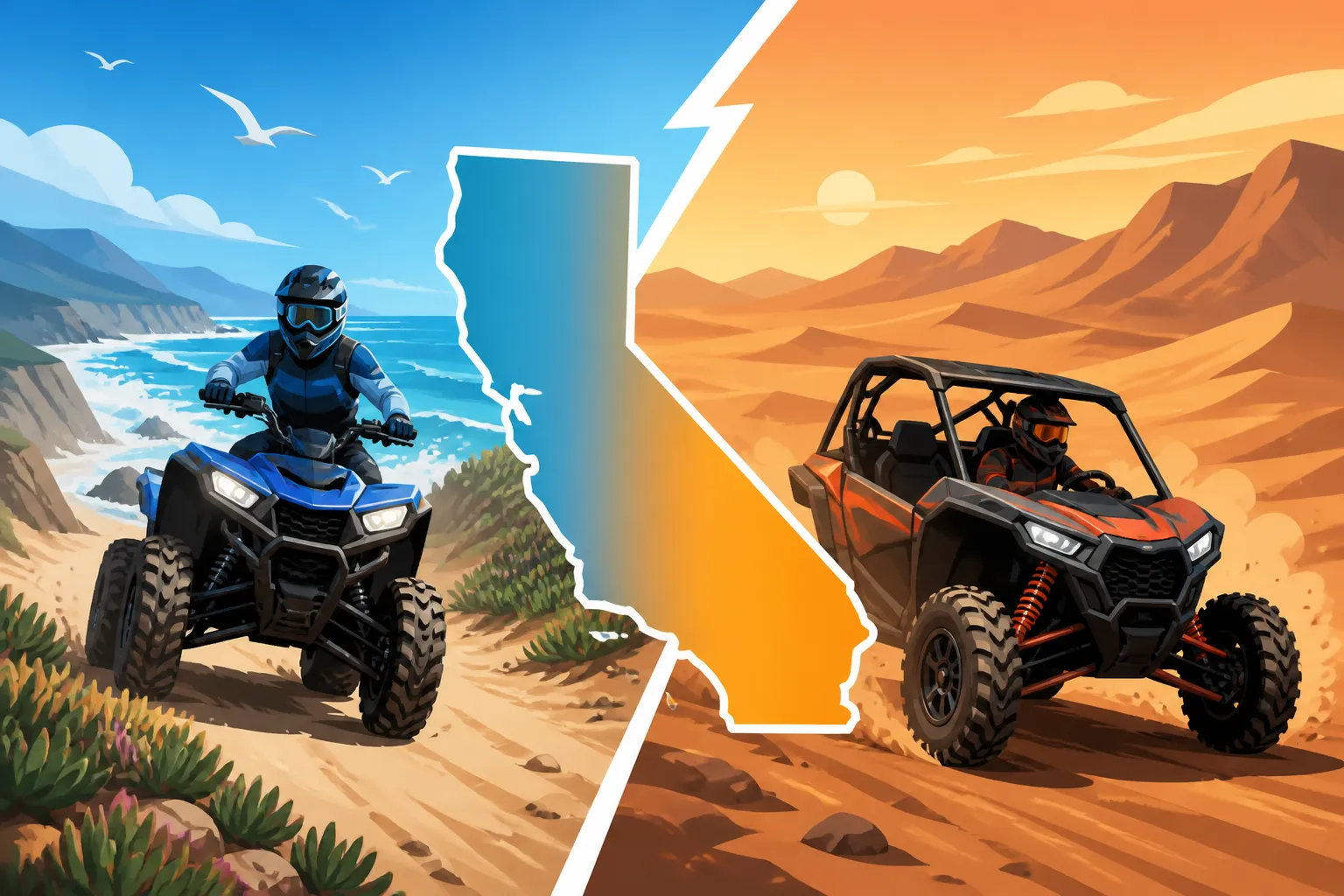
California’s coastal and desert riding can feel like two different sports: one means damp ocean air, soft beach sand, and changing access conditions; the other means wide-open desert, heat, dust, and long stretches between services. This guide compares the terrain, preparation, safety, and access considerations so you can choose a ride that suits your machine and experience.
What coastal and desert riding feel like
Coastal riding brings shifting sand and ocean conditions
California’s coastal ATV and UTV riding is closely associated with Oceano Dunes, where the experience is shaped by the shoreline as much as by the machine. Sand can feel firm in one area and loose in another, while wind, fog, and changing beach conditions affect visibility and traction. A route that looked straightforward earlier in the day may feel different after weather or tide conditions shift.
Coastal sand often calls for smooth, deliberate throttle rather than abrupt acceleration or braking. If you turn sharply or stop on a soft incline, you may dig in. Riders who are new to sand can find it tiring to concentrate on steering while also watching for other machines, pedestrians, and changing ground conditions.
The coast also brings a different kind of uncertainty: access and riding boundaries can be affected by environmental protections and park rules. At Oceano, pay attention to posted restrictions and designated areas, including boundaries established to protect wildlife. Before planning a trip, check the official park information and the guide to [Oceano Dunes and California's Snowy Plover]. For a broader introduction to the area, see [Oceano Dunes: California's Only Sand Beach Ride].
Desert riding means bigger distances and more exposure
Desert riding may involve dunes, sandy washes, rocky routes, hard-packed tracks, or a mix of surfaces in one outing. The Imperial Sand Dunes near Glamis are known for expansive dunes, while places such as Ocotillo Wells offer a broader desert landscape with varied terrain. The scale can be exhilarating, but it can also make it easy to underestimate how far you are from camp, a road, or help.
Heat, wind, dust, and limited shade are central planning concerns in desert country. A mild morning can become demanding later, and blowing sand can reduce visibility quickly. A group that spreads out or rides beyond its comfort level may have trouble keeping track of one another, especially when landmarks look similar.
Desert riding can also mean a longer day of self-reliance. Riders should think through fuel, water, communication, recovery equipment, and a plan for a disabled machine before leaving camp. For destination inspiration, compare [Glamis and the Imperial Sand Dunes] with [Ocotillo Wells: California's Free SVRA], then check the current rules and access details for the place you intend to visit.
Compare the riding conditions before you choose
Terrain, pace, and machine setup
Coastal riding usually centers on sand, but sand itself is not one consistent surface. Damp, packed areas can feel very different from dry, loose sand farther from the water. A quad or side-by-side that handles confidently in one patch may bog down or feel unstable in another. Tire condition, rider weight, throttle control, and experience all influence how the machine behaves.
Desert routes vary more widely from place to place. A trip could include soft dunes, firm flats, wash crossings, and rough or rocky sections. This makes route choice especially important for a side-by-side, which may be wider and heavier than a quad. A tight route or uneven wash that seems manageable on a smaller machine can become awkward for a wide UTV.
| Riding consideration | Coastal riding | Desert riding |
|---|---|---|
| Common surfaces | Beach sand and dunes | Dunes, washes, hard-packed routes, and rocky ground |
| Conditions to watch | Fog, wind, tides, posted boundaries | Heat, dust, wind, route distance, and terrain changes |
| Typical planning focus | Access rules, beach conditions, visibility | Water, fuel, navigation, recovery, and group coordination |
| Helpful skill | Smooth control in shifting sand | Route awareness and adapting to changing surfaces |
| Main trip-planning challenge | Confirming where riding is allowed | Preparing for distance and limited services |
Neither setting is automatically easier. A beginner may find the open space at a coastal area less intimidating than a technical desert trail, but soft sand can still be physically demanding. In the desert, a wide route can feel forgiving until a rider encounters a steep dune face, loose wash, or unfamiliar terrain. Match the route to the least experienced person and the capabilities of the smallest or least suitable machine in the group.
Weather, timing, and comfort
At the coast, fog can make the ride feel cool and quiet, but it can also limit visibility. Wind may affect flags, dust, and how comfortable it is to stop for a break. Bring layers rather than assuming that a sunny forecast inland means warm conditions on the beach. Goggles can help with windblown sand, and riders should stop in a safe place if visibility becomes poor.
Desert conditions often require more active heat management. Even when the air feels tolerable, riding in direct sun and moving across sand can be exhausting. Plan breaks, drink regularly, and avoid treating shade or water as things you can find later. A group should agree on turnaround points before the ride, rather than waiting until someone is overheated or low on fuel.
Season matters, but conditions can vary from one region and day to another. Coastal trips may feel more comfortable when temperatures are moderate, while desert trips are commonly planned around cooler riding periods. Use [California Riding Seasons by Region] as a starting point, then check the local forecast, land-manager notices, and current area conditions before loading the trailer.
Match the trip to your group and machine
Choose coastal riding for a beach-centered outing
A coastal ride may suit a group looking for a memorable beach environment and a day focused largely on sand. It can also work well for riders who want a destination with recognizable access points and nearby communities. Still, convenience does not remove the need to prepare: beach conditions, permitted riding areas, parking or entry requirements, and operating rules should all be confirmed in advance.
Families and mixed-experience groups should discuss expectations before reaching the sand. A confident rider may want to explore farther, while a novice may prefer a slower pace and a shorter session. Decide on a meeting point, keep riders within sight where practical, and make sure everyone knows what to do if the group separates.
Not every coastal beach permits motorized riding, and access rules can change. Do not assume that a stretch of sand is open because it looks rideable or because another vehicle is there. The relevant park or land manager’s posted guidance should take priority over old trip reports, social media posts, or a route saved on a phone.
Choose desert riding for variety and room to explore
Desert riding can be a strong fit for groups who enjoy changing terrain and are comfortable planning beyond a single short loop. It offers room to build a trip around dunes, washes, scenic stops, or a camp-based weekend, depending on the area and its rules. The variety is part of the appeal, but it rewards riders who keep their route within their experience level.
For a beginner group, a familiar, well-marked area and a conservative route are better choices than following the fastest or most ambitious riders. Agree on regrouping points and establish a clear pace. If a rider is new to dunes, the group should avoid pressuring them to climb or descend features they are not ready to tackle.
Machine type matters too. A quad may be easier to maneuver in some tight or uneven terrain, while a side-by-side can offer a different seating and storage setup. But size and capability do not replace judgment. Before choosing a destination, review [California Dune Riding Areas] and [California's State Vehicular Recreation Areas] to compare the general character of designated riding areas.
Prepare for access, navigation, and safety
Confirm where riding is legal
The most important route is the one that is actually open to your vehicle and riding style. Public land can include closed areas, restricted routes, private property, wildlife protections, and seasonal limitations. A visible track in the sand or dirt is not proof that the route is legal. Follow signs and barriers, and do not ride around a closure.
This matters especially when a trip crosses different kinds of land or approaches roads, trailheads, or nearby communities. Access rules can vary by location, and an OHV route does not automatically authorize riding on an adjacent public road. If your plan includes connecting routes or road crossings, check the rules for that specific area rather than relying on assumptions from another riding destination.
Before leaving, review [California Trail Closures to Check First] and the official area information. Save important details where you can access them without a reliable signal. onX Offroad can be one part of a navigation plan, but compare any app map with current land-manager information and posted signs. A digital route should never override a closure or on-the-ground direction.
Build a practical navigation and emergency plan
Cell service may be limited or unreliable in both coastal and desert riding areas. Download or otherwise prepare the maps and trip details you need before leaving coverage. onX Offroad may help riders plan and review routes, but every group should know how to identify its location and return to camp if a phone battery dies or a device stops working.
Tell someone who is not on the ride where you are going and when you expect to return. Within the group, pick a lead rider and a sweep rider, and agree on what to do at forks, stops, and unexpected route changes. It is much easier to prevent separation than to search for a missing rider across a large dune field or a network of desert tracks.
Carry the supplies that match the route, not just the supplies that fit neatly in a storage box. Depending on the destination and trip length, that may include water, sun protection, basic tools, a first-aid kit, recovery gear, and a way to communicate. Review [California Desert Riding Safety] for desert-specific planning, then adapt the same habit of preparation to coastal conditions.
Make the trip enjoyable without underestimating it
Coastal trip checklist
Before a coastal ride, confirm current access, boundaries, and any posted restrictions for the area. Check the forecast for fog and wind, and consider how changing conditions may affect comfort and visibility. If the trip is at Oceano, verify the latest park guidance rather than relying on an old map or a previous visit.
Bring layers, eye protection, drinking water, and a plan for keeping the group together. Discuss where riders can stop safely and how to respond if someone gets stuck. Sand recovery can be stressful when a group is tired or scattered, so pause before a difficult section and decide whether everyone is comfortable proceeding.
Keep the day flexible. If the beach is crowded, visibility is poor, or conditions feel beyond your group’s skill level, changing the plan is sensible rather than disappointing. A shorter, controlled ride is often more enjoyable than pushing through conditions simply because the trailer has already been unloaded.
Desert trip checklist
For a desert ride, start with fuel, water, weather, and route distance. Check whether the area has current restrictions or closures, and identify fuel or services before you need them. Let someone know your itinerary and return time, especially if you are camping or riding beyond a short day loop.
Plan for heat and dust even if the morning feels comfortable. Use suitable eye protection, take breaks, and keep the group close enough to regroup. If wind or dust reduces visibility, slow down or stop somewhere safe instead of trying to maintain the original pace. A route that looks simple on a map can become difficult when landmarks disappear in blowing sand.
Use maps as a planning aid, not as a guarantee of access. onX Offroad can support route preparation, but confirm land ownership, open routes, and closures through the responsible agency. Before you head out, make sure each rider knows the meeting point, turnaround plan, and basic response if a machine breaks down.
Disclaimer
This article is for general informational purposes only and does not constitute professional advice. Laws, prices and regulations vary by location and change over time. Consult a qualified professional for guidance on your specific situation.