What CHP Looks for on a Combined-Use Route
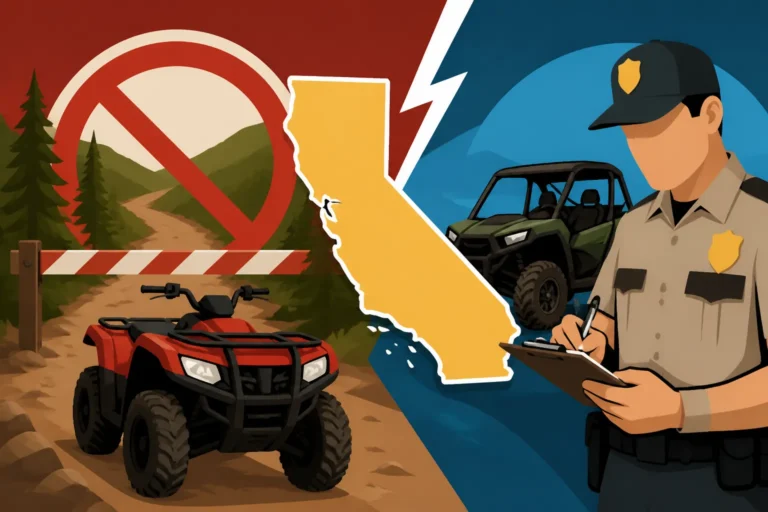
It's no secret that riding your ATV or UTV on California's designated combined-use routes can feel a bit like walking a tightrope. You're out there, enjoying a connection between trails or accessing services, but there's always that little flicker of worry: "What if I get pulled over by the California Highway Patrol?" This guide is here to cut through the confusion and anxiety, laying out exactly what CHP officers are looking for when you're traversing those legal, yet often misunderstood, segments of public road.
What Even Is a Combined-Use Route, Anyway?
First, let's get on the same page about what we're talking about. A combined-use route isn't just any dirt road you find. These are specific, designated public roadways where off-highway vehicles (OHVs) are legally permitted to operate for the purpose of connecting trails, accessing staging areas, or reaching services like fuel or food. They're a precious resource, allowing us to extend our adventures beyond just the closed-course SVRAs and deep desert lands.
The frustrating part, of course, is that these aren't always intuitively marked, and the rules feel like they change depending on which county you're in. This is why riders often feel like they're guessing, and that guessing game can lead to tickets.
The Purpose and Limitations of These Routes
The whole idea behind combined-use routes is to provide practical access for OHV enthusiasts. Imagine you're out exploring some fantastic trails in a national forest, and you need to cross a short paved section to get to the next trail system, or maybe you're trying to reach a gas station in a small town. Without these designated routes, you'd be forced to trailer your machine, which defeats the purpose of seamless exploration. These routes are usually quite short, often with strict speed limits and other specific rules tailored to the safety of both OHV operators and other motorists.
The key thing to remember is that these are not a loophole to make your UTV street legal. California does not, for example, allow you to plate an ATV or UTV for general street use, no matter how many modifications you throw at it. Combined-use routes are a very specific exception to that general rule, and they come with a raft of conditions. It's not about cruising, it's about connecting. They are typically established by local agencies, often with input and approval from the California Highway Patrol, to ensure they don't create undue hazards. The limitations are usually clearly defined, often by signs, maps, or specific ordinances in areas like parts of the Eastern Sierra or rural desert counties. You might see a sign indicating [California's 3-Mile Combined-Use Cap], for example, or a maximum speed limit much lower than the posted limit for cars.
Why CHP is Involved (and Not Just Park Rangers)
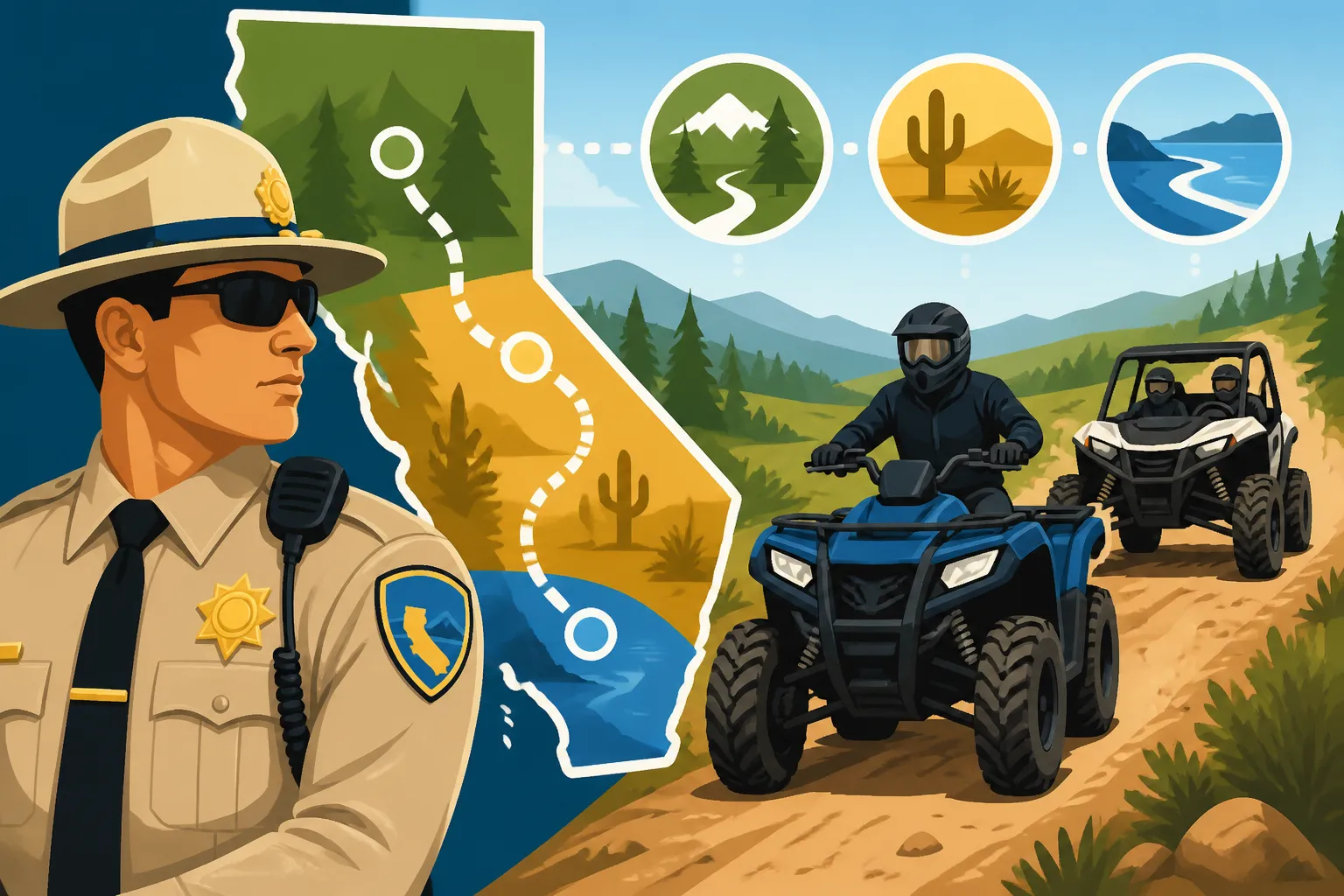
When you're riding entirely within a State Vehicular Recreation Area (SVRA) like Oceano Dunes or Hungry Valley, you're primarily dealing with park rangers or law enforcement specific to that park. However, when you venture onto a combined-use route, you're on a public road – even if it's unpaved or feels like a trail – and that puts you squarely under the jurisdiction of the California Highway Patrol.
CHP officers are tasked with enforcing the California Vehicle Code on all public roadways. This means that while a park ranger might focus heavily on off-highway specific rules like spark arresters and green stickers, a CHP officer will be looking at everything from your vehicle's condition to your driving behavior, just as they would for any car or motorcycle on the road. They are there to ensure the safety of everyone using that roadway, whether they're in a car, on a motorcycle, or operating an OHV. This often catches OHV riders off guard, as they might be used to a different type of enforcement in purely off-road environments. It means that the rules suddenly become much broader, encompassing elements of road safety that might not cross your mind when you're just out on the trails. They're not just checking your sticker; they're ensuring your machine meets minimum safety standards for road travel, even if it's a short segment.
Your Paperwork: The First Line of Defense
When a CHP officer flags you down on a combined-use route, the first thing they'll ask for is your paperwork. This isn't just about being nosy; it's about verifying your identity, your machine's legitimacy, and your legal right to operate it. Many riders are diligent about their OHV stickers but forget the other critical documents required for road use, even brief stretches.
Registration and Identification
This is probably the most obvious one, but it’s amazing how many people get it wrong. Your OHV must be properly registered with the California Department of Motor Vehicles (DMV), and you need to have proof of that registration with you. This isn't just a Green Sticker or Red Sticker decal affixed to your machine; it's the actual registration card. Think of it like your car registration – you wouldn't drive without the paper copy, right? Same goes here.
CHP officers will verify that your current California OHV registration is valid and properly displayed. They'll check the expiration date, which is always June 30th of the second year of your two-year cycle. They'll also look at your ID plate to ensure it matches your registration card. Don't forget, if you're a non-resident, you'll need a [California's Nonresident OHV Use Permit] unless your home state has reciprocity with California, which is currently only Oregon and Nevada. Many riders get caught out thinking their Arizona or Utah OHV registration will cut it, but those states do not have reciprocity for general riding on California public lands or combined-use routes. Make sure your physical ID, like a driver's license or state ID card, is also readily available and current, as they'll need to verify who you are.
Safety Certificates and Age Requirements
California has specific rules about who can operate an OHV, especially regarding age, and combined-use routes are no exception. For riders under 18 operating an ATV, a California ATV Safety Certificate is usually required. This certifies that you've completed an approved safety course. CHP officers are very aware of these rules, particularly when they see younger riders. They might ask to see that certificate, or they'll be looking to ensure that any rider under 14 is under the direct supervision of an adult who holds a valid safety certificate.
For side-by-sides (ROVs), the rules are slightly different: you generally need to be at least 16 years old and possess a driver's license or a safety certificate to operate one on public lands, including combined-use routes. The officer will want to ensure that all riders and passengers meet the appropriate age and certification requirements. If you're riding with children, be prepared to demonstrate compliance with these rules, as safety for minors is a huge priority for law enforcement. Don't assume that just because you're a parent, the rules don't apply. They definitely do.
Insurance and Other Important Documents
While California doesn't generally require liability insurance for OHVs ridden solely off-highway, that changes if you're operating on a combined-use route. Because you're on a public roadway, even if it's only for a short segment, you're usually required to carry liability insurance that meets the minimum requirements for motor vehicles in California. This is a critical point that many OHV riders overlook. A CHP officer will almost certainly ask for proof of insurance, and if you don't have it, that's an automatic citation.
Beyond insurance, depending on the circumstances, they might also ask for things like a bill of sale if you recently purchased the machine, or specific permits for certain events if you're part of an organized ride that happens to use a combined-use route. While less common, it's good practice to keep a folder with all your essential documents like the [California OHV Registration Paperwork Checklist] in a waterproof bag on your machine, or even better, have clear photos on your phone. Just make sure your phone battery is charged!
| Document Type | What CHP Looks For | Why It's Important |
|---|---|---|
| OHV Registration | Current sticker, matching ID plate, valid registration card | Proof of legal operation and ownership |
| Driver's License/ID | Current, valid photo identification | To verify operator's identity |
| Safety Certificate | For riders under 18 (ATV) or under 16 without DL (ROV) | Ensures operator has basic safety training |
| Proof of Insurance | Liability insurance meeting CA minimums for road use | Financial responsibility in case of an accident |
| Nonresident Permit | If applicable, valid [California Nonresident OHV Permit Cost] | Legalizes out-of-state machines in California |
Your Machine: Compliance and Condition
Once the paperwork is in order, CHP officers will shift their attention to your off-highway vehicle itself. They're not just giving it a once-over; they're looking for specific safety features and compliance with California's vehicle codes, many of which apply even more strictly on combined-use routes. This is where a lot of custom builds or older machines can run into trouble if not properly equipped.
Safety Equipment That's Non-Negotiable
Just like any other vehicle on the road, your OHV needs to meet basic safety standards. On a combined-use route, CHP will check for things like functional brakes (front and rear), working headlights and taillights (especially if it's near dusk or night, or in low-visibility conditions), and at least one functional mirror. While some of these might seem optional on a dirt trail, they're essential for road safety. If you've been off-roading hard, check that your lights haven't been damaged or mud-caked.
Beyond the basics, they'll also look for specific OHV safety equipment. For example, a whip flag is mandatory in many dune areas, but it's not typically required on a combined-use route that's not a dune. However, if you're coming directly from a dune area, you might still have it on. For UTVs, they'll be checking seatbelts for all occupants and ensuring that the roll-over protective structure (ROPS) is intact and unmodified. Aftermarket accessories, even from reputable brands like SuperATV, must still comply with California's safety standards and not impede the function of factory safety equipment. Make sure your tires are in good condition and not excessively worn, as that can also be a safety concern on a public road.
Noise and Emissions Standards
This is a big one in California, and it's where many riders get hit with citations. California has strict noise limits for OHVs, and these are enforced rigorously by CHP, particularly on roads or near populated areas. Officers will be listening for excessively loud exhausts. If your machine sounds like an unmuffled race bike, you're likely going to get pulled over. The general rule is 96 decibels for most newer machines and 101 decibels for older ones. Officers are trained to perform a sound test, so "it just sounds like that" won't fly.
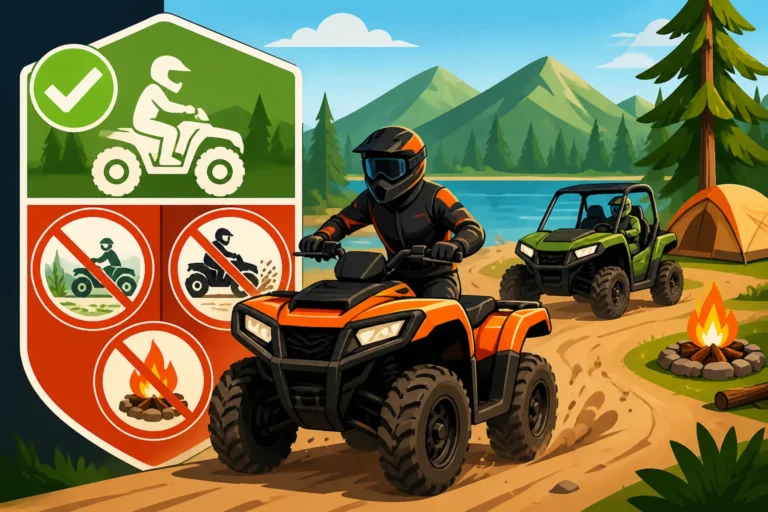
Equally important are spark arresters. If you're riding on public land that's forested or covered in brush, a U.S. Forest Service approved spark arrester is mandatory. Combined-use routes often traverse these types of areas, so CHP will check for this. Not having one, or having a modified exhaust that bypasses it, is an easy ticket and a significant fire hazard. Your machine should also have its original emissions label, proving it meets California Air Resources Board (CARB) standards for OHVs. Tampering with emissions controls or running a non-compliant engine will also get you in hot water. This is where it’s crucial to know your machine's original specifications and maintain them. [California Spark Arrester Rules] are not to be taken lightly.
Modifications That Might Catch an Eye (and a Ticket)
While many riders love to customize their machines, some modifications can draw unwanted attention from CHP on a combined-use route. Excessive lift kits that make the vehicle unstable, tires that extend far beyond the fenders without proper mudguards, or lights that are too bright or improperly aimed (especially non-DOT approved light bars used on public roads) can all be red flags. While some aftermarket parts from companies like SuperATV can enhance performance and safety, always ensure they don't push your vehicle outside of legal operating parameters for public roads.
Also, be mindful of width. While some trails accommodate wider side-by-sides, a vehicle that's excessively wide might pose a safety issue on a narrow public road, potentially drawing a closer look. Officers are looking for anything that compromises safety for other road users or creates a nuisance. If your machine looks like it just rolled off a race track and is clearly not designed for any kind of road compatibility, it will definitely attract attention. Ensure that any modifications you have are not only robust for off-road use but also don't violate vehicle code sections that apply to combined-use routes.
Your Riding: Behavior, Passengers, and Common Mistakes
Finally, CHP will be observing how you actually operate your OHV on the combined-use route. This isn't just about the machine; it's about the operator and their decisions. Many OHV riders, accustomed to the freedom of open trails, forget they are now on a segment of public roadway where traditional traffic laws apply.
Riding Etiquette and Speed Limits
The biggest behavioral mistake riders make on combined-use routes is treating them like an extension of the trail. This means forgetting basic road etiquette and speed limits. Combined-use routes, even if they're dirt, typically have posted speed limits, and they are almost always lower than you might expect, sometimes as low as 15 or 25 mph. Exceeding these limits is an instant way to catch a CHP officer's eye and earn a speeding ticket, just as if you were in a car.
Officers will also be looking for reckless driving. This includes things like weaving, excessive dust creation that obscures visibility for other drivers, performing stunts, or generally operating the vehicle in a way that endangers others. Even if there are no other vehicles around, these behaviors are illegal on a public roadway. Remember that these routes are shared with other vehicles, hikers, cyclists, and sometimes even livestock. Respect for all users is paramount. Signal turns if your machine has them, and drive defensively.
Passenger Rules and Why They Matter
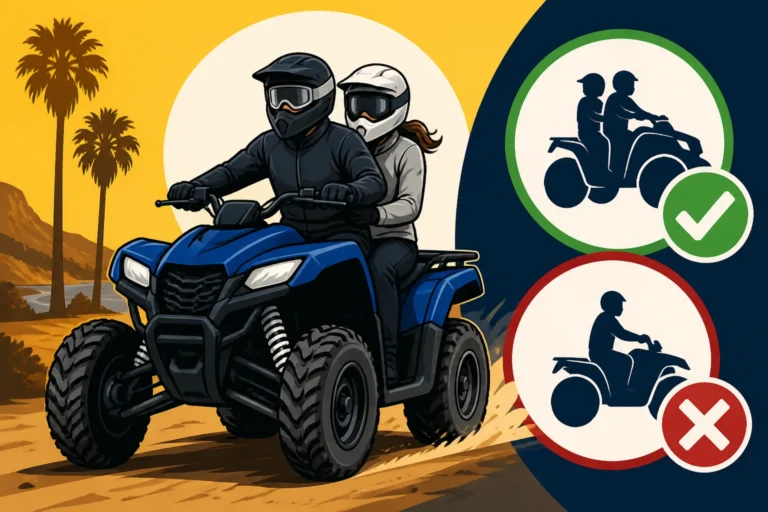
California has some of the strictest rules in the nation when it comes to passengers on OHVs. For ATVs, the rule is pretty clear: [California ATV Passenger Ban Explained]. Passengers are generally prohibited on ATVs designed for a single operator on public lands, including combined-use routes. Two-up ATVs are an exception, but they must be specifically designed by the manufacturer to carry a passenger and must be operated according to those specifications. If your ATV is a single-seat model, you cannot legally carry a passenger.
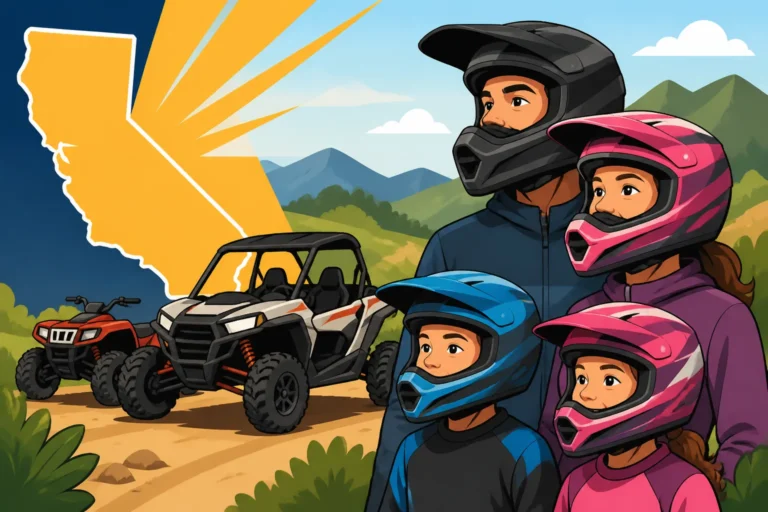
For side-by-sides (ROVs), you can carry as many passengers as there are manufacturer-designated seating positions and seatbelts. However, all passengers must be properly restrained, and children must meet specific age and size requirements for their seating, similar to car seat laws. CHP officers will be vigilant about these rules because passenger safety, especially involving children, is a high priority. Having too many people in your UTV, or allowing someone to ride in the bed of the vehicle, is a surefire way to get pulled over and cited. They're also ensuring that all occupants are wearing appropriate helmets if required. [California Helmet Law for ATV Riders] applies to all ATV operators and passengers under 18, and to all ROV passengers under 16, regardless of cage or seatbelt status, though there are waivers for adults in ROVs with proper safety equipment.
Alcohol, Drugs, and Impairment
Just like operating any other motor vehicle on a public road, operating an OHV on a combined-use route while under the influence of alcohol or drugs is strictly illegal and incredibly dangerous. DUI laws apply fully to OHV operators on these routes. CHP officers are specifically trained to identify impaired drivers, and if they suspect you've been drinking or using drugs, they will treat it with the same seriousness as if you were driving a car.
This means field sobriety tests, breathalyzers, and potentially an arrest. Many riders let their guard down when they're "off-road," but as soon as you hit that combined-use route, you are fully subject to all traffic laws. Open container laws also apply. It's simply not worth the risk to yourself, your passengers, or other road users. Always keep your head clear and your judgment sharp when operating an OHV, especially on routes shared with the public. Save the celebrations for after the ride, at your campsite or home.
Disclaimer
This article is for general informational purposes only and does not constitute professional advice. Laws, prices and regulations vary by location and change over time. Consult a qualified professional for guidance on your specific situation.