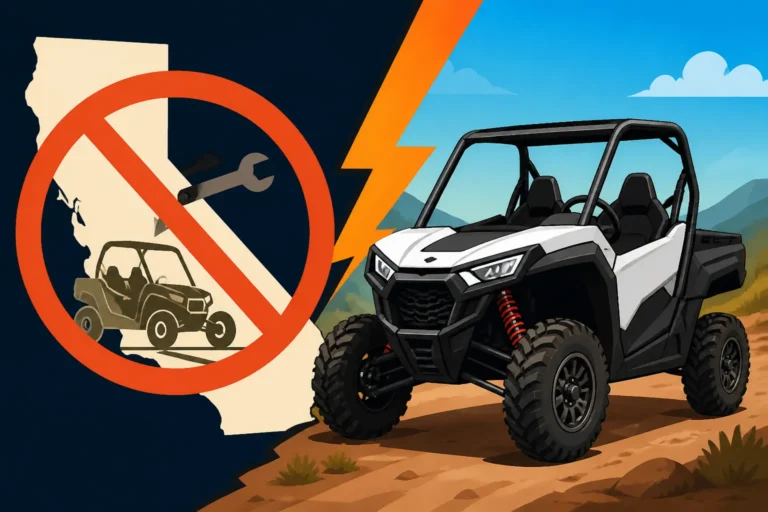
Driving a Quad Down Gecko Road
It's a familiar scenario for so many off-road enthusiasts: you've loaded up your quad, made the pilgrimage to the Imperial Sand Dunes, and now you're faced with the bustling expanse of Gecko Road. The convenience of driving your machine straight from your campsite to the main action is incredibly tempting, but the rules around off-highway vehicles (OHVs) and public roads in California are notoriously complex and often frustratingly unclear. This guide is here to cut through the confusion, helping you understand exactly when and how you can legally navigate Gecko Road on your quad, without risking a citation.
The Allure and Ambiguity of Gecko Road in Glamis
Gecko Road isn't just any stretch of pavement; it's a vital artery for the entire Glamis experience within the Imperial Sand Dunes Recreation Area (ISDRA). For many, it's the gateway to adventure, a place where people gather, show off their machines, and access some of the most iconic riding spots. But its dual nature as both a public road and a key access point to a massive off-road park creates a unique set of challenges for riders trying to stay on the right side of the law.
Where is Gecko Road and Why is it Special?
Gecko Road runs through the heart of the developed portion of Glamis, specifically within the Imperial Sand Dunes Recreation Area (ISDRA). It connects the main camping and vendor areas to the vast expanse of the dunes. Unlike many other off-road areas where you trailer your machine right up to the dirt, Gecko Road is a paved, maintained route. Its "specialness" comes from its location and function: it’s a public road that cuts directly through a highly popular off-road riding zone. This means you have both highway traffic and off-highway vehicles potentially sharing the same space, leading to significant regulatory challenges and enforcement efforts. Riders often mistakenly assume that because they are "in Glamis," all rules are suspended, which is definitely not the case. This road is the backbone of the Glamis scene, facilitating access for thousands of visitors, but it also serves as a crucial point where off-road regulations meet the pavement.
The Core Confusion: OHVs and Public Roads
The fundamental issue boils down to a core principle of California vehicle code: generally speaking, off-highway vehicles like ATVs and UTVs are not designed or legally permitted for street use. They lack many of the required features for highway operation—turn signals, mirrors, horn, DOT-approved tires, and more—and are typically identified by an OHV "green sticker" or "red sticker" (or sometimes a "tan sticker") rather than a standard license plate. This distinction is crucial. Your California OHV registration, while mandatory for public land use, is not the same as vehicle registration for a car or truck, and the ID plate issued for your quad is not a license plate. This is a common point of frustration for riders who see a short stretch of road as a convenient link, only to discover it's a legal minefield. Many riders arrive from out of state with their own ideas about street legality, only to find California's rules are particularly stringent. If you're wondering, the short answer is usually no; check out [Street Legal ATVs in California: The Short Answer].
Historical Context of Gecko Road Access
For many years, the rules around OHV access on paved roads within popular recreation areas like Glamis felt somewhat informal, or at least, less rigorously enforced. Over time, as OHV use has exploded and the potential for conflicts between different types of vehicles and users has grown, agencies like the Bureau of Land Management (BLM) and the California Highway Patrol (CHP) have worked to formalize and clarify these regulations. The goal is safety and order, ensuring that the millions who visit places like the [Imperial Sand Dunes, California's Biggest Dune Field] each year can do so safely. This has led to the designation of specific segments of roads, like portions of Gecko Road, for combined use, but always under strict conditions. Understanding this evolution helps explain why the rules might seem stricter now than in years past – it's a response to increased popularity and the need for greater public safety.
California's Strict Rules on Off-Highway Vehicle Road Use
California has some of the most comprehensive and, some might argue, complicated regulations for off-highway vehicles. It's not enough to simply have your machine registered; you need to understand where you can and cannot ride, especially when pavement is involved. The state makes a clear distinction between riding on designated off-highway trails and riding on public roads, even if those roads lead directly to the trails.
Why Your Quad Isn't "Street Legal" in California
The core reason your quad isn't "street legal" in California is that it simply doesn't meet the equipment and safety standards mandated for vehicles operating on public roadways. Cars, trucks, and motorcycles must have specific lighting, mirrors, braking systems, and emissions controls that most OHVs lack. While you might see street-legal UTVs from other states or specially converted machines, California's vehicle code is very specific. Your quad's OHV identification plate, often called the "green sticker" plate, is specifically for off-highway use. It signifies that your vehicle is registered with the state for off-highway recreation and that you've paid your [California's Biennial OHV Registration Fee], but it does not grant you permission to drive on public streets. It’s a fundamental difference that many riders, especially those new to California or visiting from out of state, often find confusing or restrictive.
The 3-Mile Combined-Use Highway Exception
This is where Gecko Road becomes a special case, and it's vital to understand the exception rather than assuming it's a free-for-all. California Vehicle Code (CVC) 38026 allows for certain, very specific segments of public roadways to be designated as "combined-use highways" where OHVs can legally operate. The catch? These segments are typically very short, usually no more than three miles, and are designated to connect two otherwise legal off-highway riding areas or allow access from a staging area. This isn't a blanket permission to ride on any road; it's a highly targeted exception for specific circumstances. For example, a short section of Gecko Road has been designated for combined use, allowing riders to transition between a camping area and the dunes themselves. But stepping even a few feet outside that designated segment can lead to a hefty fine. If you want to dive deeper into this specific code, look up [What California's CVC 38026 Lets an Agency Designate] and [How Long a California Combined-Use Segment Can Be].
Who Designates These Special Segments?
The power to designate these critical combined-use segments doesn't rest with just anyone. It's a formal process involving state agencies and local authorities. Typically, the Director of California State Parks, in consultation with the Commissioner of the California Highway Patrol (CHP), or specific local agencies with CHP approval, can officially designate these routes. This process is rigorous and requires careful consideration of public safety, traffic flow, and the specific needs of an off-highway recreation area. It's not a decision made lightly or frequently, which is why there are relatively few of these combined-use segments across the state. The designation is usually clearly marked with signage, indicating where OHVs are permitted to share the road and for what distance. Always look for these signs, as they are your legal cue to proceed.
Navigating Gecko Road: What Every Quad Rider Needs to Know
So, if you're planning to ride your quad on the designated combined-use segment of Gecko Road, you absolutely need to be prepared. This isn't just about avoiding a ticket; it's about ensuring your safety and the safety of everyone else sharing that space. There are specific requirements you must meet, both for your machine and for your riding conduct.
Essential Permits and Identification
First and foremost, your quad must be properly registered and identified for off-highway use in California. This means you need a valid California OHV sticker—whether it's a [California Green Sticker Explained] for year-round use, a red sticker for seasonal use (though Gecko Road is open year-round), or a tan sticker for competition. This sticker must be current and properly displayed on your machine. If you're visiting from out of state, you'll need a California Nonresident OHV Use Permit, unless your home state has specific reciprocity with California.
Beyond your OHV registration, if you're riding in the Imperial Sand Dunes Recreation Area (ISDRA) at Glamis, you also need an ISDRA permit, which is a separate fee paid to the Bureau of Land Management (BLM). This permit allows you to recreate within the federal land of the dunes. Make sure both your state OHV registration and your ISDRA permit are clearly displayed as required. Rangers and law enforcement routinely check for these, especially at popular access points like Gecko Road. Always carry your paper registration documents with you when riding on the sand, and even more so if you're briefly on a paved section where law enforcement might be present. Check out [Carrying Registration Paper on the Sand] for more on this.
Safety Gear and Vehicle Requirements
Even on a short, designated segment of road, safety is paramount. You are still riding a powerful off-highway vehicle in a mixed-use environment. This means:
- Helmets: California law requires helmets for all OHV operators and passengers on public lands, regardless of age. This applies even on combined-use roads like Gecko Road.
- Whips and Flags: While not strictly a "road" requirement, if you're connecting to dune areas, your machine needs a whip and a flag. This is crucial for visibility in the undulating terrain and often enforced at access points. The whip must extend at least eight feet from the ground, and the flag must be a minimum of 6×12 inches, placed near the top of the whip. These are not optional in dune areas. Read [California Dune Flag Requirements] for more detail.
- Spark Arresters: All OHVs operating on public land must be equipped with a US Forest Service approved spark arrester to prevent wildfires. This is non-negotiable and routinely checked.
- Noise Limits: California has strict noise limits for OHVs. Machines manufactured after January 1, 1998, must not exceed 96 decibels. Older machines have a slightly higher limit. Aftermarket exhausts that make your quad excessively loud are a common reason for citations.
- Basic Road-Appropriate Equipment: While your quad isn't street legal, when operating on a combined-use road, having functional brakes, proper lighting for visibility (even during the day), and a horn can contribute significantly to safety. For those riding frequently, ensuring your machine is robust and visible is paramount. Upgraded components, from durable axles to enhanced lighting, often found through brands like SuperATV, can provide peace of mind in the demanding dune environment and on shared-use routes. These aren't about making your quad street legal, but about making it safer and more capable for the varied conditions you'll encounter.
- Tires: Ensure your tires are in good condition and properly inflated for the terrain. While most of your riding will be in sand, the short paved section requires adequate traction and tire integrity. If you have extreme paddle tires, be aware of how they perform on asphalt.
Riding Etiquette and Enforcement on Gecko Road
When you're on the designated combined-use section of Gecko Road, you are sharing the space with other OHVs, pedestrians, and potentially street-legal vehicles. This means you need to operate with extreme caution and respect.
- Speed Limits: Obey posted speed limits. Even if it feels slow, the combination of various vehicle types and pedestrians means lower speeds are safer.
- Awareness: Stay alert. Look for other vehicles, people walking, and children. The environment is chaotic during busy weekends.
- Stay on the Designated Route: Do not venture off the paved combined-use segment onto other unauthorized roads or areas. The exception is very specific, and rangers patrol heavily.
- No Stunts or Reckless Riding: Gecko Road is not a riding area for showing off. Save the aggressive riding for the dunes. Reckless operation on a combined-use road can lead to serious legal consequences.
- Ranger Presence: Be aware that law enforcement, including BLM rangers and CHP, are often present on and around Gecko Road, especially during peak season. They are there to enforce all OHV and traffic laws. Expect to be stopped and checked for proper registration, permits, and safety equipment. Understanding what [Rangers at a Dune Checkpoint] look for can help you prepare.
| Requirement | Standard OHV Use (Dunes) | Combined-Use Road (Gecko Rd) |
|---|---|---|
| California OHV Sticker | Required | Required |
| ISDRA Permit (Glamis) | Required | Required |
| Helmet | Required | Required |
| Spark Arrester | Required | Required |
| Whip & Flag (Dunes) | Required | Recommended for visibility, often needed for dune access |
| Street-Legal Equipment | Not required | Not required (due to special designation) |
| Speed Limits | Follow park rules | Follow posted road limits |
| Stay on Pavement | N/A | Critical; do not veer off |
| Alcohol/Open Containers | Restricted | Restricted |
Beyond Gecko Road: The Broader Picture of OHV Road Access
While Gecko Road offers a specific, limited instance of OHV road access, it's essential to remember that this is an exception, not the norm. California's default position is that OHVs are for off-highway use only. Understanding this broader context will help you avoid issues in other riding areas across the state.
Limited Options for Connecting Trails
The reality is, designated combined-use routes are rare. While they exist in a few places to help riders connect from staging areas to trails, or to bridge short gaps between trail systems, they are not a widespread solution for OHV mobility. You won't find many opportunities to ride your quad from a store back to your campsite, for instance. These segments are meticulously chosen and managed. It’s important to research specific riding areas thoroughly to understand if any such routes exist. If a specific section of road is designated, there will be clear signage. Otherwise, assume pavement is off-limits. If you're ever looking to connect from the dunes to a store, you'll need to know the specific, often short, designated routes. Find more information at [Riding a Designated Route From the Dunes to a Store].
The Importance of Knowing Local Regulations
Beyond state laws, local regulations for specific riding areas, whether they are administered by the BLM, Forest Service, or state parks, are crucial. Some national forests, for example, have "Green Dot Roads" that allow mixed use, but these are very different from a paved county road. Every jurisdiction might have slightly different rules regarding trail access, speed limits, camping, and even vehicle width restrictions. What's allowed in Glamis might not be allowed in the Sierra Nevada. Always check the rules for the specific area you plan to visit before you go. The last thing you want is to be surprised by a citation because you weren't aware of a local ordinance. Many forest roads are also subject to specific rules. For more on this, check out [Riding a California Forest Service Road].
Staying Safe and Legal
Ultimately, enjoying your quad in California means prioritizing safety and strict adherence to the law. The allure of convenience on roads like Gecko Road is understandable, but the potential consequences of violating OHV laws are significant, ranging from substantial [California Fines for Riding on a Highway] to having your machine impounded. Always plan your rides, understand the specific regulations for the area, and ensure your machine is properly equipped and permitted. Investing in a sturdy machine and quality parts, perhaps from a brand like SuperATV, also contributes to safety and longevity, ensuring your rides are enjoyable for years to come. Ride smart, stay informed, and you'll have countless memorable adventures on California's incredible off-road terrain.
Disclaimer
This article is for general informational purposes only and does not constitute professional advice. Laws, prices and regulations vary by location and change over time. Consult a qualified professional for guidance on your specific situation.