Riding a Designated Route From the Dunes to a Store
There's nothing quite like the feeling of hitting the trails or dunes on your ATV or UTV, but let's be honest, sometimes you run out of ice, or realize you forgot crucial ingredients for dinner. The thought of packing up the entire rig, hooking up the trailer, and driving to the nearest store just for a quick errand can be a real buzzkill. Many riders dream of simply hopping on their machine and taking a short jaunt down the road to grab what they need. This guide is all about navigating California's nuanced rules to see if—and how—you can actually ride your off-highway vehicle (OHV) on a designated route from a riding area to a store, legally and safely.
The Dream vs. Reality: Why OHVs Aren't "Street Legal" in California
It's a common fantasy for many of us who love our off-road machines: being able to just cruise from the campground or staging area to the closest general store without the hassle of loading up. You see folks in other states doing it, and you think, "Why not here?" The reality in California, however, is a bit more complicated, and it boils down to how the state defines and regulates off-highway vehicles.
California's Strict Definition of an Off-Highway Vehicle
Let's face it, your ATV or UTV was engineered for tearing up dirt, climbing rocks, or conquering sand dunes, not for merging onto a busy highway. These machines are purpose-built for off-road environments, which means they often lack the fundamental safety features required for street legality. Think about it: turn signals, DOT-approved tires, proper mirrors, a horn that meets highway standards, and sometimes even windshields and wipers are missing or insufficient. California has a very clear distinction between vehicles designed for public roads and those meant exclusively for off-highway use. While you might be able to add aftermarket accessories from companies like SuperATV that enhance your off-road experience or add some safety features, these additions typically don't magically transform your OHV into a street-legal vehicle here. The state's stance on [Street Legal ATVs in California: The Short Answer] is pretty firm: it's generally a no-go. This isn't about personal preference; it's about deeply ingrained vehicle codes and safety regulations designed to protect everyone on the road.
The core issue is that your ATV or UTV is categorized as an "off-highway vehicle" by default. This classification comes with a specific set of rules, registration requirements (like Green, Red, or Tan stickers), and designated areas where you can legally operate them. Trying to operate them outside these parameters, especially on public roads not specifically designated for OHV use, can lead to serious legal trouble. It's a fundamental difference that many riders coming from other states, or even just dreaming of more convenience, often grapple with.
The Core Frustration: Needing to Trailer for Every Errand
We've all been there: you're out at Glamis or Oceano Dunes, the sun is setting, and you realize you forgot marshmallows for the campfire, or worse, you're completely out of potable water. The simple desire to run a quick errand to a nearby store on your quad or side-by-side seems so logical, so convenient. But then the heavy sigh hits as you contemplate unstrapping, loading, and trailering your machine, driving a mile or two, making your purchase, and then repeating the whole process in reverse. It's a massive inconvenience, and it can really cut into your precious riding time. This frustration is completely valid because it feels like such an unnecessary barrier, especially when the store is literally just a stone's throw away.
This "trailer for every errand" reality is a significant pain point for California OHV enthusiasts. It means that planning your trips has to be meticulous, and impromptu runs for supplies are almost always a logistical nightmare. Many riders wish for more flexibility, a way to bridge the gap between their off-road playground and the basic amenities of civilization. This is precisely where the idea of "designated routes" comes into play, offering a glimmer of hope for very specific, limited circumstances.
Understanding California's Designated Route Exceptions
While the general rule is "no OHVs on paved roads," California does have specific, albeit limited, exceptions that allow off-highway vehicles to use certain paved or unpaved public roads for short distances. These are not open invitations to cruise through town, but rather carefully regulated segments designed to improve access or connectivity for riders.
The Law That Allows Limited Pavement Access
The legal framework for these exceptions largely falls under California Vehicle Code (CVC) 38026. This code grants authority to state and local agencies, like the Department of Parks and Recreation (which oversees our State Vehicular Recreation Areas or SVRAs) or the Bureau of Land Management (BLM) for vast desert tracts, to designate certain short segments of public roads for combined use by both highway-legal vehicles and off-highway vehicles. The intent behind these designations is crucial: they are meant to connect existing trails, provide access to essential services or lodging directly adjacent to riding areas, or simply link two otherwise disconnected sections of an OHV trail system. It's not about creating a network for joyriding; it's about practical, limited access. This is why you might hear about [California's Combined-Use Highways], though these designated routes are often much shorter and localized than what comes to mind with a "highway." They are typically low-speed, less-trafficked routes where the presence of OHVs can be managed safely.
Think of it as a carefully drawn dotted line on a map, connecting your campsite to a very specific, approved point of interest, like a small market or a gas station. These aren't routes for extended travel but rather for bridging very short distances where the alternative would be a significant logistical burden for riders. The designation process is rigorous because safety is paramount, ensuring that OHVs and regular traffic can coexist without undue risk.
How a Route Gets Designated: The CHP's Role
You can't just decide a road is a "designated route." The process for establishing these limited-access segments is far from arbitrary and involves a significant amount of review and approval, most notably from the California Highway Patrol (CHP). When an agency, like a county parks department or a district of California State Parks, identifies a need for a combined-use route, they must submit a formal proposal to the CHP. This proposal details the specific segment of road, the reasons for designation, traffic patterns, speed limits, visibility, and how OHV operation can be safely integrated. The CHP then evaluates these proposals, focusing intently on public safety and minimizing potential conflicts between OHVs and conventional vehicles. This is [Why CHP Approval Gates a California Route] and ensures that any designated route has been thoroughly vetted for safety and feasibility.
Routes that are deemed suitable often share common characteristics: they usually have lower speed limits, good sightlines, and are not heavily trafficked by regular vehicles. Often, they might be unpaved service roads, or very quiet, local paved roads directly bordering the riding area. The goal is to create a seamless, albeit brief, connection for riders without compromising the safety of residents or other road users. It's a careful balancing act, and the CHP's involvement underscores the seriousness with which California treats mixed-use road access.
Practicalities of Riding a Designated Route from Dunes to Store
So, you've heard about these designated routes and are wondering how to actually use them. It's not as simple as just pointing your rig toward the nearest paved road. There are crucial steps to take to ensure you're riding legally and safely.
Finding and Confirming Designated Routes
The absolute first rule of using a designated route is: know before you go. Never assume a road is a designated route just because it looks like it, or because you saw someone else do it. "Everyone else does it" is not a legal defense in California. The onus is entirely on you, the rider, to confirm the legal status of any road you intend to take your OHV on. So, how do you verify?
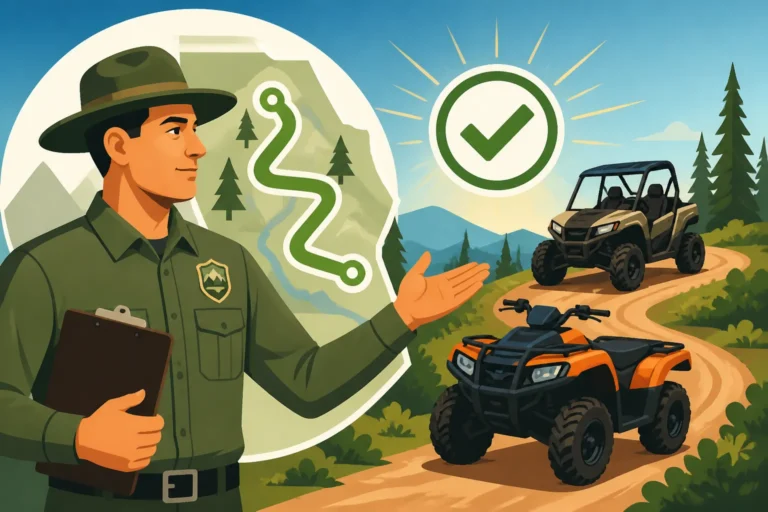
Your best bet is to check with the official managing agency of the riding area. This could be the local State Vehicular Recreation Area (SVRA) office, a specific Bureau of Land Management (BLM) field office for desert areas, or the relevant county parks department. These agencies often publish maps or have specific signage indicating legally designated combined-use routes. You might find information on their official websites or by calling their offices directly. In some cases, there will be clear, specific signs on the ground marking the beginning and end of a designated route. Look for these official markers; they are your only reliable confirmation. Remember, [What California's CVC 38026 Lets an Agency Designate] specifies that it must be a public agency making that designation, not just a landowner or a group of riders. Without this official designation, that tempting stretch of asphalt to the store is strictly off-limits to your OHV.
What You Need to Be Legal on a Designated Route
Even on a designated route, you're not entirely off the hook when it comes to compliance. You're entering a gray area where off-road rules meet a semblance of road rules, and you need to be prepared for both.
First and foremost, your OHV needs current and valid California OHV registration. This means displaying your Green, Red, or Tan sticker properly. If you're visiting from out of state, you'll need to purchase and display a [California's Nonresident OHV Use Permit]. Without proper registration, you won't get past first base with any enforcement officer, whether they're a ranger, sheriff, or CHP.
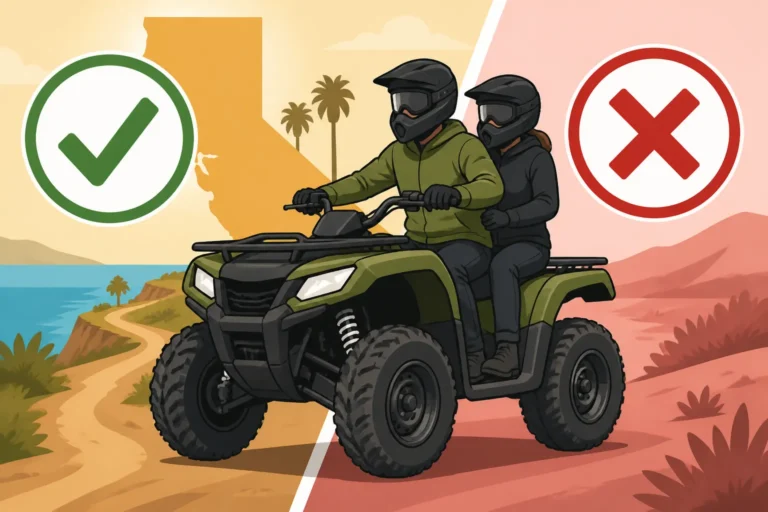
Safety gear remains paramount. Helmets are almost universally required on California public land, and this extends to designated routes. [California Helmet Law for ATV Riders] mandates helmets for all ATV operators and passengers, regardless of age. For UTVs (ROVs), while adults in a vehicle with a roll cage and seatbelts might have an exemption in some off-road situations, it's safer and generally expected to wear one when using these connecting routes. Always check [California Helmet Law for UTV Passengers] for the latest specifics.
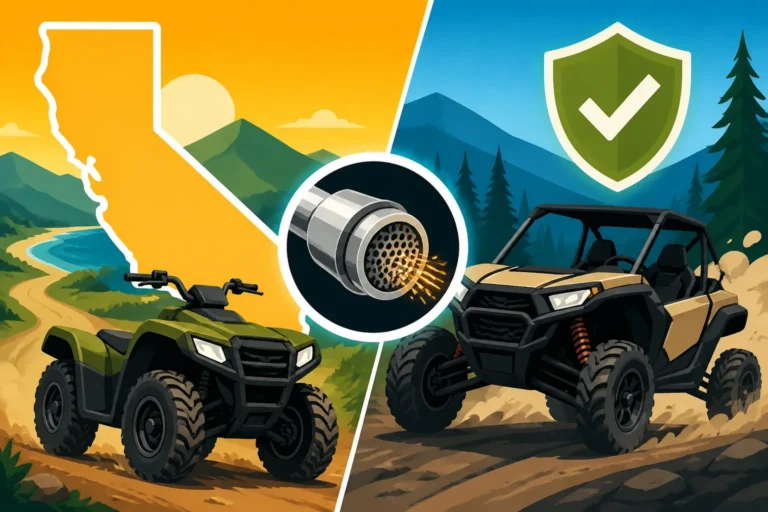
Your machine itself needs to be in good working order and comply with essential regulations. A properly functioning spark arrester is absolutely mandatory, especially when operating on or near any brush-covered land, which much of California is. [California Spark Arrester Rules] are strictly enforced. Your exhaust noise levels must also be within legal limits; rangers at SVRA gates or on designated routes can and will perform sound checks. Be aware of [California Noise Rules at an SVRA Gate]. Ensure your headlights, taillights, and brake lights (if equipped) are functional, as these routes might be used at dusk or dawn.
While not strictly required for off-road use, it's always wise to carry proof of insurance. [California OHV Insurance Requirements] don't mandate liability for off-highway use, but on a designated road segment, having it could protect you in case of an accident involving another vehicle. Finally, if the designated route connects to a dune area, remember that you'll still need to comply with specific dune requirements, such as displaying an appropriate flag on a whip. [Flag Rules for California Dune Riding] apply when you're transitioning to or from those areas. Brands like SuperATV offer a wide range of lighting solutions, durable mirrors, and other accessories that, while not making your machine street legal, can certainly enhance safety and visibility on these transitional routes.
Understanding the Limitations and Pitfalls
Even with a designated route, it's crucial to understand that these are exceptions, not a free pass. There are significant limitations and potential pitfalls you need to be aware of.
One common misconception is the "3-Mile Cap." Historically, there have been discussions and specific instances where combined-use routes were limited to a certain mileage, often around three miles, to ensure they remained short connecting segments rather than extended travel corridors. While CVC 38026 itself doesn't explicitly state a hard mileage cap, it clearly emphasizes "short segments." The intent is to provide minimal necessary access, not to create mini-highways for OHVs. Therefore, if you're traveling a significant distance to a store, you're likely exceeding the spirit, if not the letter, of the law for [How Long a California Combined-Use Segment Can Be].
These routes are explicitly not for use on freeways or major highways. [Why Freeways Are Excluded in California] is simple: the speed differentials, traffic volume, and design of these roads make OHV use incredibly dangerous and strictly illegal. Designated routes will always be on lower-speed, local roads.
The consequences of non-compliance can be severe. Rangers, county sheriffs, and CHP officers are empowered to enforce these rules, and they do. Getting caught operating an unregistered OHV, riding without a helmet, or riding on an unauthorized road can lead to hefty fines and even impoundment of your machine. Be very clear about [California Fines for Riding a Public Road]. These aren't just minor tickets; they can put a significant dent in your wallet and ruin your weekend. Lastly, a designated route is just that—a designated path. You cannot deviate from it. Riding off the designated route, even to cut a corner or find a quicker path, is considered illegal off-road operation or trespass. Stick to the marked path, or you risk breaking the rules.
Here's a quick reference for requirements on designated routes:
| Requirement | ATV/UTV Status | Notes |
|---|---|---|
| Registration | California Green, Red, or Tan sticker, OR Nonresident Permit | Must be current and properly displayed. [California's Nonresident OHV Use Permit] |
| Helmet | Mandated for ATVs. Highly recommended for UTVs, often required. | Always wear one. Check specific UTV rules for exemptions, but safety first. [California Helmet Law for ATV Riders], [California Helmet Law for UTV Passengers] |
| Spark Arrester | Required and functional | Essential for preventing wildfires, especially on brush-covered land. [California Spark Arrester Rules] |
| Noise Limits | Must comply with state decibel limits | Rangers can perform sound checks. [California Noise Rules at an SVRA Gate] |
| Lights | Functional headlights, taillights, brake lights (if equipped) | Especially important if riding at dusk or dawn. |
| Insurance | Not mandated for off-road, but advisable for designated road segments | Protects against liability in case of an incident with another vehicle. [California OHV Insurance Requirements] |
| Whip & Flag | Required if connecting to dune areas | Check specific park rules. [Flag Rules for California Dune Riding] |
| Road Type | Only on officially "designated" combined-use routes, never highways | Verify designation with the managing agency. [Why Freeways Are Excluded in California] |
| Route Length | Generally "short segments" intended for connectivity, not extended travel | Avoid assuming long distances are allowed. [How Long a California Combined-Use Segment Can Be] |
| Speed Limit | Must adhere to posted speed limits for the road segment | Designated routes typically have lower speed limits for safety. |
Real-World Examples and What to Expect
Let's look at a couple of popular California riding spots and how the designated route concept might (or might not) play out there. These examples highlight the variability and the need for vigilance.
Oceano Dunes and the Struggle for Pavement Access
Oceano Dunes SVRA, or what many still call Pismo, is California's only state park where you can drive on the beach. It's an incredibly popular destination, and the desire to pop off the sand and onto Pier Avenue in the town of Oceano for supplies is incredibly strong. Historically, there have been designated access points from the riding area to specific roads that lead to local businesses. [Riding Pier Avenue in Oceano] has been a long-standing point of discussion and access. Riders often want to quickly grab firewood, ice, or groceries from the many shops along the avenue without having to deflate their truck tires, load up their UTV, and then re-inflate.
However, Oceano Dunes has been under immense environmental pressure and legal challenges regarding its operation, which has significantly impacted all aspects of access and use. The future of any paved road access for OHVs in this area is subject to ongoing changes and restrictions. While there might be designated entry/exit points to the street, the ability to travel to a store on your OHV might be highly restricted or even eliminated, depending on current regulations and environmental permits. It's a prime example of how even existing allowances can change, reinforcing the need to check with the SVRA office for the absolute latest rules before you attempt any road travel.
Desert Riding: Glamis, Ocotillo Wells, and Local Stores
The vastness of California's deserts, particularly the Imperial Sand Dunes Recreation Area (ISDRA) also known as Glamis, presents a different set of challenges and opportunities. Riders at Glamis often camp for extended periods and have a strong need for provisions. The small towns surrounding Glamis, like Brawley or even Yuma across the border (though we're focusing on California rules here), become essential for resupply. Within Glamis itself, there are many [Wash Roads at Glamis and Road Rules] that might feel like "roads" but are still primarily off-highway areas.
While there might be some very localized designated routes connecting specific camping areas to a nearby gas station or convenience store, these are few and far between and are typically short, unpaved segments. For the most part, getting from the dunes to a true store will still require trailering your machine. The same goes for Ocotillo Wells SVRA, another popular desert riding area known for its wide-open spaces and free camping. While there are a few small communities nearby, the extensive network of off-road trails doesn't magically convert into a network of street-legal connectors. Riders frequently outfit their machines with aftermarket parts like heavy-duty axles or advanced suspension systems from companies like SuperATV to handle the desert terrain, but these modifications don't grant street access.
The key takeaway for desert riding is that the scale and remoteness of many areas mean official designated routes for store access are rare. Always assume you need to trailer, and if you think you've found a designated route, verify it with the BLM or State Parks office before you ride. The desert environment can be unforgiving, and the last thing you want is a citation miles from camp.
Navigating California's rules for riding your OHV from the dunes or trails to a store is definitely complex. While the desire for convenience is perfectly understandable, the state's stringent regulations mean that true designated routes are specific, limited, and require careful verification. Always prioritize safety and legality, checking with the managing agency, ensuring your machine is compliant, and understanding the strict limitations of these exceptions. A little bit of planning and verification can save you a lot of headache and keep you riding legally in our beautiful Golden State.
Disclaimer
This article is for general informational purposes only and does not constitute professional advice. Laws, prices and regulations vary by location and change over time. Consult a qualified professional for guidance on your specific situation.