California Spark Arrester Rules
Riding your ATV or UTV out on California's incredible trails, sand dunes, or forest roads is an unmatched experience, but nothing throws a wrench into a perfect day faster than a ranger stop. One of the most common reasons riders face fines and frustration is an improperly installed or non-existent spark arrester. It's easy to overlook this seemingly small component, but understanding California's strict spark arrester rules is absolutely critical for staying legal, safe, and avoiding hefty penalties. This guide will meticulously break down everything you need to know, from why these rules exist to how to ensure your machine is always compliant.
What Exactly is a Spark Arrester and Why Does California Care So Much?
When you’re out tearing it up on your quad or side-by-side, your engine is working hard. That combustion process, while creating the power you love, also generates tiny, superheated carbon particles – basically, little sparks – that can get expelled through your exhaust system. On pavement, this isn't usually a major concern, but in California's diverse and often dry natural environments, even one tiny spark can be catastrophic. The state's landscapes, especially during dry seasons, are incredibly susceptible to wildfires, and it’s no exaggeration to say that an errant spark from an OHV could ignite a blaze that devastates thousands of acres.
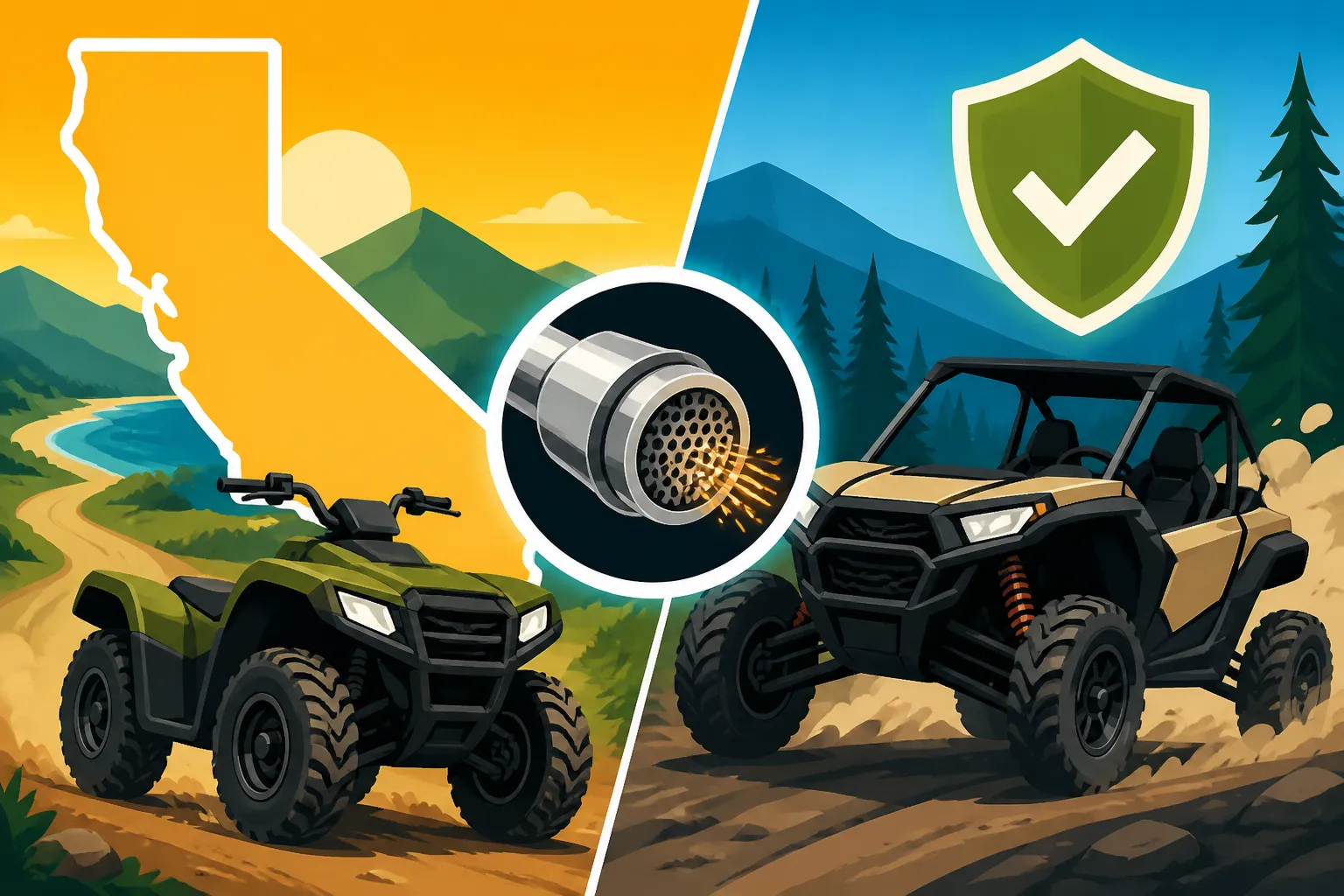
California takes fire prevention incredibly seriously, and spark arresters are a frontline defense. These devices are specially designed screens or chambers installed within your muffler or exhaust system. Their job is to catch and cool those hot carbon particles before they can exit into the atmosphere, ensuring that only exhaust gases pass through. Without a functional and compliant spark arrester, your machine becomes a potential fire hazard, and that’s a risk California simply won’t tolerate on its public lands.
The Core Function and Its Role in Fire Prevention
At its heart, a spark arrester is a safety device, plain and simple. Imagine a fine mesh screen or a series of baffles and chambers that force the exhaust gases to swirl and change direction, effectively separating the heavier, incandescent carbon particles from the gas flow. These particles then cool down, often dropping into a collection chamber, before the exhaust exits. This process is crucial because when you're riding through dry grass, brush, or even just kicking up dust in a tinder-dry forest, those hot particles could easily land on flammable material and start a fire.
The rules around spark arresters are not just bureaucratic hurdles; they are born from tragic experiences and a deep understanding of California's volatile fire ecology. Every time you see a "fire danger" sign or hear about a large wildfire, remember that this simple device plays a vital role in preventing countless such incidents. It’s a small component with a massive responsibility, acting as the final barrier between your engine's internal combustion and the potentially devastating consequences of a wildfire.
How California's Landscape Influences Regulations
California's geography is breathtakingly varied, from arid deserts and rolling grasslands to dense forests and chaparral-covered hillsides. What all these environments often have in common, especially through long, dry summers and into fall, is a profound vulnerability to fire. The state experiences prolonged periods of drought, and many of its native plants become incredibly flammable when dry, creating an ideal environment for wildfires to spread rapidly. Because of this inherent risk, California has adopted some of the most stringent OHV regulations in the nation, and spark arrester compliance is at the top of the list.
It’s not just about the big forests; even riding through a seemingly innocuous field of dry weeds can pose a threat. The regulations apply across all public lands where OHVs are permitted, including our beloved State Vehicular Recreation Areas (SVRAs), Bureau of Land Management (BLM) lands, and national forests. The expectation is that every rider is a responsible steward of the land, and having a compliant spark arrester is a non-negotiable part of that responsibility. Ignoring these rules isn't just a minor infraction; it's seen as a serious threat to public safety and the environment. [Riding Brush Land in California] emphasizes just how important fire prevention is in these areas.
Identifying a Legal Spark Arrester for Your OHV
Knowing you need a spark arrester is one thing, but knowing if yours is actually legal and compliant in California is another. It's not enough to just have something rattling around in your muffler that might be catching sparks. California law requires that all OHVs operating on public lands be equipped with a spark arrester that is approved by the U.S. Forest Service (USFS). This isn't some obscure, rarely enforced rule; it's a standard check performed by rangers and law enforcement across the state.
When you buy a new ATV, UTV, or dirt bike from a reputable dealer, it generally comes equipped with a compliant spark arrester from the factory. The challenge often arises with aftermarket exhaust systems, older machines, or when riders attempt DIY modifications. You might think an aftermarket exhaust system from a brand like SuperATV looks great and boosts performance, but it must also meet spark arrester requirements. Always double-check the product specifications to ensure it explicitly states USFS approval before installing it on your machine for public land use.
The US Forest Service Approval and Labeling
The gold standard for spark arrester compliance in California is USFS approval. What does this mean in practical terms? It means the device has undergone rigorous testing by the Forest Service to ensure it effectively retains carbon particles while still allowing for adequate engine performance. Once approved, the device will have a specific stamp or label indicating its USFS approval. This label is often a small, permanent stamping or etching directly on the spark arrester itself, or on the muffler housing if the arrester is an integral, non-removable part.
It's critical that this label is visible and legible. If a ranger stops you, they will look for this marking. If they can't find it, or if it's been ground off, painted over, or is otherwise obscured, your machine will be considered non-compliant, regardless of whether a spark arrester is technically present. This is why when you're performing maintenance or upgrading your exhaust, you need to be mindful of preserving this important identifier. Always confirm that any replacement part or aftermarket exhaust system clearly states its USFS approval and displays the proper labeling. You can often find a comprehensive [California Approved Spark Arrester List] or check the Forest Service website directly.
What to Look For: Specifics on Construction and Condition
Beyond the USFS stamp, the physical condition of your spark arrester is equally important. A damaged or clogged spark arrester can be just as dangerous as not having one at all, as it won't effectively do its job. Here’s a quick checklist of what to look for:
- Intact Screen: Most spark arresters use a fine mesh screen. This screen must be completely intact, with no holes, tears, or perforations. Even a small hole can allow hot particles to escape.
- No Modifications: Tampering with a spark arrester, such as removing the screen or altering its internal baffles, immediately renders it non-compliant and illegal.
- Cleanliness: Over time, carbon and oil residue can build up on the screen, restricting exhaust flow and potentially rendering it ineffective. Regular cleaning is crucial for proper function.
- Secure Installation: The spark arrester must be securely mounted within the exhaust system. Loose components can vibrate, wear down, or even fall out during a ride.
It’s a good practice to visually inspect your spark arrester before every ride, especially if you're heading to public lands. A quick glance can save you a lot of hassle. If you're considering an aftermarket exhaust system, ensure it's designed with an integrated, compliant spark arrester. Many performance exhaust systems, including those that might be offered by a brand like SuperATV, are designed with these regulations in mind, but it's always the rider's responsibility to verify. [California Spark Arrester Requirement Explained] covers the specific legal wording.
| Feature | Compliant Spark Arrester | Non-Compliant/Damaged Spark Arrester |
|---|---|---|
| USFS Label | Clearly visible, legible stamp or etching | Missing, obscured, or non-existent label |
| Screen/Baffles | Intact, no holes, tears, or modifications | Holes, tears, bent baffles, or evidence of tampering |
| Cleanliness | Free of excessive carbon buildup, allows airflow | Heavily clogged with carbon, restricted exhaust flow |
| Installation | Securely mounted, no rattling or loose parts | Loose, rattling, poorly fitted, or about to fall out |
| Material | Durable, heat-resistant metal | Rusting through, cracked, or degraded material |
Consequences of Not Having a Compliant Spark Arrester
The thrill of off-road riding in California is undeniable, but the repercussions for not adhering to spark arrester rules are very real and can quickly turn a fun day into a costly nightmare. Law enforcement and park rangers are highly vigilant, particularly in areas prone to fire, and they don't hesitate to enforce these regulations. It’s not just about getting a slap on the wrist; the penalties can be severe, impacting your wallet and even your ability to continue your ride.
Think about the bigger picture: beyond the personal consequences, operating a non-compliant machine jeopardizes the very access we have to these incredible riding areas. Repeated violations or major fire incidents linked to OHVs can lead to stricter regulations, area closures, and a negative public perception of off-road enthusiasts. This is why every rider needs to take spark arrester compliance seriously – it's about protecting our sport and our access to the outdoors.
Fines, Citations, and Vehicle Impoundment
Let’s talk about what happens if you get caught without a compliant spark arrester. The most immediate consequence is typically a citation and a fine. While specific amounts can vary, these fines are not trivial. You could be looking at several hundred dollars, which is far more expensive than simply buying and maintaining a proper spark arrester in the first place. The cost of a ticket can quickly add up, easily surpassing the value of most aftermarket exhaust systems. [California Fines for No Spark Arrester] details these penalties.
Beyond the fine, a ranger has the authority to order you to cease operation of your vehicle. This means your ride day is over, wherever you are. Imagine being deep in the Imperial Sand Dunes or miles into a national forest trail, only to have your day abruptly ended. In some cases, especially if there's a perceived immediate fire danger or repeated offenses, your vehicle could even be impounded. Getting your machine out of impound is an additional, significant expense, involving towing fees, storage fees, and the hassle of administrative procedures. It’s a scenario no rider wants to face.
Environmental Impact and Personal Responsibility
While the financial and logistical penalties are deterrent enough, it's equally important to consider the potential environmental impact and your personal responsibility as an OHV enthusiast. A single spark can ignite a wildfire that devastates hundreds or thousands of acres of fragile ecosystems, destroys wildlife habitats, and puts homes and lives at risk. The smoke from these fires can impact air quality across vast regions, and the long-term ecological recovery can take decades, if it ever fully recovers.
When you ride a non-compliant machine, you're not just breaking a rule; you're creating an unnecessary and profound risk. The OHV community prides itself on being responsible users of public land, and part of that responsibility is ensuring your machine is equipped to prevent fires. It’s a matter of respect for the environment, for other users of public land, and for the communities that live near our riding areas. Being a responsible rider means taking every precaution, and a functional spark arrester is one of the most fundamental. [California Fire Season and Trail Access] explains why this is so critical, especially at certain times of the year.
Maintaining and Verifying Your Spark Arrester's Compliance
Ensuring your spark arrester remains compliant isn't a one-time task; it's an ongoing part of responsible OHV ownership. Just like you regularly check your oil, tire pressure, and brakes, your spark arrester needs attention. Over time, carbon buildup, vibration, and general wear and tear can compromise its effectiveness. A well-maintained spark arrester not only keeps you legal but also helps ensure your engine runs more efficiently by maintaining proper exhaust flow.
Whether you're hitting the trails at Hollister Hills or exploring the vastness of the Mojave, regular checks are crucial. It's often a simple process that takes only a few minutes, but those minutes can save you a world of trouble. This isn’t just about avoiding a ticket; it's about making sure your machine is operating safely and responsibly every time you head out. [What a Ranger Checks at Hollister Hills] provides insight into how enforcement works.
Regular Inspections and Cleaning Tips
The key to ongoing compliance is regular inspection and cleaning. Before each major ride, or at least every few rides, take a moment to visually inspect your spark arrester. Look for the USFS stamp to ensure it's still legible. Check the screen for any holes, tears, or signs of damage. If your spark arrester is a removable screen type, take it out and inspect it closely.
Cleaning is straightforward:
- Remove if possible: Many spark arresters are designed to be removable for cleaning. Consult your owner's manual for specific instructions on how to access it.
- Brush off carbon: Use a stiff wire brush to carefully remove any carbon buildup from the screen. Be gentle to avoid damaging the delicate mesh.
- Soak (if needed): For stubborn buildup, you can sometimes soak the screen in a solvent or carburetor cleaner, but always check your manufacturer's recommendations first.
- Reinstall securely: Ensure the cleaned spark arrester is reinstalled correctly and securely, so it doesn't vibrate loose during your ride.
Regular cleaning prevents clogs that can not only make your spark arrester ineffective but also negatively impact your engine's performance by creating back pressure. This simple routine ensures that your spark arrester is always ready to do its job, keeping you compliant and our natural lands safe from fire.
When to Replace Your Spark Arrester
Even with diligent cleaning and inspection, spark arresters don't last forever. They are subjected to intense heat and exhaust gases, which can lead to degradation over time. You should consider replacing your spark arrester if:
- The screen is damaged: Any hole, tear, or significant wear in the mesh means it can no longer effectively trap sparks.
- It's heavily corroded: Rust or corrosion can weaken the material, making it prone to failure.
- The USFS stamp is unreadable: If you cannot verify its compliance due to an illegible stamp, it's safer to replace it.
- It's a non-serviceable component and performance is impacted: If your muffler has an integrated spark arrester that cannot be cleaned or inspected, and you notice a significant drop in engine performance that points to exhaust blockage, it might be time for a full muffler replacement.
When replacing, always opt for a USFS-approved part. For aftermarket exhaust systems, like those from SuperATV or similar brands, verify that the entire system or its removable spark arrester component is explicitly USFS compliant. Don't take chances with unverified parts. While aftermarket exhausts can offer performance benefits, they must still comply with all California regulations, including both spark arrester and sound limits. [Aftermarket Exhaust and California Sound Checks] and [California Sound Limits for OHVs Explained] are crucial reads if you're considering modifying your exhaust. Staying proactive with maintenance and knowing when to replace parts ensures your machine always meets California's strict standards.
Disclaimer
This article is for general informational purposes only and does not constitute professional advice. Laws, prices and regulations vary by location and change over time. Consult a qualified professional for guidance on your specific situation.