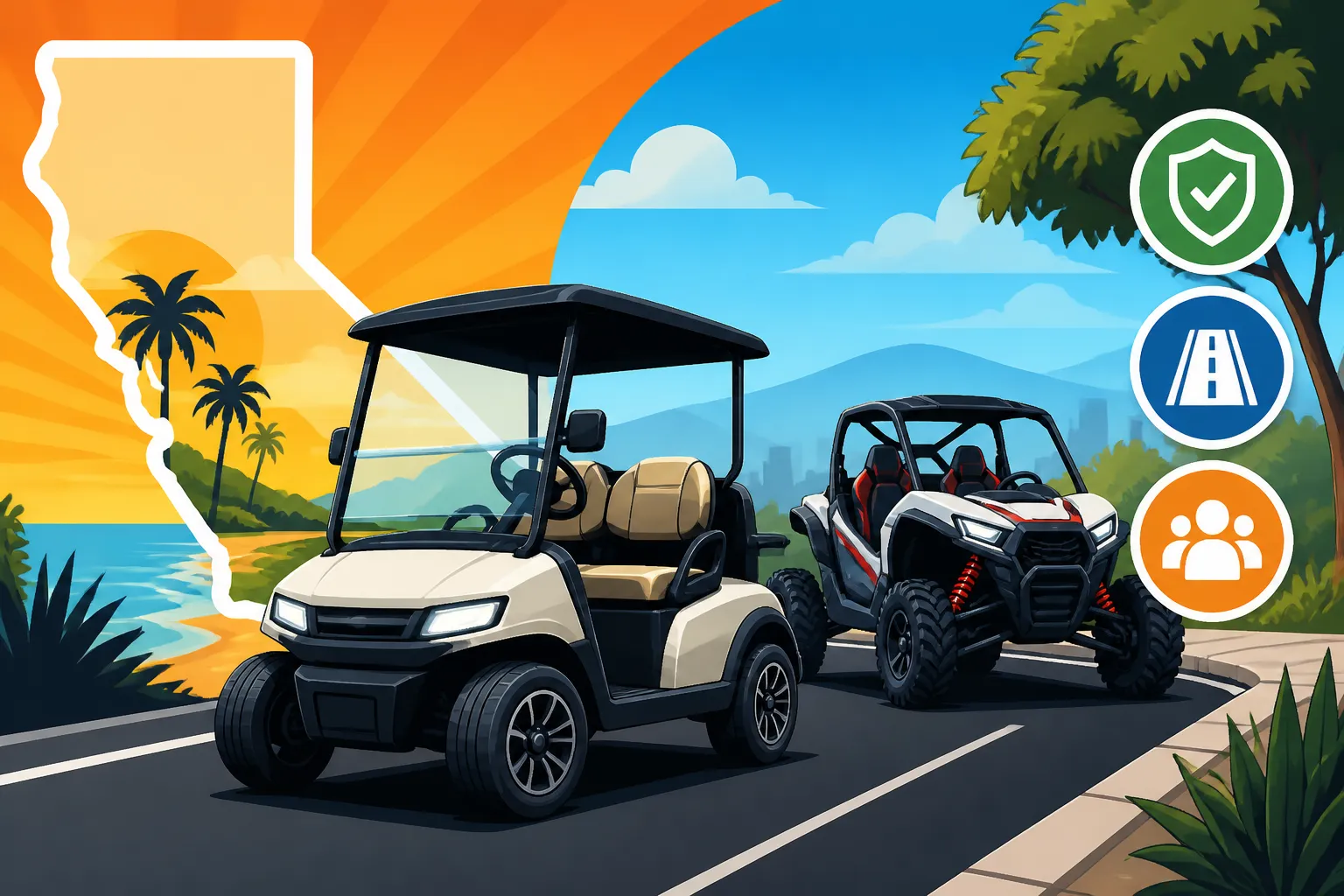
California Golf Cart Street Rules
For many California residents, the idea of hopping in a golf cart to run a quick errand or visit a neighbor seems like a convenient, eco-friendly dream. But the reality of using these vehicles on public roads in the Golden State is often met with confusion and a host of rules that can feel overly complex. This guide is here to untangle California's specific regulations regarding golf cart use on public streets, helping you understand exactly where, when, and how you can legally drive your golf cart beyond the green.
Understanding What California Defines as a Golf Cart for Street Use
Before we dive into where you can drive your golf cart, it’s absolutely critical to understand how California law actually defines a "golf cart" when it comes to public roads. This isn't just semantics; it's the foundation upon which all other rules are built, and misunderstanding it can lead to fines and legal trouble. The state has very particular definitions that differentiate a golf cart from other similar-looking vehicles like Neighborhood Electric Vehicles (NEVs) or Low-Speed Vehicles (LSVs), which have entirely different sets of rules and capabilities.
The Legal Definition and Its Limitations
Under the California Vehicle Code (CVC), a golf cart is specifically defined as a motor vehicle originally designed and manufactured for operation on a golf course for sporting or recreational purposes. The key limitation here is its inherent design and intended use. These vehicles typically have a maximum speed of no more than 15-20 miles per hour. Crucially, they are not designed to meet federal motor vehicle safety standards that regular cars or even NEVs must adhere to. This fundamental distinction means that a standard golf cart is inherently restricted in where it can operate, primarily due to safety concerns and its slower speed. Thinking you can simply slap a license plate on it and drive anywhere a car can go is a common, but mistaken, assumption. [California Low-Speed Vehicle Registration] rules, for example, are entirely distinct.
Distinguishing Golf Carts from NEVs and LSVs
This is where a lot of the confusion really sets in, as golf carts often get lumped in with Neighborhood Electric Vehicles (NEVs) or Low-Speed Vehicles (LSVs). While they might look similar, especially with some aftermarket modifications, they are legally distinct categories with different permissions and requirements.
- Golf Carts: As discussed, purpose-built for golf courses, top speed usually under 20 mph, minimal safety features, very limited street legality.
- Neighborhood Electric Vehicles (NEVs): These are essentially enhanced electric golf carts designed to be driven on public roads. They must meet specific federal safety standards, including headlights, taillights, turn signals, seatbelts, windshields, and a Vehicle Identification Number (VIN). They have a top speed between 20 mph and 25 mph. NEVs are allowed on roads with a posted speed limit of 35 mph or less, but only if the local authority (city or county) has specifically approved their use. You can read more about [California NEV Street Rules] to see how they differ.
- Low-Speed Vehicles (LSVs): This term is often used interchangeably with NEV, but technically, LSV is the broader federal definition for vehicles with a top speed of 20-25 mph. In California, these are essentially NEVs that have gone through a more rigorous registration and titling process to be fully street-legal on designated low-speed roads.
The takeaway here is that if your vehicle was made primarily for golf and doesn't explicitly state it meets NEV/LSV standards, it's a golf cart, and its street use will be much more limited. Some people might use aftermarket parts from companies like SuperATV to enhance their golf cart, adding things like turn signals or mirrors, but these additions alone do not magically transform a golf cart into an NEV or LSV in the eyes of the law. The original manufacturer's designation and federal compliance are key.
| Vehicle Type | Primary Use | Max Speed (Approx.) | Street Legal Features | Road Speed Limit Restrictions |
|---|---|---|---|---|
| Golf Cart | Golf courses, private property | 15-20 mph | Basic (brakes, lights) | Highly restricted, local designation needed, typically within 1 mile of golf course |
| NEV/LSV | Short-distance public road travel | 20-25 mph | Full (headlights, signals, seatbelts, etc.) | Roads with posted speed limit of 35 mph or less, requires local designation |
Where You CAN Legally Drive a Golf Cart in California
So, with the definitions out of the way, let’s talk about the specific places you might actually be able to drive your golf cart on public roads in California. This isn't a free-for-all, and state law outlines very narrow circumstances under which it's permissible. It heavily relies on local city and county governments to make specific designations.
Designated Golf Cart Paths and Combined-Use Highways
The primary way a golf cart can be driven on public streets is if the local authorities have specifically designated certain sections of public roadway for golf cart use. This designation is crucial. It means a city council or county board of supervisors has passed an ordinance allowing golf carts on specific streets. These designated paths are typically found in communities that are built around golf courses or have a strong residential use of golf carts for local errands.
California Vehicle Code allows for these designations on highways where the speed limit is 25 miles per hour or less. Even then, the state law is quite restrictive. You cannot simply drive your golf cart on any road with a 25 mph speed limit; it must be specifically authorized. Furthermore, the designation must ensure that the golf carts don't pose an undue hazard to pedestrians, bicyclists, or other vehicles. This is where you might find "golf cart lanes" or specific routes marked in certain communities.
The "Within One Mile of a Golf Course" Rule
This is perhaps the most well-known, and often misunderstood, provision for golf cart use. California law allows a golf cart to be operated on a public street or highway if it is being operated within one mile of a golf course, provided the local jurisdiction has authorized this use by ordinance. The purpose of this rule is to allow golfers to travel between their homes and the golf course, or to cross a public road that intersects a golf course.
However, many people mistakenly believe this means they can drive their golf cart anywhere within a mile radius of any golf course. This is incorrect. The "one mile" rule is only applicable if a local government has specifically passed an ordinance allowing it. Without that local ordinance, the one-mile radius is meaningless for public street use. Always check with your local city or county government to confirm if such an ordinance exists in your area. For example, specific guidance is available for [Golf Carts Within a Mile of the Course].
Local Ordinances and Community-Specific Rules
Ultimately, the ability to drive a golf cart on public roads in California comes down to local control. Cities and counties have the authority to create ordinances that permit golf cart operation on designated streets within their jurisdiction. These local rules are critical and can vary significantly from one community to another.
For instance, places like Palm Desert in Southern California are famous for their golf cart culture, with extensive networks of designated golf cart lanes. You can find out more about [Palm Desert's Golf Cart Lanes] and how they operate there. These communities have invested in the infrastructure and legislative framework to safely integrate golf carts into their local transportation. Other cities might have no such provisions, meaning golf carts are strictly prohibited on all public roads.
It’s your responsibility as a golf cart owner to know the specific ordinances for your city or county. Simply seeing others drive golf carts on the street is not an indication of legality. Check your local government's website, or contact their planning or traffic department, to get the definitive rules for your area.
Crossing a Public Road
Even if you can't drive your golf cart along a public road, there might be provisions for crossing one. If a golf course is bisected by a public street, or if you need to cross a street to get from one designated golf cart path to another, the law makes allowances.
A golf cart may cross a highway at an intersection where a traffic signal is present, or at a clearly marked crossing, provided the crossing is authorized by the local authority. When crossing, you must obey all traffic signals and signs, yield to all other traffic, and complete the crossing as quickly and safely as possible. This is a very specific maneuver, not a general permission to travel on the road. Remember, [California Rules for Crossing a Public Road] apply, and safety is paramount.
Essential Equipment and Safe Operation for Street Use
Even when permitted on designated roads, a golf cart isn't a toy. It's a vehicle operating alongside cars, and California law mandates certain equipment and operational standards to ensure safety for everyone. You can't just pull your cart off the course and onto the street without proper preparation.
Required Safety Equipment
While not as stringent as for a full NEV or car, a golf cart must have certain basic safety equipment to be operated legally on any public street, even a designated one. These typically include:
- Brakes: The cart must have fully functional brakes capable of stopping the vehicle safely.
- Lights: For operation during darkness or inclement weather, headlights, taillights, and brake lights are essential. Even if you only plan to drive during the day, having these is a smart safety precaution. Some owners install aftermarket light kits, and companies like SuperATV offer various lighting solutions that could be adapted for golf carts, though always ensure they meet any specific local requirements.
- Reflectors: Rear-facing red reflectors are usually required to enhance visibility.
- Horn: A working horn is necessary to alert pedestrians or other drivers to your presence.
- Mirrors: A rearview mirror (or side mirrors) to provide the driver with a clear view of traffic approaching from behind.
- Tires: Tires must be in good condition, suitable for the intended use, and properly inflated.
It's vital to check your specific local ordinance, as some communities might require additional equipment beyond the state minimums if they've designated golf cart use. For example, some might ask for turn signals even if not universally required for all golf cart use.
Driver Licensing and Age Requirements
One of the common questions revolves around who can actually drive a golf cart on a public street. In California, if you are operating a golf cart on a public street or highway—even a designated one—you must possess a valid driver's license. This means a standard Class C driver's license, just as you would need to drive a car. There are no special "golf cart licenses" or relaxed rules for public road use.
Furthermore, general age restrictions for driving apply. While a child might be able to drive a golf cart on private property like a golf course, they absolutely cannot do so on a public street, regardless of local ordinance, without a valid driver's license and meeting the minimum age requirements for that license. Parents should be particularly mindful of this to avoid severe penalties.
Insurance and Financial Responsibility
Just like with any other motor vehicle operated on a public road, driving a golf cart on a designated street in California typically requires proof of financial responsibility. This almost always means carrying liability insurance. If you're involved in an accident while driving your golf cart on a public road, you'll be held responsible for any damages or injuries you cause.
Check with your current auto insurance provider or an independent agent to see if your golf cart can be covered under an existing policy, or if you'll need a separate policy. Some homeowner's policies might offer limited coverage for golf carts on private property, but this usually does not extend to public road use. It's a small investment that can save you significant financial heartache in the event of an unforeseen incident. For more general information on this, you can look at [California OHV Insurance Requirements].
Speed Limits and Safe Operation Practices
When driving a golf cart on a public road, you must always adhere to the posted speed limits. However, given that golf carts have a maximum speed of 15-20 mph, you'll naturally be traveling slower than other vehicles on most roads, even those designated for shared use. This means you must be extra vigilant about safety.
Always stay to the right-hand side of the road, allow faster traffic to pass when safe, and use hand signals if your golf cart doesn't have turn signals. Never assume other drivers see you, especially larger vehicles. Be predictable, signal your intentions, and maintain a safe distance from other vehicles. Avoid driving in adverse weather conditions like heavy rain or fog, as golf carts offer minimal protection and visibility can be severely compromised. Just because a road is designated doesn't mean it's without risk; common sense and defensive driving are your best tools.
Local Ordinances and Why They Matter So Much
When it comes to California golf cart street rules, the state provides the framework, but local cities and counties hold the real power to permit or prohibit use. This decentralization means that what's perfectly legal in one town might get you a ticket just across the county line. Understanding this local control is absolutely key.
The Role of City and County Governments
California Vehicle Code sections allow, but do not mandate, that local authorities establish ordinances permitting golf cart operation on certain roads. This means that a city council or a county board of supervisors has to take explicit action to allow golf carts on specific streets within their jurisdiction. They don't just automatically become legal on every low-speed road.
These ordinances are typically passed after traffic studies, public hearings, and careful consideration of safety implications for residents. They often define the exact streets or segments of streets where golf carts are allowed, specify any additional equipment requirements, and outline operating hours or conditions. For example, a city might permit golf cart use on collector streets within a planned community but prohibit them on main arterial roads, even if the speed limit is 25 mph or less.
How to Check Local Regulations in Your Area
Given the critical role of local ordinances, your first step as a golf cart owner considering street use should always be to consult your local city or county government. Here’s how you can typically find this information:
- City or County Clerk's Office: Many local governments have an online portal for their municipal code or ordinances. Search for terms like "golf cart," "NEV," "low-speed vehicle," or "vehicle code" within their published laws.
- Public Works or Traffic Engineering Department: These departments are often responsible for implementing and enforcing transportation-related ordinances. They can usually provide definitive information on designated golf cart routes.
- Local Law Enforcement (Non-Emergency Line): While not their primary role to interpret nuanced code, local police or sheriff's departments can often tell you if golf carts are generally permitted on public roads in their jurisdiction and can point you to the correct department for more detailed information.
- Community Associations: If you live in a planned community or one built around a golf course, your homeowners' association or community management might have readily available information about local golf cart rules, as these are often hot topics in such areas.
It's crucial to get official information rather than relying on hearsay or what a neighbor does. An invalid assumption could lead to citations, impoundment of your golf cart, and costly fines.
Examples of Local Implementation
To illustrate the point, consider the contrast between different communities. In places like Palm Desert, the local government has actively embraced golf cart use, seeing it as part of their community's character and a viable transportation option for short distances. They have a well-defined network of cart lanes and clear signage.
On the other hand, many suburban cities with golf courses might have decided not to designate any public roads for golf cart use, citing concerns about traffic safety, congestion, or the inability of golf carts to keep pace with other vehicles, even on lower speed roads. In these areas, using a golf cart on a public street, even for a quick trip across the road to the next fairway, could be illegal.
The key takeaway is that California gives local governments the flexibility to decide. That flexibility means you, as the golf cart owner, must do your homework to ensure your joyride doesn't turn into a legal headache.
Disclaimer
This article is for general informational purposes only and does not constitute professional advice. Laws, prices and regulations vary by location and change over time. Consult a qualified professional for guidance on your specific situation.