Beach Riding in California and Where It Is Legal
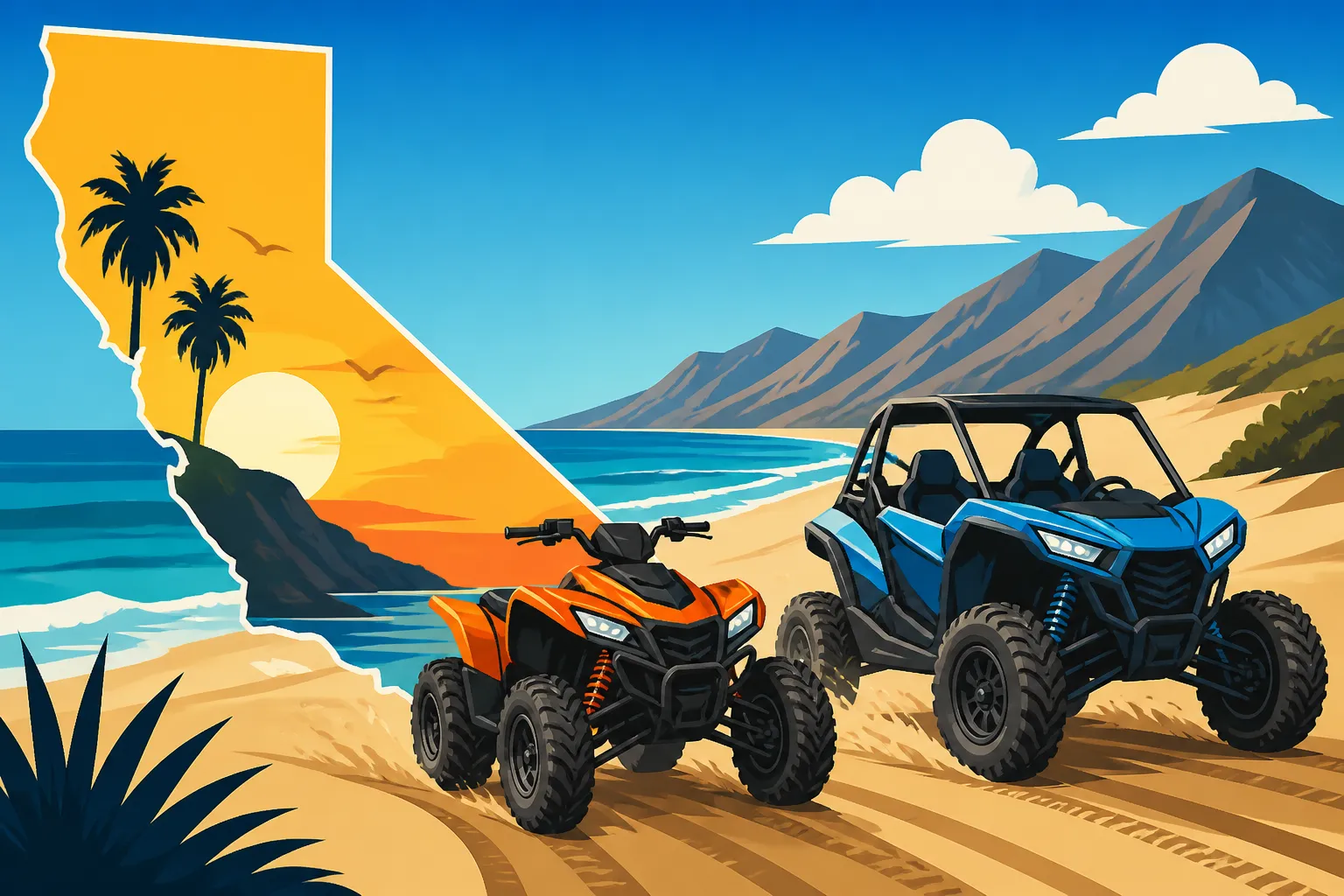
The idea of cruising your ATV or UTV along a vast, sandy California beach, with the ocean breeze in your hair and the waves crashing beside you, is a dream for many off-road enthusiasts. Unfortunately, the reality for most of California's stunning coastline is quite different, and finding a legal spot to ride can be incredibly frustrating. This guide will cut through the confusion, explaining why most beaches are off-limits and revealing the one special place where you can legally enjoy the unique thrill of beach riding in California.
The Truth About Beach Riding in California: Why Most Sands Are Off-Limits
Let's face it, the vision of kicking up sand on a pristine California beach is incredibly appealing. Many folks arrive in the Golden State, or even lifelong residents, assume that with so much coastline, there must be countless opportunities for motorized beach access. However, this couldn't be further from the truth. The vast majority of California's extensive coastline, from the dramatic cliffs of Big Sur to the bustling shores of Santa Monica, is strictly off-limits to off-highway vehicles (OHVs).
Environmental Protection and Coastal Access
California has a strong commitment to environmental conservation, particularly along its sensitive coastlines. This isn't just about protecting picturesque views; it's about preserving fragile ecosystems, wildlife habitats, and marine life that depend on undisturbed beach environments. Many beaches are critical nesting sites for endangered birds, like the Western Snowy Plover, or serve as vital nurseries for marine species. Allowing OHVs on these beaches would disrupt these delicate balances, causing irreversible harm to both flora and fauna. [Oceano Dunes and California's Snowy Plover] explains some of the specific challenges faced.
Beyond environmental concerns, there's also the matter of public access and competing uses. California's beaches are incredibly popular for a wide range of activities: sunbathing, surfing, swimming, fishing, dog walking, and simply enjoying nature. Introducing motorized vehicles into these spaces creates safety hazards, noise pollution, and conflicts between different user groups. The state's park system and local municipalities prioritize passive recreational activities that maintain the natural tranquility and safety of these cherished public spaces. The noise, dust, and sheer presence of ATVs and UTVs would fundamentally alter the experience for others, leading to widespread complaints and potential accidents.
Historic Shifts in Public Land Policy
It wasn't always this way, at least not to this extreme. Decades ago, before the full understanding of environmental impacts and the exponential growth of OHV recreation, there were more informal opportunities for beach riding in various parts of California. However, as environmental awareness grew and the impacts of unregulated riding became clearer, policies shifted dramatically. Lawmakers and environmental groups pushed for stricter regulations, leading to the closure of most coastal areas to motorized vehicles.
This historical context is important because it explains why some long-time residents might recall a time when beach riding was more common. But those days are largely gone, and current regulations are rigorously enforced. Attempting to ride your ATV or UTV on a non-designated beach will almost certainly result in a hefty fine, vehicle impoundment, and a very unpleasant interaction with law enforcement. It's simply not worth the risk. Understanding these restrictions is the first step in responsible off-roading in California.
Oceano Dunes SVRA: California's One-of-a-Kind Beach Riding Destination
After all that talk about closures, you might be feeling a bit disheartened. But don't worry, there's a silver lining, a true gem for off-road enthusiasts in California: Oceano Dunes State Vehicular Recreation Area (SVRA). This incredible park, located near Pismo Beach on California's Central Coast, is the only place in the entire state where you can legally ride your ATV, UTV, or dirt bike on the beach and in expansive sand dunes right next to the ocean. [Oceano Dunes: California's Only Sand Beach Ride] provides a deeper dive into this unique location.
A Haven for Sand Enthusiasts
Oceano Dunes SVRA is a massive playground covering several miles of coastline and thousands of acres of dynamic sand dunes. It's a truly unique environment where the crashing waves meet towering sand hills, offering an unparalleled riding experience. Here, you can literally drive your machine from your campsite on the sand, directly into the dunes, and then down to the water's edge. The sheer scale and accessibility of Oceano Dunes make it a magnet for riders from all over California and beyond.
The park is managed by California State Parks and is specifically designated for OHV recreation. This designation is crucial because it means the infrastructure, regulations, and management are all geared towards supporting a safe and enjoyable motorized experience, while still attempting to balance environmental protection. You'll find designated riding areas, camping zones, and clear rules designed to keep everyone safe and preserve the unique environment as much as possible.
Navigating Past Challenges and Securing Access
Oceano Dunes has faced its share of challenges over the years, particularly concerning environmental impacts and ongoing legal battles. Concerns about air quality, endangered species protection, and the overall impact of OHV use have led to various restrictions and even threats of closure. Riders who have been visiting for years will recall periods of uncertainty and shifting rules. [The 2026 Closure at California's Oceano Dunes] and [How an Incidental Take Permit Reopened Oceano Dunes] touch upon the complex history of managing this sensitive area.
Despite these hurdles, passionate advocacy from the OHV community and dedicated efforts by park management have, for the most part, ensured that Oceano Dunes remains open for riding. It's a testament to the importance of this recreational area and the commitment to finding solutions that allow for both recreation and conservation. However, it also means that riders must be extra diligent in adhering to all posted rules and regulations to help ensure the long-term viability of this irreplaceable riding destination. Every action, from staying on designated routes to respecting environmental fencing, contributes to its continued operation.
Riding Legally and Safely at Oceano Dunes
Once you've made the journey to Oceano Dunes SVRA, knowing the specific rules and regulations is absolutely paramount. This isn't just about avoiding a ticket; it's about ensuring your safety, the safety of others, and the continued operation of this precious resource. Don't just show up and assume you can wing it; a little preparation goes a long way.
Vehicle Requirements and Permits
Before you even think about hitting the sand, your OHV needs to be properly registered. If you're a California resident, your ATV or UTV will need a current [California's Green Sticker Explained], [California's Red Sticker Explained], or a [California's Tan Sticker Explained] decal displayed. For out-of-state visitors, you'll need to purchase a California Nonresident OHV Use Permit. This permit is required even if your machine is registered in your home state, unless your state has a reciprocity agreement with California (currently only Oregon and Nevada). [Do Nonresidents Need California OHV Registration?] provides more details on this.
Beyond registration, all vehicles must be equipped with a U.S. Forest Service approved spark arrester. This is non-negotiable, as it's a critical fire prevention measure, especially in dry, brush-covered areas nearby, or even just preventing sparks in the dunes. Furthermore, sound limits are strictly enforced. Your machine will be subject to a sound test at the park entrance or during a patrol. Machines manufactured after January 1, 1998, must not exceed 96 decibels, while older machines have a slightly more lenient 101-decibel limit. Aftermarket exhausts are a common cause of failing these sound checks, so it's vital to ensure your setup complies. [California Spark Arrester Rules] and [California Noise Rules at an SVRA Gate] are good resources for these requirements.
Finally, you'll need a Dune Permit from the Imperial Sand Dunes Recreation Area (ISDRA). While Oceano Dunes is a State SVRA and ISDRA is managed by BLM, the permit system is shared for safety and operational reasons across major California dune systems. You can purchase these weekly or seasonal permits online or at various vendor locations in the area. Make sure your permit is clearly displayed on your tow vehicle and on your OHV as directed.
Safety Gear and Flagging Requirements
Safety is paramount when riding in the dunes. First and foremost, helmets are mandatory for all riders and passengers, regardless of age, on all public lands in California, including Oceano Dunes. Make sure your helmet fits properly and is DOT-approved. Beyond helmets, eye protection, gloves, and sturdy riding gear are highly recommended to protect against sand, impacts, and abrasions. [California Helmet Law for ATV Riders] outlines these requirements.
One of the most distinctive safety requirements at Oceano Dunes, and any open dune riding area, is the whip flag. Every OHV must display a flag that is at least 6×12 inches in size, mounted on a mast (whip) that extends at least 8 feet above the ground when the vehicle is at rest. This allows riders to see each other over the crests of dunes, preventing dangerous blind collisions. The flag must be brightly colored, typically fluorescent orange. [California Dune Flags and Whips] elaborates on these crucial safety devices.
| Requirement/Item | Description | Oceano Dunes SVRA Status |
|---|---|---|
| OHV Registration | Current CA Green, Red, or Tan Sticker (CA residents) | Required |
| Nonresident Permit | For out-of-state machines (except OR, NV) | Required |
| Spark Arrester | USFS Approved | Required |
| Sound Limit | 96 dB (post-1998), 101 dB (pre-1998) | Enforced |
| Imperial Sand Dunes Permit | Weekly or Seasonal Permit | Required |
| Helmet | DOT-approved for all riders/passengers | Required |
| Eye Protection | Goggles or face shield | Highly Recommended |
| Whip Flag | 8 ft mast, 6×12 inch bright flag | Required |
| Operating Age | Minimum age restrictions apply (e.g., 6+ with direct supervision) | Enforced |
| Alcohol/Drugs | Operating under influence | Strictly Prohibited |
Rules of the Road (and Sand)
While Oceano Dunes offers incredible freedom, it's not a free-for-all. There are specific rules of conduct designed to keep everyone safe. Always maintain a safe speed and be aware of your surroundings. Yield to slower vehicles and maintain a safe distance. Never ride over vegetation, especially fenced-off areas which protect sensitive wildlife habitats, such as those for the Western Snowy Plover. [Riding South of Arroyo Grande Creek] often discusses such protected zones.
Camping is allowed directly on the sand in designated areas, but quiet hours are enforced, and campfires must be contained. Many people choose to bring their entire setup, including toy haulers and generators, and enjoy multiple days right on the beach. Remember to pack out everything you pack in, leaving no trace. Also, be aware of tides! Parking too close to the water can lead to a submerged vehicle if you're not paying attention. Finally, always operate your OHV responsibly. Driving under the influence of alcohol or drugs is strictly prohibited and carries severe penalties, just as it would on public roads.
Essential Gear and Etiquette for Your Beach Riding Adventure
Heading out to Oceano Dunes is an unforgettable experience, but a little planning for gear and understanding the local etiquette will make your trip much smoother and more enjoyable. Beyond the mandatory safety items, there are several things that can enhance your time on the sand.
Preparing Your Machine for the Sand
Sand riding puts unique stresses on your ATV or UTV, so proper machine prep is key. Start with tire pressure. Lowering your tire pressure slightly can provide a larger contact patch, increasing traction and helping prevent you from getting stuck in the soft sand. However, don't go too low, as it can de-bead a tire or damage your sidewalls; consult your owner's manual or an experienced dune rider for appropriate pressures. Having a portable air compressor to air back up when you leave is invaluable.
Consider modifications that improve performance and durability in sandy conditions. Companies like SuperATV offer a wide range of aftermarket parts that can enhance your UTV's capabilities for dune riding. This might include upgraded axles and suspension components to handle the rough terrain, or even specialized tires designed specifically for sand. A snorkel kit might be overkill unless you plan on deep water crossings, but it can protect your engine from fine dust and sand ingestion. Ensure your air filter is clean and consider using a pre-filter designed for dusty environments. Sand can be notoriously abrasive, so checking fluid levels and ensuring all connections are secure is always a good idea.
Personal Comfort and Safety Extras
Beyond the machine, think about your personal comfort and additional safety items. The sun reflecting off the sand can be intense, so high-quality sunglasses or tinted goggles are a must. Sunscreen, a wide-brimmed hat (for when you're off the machine), and plenty of water are essential to prevent dehydration and sunburn, even on overcast days. The weather can change quickly near the coast, so layering clothing is a smart strategy – it might be cool in the morning but warm up significantly by midday.
For emergencies, always carry a basic toolkit, a first-aid kit, and a fully charged cell phone. Consider a sand anchor and a tow strap, even if you think you won't get stuck. In soft sand, even experienced riders can find themselves bogged down, and having the right recovery gear can save you a lot of frustration and effort. Traveling with a buddy is also a great safety practice, especially in such a dynamic environment. Let someone know your plans and expected return time.
Respecting the Environment and Fellow Riders
Riding at Oceano Dunes means being part of a larger community of off-road enthusiasts and sharing a fragile natural resource. Therefore, good etiquette is crucial. Always respect speed limits and designated quiet areas, especially near camping zones. When passing other riders, do so safely and courteously. Be mindful of dust and noise, particularly near other groups.
It's also vital to practice "Leave No Trace" principles. Whatever you bring in, take out. This includes all trash, broken parts, and even food scraps. Utilize designated waste receptacles or pack your trash out with you. Avoid sensitive areas marked with fences or signs, as these are critical for wildlife or habitat restoration. Understanding and respecting these guidelines ensures that Oceano Dunes remains open and enjoyable for everyone, for years to come. Remember, every rider plays a role in preserving this unique California treasure.
Disclaimer
This article is for general informational purposes only and does not constitute professional advice. Laws, prices and regulations vary by location and change over time. Consult a qualified professional for guidance on your specific situation.