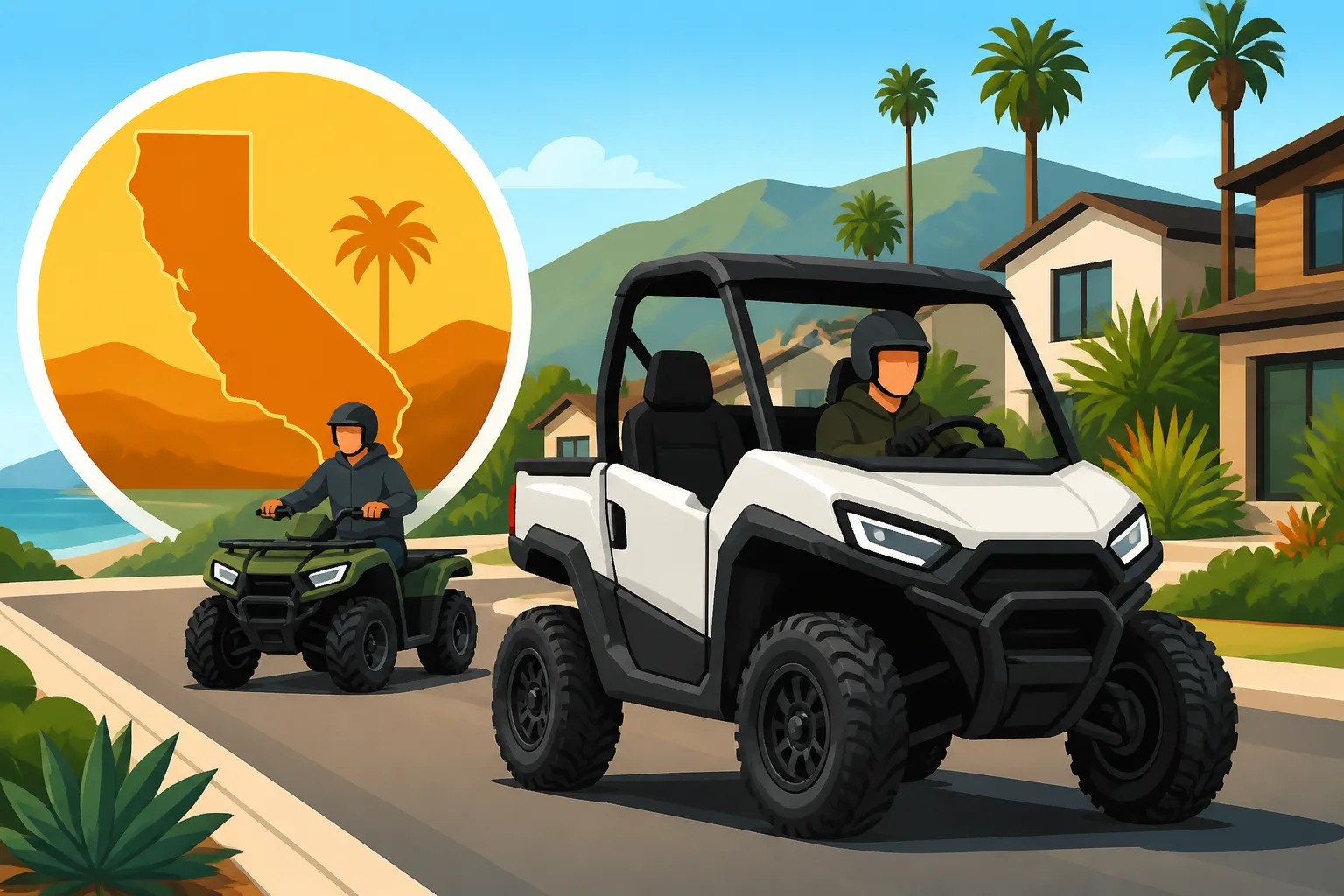
Neighborhood Electric Vehicles on 35 mph Streets
It's a familiar scenario: you live in a charming California neighborhood, and you're tired of firing up the gas-guzzling car for a quick run to the corner store, dropping the kids off at a friend's house a few blocks away, or just cruising to the community pool. You've seen those zippy, electric little vehicles, sometimes called golf carts, sometimes something else, and you wonder, "Can I actually drive one of those on my street?" The rules around Neighborhood Electric Vehicles (NEVs) in California, especially on those 35 mph streets, can feel like a tangled web of local ordinances and state regulations. This guide is here to untangle that web, helping you understand precisely where and how these convenient, eco-friendly machines fit into your daily life.
Understanding Neighborhood Electric Vehicles (NEVs) in California
Before we dive into speed limits and local designations, it’s crucial to understand what California actually defines as a Neighborhood Electric Vehicle. This isn't just a souped-up golf cart, nor is it a fully street-legal UTV. It’s a category all its own, designed with specific purposes and limitations in mind.
What Exactly is an NEV?
A Neighborhood Electric Vehicle, or NEV, is a specific type of low-speed vehicle that operates under a distinct set of rules. Think of it as a purpose-built, small, four-wheeled electric vehicle designed for short trips within communities. The key defining characteristic under California law is that an NEV must be capable of a maximum speed of at least 20 miles per hour but no more than 25 miles per hour on a paved level surface. This speed range is critical for differentiating it from other vehicle types.
These vehicles are always electric, aligning with a broader push for sustainable transportation. They typically have an enclosed passenger compartment, or at least dedicated seating with seatbelts, distinguishing them from open-air golf carts. The intent behind their creation was to provide an efficient, low-emission option for local travel, connecting homes to nearby amenities without the need for a full-sized automobile. They're often seen as part of a solution for reducing traffic congestion and promoting greener living within planned communities or small towns.
The Regulatory Framework for NEVs
California's legal framework for NEVs is primarily outlined in the Vehicle Code, specifically sections pertaining to low-speed vehicles. Unlike a standard golf cart, which generally isn't intended for public road use, an NEV is explicitly recognized and permitted to operate on certain public streets, provided it meets stringent safety and equipment requirements. This means they're not just allowed; they're regulated to ensure they can safely share the road with traditional vehicles, albeit on lower-speed thoroughfares.
The federal government also has a role, setting initial safety standards for low-speed vehicles, which states then adopt and often expand upon. In California, this means that an NEV must not only meet federal safety guidelines but also comply with additional state-specific mandates regarding registration, licensing, and local operating restrictions. It's a layered system designed to balance utility with public safety, ensuring that while NEVs offer convenience, they don't pose undue risks to themselves or other road users. This careful regulatory approach is why you can't simply take any electric cart and call it an NEV; it needs to be manufactured and equipped to specific standards.
Where NEVs Can Legally Roam: The 35 MPH Rule
The single most important rule to understand when it comes to operating a Neighborhood Electric Vehicle in California is the speed limit of the streets it can travel on. This isn't a suggestion; it's a hard and fast legal requirement that dictates the entire operational scope of your NEV.
The Core Restriction: 35 MPH Streets
In California, Neighborhood Electric Vehicles are permitted to operate only on those streets where the posted speed limit is 35 miles per hour or less. Let's really hone in on that: it's the posted speed limit that matters, not just your estimation of how fast traffic usually moves. You might drive down a road that feels like a 30 mph street, but if the sign clearly states 40 mph, your NEV is legally prohibited from using it. This is a critical distinction that many new NEV owners sometimes overlook, leading to potential citations and safety hazards.
The rationale behind this 35 mph cap is purely about safety and the speed differential with other vehicles. An NEV, with its maximum speed of 25 mph, would create a significant speed difference on a 40 or 45 mph road, leading to dangerous overtaking situations, frustrated drivers, and a much higher risk of collisions. By limiting NEVs to streets with lower speed limits, the state aims to integrate them into traffic flows where all vehicles are moving at a more comparable pace, enhancing safety for everyone. It's about ensuring that your NEV journey is not just convenient, but also secure.
Local Ordinances and Designated NEV Routes
Here's where things get a bit more localized and often confusing for folks. While California law sets the overarching 35 mph speed limit rule, it doesn't automatically mean you can drive your NEV on every 35 mph street statewide. For an NEV to be legally operable on public roads, the specific city or county must have adopted an ordinance allowing their use and, in many cases, designated specific NEV routes. Without this local permission, even a street with a 25 mph speed limit is off-limits.
Many communities in California have proactively embraced NEVs as part of their transportation strategy, especially in master-planned communities or areas with significant resort or retirement populations. For example, cities like Palm Desert have implemented extensive [Palm Desert's Golf Cart Lanes] and NEV networks, allowing residents to easily navigate between homes, shops, and recreational facilities. Similarly, the City of Lincoln has developed an [Inside the City of Lincoln's NEV Master Plan], creating specific routes and guidelines for NEV use. These local plans usually involve studies on traffic flow, safety assessments, and public hearings before designated routes are established and approved by the city council. So, before you invest in an NEV, always check with your local municipality's planning or public works department for their specific ordinances and maps.
Crossing Higher Speed Roads
A very common question for NEV owners is about crossing a street with a speed limit higher than 35 mph. Imagine you live on a 25 mph street, but to get to the other side of your community, you need to cross a main thoroughfare that's posted at 45 mph. California law does provide for this, but with strict conditions to ensure safety. You can generally cross a highway or street with a speed limit greater than 35 mph, but only at an intersection where the highway has a traffic signal.
Furthermore, the crossing must be made at a right angle to the highway, and you must proceed directly across the street. This isn't an invitation to drive down the higher-speed road; it's strictly for traversing it. You can't merge into traffic, travel even a short distance on the higher-speed road, or wait for an opportunity if it's not a signalized intersection. The intent is to minimize the NEV's exposure to faster-moving traffic and facilitate a swift, controlled crossing. Understanding [California Rules for Crossing a Highway] is paramount for NEV owners who need to connect different low-speed areas of their community. Always exercise extreme caution and follow all traffic signals and signs when making such a maneuver.
Equipping Your NEV for California Roads
It’s not enough for an NEV to simply be electric and slow. To legally operate on California's public streets, these vehicles must be outfitted with a comprehensive set of safety features that align them more with traditional automobiles than with recreational vehicles. This isn't about personalization; it's about meeting non-negotiable legal requirements.
Mandatory Safety Features and Equipment
For an NEV to be registered and legally driven on California streets, it must come equipped from the manufacturer with a specific array of safety features. These aren't optional upgrades you can add later; they are fundamental to the vehicle's design and certification. You'll need properly functioning headlights, tail lights, and stop lights, just like any other car. Turn signals, both front and rear, are also mandatory for indicating your intentions to other drivers. Reflectors, a horn, and an exterior mirror mounted on the driver's side are also critical for visibility and communication.
Beyond these, NEVs must have a parking brake, seatbelts for all designated seating positions, and a vehicle identification number (VIN) for proper registration and tracking. The windshield, if present, must be made of safety glazing material, similar to that used in cars, to prevent shattering upon impact. These requirements ensure that NEVs, despite their lower speed, provide a basic level of occupant protection and are clearly visible and predictable to other road users. While companies like SuperATV are renowned for their rugged, high-performance accessories for ATVs and UTVs—think heavy-duty axles or lift kits for hitting the trails—the concept of finding durable, compliant parts for lighting, mirrors, or even upgraded seating is something NEV owners also consider if they ever need replacements that meet regulatory standards.
Registration and Licensing Requirements
Just like your car, truck, or even your off-highway vehicle (OHV), a Neighborhood Electric Vehicle needs to be properly registered with the California Department of Motor Vehicles (DMV) before it can hit the designated streets. This isn't a casual affair; it involves submitting the necessary paperwork, proving ownership, and paying applicable fees. You'll receive a standard license plate that must be displayed on the vehicle, clearly distinguishing it as a road-legal low-speed vehicle.
Operating an NEV on public roads also requires the driver to possess a valid California driver's license. This means you can't just let anyone hop behind the wheel, especially minors, without proper licensing. The rules for operating an NEV are aligned with basic driving laws, emphasizing that even at lower speeds, the driver is responsible for understanding and obeying traffic regulations. For a comprehensive overview of the process, it's worth checking out information on [California Low-Speed Vehicle Registration] through the DMV's official channels. This ensures that every NEV operator has demonstrated at least a baseline level of driving competency and awareness.
Insurance Considerations
Driving any registered vehicle on California's public roads comes with a mandatory requirement for insurance, and your Neighborhood Electric Vehicle is no exception. While NEVs are designed for lower speeds and specific types of roads, they are still vehicles that can be involved in accidents, causing property damage or personal injury. Therefore, you must carry adequate liability insurance coverage.
This insurance provides financial protection in case you are found at fault in an accident, covering damages to other vehicles or property, and medical expenses for injured parties. Without proper insurance, you could face significant financial repercussions and legal penalties. It's always a good idea to speak with your insurance provider to ensure your NEV is appropriately covered, understanding that policies for these types of specialized vehicles might differ slightly from standard auto insurance. Don't assume your existing car policy automatically extends to your NEV; always verify your coverage for operating on public streets.
Differences Between NEVs, Golf Carts, and OHVs
One of the biggest sources of confusion for Californians looking into alternative local transportation options is distinguishing between Neighborhood Electric Vehicles, golf carts, and Off-Highway Vehicles (OHVs) like ATVs and UTVs. While they might all be small, often electric, and have four wheels, their legal definitions, intended uses, and permissible operating environments are vastly different.
Golf Carts vs. NEVs: Not the Same
While often visually similar and both electric, a golf cart and an NEV are not interchangeable in the eyes of California law. A golf cart, as the name implies, is primarily designed for use on golf courses. It typically has a top speed significantly lower than an NEV, often around 15-20 mph, and usually lacks many of the safety features mandatory for NEVs like seatbelts, turn signals, or safety glazing. Most golf carts are not street legal.
There are very limited exceptions where a golf cart might be permitted on public roads. These usually involve specific local ordinances that allow golf cart use within one mile of a golf course for residents traveling to and from the course, or in specially designated "golf cart friendly" communities. However, even in these cases, the local ordinance will specify exactly what is permitted. An NEV, on the other hand, is built to federal and state low-speed vehicle standards, specifically designed for public road use on lower speed streets, and requires full DMV registration. To dive deeper into the specific allowances for golf carts, you might want to look at [California Golf Cart Street Rules] and understand that while communities may have [California's First Neighborhood Vehicle Plan], it doesn't automatically mean all low-speed electric vehicles are created equal.
NEVs vs. OHVs/UTVs: A World Apart
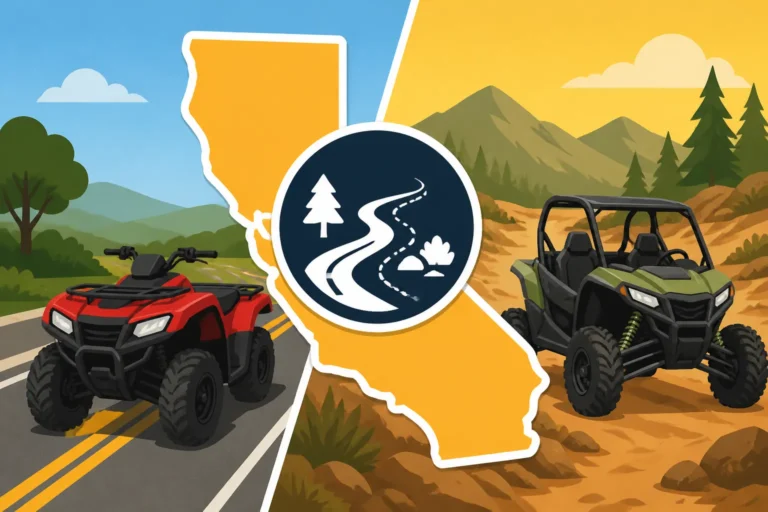
If the golf cart vs. NEV distinction is often blurred, the difference between an NEV and an Off-Highway Vehicle (OHV) like an ATV or UTV is a chasm. OHVs are purpose-built for off-road use – tackling dirt trails, sand dunes, rocky terrain, and open desert. They have powerful engines (gas or electric), rugged suspensions, and aggressive tires, and are designed for challenging environments, not paved roads. Their registration is through California's OHV program, resulting in a Green, Red, or Tan sticker, not a traditional license plate.
California law is very clear: OHVs are generally not street legal. There are extremely limited exceptions for crossing public roads at specific points or utilizing very short, designated "combined-use" highway segments to connect trails, but these are exceptions, not a rule that makes them street-legal. The idea of taking an ATV or UTV and "making it street legal" in California by adding turn signals and a horn like you might do with an NEV is a common misconception and largely impossible under current state law for a typical OHV. The vehicle classes are fundamentally different, with distinct design, safety, and operational requirements. This is why when people ask [Are ATVs Street Legal in California?], the short answer is almost always no, and understanding [Why California Will Not Convert a UTV] to street legal status is key. Fundamentally, [Why an NEV Is Not an OHV] boils down to their core design and intended use.
Practical Considerations and Local Examples
Once you grasp the legal framework and distinctions, the practical application of NEV use in California becomes clearer. It's all about matching the vehicle's capabilities and legal allowances to the specific needs and infrastructure of your community.
Navigating Your Community with an NEV
Successfully integrating an NEV into your daily routine in California requires a bit of homework. The first and most crucial step, as we've discussed, is to confirm that your specific city or county has enacted an ordinance permitting NEVs on its streets. Don't rely on assumptions or what your neighbor does; always verify the local rules. Many NEV-friendly municipalities will even provide detailed maps of approved routes, clearly showing which streets are accessible and where crossings of higher-speed roads are permitted. These maps become your essential guide for safely navigating your neighborhood.
NEVs truly shine in planned communities, retirement villages, or smaller towns where amenities like grocery stores, parks, community centers, and local shops are within a few miles and connected by streets with 35 mph (or lower) speed limits. They're perfect for quick errands, visiting friends nearby, or commuting short distances to work if your office is within the designated zone. The goal is convenience and reduced environmental impact for those frequent, short trips that often feel wasteful in a full-sized car. Always remember that while an NEV offers great flexibility, it's still a vehicle sharing the road with others, so defensive driving and adherence to all traffic laws remain paramount.
Spotlight on NEV-Friendly Communities
California has several excellent examples of communities that have successfully integrated NEVs into their local transportation fabric, demonstrating how these vehicles can enhance residents' quality of life. Palm Desert in Southern California is a prime illustration, with its extensive network of golf cart and NEV-friendly lanes and designated routes. Here, it’s common to see residents zipping to the supermarket, doctor's appointments, or local restaurants in their NEVs, leveraging the city's thoughtfully designed infrastructure. The city's grid layout and generally lower speed limits on residential and commercial collector streets make it an ideal environment for low-speed vehicle use.
Another fantastic example is the City of Lincoln, located north of Sacramento, which has actively worked to create a comprehensive plan for Neighborhood Electric Vehicles. Through careful planning, Lincoln has established approved routes that allow residents to use NEVs for various purposes, including accessing schools, parks, and local businesses. These communities often invest in signage, road markings, and even specific charging infrastructure to support NEV use. These examples highlight that successful NEV integration isn't just about passing a law; it's about a holistic approach to urban planning that considers the unique needs and benefits of these eco-friendly transport options.
Here's a quick comparison to help solidify the differences between these vehicle types in California:
| Feature | Neighborhood Electric Vehicle (NEV) | Golf Cart | Off-Highway Vehicle (OHV) |
|---|---|---|---|
| Max Speed (Paved) | 20-25 mph | Typically 15-20 mph (varies) | Varies, often 40+ mph |
| Public Road Use | Yes, on streets ≤ 35 mph, with local ordinance | Limited (golf courses, 1-mile radius, specific local ordinance) | No, strictly off-road (limited combined-use allowed) |
| CA Registration | Yes, with CA DMV (license plate) | No (unless specifically modified/registered as NEV, rare) | Yes, with CA DMV (Green/Red/Tan Sticker) |
| CA Driver's License | Yes | Yes (if on public road) | Varies by age (safety certificate often required) |
| Mandatory Safety Equip | Headlights, tail lights, turn signals, seatbelts, mirrors, horn, VIN, safety glazing | Varies; minimal for course use, sometimes add-ons for limited road use | Headlights, tail lights, spark arrester, sometimes whips, noise compliance |
| Primary Purpose | Short-distance local community transportation | Golf, private property, resort grounds | Recreation, sport, utility on unpaved terrain |
| Example Use Case | Errands in a master-planned community | Getting around a golf course, resort grounds | Trail riding at Hungry Valley, dune bashing at Glamis |
The Future of NEVs in California
As California continues its push towards greener transportation and more sustainable community living, the role of Neighborhood Electric Vehicles is likely to evolve. Understanding where NEVs are headed helps paint a clearer picture of their long-term viability and potential impact.
Expanding NEV Access and Infrastructure
The trend for NEVs in California points towards a gradual expansion of their integration into urban and suburban planning. As more communities recognize the benefits of reducing short-trip car dependence, we can expect to see more cities and counties explore and adopt ordinances that permit NEV use. This expansion won't just be about passing laws; it will also involve developing the necessary infrastructure, such as designated NEV lanes, specific parking areas with charging stations, and clearer signage. These efforts aim to make NEV use even more seamless and safe for residents.
Furthermore, advancements in battery technology and NEV design are likely to make these vehicles even more appealing. While companies like SuperATV primarily serve the robust market for off-highway vehicle parts, the general demand for reliable, specialized vehicle components is universal. As the NEV market grows, there will be increasing opportunities for innovative solutions that enhance performance, safety, and customization, ensuring NEVs remain a practical and attractive option for residents looking for local transport that aligns with California’s environmental goals.
Challenges and Safety Concerns
Despite the promising future, NEVs aren't without their challenges and ongoing safety considerations. One of the primary concerns remains the speed differential with traditional vehicles, even on 35 mph streets. While legal, a 25 mph NEV can still feel slow to a car traveling at 35 mph, requiring drivers to remain highly attentive and patient. There's also the challenge of driver awareness; both NEV operators and drivers of larger vehicles need to be educated on the unique characteristics and limitations of NEVs to prevent accidents.
Infrastructure needs are also significant. Simply designating a street as NEV-friendly isn't always enough; ideally, these routes should be designed to accommodate the slower speeds and smaller size of NEVs, perhaps with wider shoulders or dedicated lanes where feasible. Ultimately, the safety and continued success of NEVs in California will depend on a combination of responsible local planning, ongoing public education for all road users, and a continued commitment from NEV manufacturers to build vehicles that prioritize safety and compliance. It's a journey, not a destination, but one that many California communities are increasingly willing to embark on.
Disclaimer
This article is for general informational purposes only and does not constitute professional advice. Laws, prices and regulations vary by location and change over time. Consult a qualified professional for guidance on your specific situation.