Golf Carts Within a Mile of the Course
Ah, the golf cart! It’s the perfect companion for a leisurely day on the greens, a quick run to the clubhouse, or just zipping around the neighborhood. But in California, many of us have found ourselves scratching our heads, wondering if we can actually take that trusty cart on public streets, especially if we live just a stone's throw from our favorite golf course. The confusion often leads to uncertainty or, worse, an unexpected citation. This comprehensive guide will clear up all that head-scratching, diving deep into California's specific rules, particularly the often-misunderstood "one-mile radius" allowance, so you can ride with confidence and stay on the right side of the law.
Decoding California's Golf Cart Rules: More Than Just the Green
California's laws around off-highway vehicles (OHVs) and low-speed vehicles can feel like a labyrinth, and golf carts are no exception. Many people assume that because a golf cart is "low speed," it automatically gets a pass on residential streets. Unfortunately, that's rarely the case without specific local approval. It's not just about how fast it goes; it's about how the state and local municipalities classify and regulate it.
What Makes a Golf Cart a "Golf Cart" Legally?
First, let's establish what California law considers a "golf cart." According to the California Vehicle Code (CVC) Section 345, a "golf cart" is defined as a motor vehicle having not less than three wheels in contact with the ground, weighing no more than 1,300 pounds unladen, designed to be operated at speeds of not more than 15 miles per hour, and designed for transporting persons and golf equipment on a golf course. This definition is crucial because it sets golf carts apart from other vehicles like Neighborhood Electric Vehicles (NEVs) or Low-Speed Vehicles (LSVs), which have different speed and equipment requirements. It's really designed for a very specific purpose and environment – the golf course itself.
Many golf carts today are capable of exceeding that 15 mph limit, especially newer electric models with upgraded motors. However, for the purpose of the law, if its design intent is for the golf course and it meets the weight and original speed specifications, it’s still legally a golf cart. This distinction becomes incredibly important when you start thinking about taking it off the fairway and onto city streets. Your souped-up cart might feel like a mini-UTV, but legally, it's still a golf cart.
The Standard No-Go for Public Roads (and Why)
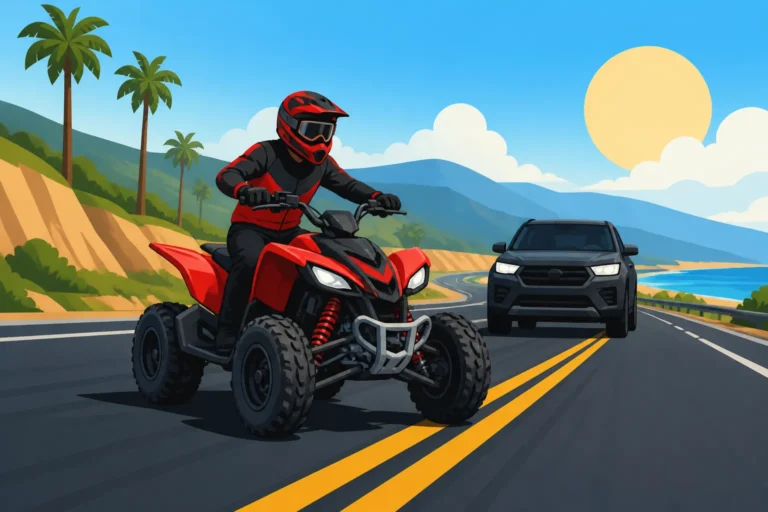
Generally speaking, golf carts are not designed or legally permitted for use on public streets, highways, or roadways in California. They lack many of the safety features required for conventional street-legal vehicles, such as advanced lighting systems, turn signals, mirrors, seat belts, and robust braking systems suitable for higher speeds or interactions with cars. The state prioritizes the safety of all road users, and a golf cart simply doesn't offer the same level of protection or visibility as a standard vehicle. This fundamental restriction is in place to prevent accidents and ensure that anyone operating a vehicle on public thoroughfares can do so safely and predictably.
Imagine trying to navigate a busy intersection in a vehicle that tops out at 15 mph, lacks proper turn signals, and offers minimal protection in a collision. It's a recipe for disaster, both for the golf cart operator and other drivers. The CVC is designed to prevent these kinds of situations. This is why you typically see golf carts confined to private property, within gated communities that have their own internal road networks, or, of course, on golf courses themselves. Without specific local exceptions, taking your cart for a spin to the grocery store or a friend's house on public roads is a definite no-no.
Why This "One-Mile Rule" Even Exists
So, if golf carts aren't generally allowed on public roads, where does this "one-mile rule" come from? It's a concession designed to bridge the gap between private property and a golf course, recognizing the practical need for players and residents living immediately adjacent to courses to access them conveniently. The rule is rooted in the idea of local control and common sense. Many golf course communities are specifically designed with homes bordering the course, and forcing residents to load their golf carts onto trailers just to travel a few hundred feet down a quiet street to the pro shop seems excessive and inconvenient.
The "one-mile rule" serves as an exception to the general prohibition, allowing cities and counties to designate specific sections of roadway for golf cart use. This power is granted by the state but executed at the local level, recognizing that local governments are best equipped to assess the safety and traffic conditions of their specific streets. It's all about balancing convenience for golf enthusiasts with the paramount need for public safety. Think of it as a localized "combined-use highway" concept, but specifically tailored for golf carts and very limited areas. [California's Combined-Use Highways] follow a different set of rules for OHVs, highlighting just how specific the golf cart exemption is.
The Specifics of California's "One-Mile Radius" Exemption
This is where the rubber meets the road—or rather, where the golf cart wheels meet the designated path. The "one-mile radius" isn't an automatic right; it's a specific allowance that requires local government action. Without that local designation, even if your house is literally next door to the first tee, you still can't legally drive your golf cart on the public street.
Understanding the Enabling Legislation: CVC 21115
The legal foundation for the "one-mile rule" is found primarily in California Vehicle Code Section 21115. This section essentially states that a local authority (like a city council or county board of supervisors) may adopt an ordinance permitting the operation of golf carts on public streets or highways within its jurisdiction. However, there are very specific conditions that must be met:
- Proximity to a Golf Course: The primary condition is that these designated streets must be within one mile of a golf course. This is the crucial geographic limitation that defines the "one-mile radius" concept. It's not arbitrary; it's a very clear boundary.
- Designated Routes: The local authority must designate which specific streets or portions of streets are approved for golf cart use. They can't just declare a general "one-mile zone." This often involves studies of traffic patterns, road conditions, and safety.
- Speed Limit: The designated streets must have a posted speed limit of 25 miles per hour or less. This is critical because golf carts, by definition, are low-speed vehicles. Allowing them on faster roads would create significant safety hazards.
- Appropriate Signage: The local authority is required to place appropriate signs indicating that golf cart operation is permitted. This helps inform both golf cart operators and other drivers about the shared use of the roadway. You can't just assume; you need to see the signs.
Without an ordinance specifically adopted by your local city or county, CVC 21115 doesn't apply, and your golf cart remains off-limits for public roads. This means that while the state allows for this possibility, it’s entirely up to your local officials to make it a reality.
How Local Governments Designate Golf Cart Routes
The process for a local government to designate golf cart routes is a formal one, typically involving several steps:
- Feasibility Study and Public Input: The city or county will usually conduct a study to identify potential routes, assess traffic volumes, accident history, and pedestrian safety. They'll also often solicit public input from residents, golf course operators, and law enforcement. This ensures that any designated route is safe and addresses community concerns.
- Drafting an Ordinance: Based on the study and input, a proposed ordinance is drafted. This document will specify the exact streets or segments of streets where golf carts are allowed, any additional local rules (such as hours of operation), and the requirements for signage.
- Public Hearings and Adoption: The draft ordinance is then presented at public hearings where residents can voice their opinions. If approved, the city council or county board of supervisors will formally adopt the ordinance, making it law within their jurisdiction.
- Installation of Signage: Once the ordinance is adopted, the public works department will install the necessary signage along the designated routes, clearly indicating where golf carts are permitted. [What California's CVC 38026 Lets an Agency Designate] offers similar insight into how public agencies can designate routes for other types of vehicles.
This detailed process ensures that golf cart routes are not haphazardly created but are instead thoughtfully integrated into the existing road network with safety as a top priority. It's not a quick decision; it involves careful consideration of the local environment.
Distinguishing Designated Routes from Just "Near the Course"
Here's where many golf cart owners get tripped up. The phrase "within one mile of a golf course" in the CVC doesn't grant carte blanche to drive anywhere. It's the limit within which a city can designate routes, not an automatic permission slip for every street in that radius. You cannot, for example, just assume you can drive your golf cart on any road within a one-mile circle around the golf course entrance.
The critical element is the designation by local authority and the presence of signs. If there are no signs specifically indicating golf cart use is allowed on a particular street, then it is not a designated route, regardless of its proximity to the golf course. Driving on an undesignated street, even if it's only 500 feet from the clubhouse, is still considered illegal operation on a public roadway. This is why paying close attention to local ordinances and street signage is paramount. A good example of proactive designation can be seen in [Palm Desert's Golf Cart Lanes], where specific infrastructure and signage exist to facilitate golf cart movement. Don't rely on guesswork; look for the official signs.
Making Your Golf Cart Street-Ready for Designated Routes
Even if your local municipality has designated routes, you can't just roll your standard golf cart off the course and onto the street. California law has specific equipment requirements that your cart must meet to be considered "street-ready" for these designated paths. These aren't just suggestions; they are legal mandates designed to ensure safety when sharing the road with other vehicles.
Essential Equipment Upgrades for Road Use
To comply with the CVC and local ordinances for street-legal golf cart operation on designated routes, your golf cart will typically need to be equipped with the following:
- Headlamps: At least one, but usually two, headlamps that meet visibility standards, just like a regular car, to ensure you can see and be seen, especially at dusk or night.
- Tail Lamps: Red tail lamps visible from a specified distance to signal your presence from behind.
- Stop Lamps (Brake Lights): Working brake lights that illuminate when the brakes are applied, alerting drivers behind you that you're slowing down or stopping.
- Turn Signals: Front and rear turn signals to indicate your intention to turn or change lanes, crucial for predictable road sharing.
- Side-View Mirrors: At least one mirror, but often two (one on each side), to allow the driver to see traffic behind and to the sides.
- Reflectors: Additional reflectors on the sides and rear for enhanced visibility, especially at night.
- Horn: A functional horn capable of emitting a sound audible under normal conditions from a distance of 200 feet.
- Windshield: A safety-glazed windshield, often made of AS1 or AS2 rated plastic, providing protection from debris without obstructing vision.
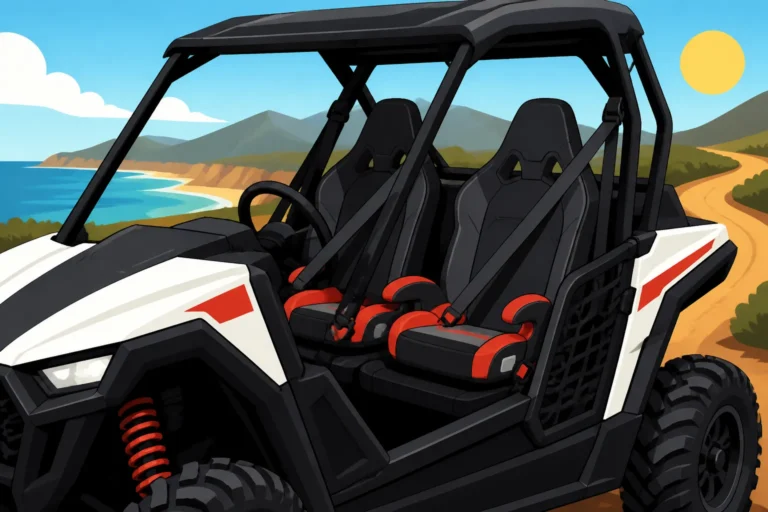
- Seat Belts: If the golf cart is equipped with seat belts, they must be in good working order. While not always mandated for low-speed vehicles in the same way as cars, if they are present, they must function correctly.
- Parking Brake: A parking brake capable of holding the vehicle stationary on a grade.
These requirements ensure that even though your golf cart is low-speed, it still possesses the basic safety features necessary to operate predictably and visibly alongside conventional traffic. Think of it as a bare minimum for safety. Unlike the heavy-duty modifications and suspension systems that enthusiasts often seek from brands like SuperATV for their off-road UTVs, golf cart upgrades for street use are purely about meeting these specific safety and visibility standards, not about performance or extreme terrain.
Navigating Licensing, Speed, and Operational Limits
Operating a golf cart on designated public roads also comes with specific rules for the driver and the vehicle's operation:
- Driver's License: Anyone operating a golf cart on a public street, even a designated golf cart path, must possess a valid California driver's license. This means teenagers with just a learner's permit cannot operate a golf cart on public roads, even if accompanied by a licensed adult. It’s the same requirement as driving a car.
- Speed Limit Adherence: You must obey all posted speed limits, but your golf cart itself cannot exceed 25 miles per hour. If the designated street has a speed limit higher than 25 mph, then golf carts are simply not allowed on that segment, even if it's within the one-mile radius and otherwise designated.
- Right-of-Way and Traffic Laws: Golf cart operators are expected to follow all standard traffic laws, including yielding the right-of-way, stopping at stop signs and traffic lights, and observing pedestrian crossings. You are sharing the road with cars, bicycles, and pedestrians, so responsible driving is non-negotiable.
- No Reckless Driving: Just like any other vehicle, reckless driving, unsafe maneuvers, or operating while under the influence of alcohol or drugs is strictly prohibited and carries severe penalties. [California DUI Rules for OHV Riders] apply broadly to anyone operating a motor vehicle on public land or designated routes.
Understanding and adhering to these operational limits and driver requirements is just as important as having the right equipment. The convenience of a designated golf cart route does not exempt you from the fundamental responsibilities of being a licensed driver on a public road.
Insurance Considerations for Public Road Travel
While California does not typically require registration or license plates for golf carts in the same way it does for cars or OHVs (unless they are modified to be a Low-Speed Vehicle, which is a different classification), liability insurance is a critical consideration for any public road use. Although not always explicitly mandated by law for golf carts in every local ordinance, operating any vehicle on a public roadway exposes you to potential liability in case of an accident.
Most homeowners' insurance policies might offer some limited coverage for golf carts on your own property or a golf course, but this coverage often doesn't extend to incidents on public streets. It's highly advisable to check with your insurance provider to see if your current policy covers liability for golf cart operation on designated public roads. If not, you might need to obtain a separate golf cart insurance policy or an endorsement to your existing auto or homeowners' policy. [California Insurance Rules for OHV Road Use] similarly underscore the importance of understanding coverage when taking any recreational vehicle onto public access points. Protecting yourself and others from financial repercussions in the event of an accident is simply a smart move.
Beyond Golf Carts: Comparing With Other Low-Speed Vehicles
The world of small, electric, and low-speed vehicles can be confusing, with golf carts often lumped in with their cousins, Neighborhood Electric Vehicles (NEVs) and even some modified utility vehicles (UTVs). However, understanding the distinctions is crucial, as each category has its own set of rules, equipment requirements, and permissible uses on public roads. Misidentifying your vehicle type can lead to unexpected legal trouble.
Golf Carts vs. Neighborhood Electric Vehicles (NEVs)
This is one of the most common points of confusion. While both are low-speed, often electric, and designed for local travel, a golf cart and a Neighborhood Electric Vehicle (NEV) are distinct categories under California law.
| Feature | Golf Cart | Neighborhood Electric Vehicle (NEV) |
|---|---|---|
| Primary Design | Transport on golf courses | Local transportation on public roads |
| Maximum Speed | Designed for 15 mph (CVC 345) | 25 mph to 35 mph (CVC 38550) |
| Registration | Generally no state registration/plate needed | Requires DMV registration, license plate |
| Safety Features | Basic for course use, needs upgrades for roads | Higher standard: lights, signals, mirrors, seat belts, VIN, windshield |
| Road Use | Only on designated local roads (max 25 mph) | Roads with posted speed limit of 35 mph or less |
| Emissions | Zero emission (typically electric) | Zero emission (electric only) |
| Cost | Generally lower | Generally higher due to enhanced features |
As you can see, NEVs are essentially designed from the ground up to be street-legal on a wider range of low-speed roads. They undergo a more rigorous manufacturing process to meet federal and state safety standards for low-speed vehicles (LSVs), including crush zones, vehicle identification numbers (VINs), and more robust braking systems. If you have a vehicle that looks like a golf cart but can go 25-35 mph and has a license plate, it's likely an NEV, not just a golf cart. [California NEV Street Rules] delves deeper into these specific regulations for Neighborhood Electric Vehicles.
Golf Carts vs. Modified UTVs (and why SuperATV comes to mind for the latter)
This distinction is even more pronounced. Utility Terrain Vehicles (UTVs) or side-by-sides are built for off-road use, hauling, and recreational adventures. They are robust, powerful machines designed for rough terrain, often featuring advanced suspension, larger tires, and powerful engines. When people discuss modifying UTVs for street legality, they are usually talking about a completely different set of upgrades and legal pathways compared to golf carts.
Companies like SuperATV specialize in aftermarket parts for UTVs, offering everything from lift kits and heavy-duty axles to winch mounts and protection components that enhance off-road performance and durability. While some UTVs can be modified to meet street-legal requirements in certain states (often by adding turn signals, horns, mirrors, and DOT-approved tires), California's laws for converting an OHV to street-legal status are notoriously strict and often prohibitively difficult. [Can You Make a UTV Street Legal in California?] explains why this is generally not possible in the Golden State.
A modified UTV, even one with street-legal accessories, is fundamentally different from a golf cart. It's larger, heavier, typically much faster, and designed for a completely different purpose. Attempting to pass a UTV off as a golf cart, or vice-versa, for road use would be a major legal misstep. Golf carts, even with street-legal upgrades, retain their core identity as a specific type of low-speed vehicle with very limited road privileges, distinct from the rugged, trail-dominating machines optimized with parts from a brand like SuperATV.
Why Misidentification Leads to Big Problems
The consequences of misidentifying your vehicle type can be severe. If you operate a golf cart on a street where it's not designated, or a UTV on a public road assuming it's a golf cart, you could face:
- Fines and Citations: Driving an unregistered or improperly equipped vehicle on public roads can lead to significant traffic tickets. [California Fines for Riding on a Highway] highlights the potential financial penalties involved.
- Impoundment: Your vehicle could be impounded, leading to additional fees for towing and storage.
- Insurance Issues: In the event of an accident, your insurance might deny coverage if the vehicle was being operated illegally, leaving you personally liable for damages and injuries.
- Safety Risks: Most importantly, operating a vehicle outside its designed parameters or legal permissions poses a serious safety risk to yourself, passengers, and other road users. A golf cart simply isn't built to handle the dynamics of regular traffic.
Therefore, it's absolutely essential to know precisely what type of vehicle you have and what specific laws apply to its operation on California's public roads. Don't guess; verify.
Navigating Your Community: Real-World Examples and Best Practices
Understanding the statewide laws is one thing, but applying them to your specific community requires a bit of local investigation. California is a diverse state, and what's permitted in one city might be strictly prohibited in another, even if both are near golf courses.
Case Studies: Cities Successfully Implementing Golf Cart Zones
Many communities in California, particularly those with a strong golf culture or retirement communities built around courses, have successfully implemented golf cart zones under CVC 21115. These cities serve as excellent examples of how local ordinances can enhance convenience while maintaining safety.
One prominent example is the City of Palm Desert in Southern California. With numerous golf courses and a large population of golf enthusiasts, Palm Desert has meticulously established a network of designated golf cart lanes and routes. This allows residents to travel safely between their homes, golf courses, shopping centers, and other local amenities using their golf carts. [Palm Desert's Golf Cart Lanes] are a testament to how local planning can integrate golf carts into the urban fabric. These aren't just random streets; they are clearly marked, often separate, and designed with safety in mind. Another area that has explored similar local vehicle plans is documented in [Inside the City of Lincoln's NEV Master Plan], though that one specifically focuses on NEVs, it demonstrates the local authority's ability to create such zones.
These successful implementations didn't happen overnight. They involved extensive planning, community engagement, traffic studies, and a significant investment in signage and, in some cases, dedicated cart paths. They highlight that where there's a will (and a need), local governments can find safe ways to accommodate golf cart use within the one-mile radius.
What to Do If Your Community Doesn't Have Designated Routes
If you live within a mile of a golf course but don't see any signs indicating designated golf cart routes, assume they don't exist. The absence of signage means the general prohibition on golf carts on public roads applies. Trying to argue that you're "within a mile" if there's no ordinance and no signs won't hold up in court if you receive a citation.
Here are your options if your community hasn't yet designated golf cart routes:
- Contact Local Officials: Reach out to your city council members or county supervisors. Inquire about the possibility of creating golf cart routes. You can present a compelling case based on community convenience, reduced car traffic for short trips, and enhanced accessibility for seniors. Gather support from neighbors and local golf course operators; a collective voice is often more effective.
- Advocate for Change: Organize a community group to research the feasibility, gather data, and formally propose an ordinance to your local government. Reference CVC 21115 and provide examples of successful implementations in other cities (like Palm Desert). This could be a multi-year effort, but it's the only legal pathway to change.
- Use Alternative Transportation: Until designated routes are established, your only legal options are to either trailer your golf cart to the course or drive your conventional vehicle. As frustrating as it might be to drive your car a mere half-mile, it's far better than facing fines or, worse, being involved in an accident while operating your golf cart illegally.
Remember, the power lies with your local authorities to make this designation. Without their official action, the "one-mile rule" is merely a potential, not a present right.
Safety Best Practices for Sharing the Road
Even on designated golf cart routes, safety must always be your top priority. You are sharing the road with larger, faster vehicles, and you are far more vulnerable in a golf cart.
- Be Highly Visible: Always ensure your golf cart's lights are on, even during the day. Consider adding reflective tape or a bright flag, particularly if you are on a busy street. The more visible you are, the safer you'll be.
- Drive Defensively: Assume other drivers don't see you. Anticipate potential hazards, leave plenty of space, and be prepared to stop or react quickly. Don't rely solely on the fact that you are on a "designated route."
- Follow All Traffic Laws: Obey speed limits, stop signs, traffic signals, and yield signs. Use your turn signals every time. Just because you're in a golf cart doesn't mean the rules of the road don't apply.
- Avoid Distractions: Put away your phone, focus on the road, and be aware of your surroundings. Distracted driving is dangerous in any vehicle.
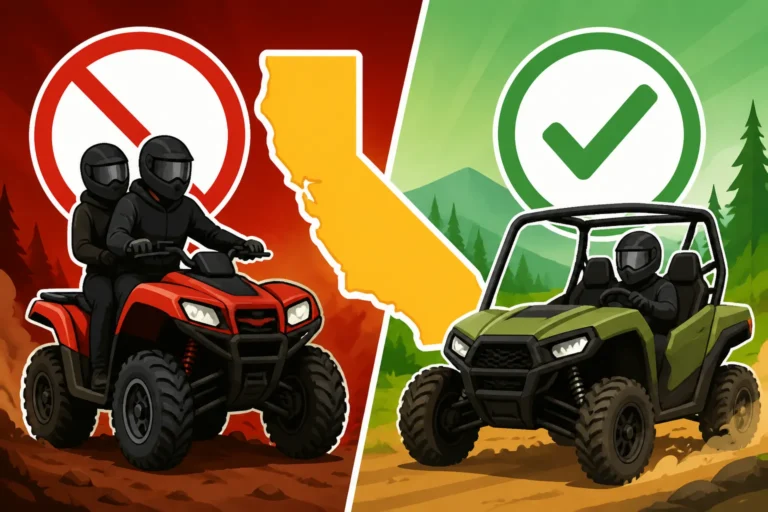
- No Passengers Beyond Capacity: Never overload your golf cart with more passengers than it's designed for, and ensure everyone is seated properly. In many instances, [California's Ban on ATV Passengers] on public land underscores a general state caution against exceeding vehicle design capacity for safety.
- Children and Pets: Ensure children are properly restrained and supervised. Pets should also be secured and not allowed to interfere with the driver's operation.
- Be Aware of Weather Conditions: Rain, fog, or extreme heat can significantly reduce visibility and traction, making golf cart operation more hazardous. Plan your trips accordingly.
- Carry Your License and Proof of Insurance: Always have your valid driver's license with you, and any proof of insurance you might have for your golf cart. A ranger or law enforcement officer may ask to see these. [Carrying Registration Paper on the Sand] applies this concept to OHVs, but it's good practice for any vehicle on public routes.
By following these best practices, you can enjoy the convenience of your golf cart on designated routes while minimizing risks and ensuring a safer experience for everyone on the road.
Disclaimer
This article is for general informational purposes only and does not constitute professional advice. Laws, prices and regulations vary by location and change over time. Consult a qualified professional for guidance on your specific situation.