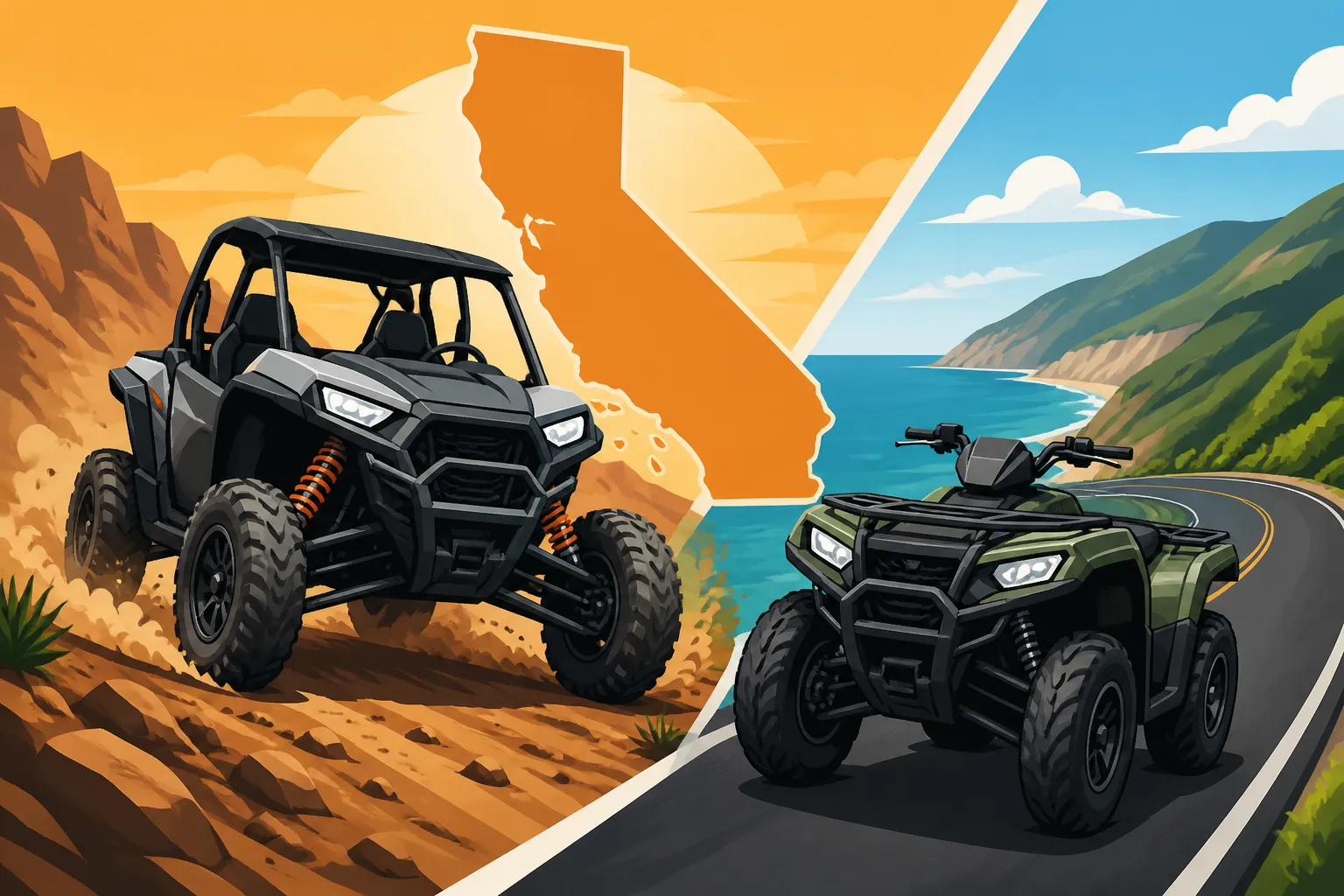
Machines Built for Both On and Off Highway
It's a common scenario: you've seen videos of riders cruising their side-by-sides down Main Street in Arizona, or perhaps you're moving to California from a state where a few aftermarket modifications turn your ATV into a street-legal dream machine. Then you hit California, and suddenly, the dream crashes into a wall of confusion. This guide is here to untangle the often-frustrating reality of what "machines built for both on and off highway" actually means in the Golden State, helping you understand the rules and avoid costly mistakes.
The Elusive "Street Legal" OHV in California
For many off-highway vehicle (OHV) enthusiasts, the idea of a "street legal" ATV or UTV is the ultimate convenience. Imagine riding straight from your campsite to the local diner, or connecting trails without the hassle of loading and unloading from a trailer. This vision is a reality in many parts of the country, leading to a natural assumption that the same applies everywhere. However, California operates under a vastly different set of rules, often leaving riders scratching their heads and feeling frustrated.
The Dream Versus Reality for California Riders
Let's be real: seeing a UTV with a license plate cruising down a paved road in another state can spark serious envy. You might have bought your machine, perhaps a rugged UTV or a performance ATV, with the idea that with a few tweaks, it too could enjoy the open road. The sales pitch in your home state might have even hinted at "dual-sport capability" or "street-ready features." But when you bring that machine to California, that dream often evaporates. The reality is that a machine considered street legal in, say, Nevada, might be deemed strictly off-highway the moment its tires touch California pavement, unless it's within a very specific, designated area. It’s a rude awakening for many, a legitimate point of contention for those who simply want to enjoy their expensive recreational vehicle without breaking the law.
Why California's Rules Differ So Dramatically
California's approach to vehicle registration and street legality is rooted in a unique combination of environmental regulations, public safety concerns, and the sheer volume of vehicles on its roads. Unlike states that prioritize ease of conversion, California maintains a sharp distinction between vehicles designed and certified for highway use and those intended for off-highway recreation. The state's Vehicle Code (CVC) doesn't just look at what features you've added (like turn signals or a horn); it delves into the fundamental manufacturing certification of the vehicle. If a machine was originally designated as an off-highway vehicle by its manufacturer, it's incredibly challenging, if not impossible, to reclassify it for unrestricted highway use here. This strict stance reflects California's commitment to clean air standards and its comprehensive framework for road safety, setting it apart from many other states that embrace more flexible "street legal" OHV conversions.
California's Strict Definition: What's Allowed and What Isn't
To truly understand why most OHVs aren't street legal in California, you need to grasp the state's core definitions for vehicles. It’s not about how fast your UTV can go or how many creature comforts it has; it’s about its fundamental classification at the time of manufacture. This distinction is paramount and impacts everything from registration to where you can legally ride.
What is a "Motor Vehicle" in California's Eyes?
For a vehicle to be fully "street legal" and registered for unrestricted highway use in California, it must meet rigorous federal motor vehicle safety standards (FMVSS) and, critically, California Air Resources Board (CARB) emissions requirements as a highway vehicle from the factory. This isn't just a matter of adding a few accessories; it's about the entire engineering and certification process. Think about it: your car or truck comes with a Certificate of Origin that designates it as a highway vehicle, complete with specific safety ratings and emissions compliance. Most ATVs and UTVs, even those that boast full cabins and advanced suspensions, are manufactured and certified as off-highway recreational vehicles. This means they don't undergo the same battery of tests or meet the same emissions standards required for highway vehicles, even if they sometimes have features like headlights or seatbelts. This fundamental difference in manufacturing intent and certification is the primary barrier to street legality.
The Specifics of OHV vs. Highway Vehicle Status
The California Vehicle Code draws a very clear and often unforgiving line between an Off-Highway Vehicle (OHV) and a highway-legal motor vehicle. An OHV is, by definition, a vehicle designed primarily for off-highway use and does not meet all the stringent requirements for registration for unrestricted use on public roads. Even if your [California OHV Registration for a Side-by-Side] or dirt bike looks capable of handling road travel, its underlying certification and manufacturing intent dictate its legal status. This is why a brand-new UTV purchased from a dealership, despite its increasing sophistication and car-like features, typically receives a special OHV identification "sticker" (like a [California's Green Sticker Explained] or [California Red Sticker Rules Today]), not a standard license plate. This initial classification at the point of sale is a powerful determinant, and attempting to change this fundamental status through aftermarket modifications for general street use is simply not permitted under California law.
Understanding "Combined-Use" Roads: A Limited Exception
While the dream of an all-encompassing street-legal OHV is mostly elusive in California, there's a specific, albeit narrow, exception that many riders hear about: combined-use roads. These routes offer a glimmer of hope for short transitions, but they come with their own strict set of rules and limitations that are crucial to understand.
Navigating California's Designated Combined-Use Routes
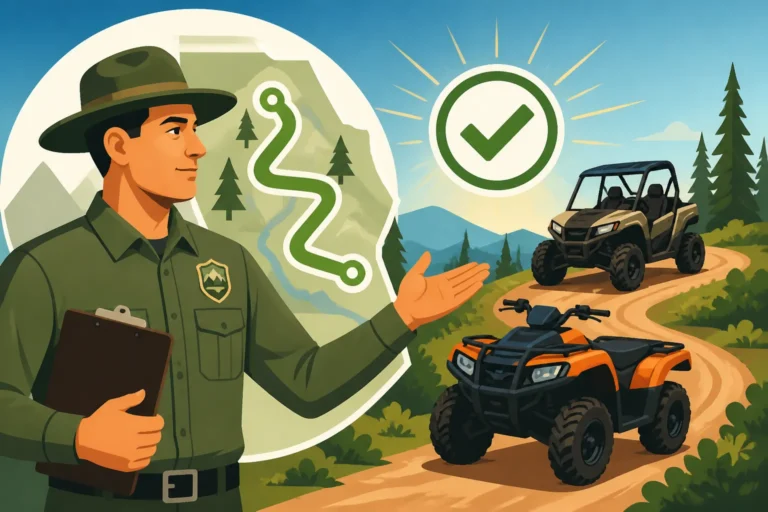
Think of combined-use highways not as an open invitation to cruise, but as carefully controlled bridges connecting off-highway areas. These are specific, short segments of public roads – typically county routes or low-speed highways – that have been explicitly approved by a local agency and the California Highway Patrol (CHP) for shared use by both highway-licensed vehicles and registered OHVs. The purpose is highly pragmatic: to allow riders to legally travel a short distance between OHV trails, access a staging area, or reach essential services like a gas station or a general store from an off-highway riding spot. [California's Combined-Use Highways] provides a good overview of this. The key here is "designated" – these aren't just any dirt roads, but routes that have gone through a formal, often lengthy, approval process. Finding them usually requires checking local county maps or consulting resources from the Off-Highway Motor Vehicle Recreation (OHMVR) Division.
The Strict Rules for Riding on Combined-Use Segments
Riding on a designated combined-use route isn't a free-for-all; it's a privilege with very specific conditions. Riders must adhere to posted speed limits (often 35 mph or less), observe any time-of-day restrictions, and ensure their OHV meets specific equipment requirements, including headlights, taillights, brake lights, mirrors, and, of course, a valid [Registering an OHV in California] and appropriate identification sticker. Helmets are almost always required, even for adults in UTVs, unless specific rollover protection and seatbelt systems are present, and even then, local rules can supersede. Crucially, these routes are designed for transition, not leisurely drives. They are typically capped at a maximum length of [California's 3-Mile Combined-Use Cap]. This isn't for joyriding; it's about connecting point A to point B for a necessary purpose. Ignorance of these highly localized rules is not an excuse, and a violation can quickly lead to a hefty citation.
Why Conversions Are a No-Go for Most OHVs
This is often the most frustrating part for riders coming from other states. The idea of adding a few accessories and getting a license plate is deeply ingrained in the off-road culture of many regions. However, in California, the concept of "converting" a factory-produced OHV into a street-legal vehicle for general road use is, for the most part, a legal dead end.
The Fundamental Legal Hurdles to OHV Street Conversion
In states with more permissive laws, turning an OHV into a street-legal machine might involve installing a kit from a company like SuperATV that includes turn signals, a horn, a rearview mirror, and a license plate bracket. While SuperATV offers fantastic aftermarket parts for off-road performance and utility, these additions alone do not change the fundamental legal classification of your vehicle in California. The core issue, as we've discussed, lies in the original manufacturing certification. If your ATV or UTV was manufactured and designated as an off-highway vehicle (with an OHV VIN and an MSO stating "Off-Highway Use Only"), California generally will not allow it to be registered as a highway vehicle, regardless of how many street-legal accessories you bolt on. The state does not have a formal process to "convert" an OHV's title and registration to highway status. This is a critical distinction and often the biggest misconception for riders new to California's unique regulatory environment. The bottom line is [Why California Will Not Convert a UTV].
Out-of-State Plates and California's Viewpoint
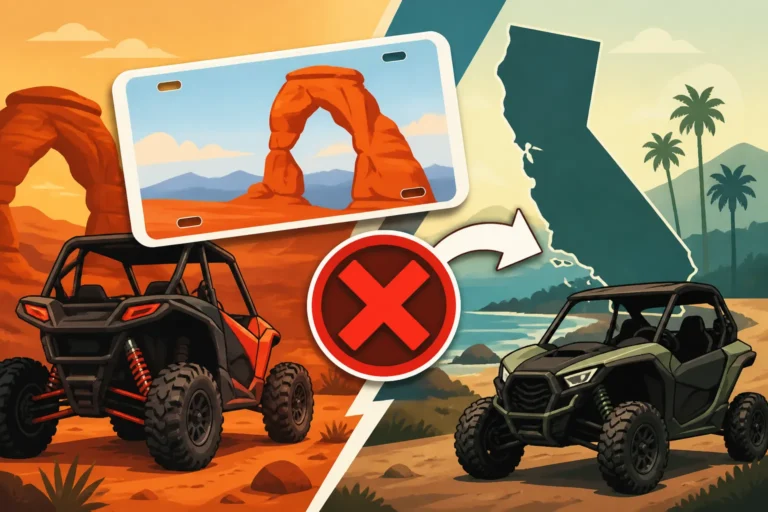
Given California's stringent rules, many riders explore alternative routes, such as registering their OHVs as street legal in a more lenient state – perhaps setting up a Montana LLC or obtaining an Arizona plate. While these strategies might be perfectly legal and effective in those states, they generally do not grant street-legal status for an OHV on California's public roads. California law enforcement typically views these as off-highway vehicles regardless of their out-of-state license plate, especially if they clearly do not meet California's specific highway vehicle requirements. You're effectively relying on reciprocity rules that don't apply to the fundamental classification of the vehicle in California. If you're pulled over on a public road in California on an OHV that only has an [An Arizona Street-Legal UTV in California] plate or one from a [A Montana LLC Plate in California], you risk being cited for operating an unregistered vehicle on a public highway, among other potential violations. The state takes its vehicle codes seriously, and trying to circumvent them can lead to significant fines, impoundment, and a ruined riding trip.
What if Your Machine Is Truly Dual-Sport from the Factory?
The term "dual-sport" can be confusing because it's often misapplied. While most ATVs and UTVs cannot be converted to street legal status in California, there are legitimate vehicles that are designed and certified for both on-highway and off-highway use right from the factory. Understanding these categories is key to knowing what truly fits the bill.
Motorcycles and Dual-Sport Enduros: The Real Deal
When Californians talk about a "dual-sport" vehicle in the context of legal street and dirt use, they are almost universally referring to a motorcycle. These are machines like a Honda CRF450L, a Kawasaki KLR650, or a Suzuki DR-Z400S that are specifically manufactured and certified from the factory to meet both federal highway safety standards and off-highway capabilities. They come with a full 17-digit Vehicle Identification Number (VIN) that designates them as highway vehicles, a manufacturer's statement of origin (MSO) that clearly indicates their street-legal status, and all the necessary equipment installed at the factory: DOT-approved tires, mirrors, turn signals, headlights, taillights, and emissions controls. When you register one of these, you receive a standard California license plate, just like a car or truck, allowing you unrestricted street use. This is the gold standard for genuine dual-sport capability in California, fundamentally different from an ATV or UTV that might possess some street features but lacks the foundational highway certification.
Specialized Low-Speed Vehicles (LSVs) and NEVs
California also recognizes other niche categories of vehicles that have specific, limited street legality, but these are distinct from traditional OHVs. Low-Speed Vehicles (LSVs) and Neighborhood Electric Vehicles (NEVs) are examples. These are purpose-built vehicles, often resembling modified golf carts, designed for specific, limited street use, typically on roads with posted speed limits of 35 mph or less. They have their own set of manufacturing and safety requirements (which are less stringent than full highway vehicles but more so than OHVs) and are registered with standard license plates. While they can operate on certain public roads, they are far from being full highway vehicles and are certainly not to be confused with a robust off-road UTV or ATV that has been merely "modified." [California Low-Speed Vehicle Registration] explains these distinctions in detail. These vehicles serve a very specific purpose for localized transportation and recreation, not for the extensive off-highway adventures typically associated with ATVs and UTVs.
Navigating Your "Off-Highway" Machine's Life in California
So, if converting your OHV to street-legal status is mostly out of the question and combined-use roads are a narrow exception, what’s the best way to enjoy your machine in California? The answer lies in embracing its intended purpose and understanding the state’s extensive network of dedicated off-highway riding areas.
Focus on Designated Off-Highway Riding Areas
Given California's stringent regulations, the most realistic, legal, and truly enjoyable approach for most OHV owners is to embrace their machine's intended purpose: off-highway riding. California is home to an incredible array of State Vehicular Recreation Areas (SVRAs), Bureau of Land Management (BLM) lands, and National Forest trails where your [California Green Sticker Cost] or [California Red Sticker Rules Today] machine can be ridden legally and safely. Areas like the vast [Riding Glamis on a California Green Sticker] in the Imperial Sand Dunes, the wide-open spaces of [Ocotillo Wells: California's Free SVRA], or the diverse terrain of [Hungry Valley SVRA North of Los Angeles] offer literally millions of acres of designated riding opportunities. Instead of trying to force your off-highway vehicle onto public roads where it doesn't belong, focus on exploring these incredible resources. They provide unparalleled experiences designed specifically for your machine, without the constant worry of legal violations.
Trailer Your Machine: The Safest Bet
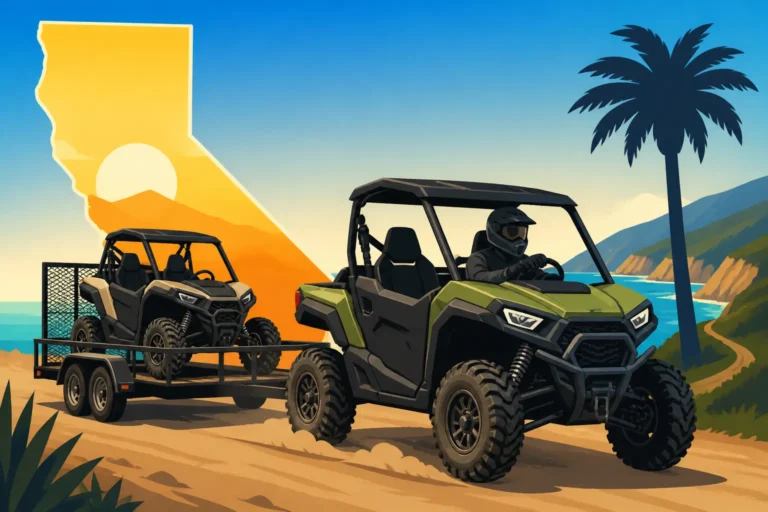
Unless you are absolutely certain you are on a designated and currently open combined-use route, and you meet all the specific requirements for that route, the only legal and sensible way to transport your OHV to a riding area is to trailer it. Attempting to ride your ATV or UTV down a public highway, even for a very short distance, can result in significant fines, potential impoundment of your vehicle, and other penalties. It’s simply not worth the risk. Invest in a reliable trailer, ensure it's properly registered, and make sure your tow vehicle is capable of safely transporting your machine. While it might feel like an extra step compared to simply riding from your driveway, [Trailering Instead of Riding in California] is the standard practice here for a reason. It ensures you're riding legally, safely, and protecting your investment by keeping it where it belongs – off-highway. This isn't just about avoiding a ticket; it's about adhering to the state's comprehensive safety and environmental framework, which ultimately helps preserve these riding opportunities for everyone.
| Feature | True Dual-Sport (Motorcycle) | Factory OHV (ATV/UTV) | Converted OHV (Out-of-State) |
|---|---|---|---|
| Street Legal in CA? | Yes, full highway plate | No, generally OHV sticker | No, generally OHV sticker |
| Primary Design | Both on/off highway | Off-highway | Off-highway |
| Manufacturer Cert. | Highway & Off-Highway | Off-Highway | Off-Highway |
| CA Registration | Standard License Plate | Green/Red/Tan OHV Sticker | Green/Red/Tan OHV Sticker |
| Reciprocity | Full (like any car/truck) | Limited (OR, NV for OHV use) | No, for street legal status |
| Combined-Use Routes | Can use (as highway vehicle) | Can use (if designated & compliant) | Can use (if designated & compliant) |
| Typical Equipment | DOT tires, full lights, mirrors, horn, CA emissions | Varies, often basic lights, some have mirrors/turn signals | Aftermarket street kit (turn signals, horn, etc.) |
Disclaimer
This article is for general informational purposes only and does not constitute professional advice. Laws, prices and regulations vary by location and change over time. Consult a qualified professional for guidance on your specific situation.