Booking a DMV Field Office Visit
Dealing with the California Department of Motor Vehicles (DMV) can sometimes feel like navigating a maze blindfolded, especially when it comes to your off-highway vehicle (OHV). Many of us dread the thought of long lines and endless paperwork, but for certain critical OHV tasks, a visit to a DMV field office is absolutely essential. This guide will walk you through the process of booking that necessary appointment, helping you prepare so you can get in, get out, and get back to the trails with minimal fuss.
Why a DMV Field Office Visit for Your OHV is Often Unavoidable
While California has made strides in offering online services, the reality for OHV owners is that not everything can be handled from the comfort of your home. There are specific situations where the DMV needs a physical presence – either yours or your vehicle's – to complete the process. This can be a source of frustration, especially when you're used to doing so much online, but understanding why these visits are required can help you mentally prepare.
For example, if you've just bought a used quad from a private seller, you can't simply click a few buttons online to transfer the title. The DMV needs to verify ownership, potentially collect sales tax, and ensure all the paperwork is in order. This often involves submitting the actual [California Issues a Certificate of Title] to the new owner. Similarly, if you're trying to [Registering an OHV in California] for the very first time, especially if it's a machine without a prior California registration, an in-person visit is typically required to get it into the system. It's not just about paying a fee; it's about establishing a legal record for your machine.
Then there are those unique circumstances that always seem to pop up. Maybe you've lost your original [Replacing a Lost California OHV Title] and need to apply for a duplicate. Or perhaps you've moved to California from out of state and need to [Registering an Out-of-State Machine in California]. These aren't simple renewals; they often involve vehicle verification or the processing of complex forms that require a human eye to confirm details. Even something as seemingly straightforward as [Transferring a California OHV Registration] after a sale has specific requirements that often necessitate a field office visit to avoid delays or penalties.
| OHV Task | Can It Be Done Online/Mail? | Often Requires DMV Appointment? |
|---|---|---|
| Initial Registration (new machine) | No | Yes |
| Transfer of Ownership/Title | Sometimes (limited) | Yes |
| Replacing Lost Title | Yes (in some cases) | Often Recommended |
| Vehicle Verification (REG 31) | No | Yes (at DMV or by approved verifier) |
| Non-Resident Permit | Yes | No |
| Standard Registration Renewal | Yes | No |
| Out-of-State OHV Registration | No | Yes |
| Correction to Registration Info | Sometimes | Often Recommended |
This table shows a common breakdown, but always double-check the latest DMV guidelines, as rules can evolve. The bottom line is, for many of the more complex or initial transactions concerning your OHV, that DMV appointment is a necessary hurdle.
Booking Your California DMV Appointment: A Step-by-Step Guide
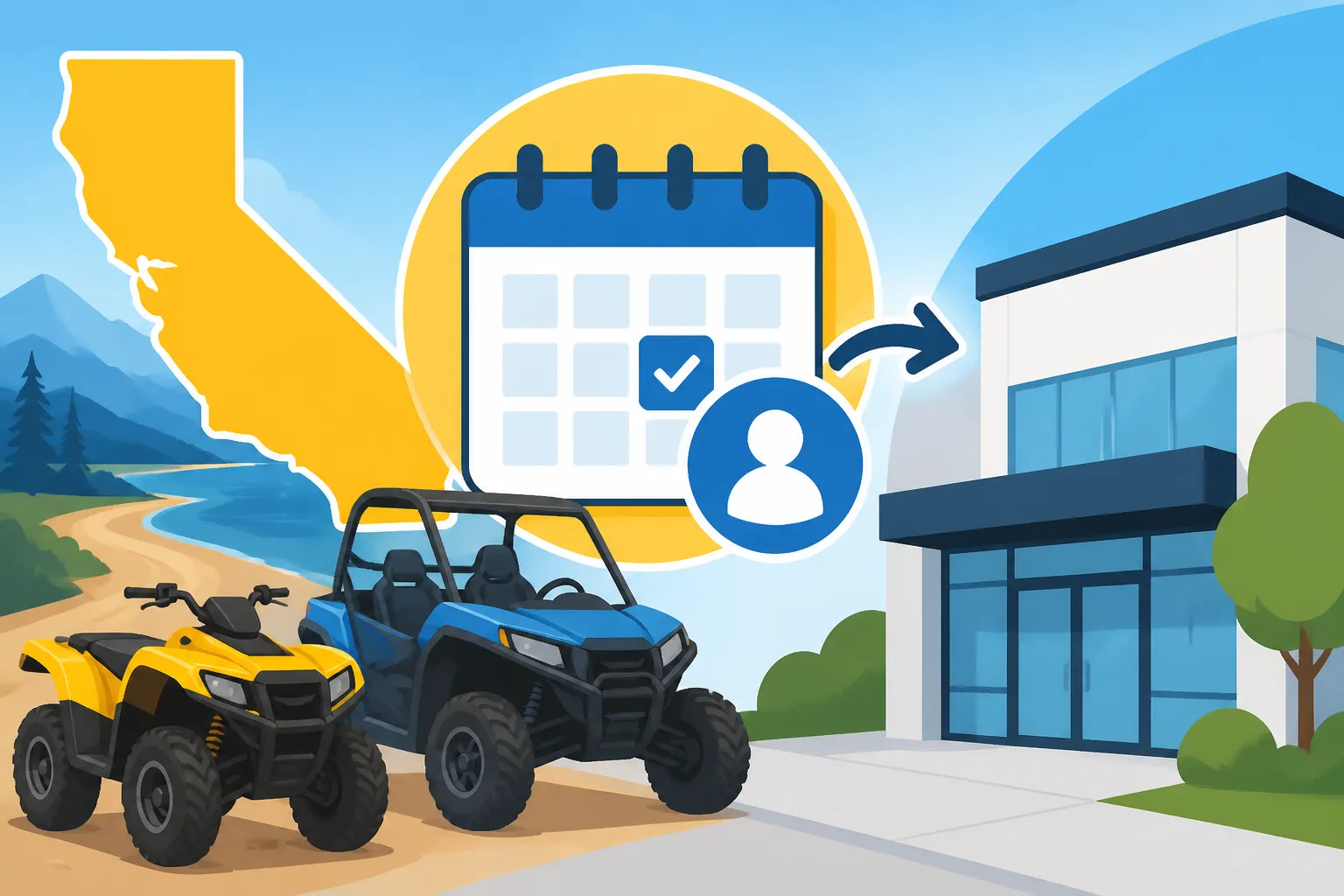
Alright, so you've accepted that a DMV visit is in your future. The good news is that booking an appointment online can save you a significant amount of time compared to just walking in and hoping for the best. While it won't eliminate all the waiting, it definitely puts you on a faster track. Think of it as reserving your spot in line, rather than joining the back of a very long, very slow-moving queue.
The first step is to head to the official California DMV website. Don't be tempted by third-party sites that promise to book appointments for you – stick to the official source to ensure accuracy and avoid potential scams. Once there, you'll look for a section related to making appointments. This process can be a little clunky, so be patient. You'll typically be asked to select the type of service you need. For OHV matters, you're often looking for "Vehicle Registration Services" or "Title Services." It's important to be as specific as possible here, as choosing the wrong category might mean you're not helped when your number is finally called.
After selecting the service, you'll be prompted to choose a field office location. This is where a little strategy comes in. While your closest DMV might seem like the obvious choice, it's often the busiest. Consider checking offices in slightly less populated areas or even a bit further out if your schedule allows. You might find significantly more appointment availability or shorter wait times at these locations. Sometimes, driving an extra 20-30 minutes can save you hours of sitting around.
Once you've picked your location, the system will show you available dates and times. This is often the trickiest part, as popular offices can have appointments booked out for weeks. Don't get discouraged! If you don't see anything immediately, try checking early in the morning when new slots might be released, or keep refreshing the page throughout the day. Sometimes, cancellations open up unexpected spots. If you're really in a bind and need an urgent appointment, you might have to expand your search to a wider geographic area. Remember, the goal is to secure any appointment that works, not just one at your absolute favorite branch. Once you confirm your slot, you'll usually receive a confirmation number or email. Make sure to save this – it's your golden ticket!
What to Bring to Your OHV DMV Appointment: The Essential Checklist
Walking into the DMV unprepared is a surefire way to guarantee a return trip. To avoid that sinking feeling of being told you're missing a crucial document, it's vital to have everything organized before you even leave your driveway. For OHV-related transactions, the paperwork can vary, but there's a common core of documents you'll almost always need. Think of it as building your fortress of paperwork against bureaucratic delays.
First and foremost, you'll need the appropriate application form. For many OHV registrations and transfers, this is [What California's Form REG 343 Asks For], the Application for Title or Registration. You can usually download and fill this out beforehand from the DMV website. Filling it out neatly and completely at home not only saves time but also reduces the chance of errors under pressure at the counter. When you're dealing with a private party sale, you'll need the original Certificate of Title, properly signed off by the seller. If you're doing a transfer, you’ll also need a Bill of Sale. This is where services like LawDepot can come in handy. They offer templates for various legal documents, including a bill of sale, which can ensure you have all the necessary information covered and help avoid future disputes. Having a professionally structured document makes a big difference to the DMV staff.
Next, proof of ownership is paramount. If you're the new owner, this is typically the signed-over title. For a brand-new machine, it would be the Manufacturer's Certificate of Origin (MCO) or Manufacturer's Statement of Origin (MSO). For machines coming from out of state, you'll need the out-of-state title or registration. Then there's [California Vehicle Verification on Form REG 31]. This form confirms that the vehicle identification number (VIN) on your machine matches the paperwork. This verification must be completed by an authorized DMV employee, a California Highway Patrol officer, or a licensed vehicle verifier. For OHVs, you often have to bring the machine itself to the DMV, or arrange for a mobile verifier to come to you, so be prepared for that possibility.
Don't forget your California driver's license or ID card, and proof of insurance if required (though OHVs typically only need liability for road crossings, not general registration). You'll also need to be prepared for payment. While specific fees vary, remember that you'll likely be paying registration fees, potentially sales or use tax if it wasn't paid at purchase, and any applicable penalties, such as a [The $27 Late Penalty in California] if you're behind on renewing your [California's Biennial OHV Registration Fee]. It’s a good idea to bring multiple payment methods, just in case. Creating a checklist and physically checking off each item as you gather it can be incredibly helpful. LawDepot can also assist with other forms or agreements you might need for your OHV, providing a reliable source for legally sound documents.
Making Your DMV Visit as Smooth as Possible
Even with an appointment, visiting the DMV can test the patience of a saint. However, a few smart strategies can turn a potentially stressful experience into a relatively manageable one. The key is to manage your expectations and control what you can. Remember, the goal is to complete your OHV transaction efficiently so you can get back to enjoying your time outdoors.
First, aim to arrive a bit early for your appointment – not so early that you're twiddling your thumbs for an hour, but giving yourself 10-15 minutes can make a world of difference. This allows time to find parking (which can be a challenge at some offices), take a deep breath, and locate where you need to go. Once inside, check in promptly with the staff or the self-service kiosk to ensure your appointment is registered and you're in the queue. Don't be afraid to politely ask for clarification if you're unsure where to go or what to do next.
While you wait, keep all your documents readily accessible and organized. Having them in a clear folder, perhaps with a paperclip or binder clip grouping related items, can save you from fumbling at the counter. If you used a service like LawDepot for your Bill of Sale, make sure that's prominent and easy to hand over. When your number is finally called, approach the counter with a clear idea of what you need to accomplish. State your purpose concisely, like "I'm here to [Titling an Off-Highway Vehicle in California] that I recently purchased." This helps the clerk quickly understand your request. Be polite and patient with the DMV staff; they are often dealing with a high volume of complex transactions, and a positive attitude from your side can go a long way.
Finally, confirm everything before you leave. If you were there for a registration, ensure you receive your temporary operating permit or, if applicable, your new [California's Green Sticker Explained] or [California's Red Sticker Explained]. For a title transfer, make sure you understand when your new title will arrive in the mail. Don't hesitate to ask for a receipt for any payments made. While no one truly enjoys a DMV visit, being prepared and organized for your [California OHV Registration Appointment at the DMV] can make it a far less daunting experience, clearing the path for your next adventure.
Disclaimer
This article is for general informational purposes only and does not constitute professional advice. Laws, prices and regulations vary by location and change over time. Consult a qualified professional for guidance on your specific situation.