Why June 30 Is the Only Expiration Date
If you're a California off-highway vehicle (OHV) enthusiast, you've likely encountered that peculiar June 30th deadline for registration renewal. It can be incredibly confusing, especially if you bought your dirt bike or side-by-side mid-year, leaving you wondering why you pay for two years but only get a few months of riding before needing to renew again. This guide is here to untangle the mystery behind California's fixed June 30th OHV registration expiration date and explain what it means for every rider.
The Fixed Nature of California's OHV Registration Cycle
Unlike the registration for your passenger car or truck, which typically expires on a rolling basis two years from the date you originally registered it, California's off-highway vehicle registration operates on a uniform, statewide schedule. Every single OHV that needs a Green, Red, or Tan Sticker has its registration expire on June 30th. This date applies to everyone, no matter if you registered your machine last August or just last month. It's a standard that applies across the board, year after year, for all of California's millions of registered OHVs. This structure is a fundamental part of how the state manages its vast OHV program, and understanding it is key to avoiding frustration and penalties.
Understanding the Biennial Cycle
California's OHV registration runs on a biennial cycle, meaning it covers a two-year period. The state establishes these periods with a clear start and end date. For instance, a recent cycle might run from July 1, 2023, to June 30, 2025. When you register your OHV, you are purchasing registration for the remainder of the current two-year cycle, not a personalized two-year period that starts from your purchase date. This is why you'll often hear about "even" or "odd" year stickers; they align with which two-year cycle the state is currently in. This system is designed to simplify administration for the California Department of Motor Vehicles (DMV) and the Off-Highway Motor Vehicle Recreation (OHMVR) Division. Imagine the administrative nightmare if every single one of California's tens of thousands of OHVs had a unique expiration date based on its individual purchase! It would create a logistical challenge that would make tracking compliance and managing renewals incredibly complex. Instead, everyone is on the same clock, making the system more manageable from a state perspective. You can learn more about this by reading [California OHV Registration Two-Year Cycle].
Why Not a Rolling Expiration?
This is perhaps the most common question and source of frustration for OHV owners. "Why can't my OHV registration just expire two years from the day I bought it, like my car does?" It's a completely fair question. The truth lies in the sheer volume of OHVs in California and the unique nature of off-highway recreation and its enforcement. With a rolling system, law enforcement officers and rangers at gates or during trail patrols would have to verify each individual expiration date, making roadside checks far more time-consuming and prone to error. By having a single, fixed expiration date of June 30th for all OHVs, enforcement becomes significantly more straightforward. A quick glance at the sticker or plate, and the officer immediately knows if the machine is currently registered for the ongoing cycle. This also helps with planning for land managers, as they can anticipate periods of higher enforcement activity or adjust educational outreach around the renewal period. While it might seem inconvenient for individual owners who purchase mid-cycle, the fixed date is a pragmatic choice for large-scale state administration and enforcement. The state has chosen this method to keep things as streamlined as possible across all public riding areas.
How June 30th Impacts Your Registration
The fixed June 30th expiration date has very real, practical implications for every OHV owner, whether you're buying a brand-new machine or just renewing your trusty old one. It fundamentally changes how you think about the value and timing of your registration compared to what you might be used to with street-legal vehicles. This system often catches new OHV owners off guard and can lead to unexpected expenses if not properly understood. It's a distinct difference that can save you a headache (and some money) if you plan accordingly.
New Registrations and the Fixed Date
Let's say you just purchased that gleaming new quad or side-by-side in February. You head to the DMV, pay your registration fees, and get your shiny new sticker. You're probably thinking, "Great, I'm good for two years!" But here's where the June 30th rule comes into play: your registration won't expire two years from February. Instead, it will expire on the very next June 30th that marks the end of the current two-year cycle. So, if you registered in February 2024 during a cycle ending June 30, 2025, your new sticker would be valid until June 30, 2025. That means you paid for a full two-year registration but only got about 16 months of actual use before having to renew again. This is a common point of confusion and frustration, particularly for those who purchase their machines in the spring months. It’s important to factor this into your buying decision. For example, if you register your machine in May or June, you’ll be renewing again within weeks or a couple of months. For specific scenarios, you might find it helpful to read [Registering a Machine Bought in May] or [Registering a Machine Bought Just Before June 30].
Renewing Your OHV Registration
When it's time to renew, the June 30th deadline becomes paramount. The California DMV typically sends out renewal notices well in advance, usually a few months before the expiration date. It's crucial to pay attention to these notices and get your renewal processed before June 30th. Missing this deadline will inevitably lead to penalties, which can quickly add up. Renewing is generally a straightforward process, often involving mailing in your renewal card and payment or visiting a local DMV field office. Many riders try to get this done as early as possible to avoid the last-minute rush and ensure their sticker is valid before their next ride after the deadline. Staying on top of this date is essential for uninterrupted riding on public lands. You can find more detailed information on the renewal process in [Renewing California OHV Registration].
The "No Prorating" Rule
This is arguably the most significant source of confusion and resentment among California OHV owners. California simply does not prorate OHV registration fees. This means that whether you register your machine on July 1st (the very beginning of a new two-year cycle, giving you almost two full years of use) or on June 1st of the second year of the cycle (giving you barely a month of use), you pay the exact same two-year registration fee. There's no discount for registering later in the cycle, which can feel unfair if you're only getting a few months out of a full payment.
This "no prorating" policy is a direct consequence of the fixed June 30th expiration date and the biennial cycle. From the state's perspective, processing prorated fees would add immense complexity to an already massive administrative task. So, while it stings to pay full price for less than a full term, it's a fixed reality of the California OHV registration system. This is a critical point to understand before you commit to purchasing an OHV, especially if you're buying late in a registration cycle. For a deeper dive into this policy, check out [Why California Will Not Prorate Your Fee].
Administrative Benefits and Enforcement Efficiency
While the June 30th expiration date can feel like an arbitrary hassle for individual riders, it actually serves several crucial administrative and enforcement purposes from the state's perspective. It's a system designed to manage a massive number of off-highway vehicles across a diverse landscape of riding areas, and a fixed date is a cornerstone of that management. Understanding these underlying reasons can help put the policy into perspective, even if you still find it inconvenient.
Streamlined Administration for the OHMVR Division
Imagine the logistical challenge of tracking millions of individual OHV registrations, each with its own unique expiration date, across the state. It would be a monumental task for the California Department of Motor Vehicles (DMV) and particularly the Off-Highway Motor Vehicle Recreation (OHMVR) Division, which is responsible for the program. By having a single, universal expiration date, the state can streamline its administrative processes significantly. Renewal notices can be generated and mailed in bulk, payments can be processed efficiently within a specific window, and the overall management of the OHV Trust Fund (which funds OHV parks and grants) becomes far more predictable. This consolidated approach allows the DMV and the OHMVR Division to allocate resources more effectively and reduces the potential for errors that could arise from a rolling system. It's about maximizing efficiency for a program that serves a huge recreational community. For a closer look at the agencies involved, consider reading [The California DMV and the OHMVR Division].
Easier Enforcement for Rangers and Law Enforcement
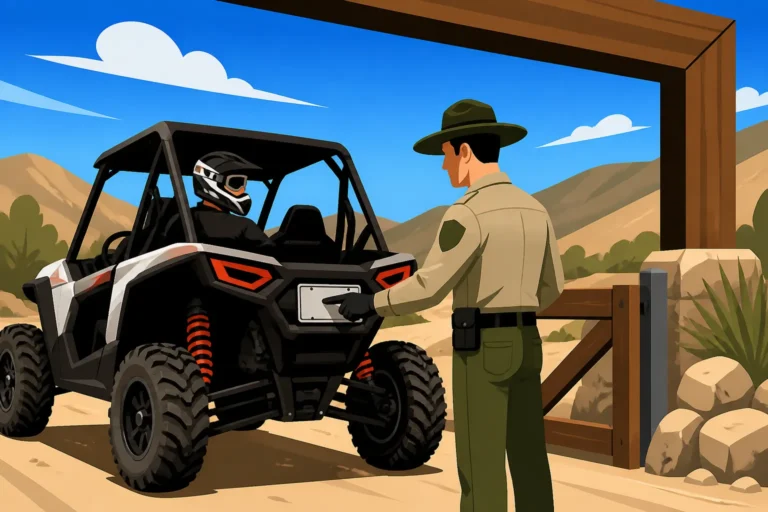
For rangers patrolling State Vehicular Recreation Areas (SVRAs), Bureau of Land Management (BLM) lands, National Forests, or other OHV areas, the fixed June 30th expiration date is an invaluable tool. They don't have to remember or look up individual vehicle specifics; they simply know that after July 1st, all stickers from the previous two-year cycle are expired. This drastically simplifies roadside checks and gate entries. A quick glance at the OHV's ID plate or sticker is often all that's needed to determine if the machine is legally registered for the current period. This uniformity reduces ambiguity, speeds up enforcement, and helps ensure that all riders on public lands are contributing to the system that maintains those very lands. Without a fixed date, enforcement would become a much more complex and time-consuming process, potentially leading to increased costs or less effective compliance. This efficiency is critical in maintaining order and safety across California's vast network of riding opportunities. You can see how these checks happen in practice by looking at topics like [Sticker Checks at Ocotillo Wells] or [Plates Checked at a Hungry Valley Gate].
Budgeting for OHV Programs
The fees collected from OHV registrations, including the biennial renewal fees, directly contribute to the Off-Highway Vehicle Trust Fund. This fund is vital for maintaining and developing riding areas, providing grants for safety and education programs, and supporting land acquisition for new OHV opportunities across California. With a single, fixed renewal date of June 30th, the state has a predictable influx of revenue. This predictability is incredibly important for budgeting and long-term planning. It allows the OHMVR Division to forecast available funds, plan major projects, and disburse grants with a clear understanding of financial resources. Without this predictable revenue stream, managing the extensive OHV program and its various initiatives would be far more challenging. Every dollar collected goes towards improving and preserving the riding experience, and the June 30th deadline helps ensure that flow of funds is consistent and manageable. To understand where your registration money goes, check out [What California OHV Fees Pay For].
Navigating the June 30th Deadline and Avoiding Penalties
Understanding why June 30th is the universal expiration date is one thing, but knowing how to navigate it effectively is another. For California OHV owners, this means being proactive, organized, and aware of the implications of timing your purchase or renewal. No one wants to face unexpected fees or, worse, a citation because of a missed deadline. A little planning goes a long way in ensuring your riding adventures remain hassle-free.
Planning Your Purchase and Registration
Given that California does not prorate OHV registration fees, the timing of your purchase can have a direct impact on how much "value" you get from your initial registration fee. If you're considering buying a new or used OHV, it’s worth thinking about the registration cycle. For example, if you're looking to buy in April, May, or June, you'll pay the full two-year fee, but your sticker will only be valid until the upcoming June 30th. This means you'll have to renew again almost immediately, essentially paying for two registrations within a very short period.
| Registration Timing (Approx.) | Effective Sticker Lifespan | Implication for Cost (Example of a $54 Fee) |
|---|---|---|
| July 1st – Sept 30th | ~2 full years | Maximize value (e.g., $27/year) |
| Oct 1st – Dec 31st | ~1.5 – 1.75 years | Still good value (e.g., $30-36/year) |
| Jan 1st – March 31st | ~0.75 – 1 year | Less value (e.g., $54-72/year) |
| April 1st – June 30th | ~0 – 3 months | Pay full fee, renew almost immediately |
To maximize your initial registration's lifespan, consider delaying a purchase slightly until after July 1st, if feasible. Of course, sometimes the perfect machine comes along at the "wrong" time, and you just have to go for it. In such cases, simply be prepared for an immediate renewal. Regardless of when you buy, always make sure you have a proper bill of sale or purchase agreement. Resources like LawDepot can provide templates for these essential documents, ensuring you have the necessary paperwork for registration and a clear record of your transaction. This level of documentation is critical when dealing with the DMV. Be sure to check [California OHV Bill of Sale Requirements] for specific details.
Understanding Late Penalties
Missing the June 30th deadline for your OHV registration renewal can come with a sting. California imposes a late penalty, which is often a significant percentage of the original registration fee. This isn't just a minor inconvenience; these penalties are designed to encourage timely renewals and help maintain the predictable revenue stream for the OHV Trust Fund. For instance, the penalty might be a fixed amount, or even a percentage of your original registration fee, compounding the cost. It's much cheaper and less stressful to simply renew on time. Keep an eye on your mailbox for renewal notices, set a reminder on your phone, or mark your calendar for June 30th. Understanding these penalties is a strong motivator to stay current with your registration. You can learn more about how these fines are calculated in [The $27 Late Penalty in California] and [California's 50 Percent Late Fee on OHV Registration].
Documenting Your OHV Transactions
Beyond just the registration sticker, keeping all your OHV-related paperwork meticulously organized is crucial. This includes your certificate of title, bill of sale, vehicle verification forms, and any previous registration documents. When you register or renew, the DMV relies heavily on accurate documentation. Having everything in order can prevent delays, additional trips to the DMV, or even legal issues down the road.
If you're buying a used machine, ensure the bill of sale clearly states the date of purchase, the VIN, and the agreed-upon price. This document is vital for establishing ownership and calculating any applicable sales tax during registration. Similarly, when selling, providing clear documentation protects both you and the buyer. Platforms like LawDepot can be incredibly helpful for generating legally sound documents such as bills of sale or affidavits, which might be needed for specific situations like a lost title or unique ownership transfers. Proper documentation is your best friend in the world of OHV ownership, especially when interacting with state agencies. For a comprehensive list of what you'll need, review [California OHV Registration Paperwork Checklist].
Disclaimer
This article is for general informational purposes only and does not constitute professional advice. Laws, prices and regulations vary by location and change over time. Consult a qualified professional for guidance on your specific situation.