California OHV Registration Refund
Many California off-highway vehicle (OHV) owners eventually find themselves wondering about refunds. Perhaps plans changed, a machine was sold sooner than expected, or there was a mistake in the registration process. It's a common frustration to pay for something you might not fully use, and the California Department of Motor Vehicles (DMV) refund policies for OHV registrations aren't always crystal clear. This guide will walk you through the realities of securing a refund for your California OHV registration, explaining what scenarios might qualify and, more often, why they won't.
Understanding California's OHV Registration System and Fees
Before diving into refunds, it's essential to understand what California's OHV registration entails and why the fees are collected in the first place. This context helps clarify why refunds are generally so rare.
The Purpose of OHV Registration Fees
When you register your ATV, UTV, dirt bike, or sand rail in California, you're not just paying for a sticker or an ID plate. You're contributing to a much larger system designed to manage and maintain the state's extensive network of riding areas and programs. The bulk of these fees go directly into the Off-Highway Motor Vehicle Recreation (OHMVR) Division. This division is responsible for operating and preserving the State Vehicular Recreation Areas (SVRAs) like Hungry Valley, Oceano Dunes, and Ocotillo Wells, which are often the most popular places to ride.
Beyond maintaining these parks, a significant portion of the funds collected through OHV registrations is distributed as grants to other agencies, including federal, local, and even private entities. These grants support a wide array of activities, from trail development and restoration to law enforcement and safety education across California. So, when you pay your [California OHV Registration Cost], you're directly investing in the future of off-road recreation in the state. Because these funds are allocated for specific programs and infrastructure, a refund often means clawing back money that has already been earmarked or spent, making the process inherently difficult. It's not like returning an unused item to a store; the service (funding the OHV program) has already begun.
Breakdown of the Typical California OHV Registration Payment
A California OHV registration isn't just one lump sum; it's comprised of several distinct fees, each serving a specific purpose. Understanding this breakdown can help you see why certain components are non-refundable. The total cost, which is collected biennially, covers a two-year period, with all registrations expiring on [California's June 30 Expiration]. For example, the [California's $54 OHV Registration Fee Broken Down] typically includes a portion that goes to the OHMVR Division for the purposes described above, and another portion, often noted as the [The $10 CHP Fee on a California OHV], which supports the California Highway Patrol's enforcement and safety programs related to OHVs.
You might also encounter other smaller fees depending on your specific situation, such as a [California OHV Registration Renewal Fee] if you're just extending your current registration, or penalties like the [California OHV Late Registration Penalty] if you miss the deadline. Each of these fees is designated for particular uses, and once paid and processed, that money is disbursed. This structured allocation system is why the DMV does not typically offer prorated refunds, even if you only use a fraction of your two-year registration period. The system operates on a biennial cycle, and once that cycle begins, the fees contribute to the ongoing programs for that entire period.
Scenarios Where a California OHV Registration Refund Might Be Considered (and Why They're Rare)
The dream of getting your money back for an unused registration is a common one, but the reality is that the circumstances for a refund are extremely limited. It's crucial to distinguish between what people think should qualify and what the DMV actually allows.
Common Misconceptions About Refunds
Many OHV owners mistakenly believe they are entitled to a refund for reasons that, while understandable from a personal standpoint, don't align with state policy. For instance, a frequent scenario involves an individual who registers their new dirt bike, only to sell it a few months later due to unexpected circumstances. They might assume that since they no longer own the machine, they should receive a prorated refund for the unused portion of the [California OHV Registration Two-Year Cycle]. However, California's policy states that OHV registration is tied to the vehicle itself, not the owner. When you sell an OHV with a valid registration, that registration transfers with the machine to the new owner, adding value to your sale. The DMV does not issue refunds in this situation because the registration remains active and usable for the vehicle.
Another common misconception arises when riders move out of state or simply don't have the opportunity to ride their OHV as much as they anticipated. They might feel they paid for a service they didn't fully utilize and therefore deserve some money back. Unfortunately, the DMV will not prorate your registration fee or offer a refund just because your riding habits changed or you relocated. The fee is considered a fixed cost for participation in the state's OHV program for the two-year period, regardless of personal usage. The state's position is that the funds contribute to the overall OHV program, which benefits all registered OHVs, even if individual machines aren't ridden frequently. This is why [Why California Will Not Prorate Your Fee] is a consistent policy.
Limited Circumstances for Potential Refunds
While general dissatisfaction or changes in personal circumstances won't net you a refund, there are indeed a few, very specific situations where the California DMV might consider issuing one. These almost exclusively revolve around administrative errors on the part of the DMV or duplicate payments. For example, if you mistakenly paid your OHV registration twice for the same machine and the same registration period, you would likely be eligible for a refund of the duplicate payment. In such a case, the DMV has received an excess payment that isn't due, and they are obligated to correct the error.
Another potential scenario for a refund would be if the DMV processed an incorrect fee amount, overcharging you for your registration. This could happen if a new fee structure was not correctly applied, or a data entry error occurred. If you can provide clear evidence that you were overcharged beyond the legally mandated fees, the DMV would typically process a refund for the difference. These situations are relatively rare, as the DMV's systems are designed to minimize such errors. However, they do occur, and it's important to keep thorough records of your transactions, perhaps even using a service like LawDepot to organize and store copies of receipts and applications, making it easier to identify and prove any discrepancies. Beyond these clear administrative or payment errors, the chances of securing a refund are exceedingly slim.
The Process of Requesting a Refund from the California DMV
If you believe your situation falls into one of the rare categories qualifying for a refund, you'll need to navigate the official channels of the California DMV. This process requires diligence, clear documentation, and realistic expectations.
Required Documentation and Steps
Requesting a refund from the California DMV for an OHV registration is not as simple as clicking a button. It requires submitting specific forms and providing compelling evidence. The primary document you'll need is the Form REG 256, Statement of Facts. This form is your opportunity to clearly articulate the reason for your refund request. You'll need to explain precisely why you believe you are entitled to a refund, providing dates, transaction details, and any other relevant information. It’s critical to be as detailed and concise as possible, avoiding emotional appeals and sticking strictly to the facts. If you're requesting a refund due to a duplicate payment or an overcharge, you'll need to include proof of payment, such as copies of your bank statements, cancelled checks, or credit card transaction records, clearly showing the erroneous charges. You should also include a copy of your original OHV registration or any correspondence from the DMV related to the transaction.
Gathering all these documents can feel daunting, but it's essential for a successful claim. Consider using a resource like LawDepot to help you generate a formal letter outlining your request, ensuring it is clearly structured and legally sound, which can improve your chances of a positive outcome. Once you have all your documentation, you'll typically mail it to the DMV's Refund Section. It's always a good idea to send it via certified mail with a return receipt requested, so you have proof of delivery. This meticulous approach ensures that your request is officially on record and can be tracked.
What to Expect After Submitting a Refund Request
After you've painstakingly gathered all your documents and sent off your refund request to the California DMV, the next step is often the most challenging: waiting. The processing times for refund requests can be quite lengthy, sometimes extending several weeks or even months. The DMV receives a vast number of inquiries and processes various types of refunds, so patience is absolutely key. It's not uncommon for requests to be reviewed by a specialized accounting department, which has its own timeline and verification procedures.
During this waiting period, you might not receive regular updates. It's generally not advisable to call frequently, as this can sometimes tie up resources without expediting your specific case. If a significant amount of time has passed and you haven't heard anything, you may then follow up with a polite inquiry, referencing your certified mail tracking number if applicable. Be prepared for the possibility of denial. Even if you believe your case is strong, the DMV has strict guidelines, and they may interpret your situation differently. If your request is denied, the DMV should provide a reason for the denial. At that point, you can review their explanation and determine if there are any additional facts or documentation you can provide to appeal their decision, though repeated appeals can be an arduous process.
Alternatives to Seeking a Refund
Given the slim chances of securing a direct refund for an OHV registration, it's often more practical to explore alternatives that can mitigate your financial outlay or maximize the value of your existing registration.
Transferring Registration to a New Owner
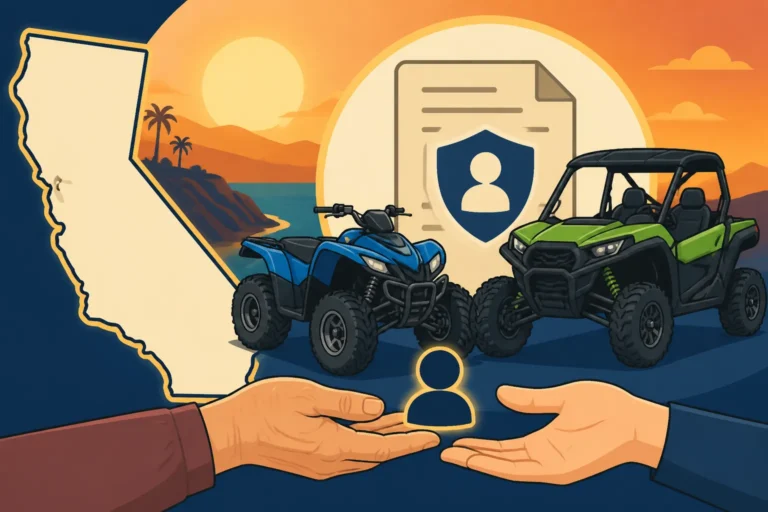
One of the most practical "alternatives" to a refund, especially if you're selling your OHV, is to simply transfer the existing registration to the new owner. In California, OHV registration is tied to the vehicle, not the person. This means that if your ATV or UTV has a valid Green, Red, or [California's Tan Sticker Machines], that sticker (and the associated ID plate) remains with the machine when it changes hands. This isn't just a convenience; it adds tangible value to your OHV when you put it up for sale. A buyer will often prefer a machine that already has current, valid registration because it means they can immediately hit the trails without needing to go through the [Registering an OHV in California] process themselves, saving them time, effort, and immediate registration costs.
When you [Selling an OHV and Signing the California Title] over to a new owner, you simply ensure that the current registration is handed over along with the title. The new owner will then be responsible for formally transferring the registration into their name, usually within a specified timeframe, to avoid penalties like [The $28 Transfer Penalty in California]. This system benefits both parties: you avoid the impossible task of getting a refund, and the buyer gets a ride-ready machine. It’s a win-win that leverages the existing investment rather than trying to reclaim it.
Utilizing the Full Registration Period
Since California OHV registration fees are non-prorated and cover a full two-year cycle, the most effective way to maximize your investment is to simply use the registration for its entire duration. Many riders register their machines and then, due to busy schedules or other commitments, find themselves not riding as much as they'd hoped. However, the registration is valid for two full years, always expiring on [California's June 30 Expiration], regardless of when you initially registered within that cycle. If you register a machine in July, you have nearly two full years of validity. Even if you don't ride every weekend, those fees allow you access to California's extensive network of SVRAs and other designated OHV areas whenever you do get the chance.
Instead of focusing on a refund you likely won't receive, redirect your energy to planning more outings. Explore different [Where to Ride an OHV in California], from the vast sand dunes of Glamis to the rocky trails of Johnson Valley or the rolling hills of Hollister Hills. Look into group rides or events that can encourage you to get out more. Remember, your registration helps maintain these areas, so every time you ride, you're benefiting from the system you've paid into. Think of it as an investment in your recreational opportunities. Even if life gets in the way of a full two years of riding, making the most of the time you do have registered is a far more achievable and satisfying outcome than pursuing a refund that is almost certainly out of reach.
| Scenario Category | Common Belief | California DMV Refund Policy | Likelihood of Refund |
|---|---|---|---|
| Change of Plans/No Use | "I didn't ride, so I should get my money back." | Registration is for a fixed period (2 years) and is non-prorated. | Extremely Low |
| Selling the OHV | "I sold it after a few months; I need a refund." | Registration stays with the vehicle, adding value to the sale. | None |
| Moving Out of State | "I moved, so I no longer need CA registration." | No prorated refund for relocation; registration remains valid for vehicle. | None |
| Duplicate Payment | "I accidentally paid twice for the same period." | Yes, a refund will be issued for the overpayment. | High |
| DMV Administrative Error | "The DMV overcharged me or made a mistake." | Yes, a refund for the excess amount will be issued with proof. | High |
| Stolen & Unrecovered OHV | "My OHV was stolen; refund my registration." | Generally not a refund scenario; often an insurance claim. | Extremely Low |
Disclaimer
This article is for general informational purposes only and does not constitute professional advice. Laws, prices and regulations vary by location and change over time. Consult a qualified professional for guidance on your specific situation.