California OHV Registration After Moving to the State
Moving to a new state is already a whirlwind of logistics – finding a new place, getting settled, changing your address on what feels like a thousand forms. When you also bring along your beloved off-highway vehicles (OHVs), like ATVs, UTVs, or dirt bikes, that "to-do" list can suddenly feel overwhelming, especially when you learn about California's unique and often complex registration rules. This guide is here to walk you through the process of getting your out-of-state OHV properly registered in California, covering everything from the necessary paperwork to understanding the dreaded sales tax on machines you already own, so you can hit the trails legally and without a headache.
Understanding California's OHV Landscape for Newcomers
Let's be honest, California has a reputation for being a bit… particular when it comes to regulations, and OHVs are no exception. If you're coming from a state with more relaxed rules, the Golden State's approach can feel like a whole new world. But understanding why these rules exist, and how they differ, is the first step to navigating them successfully.
Why California's Rules Are Different (And Why It Matters)
California's OHV laws are deeply rooted in environmental protection, air quality concerns, and the sustainable funding of riding areas. Unlike some states that might have a simpler "register it and go" approach, California categorizes OHVs based on their emissions compliance and age, leading to our famous Green, Red, and Tan sticker system. This means that a machine perfectly legal and compliant in your previous state might face restrictions or require specific steps here.
For example, many states don't have the same stringent emissions standards as California, especially for off-road vehicles. When you bring your machine here, the state wants to ensure it meets, or at least acknowledges, these standards. This isn't just bureaucratic red tape; it's about protecting California's diverse landscapes and ensuring cleaner air for everyone, particularly in high-use OHV areas. The fees you pay for registration also contribute directly to maintaining and expanding California's extensive network of OHV parks and trails, which is something many riders appreciate once they understand the system. It's a system designed to ensure the longevity of our riding opportunities, even if it feels a little cumbersome at first.
The Importance of Timely Registration
You've just moved, you're unpacking boxes, and the last thing you want to do is deal with more DMV paperwork. We get it. However, procrastinating on your OHV registration in California can lead to some costly surprises. When you become a resident, California generally expects you to register your vehicles, including OHVs, within a specific timeframe, often around 20 days. Missing this window can trigger penalties, which nobody wants when they're already trying to stretch a budget after a big move.
Beyond the immediate financial implications, timely registration is crucial for legal operation. Riding an unregistered out-of-state OHV on California public lands or in State Vehicular Recreation Areas (SVRAs) can result in fines from rangers or law enforcement officers. These fines can quickly add up, turning a fun day on the trails into a very expensive lesson. Remember, your out-of-state registration or permit might be recognized in some limited circumstances, but generally, once you're a California resident, your machine needs California identification. The good news is that by tackling this process head-on, you'll be able to enjoy all the incredible riding spots California has to offer without looking over your shoulder.
Step-by-Step Guide to Registering Your Out-of-State OHV
The process can seem daunting, but breaking it down into manageable steps makes it much clearer. Think of it as a checklist, and you'll be stamping those forms in no time.
Gathering Your Essential Documents
Before you even think about setting foot in a DMV field office, you need to have all your ducks in a row. This stage is critical because missing even one piece of paper can send you right back to square one, which is nobody's idea of a good time.
First and foremost, you'll need your out-of-state title. This is proof that you own the machine and will be used to transfer ownership into California's system. If you don't have a physical title because it's held by a lienholder (like a bank that financed your purchase), you'll need their information. You'll also need a bill of sale if you purchased the OHV recently, even if it was in your previous state. This helps establish the purchase price for sales tax purposes – more on that headache later!
You'll also need proof of residency, like a California driver's license or utility bills in your name. Then there are the California-specific forms:
- Application for Title or Registration (Form REG 343): This is your main application form. It's comprehensive, asking for details about you and your OHV. Getting a head start and filling out [What California's Form REG 343 Asks For] before your DMV visit can save significant time and stress.
- Vehicle Verification (Form REG 31): This form needs to be completed by an authorized verifier who physically inspects your OHV. It's not something you fill out yourself; it's a critical step that ensures your machine's identity matches its paperwork. We'll delve into the verification process next, but understanding [California Vehicle Verification on Form REG 31] ahead of time can help you prepare.
What if your out-of-state title is lost or was never issued? This can happen, especially with older machines or those acquired informally. Don't despair, but do prepare for a more involved process. You might need to contact the titling agency in your previous state or provide additional affidavits explaining the situation. Sometimes, a comprehensive bill of sale, perhaps one you can create with a service like LawDepot, can help establish ownership, especially if the title itself is missing.
The Verification Process
This is where California gets up close and personal with your OHV. The vehicle verification process is a mandatory step for any out-of-state vehicle, including OHVs, seeking California registration. It's not just a quick glance; it's a thorough check designed to confirm the machine's identity and, crucially, its emissions compliance.
Who can perform this verification? It can be done by a licensed California vehicle verifier, a peace officer (like the CHP), or even certain DMV employees. During the verification, they will check several things:
- Vehicle Identification Number (VIN): They'll make sure the VIN on your machine matches the VIN on your title and registration documents. This is a primary safeguard against theft.
- Emissions Label: This is particularly important in California. The verifier will look for the manufacturer's emissions label, often found on the frame or engine. This label indicates whether your OHV was originally built to meet California emissions standards (often referred to as CARB-compliant, for California Air Resources Board). Understanding [What CARB Compliance Means in California] is key here. If your machine doesn't have a California emissions label, or if it was not manufactured to California standards, it doesn't necessarily mean you can't register it, but it will impact which sticker your machine is eligible for. This is where the Green, Red, and Tan sticker system comes into play.
- Odometer Reading: While more common for street vehicles, it might be noted for some larger UTVs or specialty OHVs.
If your OHV has been modified, especially in terms of its engine or exhaust system, this might raise questions during verification. It's always best to ensure your machine is in stock or compliant condition before verification to avoid any potential issues. Once the verification is complete, the verifier will sign and stamp your REG 31 form, making it ready for submission.
Submitting Your Application and Fees
With your documents in hand and verification complete, it's time for the main event: submitting your application. For out-of-state OHV registrations, you'll almost always need to visit a California DMV field office in person. While some renewals can be done online, new registrations for out-of-state vehicles typically require a face-to-face interaction to ensure all documentation is properly reviewed and verified. It's often wise to make an appointment online to minimize your wait time.
When you submit your paperwork, be prepared to pay the necessary fees. These typically include:
- California OHV Registration Fee: This is the core fee for the two-year registration cycle. It helps fund OHV recreation programs and facilities.
- California Highway Patrol (CHP) Fee: A smaller fee dedicated to supporting CHP services related to OHVs.
- Sales/Use Tax: This is where many newcomers get a bit of a shock. If you've recently purchased your OHV outside California and are now bringing it into the state, California's use tax will likely apply. This tax is essentially what you would have paid in sales tax if you had bought the OHV within California. The rate is the same as the state sales tax and is calculated on the purchase price. Even if you've owned the machine for a while, there are rules about when the use tax kicks in. Understanding [California OHV Registration and Sales Tax] is crucial here, as it can be a significant cost. The DMV will review your bill of sale to determine the purchase price and calculate the use tax due.
The DMV clerk will review all your documents, process your payment, and if everything is in order, they'll give you a temporary operating permit. This allows you to legally operate your OHV while you wait for your official registration materials to arrive in the mail.
Receiving Your California Identification
After successfully navigating the paperwork and payment, you'll eventually receive your official California OHV identification. This package typically includes:
- ID Plate: This is a small, usually metal, plate with a unique identification number. This plate needs to be securely mounted to your OHV, typically on the rear for quads and side-by-sides, and on the front forks or fender for dirt bikes. It's designed to be visible and durable. Instructions will come with it on where to mount the plate.
- Registration Card: This card is your proof of current registration and should always be carried with you when operating your OHV. Keep it in a waterproof bag or a secure compartment on your machine.
- OHV Sticker: This is the colorful decal that goes on your OHV, indicating its registration status and type. You'll likely receive a [California's Green Sticker Explained], which signifies year-round riding privileges in most designated areas, provided your machine meets California's emissions standards. However, depending on your machine's model year and emissions compliance, you might receive a [Red Stickers and What Changed in California] or a [California's Tan Sticker Machines]. We'll discuss these sticker types in more detail later, but it's important to know what each one means for your riding options. The sticker is usually placed prominently on the left side of your machine, often near the ID plate or on a fender.
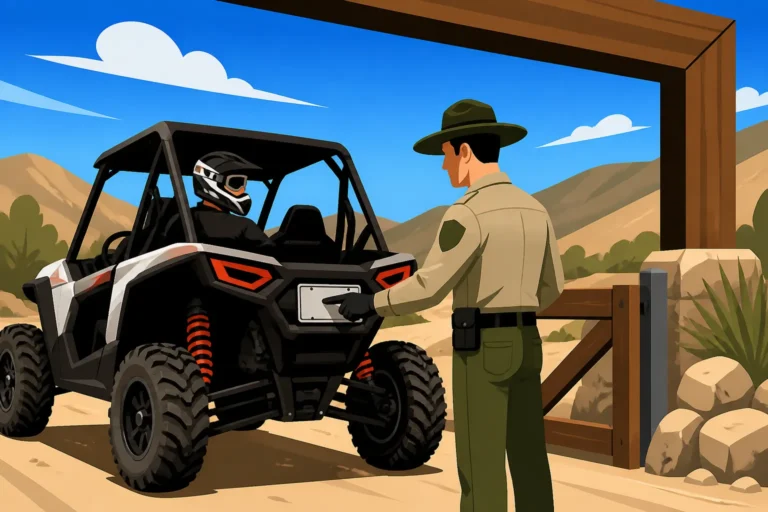
Remember, the ID plate and sticker are your OHV's new California identity. Ensure they are properly affixed and visible, as rangers frequently check for current and correct identification at trailheads and park entrances.
Special Considerations and Common Pitfalls
Even with a step-by-step guide, there are a few areas where newcomers often get tripped up. Being aware of these can save you a lot of grief.
Sales Tax, Use Tax, and Exemptions
Ah, California's use tax – a frequent source of confusion and frustration for those moving to the state with existing vehicles. Unlike a traditional sales tax applied at the point of sale, California's use tax is levied on items purchased outside the state but intended for use within California. For OHVs, this means if you bought your quad in Arizona five months ago and now you've moved to California, you'll likely owe California's use tax.
The general rule is that if you purchased the OHV within 12 months of bringing it into California, and you paid less than California's sales tax rate in your previous state (or no sales tax at all), you will owe the difference or the full amount to California. The DMV will determine this based on your purchase date and the bill of sale.
There are a few common scenarios where you might be exempt:
- Long-Term Ownership: If you've owned and used the OHV in another state for a period exceeding 12 months before moving to California, you are generally exempt from California's use tax.
- Gifted Machines: If the OHV was genuinely gifted to you, and no money changed hands, you typically won't owe sales or use tax. However, you'll still need to declare it as a gift on your application.
- Military Personnel: Active duty military members moving to California often have specific exemptions or deferrals, so it's always worth checking with the DMV if this applies to you.
It's crucial to have clear documentation of your purchase date, price, and any sales tax paid in your previous state. A well-documented bill of sale is your best friend here. If you're buying a machine from a private party, even if it's already in California, you'll still need a bill of sale, and services like LawDepot can provide excellent templates to ensure all necessary information is included, which can be invaluable for tax purposes and establishing clear ownership.
Understanding Sticker Types: Green, Red, and Tan
California's OHV sticker system is perhaps the most unique aspect newcomers encounter. It's more than just a decal; it dictates when and where your OHV can legally be ridden. The system is designed to manage environmental impact, particularly air quality. When registering an out-of-state machine, the type of sticker you receive will depend heavily on its model year and whether it meets California's stringent emissions standards. This is where the emissions label checked during verification becomes critical.
Here’s a quick rundown of the [Green, Red and Tan: California's Three Stickers]:
| Sticker Type | Eligibility | Riding Privileges |
|---|---|---|
| Green | All OHVs that meet California (CARB) emission standards. | Year-round use in all designated OHV areas. |
| Red | OHVs that do not meet California emission standards. Generally, machines | Restricted use in designated OHV areas during specific "open" seasons |
| with an engine built after 2002 that aren't CARB-compliant. | (typically October 1 to May 31) and in special exceptions. | |
| Tan | Limited to Model Year 2022 and later machines specifically built for | Limited to riding at sanctioned competitive events on private or |
| closed-course competition or non-competition uses in certain limited | designated public land, and on private land. Cannot be used for general | |
| situations. | recreation on California's public OHV lands. |
For most out-of-state machines, you'll likely be looking at either a Green or Red sticker. If your OHV has an emissions label stating it's CARB-compliant, or if it's an older machine manufactured before specific emissions regulations (generally pre-2003 for many types), you'll likely receive a Green Sticker. This is the most desirable sticker as it allows year-round access to most OHV parks and designated riding areas.
If your machine was manufactured after 2002 but does not have a CARB-compliant emissions label, it will likely receive a Red Sticker. As detailed in [Red Stickers and What Changed in California], these machines face seasonal restrictions, limiting when you can ride in many popular OHV areas. This can be a major adjustment if you're used to year-round riding.
The Tan Sticker, as explained in [California's Tan Sticker Machines], is a newer category and less likely to apply to a general recreational OHV brought from out of state, unless it's a very specific competition-only machine. Knowing which sticker your machine will qualify for will directly impact your riding plans, so it's a critical distinction to understand.
Machines Without a Title or Bill of Sale
This is a scenario that can send shivers down any OHV owner's spine, but it's more common than you might think, especially for older dirt bikes or quads purchased informally. If you're moving to California and your OHV lacks an official title or a comprehensive bill of sale, the registration process will become more involved.
California's DMV needs a clear chain of ownership to issue a title and registration. Without one, they can't be sure you're the rightful owner. If you don't have a title, your first step should be to try and obtain a duplicate from the titling agency in the state where the OHV was last registered. If that's not possible, or if the machine was never titled, you'll likely need to provide additional documentation to prove ownership.
This could include:
- Affidavit of Ownership: A sworn statement detailing how and when you acquired the OHV, affirming that you are the legal owner.
- Lien Release: If there was a lien on the machine that was paid off, a release from the lienholder is crucial.
- Comprehensive Bill of Sale: Even if it's an informal sale, having a detailed bill of sale signed by the previous owner, ideally notarized, is immensely helpful. You can find robust templates for bills of sale through resources like LawDepot, which can help ensure you have all the necessary information, even for private transactions, to present to the DMV.
In some cases, if no other documentation exists, the DMV might require a bond or a court order to establish ownership. This is why having as much evidence as possible – even old registration cards, photos of the machine with you, or emails with the seller – can be beneficial. The goal is to provide enough proof to satisfy the DMV that you are the legitimate owner and that the OHV is not stolen.
Getting Ready to Ride in the Golden State
Once your OHV is properly registered with a California ID plate and sticker, you're almost ready to hit the trails! But a few more things are worth keeping in mind to ensure a safe and legal ride in your new state.
Beyond Registration: Safety and Rules
California has specific rules beyond just registration that all OHV riders must adhere to. These are designed for safety, environmental protection, and ensuring a positive experience for everyone on the trails. Don't let your guard down just because your registration is sorted.
- Helmets: California has a strict helmet law for all OHV riders and passengers on public lands, regardless of age. Make sure you and anyone riding with you wear a properly fitted, DOT-approved helmet. For more details, check out [California Helmet Law for ATV Riders].
- Spark Arresters: Any OHV operated on public lands in California must be equipped with a US Forest Service approved spark arrester. This is crucial for preventing wildfires, especially in our dry climate. You'll want to ensure your machine has one and that it's in good working order. More information can be found in [California Spark Arrester Rules].
- Sound Limits: California has noise limits for OHVs. While many modern machines comply, older or modified exhausts might be too loud. Rangers do conduct sound checks, and citations can be issued for machines exceeding the decibel limits.
- Flag Requirements: When riding in sand dune areas like Glamis or Oceano Dunes, an 8-foot safety whip and flag are mandatory for visibility.
- Passenger Rules: ATVs are generally single-rider machines on public lands, with a strict ban on passengers unless the machine is specifically designed for two riders. UTVs (side-by-sides) can carry as many passengers as there are manufacturer-installed seats and seatbelts.
These rules are strictly enforced, so a little pre-ride check can save you from a costly citation.
Finding Your New Riding Spots
With your OHV legally registered and your safety gear squared away, the best part begins: exploring California's incredible riding opportunities! California boasts a diverse array of OHV areas, from the vast sand dunes of the Imperial Sand Dunes Recreation Area (Glamis) to the challenging trails of Hollister Hills SVRA and the wide-open desert of Ocotillo Wells.
Start by researching California's State Vehicular Recreation Areas (SVRAs) and other designated public lands managed by agencies like the Bureau of Land Management (BLM) and the US Forest Service. Many of these areas offer detailed maps, trail ratings, and information on amenities. A great starting point for discovering these locations is [Where to Ride an OHV in California]. Don't forget to check local conditions, especially during fire season or after heavy rains, as closures can occur. Connecting with local riding clubs or online forums can also be a fantastic way to discover hidden gems and get local tips. Welcome to California's OHV community – get out there and ride!
| Sticker Type | Emission Standard Compliance | Model Year Impact | Riding Season on Public Land | Common Scenarios for Out-of-State OHVs |
|---|---|---|---|---|
| Green | Meets CARB standards | All years, pre-2003 often included | Year-round access to designated OHV areas | Newer machines with CARB label; older machines (pre-2003) |
| Red | Does NOT meet CARB standards | Post-2002 | Seasonal (Oct 1 – May 31) in many areas | Newer machines without CARB label, common for out-of-state purchases |
| Tan | Specialized for competition | 2022 and newer | Sanctioned events & private land only | Rarely applies to general recreational OHVs from out-of-state; specific competition models |
Disclaimer
This article is for general informational purposes only and does not constitute professional advice. Laws, prices and regulations vary by location and change over time. Consult a qualified professional for guidance on your specific situation.