Registering a Quad Bought From a California Private Seller
So you've found the perfect quad, the price was right, and it's parked in your driveway. Awesome! That feeling of excitement is probably mixed with a little dread when you remember the next step: getting it legally registered in your name, especially when you bought it from a private seller here in California. It's not always as straightforward as buying from a dealer who handles all the legwork, and it can feel like you're navigating a confusing maze of forms and requirements. This guide is here to cut through the confusion and walk you through every step of registering that off-highway vehicle (OHV) after a private sale, ensuring you get your new sticker and title without unnecessary headaches.
The Initial Hurdles of a Private Sale
Buying an off-highway vehicle from a private seller in California can be a fantastic way to find a great deal, but it often comes with a unique set of challenges compared to purchasing from a licensed dealer. Dealers are usually well-versed in the registration process and handle most of the paperwork for you, making the transition seamless. With a private sale, the responsibility for gathering the correct documents and initiating the transfer falls squarely on your shoulders.
Why Private Sales Feel More Complicated
One of the biggest reasons private sales can feel like a bigger lift is precisely that: there’s no dealership staff to guide you. Many private sellers, while perfectly honest and well-intentioned, might not be fully aware of all the intricate steps involved in transferring ownership and registration in California. They might think signing the title is enough, not realizing the additional forms and verification you, as the buyer, will need to complete. This can lead to frustration if you discover crucial documents are missing or incomplete after the sale is finalized. It's a classic "you don't know what you don't know" scenario, and it’s why being proactive and informed on your end is so important.
The reliance on the seller for accurate information and complete paperwork also means you need to do your due diligence. You’re counting on them to have a clear title, to have paid off any liens, and to provide you with all the necessary identifiers for the machine. Without a third-party intermediary, the burden of ensuring a smooth legal transfer rests with you and the seller.
Essential Documents You Need from the Seller
Before you even head to the California Department of Motor Vehicles (DMV), securing the right documents from the private seller is absolutely critical. Think of these as your golden tickets to a hassle-free registration. The most important document, hands down, is the California Certificate of Title. This is proof of legal ownership. Ensure that the seller has properly signed off on the title, typically in a designated section for the seller's signature. Check for any lienholder information on the title; if there’s a lien, it needs to be released by the lienholder before the title can be transferred to you.
Beyond the title, a comprehensive Bill of Sale is highly recommended, even if the DMV might not always require it for registration. A Bill of Sale serves as a crucial record of the transaction, detailing the buyer and seller's information, the vehicle's description (including its VIN, make, model, and year), the purchase price, and the date of sale. This document is your proof of purchase and can be invaluable for calculating sales tax or resolving any future disputes. It also helps confirm the agreed-upon price, which the DMV will use to assess sales tax. If you need a reliable template, resources like LawDepot offer various legal document forms that can be customized for your specific transaction. Having a clear, typed, and signed Bill of Sale can save you a ton of headaches down the road.
Finally, while not a document from the seller, you'll need to ensure the vehicle is verifiable. This means its identifying numbers (VIN) can be physically inspected. While the seller doesn't provide the verification form itself, ensuring the VIN is accessible and matches the title is part of what you need from them.
Understanding California's OHV Registration Process
Navigating the California OHV registration landscape can feel a bit like learning a new language. It’s distinctly different from registering a street-legal car, and there are specific agencies and forms that come into play. Understanding these components will empower you to move through the process with confidence.
The Role of the California DMV and OHMVR
In California, while your local DMV field office is where you’ll actually submit your paperwork and fees, the California Off-Highway Motor Vehicle Recreation (OHMVR) Division is the agency that oversees the broader OHV program. The OHMVR Division is responsible for managing the state's network of OHV riding areas, setting safety standards, and distributing funds collected from registration fees to maintain and expand these opportunities. Think of the DMV as the administrative arm handling the transactions, and the OHMVR Division as the governing body shaping the rules and benefiting from your registration dollars.
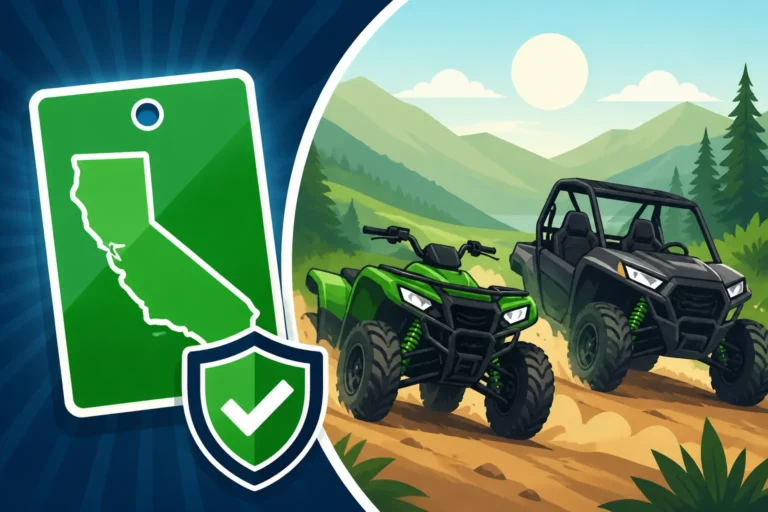
It's also important to remember that OHV registration is specifically for machines that are not street legal. This means your quad will receive an identification (ID) plate and a colored sticker, not a traditional license plate. California uses a system of colored stickers—Green, Red, and Tan—to denote a machine's eligibility for riding in specific areas at certain times, primarily based on its model year and emissions compliance. For example, a "Green Sticker" machine generally has fewer restrictions, while "Red Sticker" machines might be subject to seasonal riding schedules in certain areas. Understanding [Green, Red and Tan: California's Three Stickers] can help you confirm your machine's general riding eligibility once it's registered.
Paperwork Checklist for a Smooth Transfer
To register your privately purchased quad, you’ll need a specific set of forms, all easily obtainable from the DMV website or a field office. Getting these prepared before your appointment is key to a smooth visit.
Here’s your essential checklist:
- California Certificate of Title (Signed by Seller): As mentioned earlier, this is the cornerstone. Ensure all transfer sections on the back are completed by the seller, including their signature, and you, as the buyer, have also signed where indicated. If the title is lost or missing, the process becomes more complex, often requiring the seller to apply for a duplicate title first.
- Application for Title or Registration (Form REG 343): This is the primary form you'll fill out. It gathers all the pertinent information about you, the vehicle, and the transaction. You'll need details like the vehicle identification number (VIN), make, model, year, and the purchase price. Accuracy is paramount here. If you're wondering [What California's Form REG 343 Asks For], it generally covers owner information, vehicle details, sales information, and any lienholder details.
- Vehicle Verification Form (REG 31): This form confirms that the vehicle you're trying to register is indeed the vehicle described on the title. A DMV employee, law enforcement officer, or a licensed vehicle verifier must physically inspect your quad and complete this form. They'll be checking the VIN on the machine against the documents. This step is often a bottleneck for folks who try to do it at the DMV without an appointment or prior arrangement. Understanding [California Vehicle Verification on Form REG 31] is crucial, as this often needs to happen before your DMV appointment.
- Bill of Sale: While not always required to be submitted to the DMV, having a detailed Bill of Sale is essential for you. It clarifies the purchase price for sales tax calculations and provides a clear record of the transaction. A well-drafted one, perhaps using a template from LawDepot, provides legal protection and clarity.
- Proof of California Residency (if applicable): If you’ve just moved to California or the DMV needs to verify your residency, be prepared with documents like a utility bill or rental agreement.
Regarding sales tax, even with a private party sale, you are generally subject to California sales tax on the purchase price of the OHV. The DMV will collect this when you register. If the stated purchase price seems unusually low compared to the vehicle's market value, the DMV may question it and assess tax based on a fair market value determination. You can learn more about this through resources detailing [California OHV Registration and Sales Tax].
Navigating the DMV Visit and Avoiding Penalties
The DMV can sometimes feel like a daunting place, but with all your paperwork in order and a clear understanding of the process, you can make your visit as smooth as possible. Pre-planning is your best friend here.
The Dreaded DMV Appointment and What to Expect
Let's be realistic: a walk-in visit to the DMV for something as specific as OHV registration after a private sale can often mean long wait times. Your absolute best bet is to make an appointment at your local DMV field office. This can significantly reduce the amount of time you spend waiting. You can usually schedule an appointment online, sometimes weeks in advance. If you're wondering about [California OHV Registration Appointment at the DMV], booking ahead is almost universally recommended.
When you arrive for your appointment, ensure you have all your prepared documents neatly organized. This includes your signed Certificate of Title, the completed REG 343, your Vehicle Verification Form (REG 31), and your Bill of Sale. Having them in a folder will make it easier to hand over to the clerk. The clerk will review your documents, verify the information, and then calculate your registration fees and any applicable sales tax. Be prepared to pay these fees on the spot.
Sometimes, the DMV clerk might have questions about the transaction, especially regarding the purchase price or the condition of the title. Answer truthfully and clearly. If everything is in order, they will process your application, provide you with a temporary registration document, and inform you that your official Certificate of Title and OHV ID plate will be mailed to you.
Common Pitfalls and Penalties to Avoid
The last thing you want after buying your new quad is to get hit with unexpected fees. California has specific deadlines and requirements, and missing them can lead to avoidable penalties.
- Late Transfer Penalties: California law stipulates that you must transfer ownership of an OHV within 10 days of the date of sale. If you fail to do so, you will incur a penalty. This isn't just a small inconvenience; [The $28 Transfer Penalty in California] is a real fee that adds to your registration costs. Always prioritize getting to the DMV promptly after a private purchase.
- Missing Verification: As discussed, the Vehicle Verification Form (REG 31) needs to be completed by an authorized party before you can successfully register your OHV. Showing up at the DMV without this completed form will mean you can't complete the registration that day, forcing you to reschedule your appointment and potentially incurring late fees if you miss the 10-day window.
- Incomplete Bill of Sale: While the DMV might not always demand to see your Bill of Sale, having an incomplete or poorly detailed one can cause issues, especially if there's any ambiguity about the purchase price or the date of sale. A detailed document, like those you can create using LawDepot, minimizes these risks.
- Sales Tax Misunderstandings: Don't assume that because it's a private sale, you're exempt from sales tax. California charges sales tax on the purchase price of private party OHV sales. Budget for this, as it will be collected at the DMV. You can find a more detailed breakdown of fees by researching [California OHV Registration Cost].
- Unpaid Prior Registration Fees: If the previous owner had outstanding registration fees or penalties, these might transfer with the vehicle. Always ask the seller if there are any outstanding fees. The best practice is to have the seller take care of these before you buy, or adjust the purchase price accordingly.
| Document Type | Purpose | Who Provides It? | When Needed? |
|---|---|---|---|
| California Certificate of Title | Proof of legal ownership, signed over to buyer | Seller | At time of sale, for DMV submission |
| Application for Title or Registration (REG 343) | Your application for new ownership and registration | Buyer (you) | Before or at DMV appointment |
| Vehicle Verification (REG 31) | Confirms VIN matches physical vehicle and documents | Authorized Verifier | Before DMV appointment |
| Bill of Sale | Legal record of sale, purchase price, date, and parties involved | Seller & Buyer | At time of sale, for your records & DMV if needed |
After Registration: What to Do Next
Congratulations! You’ve navigated the DMV and submitted all your paperwork. While the hard part is over, there are a few final steps and ongoing responsibilities to ensure your quad stays legal on California trails.
Receiving Your New Title and ID Plate
Once your registration is processed at the DMV, they will typically give you a temporary registration receipt. This document is proof that your application is in progress and allows you to legally ride your OHV until your official documents arrive. Keep this temporary receipt with you whenever you're out riding.
Your official California Certificate of Title and your new OHV ID plate will be mailed to you, usually within a few weeks. The title is a critical document, proving you are the legal owner. It’s not something you carry with you when you ride; instead, it should be stored securely, perhaps in a fireproof safe, along with other important documents. For more details, you can look into [California Issues a Certificate of Title].
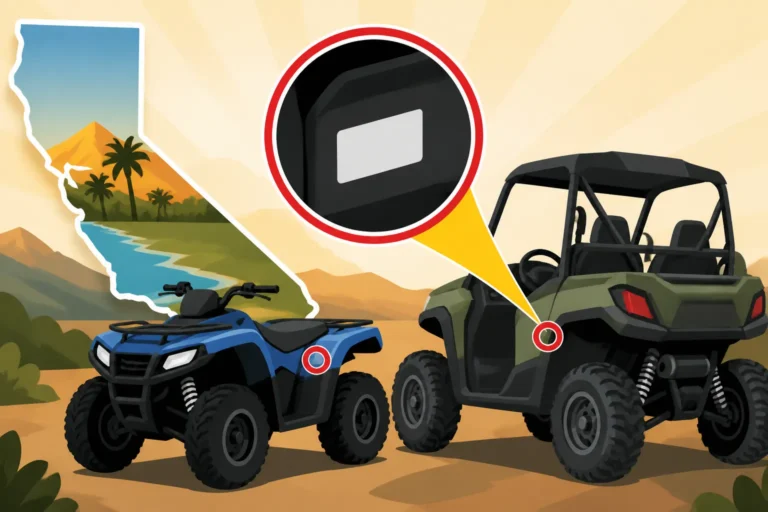
The OHV ID plate is what you’ll actually display on your machine. This metal plate typically has a series of numbers and letters, identifying your specific off-highway vehicle. California law specifies where this plate must be mounted. For quads, it generally needs to be attached to the rear of the machine, in a clearly visible location, and kept legible. Understanding [Where the ID Plate Mounts on a Quad] is important for compliance. Along with the plate, you'll also receive your registration sticker, which needs to be affixed to the plate. Once everything arrives, make sure to attach the plate and sticker correctly.
Finally, while you'll display the ID plate and sticker, you should always carry a copy of your current OHV registration papers (the ones mailed with your plate and title, or your temporary receipt) with you whenever you're riding on public lands. Rangers and law enforcement will often check for this during trailside stops. Resources like [Carrying Registration Paper on the Sand] emphasize this important point.
Maintaining Your Registration and Avoiding Future Headaches
OHV registration in California isn't a one-and-done deal; it operates on a biennial (two-year) cycle. This means your registration will need to be renewed every two years. Crucially, all OHV registrations in California expire on June 30th, regardless of when you initially registered your machine. So, if you register in November, your first registration period might be shorter than two full years, but it will still expire on the next June 30th that follows a two-year cycle from the OHV program's designated renewal date. You can learn more about [California OHV Registration Two-Year Cycle] and [California's June 30 Expiration].
The good news is that renewing your registration is usually much simpler than the initial transfer. You’ll typically receive a renewal notice in the mail. You can then renew online, by mail, or in person at the DMV. It's often possible to find details on [Renewing California OHV Registration] through the DMV's website. Always aim to renew on time to avoid late penalties.
Should you move, remember to update your address with the DMV. This ensures you continue to receive important notices, including your renewal reminder. Information on [California OHV Registration Address Change] is available through the DMV. Staying on top of these administrative tasks ensures you can enjoy your quad on California's fantastic trails without any unexpected interruptions or fines.
Disclaimer
This article is for general informational purposes only and does not constitute professional advice. Laws, prices and regulations vary by location and change over time. Consult a qualified professional for guidance on your specific situation.