How a Ranger Measures Your Exhaust Noise
A ranger’s exhaust-noise check is more than a judgment that your ATV or UTV sounds loud. The result can depend on the meter, its position, engine speed and the applicable limit for your machine. Knowing how a stationary sound test works helps you prepare, understand a reading and respond sensibly if your vehicle is tested.
What the ranger is measuring
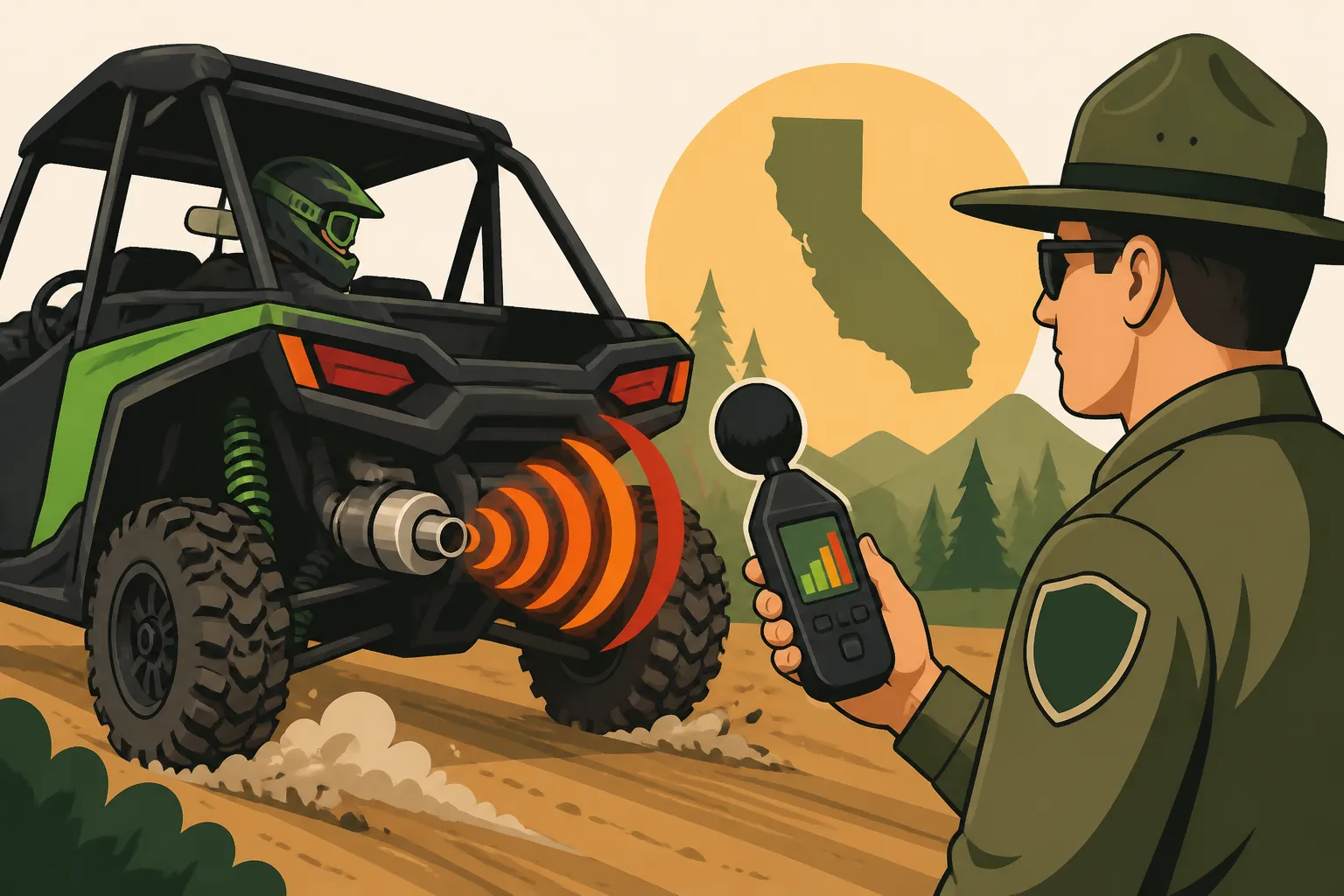
A sound check measures sound pressure at a particular distance and engine speed. It is not a rating of how loud the machine seems from a trail, and it does not rely only on whether an exhaust sounds sharp or deep. Those impressions can prompt an inspection, but a meter reading gives the ranger a number to compare with the applicable standard.
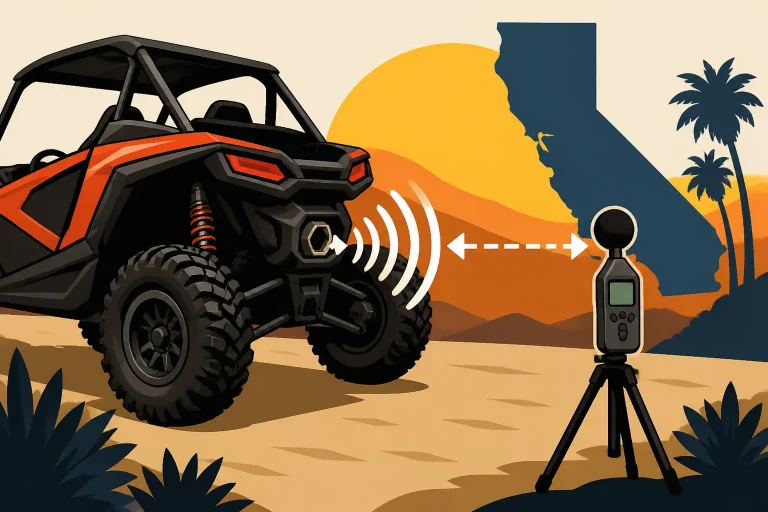
For many California OHVs, the familiar stationary test places a sound meter 20 inches from the exhaust outlet and measures sound in decibels using an A-weighted setting. The test is commonly associated with SAE J1287 procedures. The specific setup and applicable limit can depend on the machine’s type, model year and use, as well as the enforcement agency and current rules. The broader standards are discussed in California Sound Limits for OHVs Explained.
Decibels are measured on a logarithmic scale, so a change of a few decibels is meaningful; it is not a simple percentage increase in loudness. A meter reading also reflects the conditions at the time of the test. Background noise, wind, nearby vehicles, the test location and how the engine is operated can all affect what the meter records.
California’s commonly cited framework includes a 96-decibel limit for many newer OHVs and a higher limit for certain older machines. Those figures are not a blanket allowance for every ATV, UTV or competition vehicle. The machine’s category and manufacture date matter, and a posted site rule or a different applicable requirement may also be relevant. For details on the commonly discussed older-machine standard, see One Hundred One Decibels for Older Machines. Competition machines can fall under additional distinctions, covered in Competition Machines and California Decibels.
| Part of the check | What it means | Why it matters |
|---|---|---|
| Sound level | A meter reading, commonly in A-weighted decibels | A number can be compared with the relevant limit |
| Meter position | Often 20 inches from the exhaust outlet | Moving the meter closer or farther can change the result |
| Angle | The microphone is positioned at an angle to the exhaust outlet | The direction of sound affects the reading |
| Engine speed | The engine is brought to a prescribed test speed | Different revving can produce a different result |
| Test surroundings | The check needs suitable space and manageable background noise | Reflections and other sounds can interfere |
| Machine details | Model year and vehicle category may affect the standard | Not every machine is judged against the same limit |
A ranger may first notice excessive noise while you are riding or entering a recreation area. That observation can lead to a closer look or a formal sound test, but it is not the same as a documented meter reading. If a ranger performs a test, ask politely which procedure and limit are being applied. That is a practical way to understand what is happening without turning a roadside conversation into an argument.
How the stationary test is set up
A stationary test is designed to make readings from different machines more comparable than a casual rev beside a trail. The ranger selects a suitable area, places the meter in relation to the exhaust outlet, and has the operator bring the engine to the required speed. The exact sequence can depend on the applicable test procedure and the agency’s equipment.
The familiar 20-inch measurement is taken from the exhaust outlet, not from the seat, rear tire or the nearest outside edge of the vehicle. The microphone is generally positioned at an angle to the exhaust flow rather than directly in line with it. For a detailed look at the setup, see Measuring Sound at 20 Inches and California Sound Test Procedure.
The meter’s position
Distance matters because sound intensity changes as you move away from its source. An otherwise identical reading taken closer to the outlet can be higher than one taken farther away. The angle matters too: sound directed straight out of an exhaust may register differently from sound measured to the side.
If a vehicle has more than one exhaust outlet, the ranger may need to assess each outlet according to the procedure being used. Do not assume that a quiet outlet cancels out a louder one. The operator or ranger should be able to explain where the meter is positioned and which outlet is being tested.
The ground and nearby surroundings can also matter. Hard walls, parked vehicles or other surfaces may reflect sound toward the microphone. Wind and noise from nearby machines can interfere with the reading. A careful test uses a location and setup that reduce those effects as much as possible. If conditions are obviously noisy or the meter position changes between readings, it is reasonable to ask whether the test can be repeated under steadier conditions.
Engine speed and throttle
The test does not simply involve revving the engine as high as possible. It uses a prescribed engine speed for the machine and procedure. The ranger may use engine information or the test protocol to determine the target speed, then ask the operator to hold that speed briefly. The required speed can vary; there is no single universal rpm figure that can be safely applied to every ATV or UTV.
Follow the ranger’s instructions, keep the machine stable and avoid sudden throttle blips. A brief, controlled test is different from repeatedly revving the engine. If you are unsure whether the engine is at the requested speed, ask before continuing. Guessing, holding the throttle too long or revving beyond the instruction can create a less useful reading and put unnecessary strain on the machine.
A stationary reading also does not measure every kind of noise a machine makes. It is focused on exhaust sound under the test conditions. Tire noise, drivetrain noise, rattles and sound while driving may contribute to what a ranger hears in the field, but they are not interchangeable with the stationary exhaust reading.
Reading the result
A sound meter displays a value, but the number only makes sense alongside the test conditions and the standard being applied. If you receive a reading near a limit, ask whether the ranger took more than one reading and how the result was handled. A single number without the test setup does not tell you the whole story.
Consumer sound meters can be useful for screening a machine at home, but they are not a reliable substitute for a properly conducted enforcement test. A phone app is even less suitable for deciding whether a machine meets a legal standard. Microphone quality, calibration, distance, angle and background noise can all make a home reading differ from an official result. Meters sold through retailers such as Amazon may help identify a change after exhaust work, but a low reading from a consumer device does not guarantee compliance.
What can happen during a check
A sound check may happen at an entrance, during an inspection or after a ranger hears a machine operating. The exact process varies by location and agency. Some checks are focused on visible equipment and general compliance; others may include a stationary meter test. A ranger’s authority, the consequences of a failed check and any options to correct the problem depend on the circumstances and rules that apply at that site.
If you are asked to stop, do so in a safe place and follow directions. Keep the engine off until asked to start it. If a test is conducted, remain attentive to the instructions and do not interfere with the meter or its position. A calm request for an explanation is more useful than trying to debate the reading while the test is underway.
If the ranger says the machine exceeds the applicable limit, ask what the next step is. Depending on the setting and enforcement process, you may be told that the vehicle cannot continue in a particular area, that a citation or other enforcement action may follow, or that you should have the machine inspected or repaired. Do not assume that every location handles a failed test in the same way. Ask for any written notice or instructions and keep them with your vehicle records.
A disagreement about a reading is best handled by documenting details rather than escalating the exchange. Note the location, date, meter reading, machine identification, test conditions and what the ranger said about the procedure. If you believe the meter was placed incorrectly or background noise disrupted the test, describe the specific issue respectfully and ask whether the reading can be repeated. Do not obstruct enforcement or leave when directed to remain.
For a general overview of the limits that may apply to ATVs, see California ATV Sound Limits Explained. If you want to understand how the commonly cited 96-decibel standard fits into the rules, The 96-Decibel Limit on a California Trail provides more context. A failed check is also addressed in Failing a Sound Check at a Gate.
Why an ATV or UTV can fail a sound check
A machine can become louder without an obvious change in how it runs. An exhaust system is made up of parts that wear, loosen, clog or become damaged. A missing component or an exhaust modification can also change the sound substantially. Checking these items before a ride is more reliable than waiting to see whether a ranger notices the noise.
Common issues include:
- A damaged or missing muffler, baffle or other sound-control component
- A loose joint, clamp or exhaust connection that allows sound to escape
- A worn packing material inside a muffler
- An aftermarket exhaust that is not suitable for the machine or its required use
- A spark arrester that has been removed, damaged or installed incorrectly
- Engine problems that cause unusual popping, knocking or inconsistent exhaust noise
A spark arrester and a muffler serve different purposes. An arrester helps reduce the risk of sparks escaping; a muffler reduces exhaust noise. Some components combine functions, but one should not be treated as a replacement for the other. California’s requirements for exhaust noise are separate from requirements that may apply to spark arresters on particular public lands. See California Spark Arrester Requirement Explained for that distinction.
An aftermarket exhaust is not automatically illegal, and a stock exhaust is not automatically quiet enough if it is damaged or incomplete. The important questions are whether the complete system is appropriate for the machine, whether required components are installed and functioning, and whether the vehicle meets the standard that applies to it. An exhaust that sounds acceptable in a driveway can still produce a different result during a properly set up test.
Before riding, inspect the system when the machine is cool. Look for loose fasteners, missing parts, visible cracks, unusual soot around joints and a muffler that moves more than it should. Check the manufacturer’s information for the correct parts and maintenance schedule. If the sound has changed suddenly, investigate the cause rather than assuming that the ranger’s meter is at fault.
Preparing before a ride
A simple pre-ride check can prevent avoidable problems:
- Compare the exhaust system with the machine’s original configuration or a suitable replacement specification.
- Check for loose fittings, damage and missing sound-control components.
- Confirm that any required spark arrester is present and properly installed.
- Listen for a new leak or change in exhaust tone after the engine warms up.
- If the machine has been modified, have the system checked using the applicable procedure rather than relying on a phone app.
- Carry any relevant equipment or repair information, but do not treat paperwork as proof that a noisy machine passes a sound test.
A home screening test can help identify whether a repair made the machine quieter than it was before. For the comparison to be meaningful, use the same meter, distance, angle, engine condition and surroundings each time. Even then, treat the result as a maintenance aid, not a legal certification. If a machine is close to the applicable limit, a qualified shop or an authorized test facility may be better placed to assess it.
What to do if you question the test
It is reasonable to want a fair, understandable test. The best approach is to ask focused questions and keep your response measured. A ranger may be able to explain the limit, the test position and what the result means. If the ranger cannot answer in the moment, written information from the responsible agency may clarify the procedure and any review process.
You can ask:
- Which sound standard applies to this machine?
- Is the limit based on the machine’s model year or category?
- Where was the microphone positioned in relation to the exhaust outlet?
- What engine speed was used?
- Was the reading repeated?
- Were there conditions, such as nearby engine noise or wind, that affected the measurement?
- What action is required before the machine can be used again?
These questions focus on procedure rather than accusing the ranger of getting it wrong. If the machine is found to exceed the limit, do not remove or alter parts at the site in an attempt to pass a second test unless the ranger permits it and the change is safe. A quick adjustment may not fix the underlying issue, and disabling a required component can create another violation or a fire risk.
After the ride, write down what happened while the details are fresh. Photograph the exhaust and any visible damage, save maintenance receipts, and retain the notice or citation if one was issued. If you plan to challenge an enforcement action, follow the instructions and deadlines on the document or contact the responsible agency. Do not assume that a verbal disagreement changes a written citation or its response deadline.
If the ranger’s concern was based on the machine sounding loud rather than a formal meter test, that does not mean the concern should be ignored. A leak, damaged muffler or missing component can be unsafe and can draw attention even before a formal check. Fixing the mechanical cause is usually the most useful next step.
Frequently Asked Questions
Can a ranger test an ATV while it is moving?
A moving vehicle may be noticed or assessed by sound in the field, but a stationary meter test is different: it uses a specific distance, angle and engine speed. Ask whether a formal stationary test was performed and what procedure applies.
Does a loud-sounding exhaust automatically fail?
Not necessarily. Perceived loudness is not a meter reading, and sound can carry differently with terrain, wind and surroundings. A ranger may use what they hear as a reason to inspect or test the machine, but the applicable standard and test conditions matter.
Is a phone app enough to check whether my UTV passes?
No. A phone app can offer a rough comparison, but its microphone and measurement setup may not be accurate enough for enforcement. Use it only as a screening tool, not as proof of compliance.
Does a stock exhaust guarantee that the machine meets the limit?
No. Stock components can wear, loosen or become damaged. A machine’s manufacture date and category may also affect the applicable standard. Inspect the system and confirm the requirement that applies to your vehicle and riding location.
Disclaimer
This article is for general informational purposes only and does not constitute professional advice. Laws, prices and regulations vary by location and change over time. Consult a qualified professional for guidance on your specific situation.